
‘I once planned to hide behind a marriage. Now I represent Nigeria as a gay man’
Andrew Akuruka on the Nigerian wedding he once imagined, the life he nearly built around a secret, and standing under the flag as himself
I once thought I could have the Nigerian wedding, the honour and the respect by hiding the part of me that was gay. My partner and I would each marry a lesbian woman. We would have families and keep our sexuality hidden. In my mind, I could still be a respectable son. I would not have failed my family.
I wanted the relatives, the celebration, the feeling that I had done right by the people I loved. I can see now that four people would have had to arrange their lives around what they could never say. I was ready to remove parts of myself to keep the picture of a respectable future intact.
I thought marriage would let me belong. Really, I was planning to be welcomed only as long as no one knew all of me. A place at the table is not the same as being able to bring your whole life into the room.
Now I am going to represent Nigeria at Mr Gay World. People may see a flag, a sash and a man on a stage. I see a part of my life that I once thought had to stay hidden, standing in full view. I am British Nigerian, raised in South London. I was not born in Nigeria, and I do not speak for men living there. But Nigeria is part of my family and identity. I can stand under its flag without leaving any part of myself outside the room.
“Nobody owes the world disclosure. No man should have to risk his safety to make somebody else feel enlightened”
That belief was challenged when my participation was announced. Someone wrote that it was illegal for me even to enter representing Nigeria. One comment contained the bargain I had once tried to make with my life: keep the flag but lose yourself. Give your family the wedding but hide the man you love. Protect their honour by turning your life into a secret.
I know what a warning like that can teach a boy because I once built a future around it. It teaches him that the flag belongs to him only while part of him remains buried. Perhaps he will see me standing beneath it and realise it was never his sexuality that made him less Nigerian. It was other people’s acceptance that came with conditions.
But I will not lie to him: seeing me at a pageant cannot make his family accept him or make his life safe. My visibility can show him that a life beyond hiding exists. It cannot decide whether he should reveal himself. That choice belongs to him.
Too many boys learn manhood as a list of things they must not do: ask for help, show fear, let anyone see the truth if it might change how they are treated. A man can be praised for needing nobody and still have nobody he trusts with his fear. Some gay men use masculinity as cover. It can protect them. But when people accept you only because they do not know you, you are accepted but unknown.
That rule travels. Gay men around the world are told vulnerability makes them less masculine; men of colour are welcomed in the image and left out of the decisions. If a man watching in Nigeria, London or somewhere else sees me and thinks, ‘I can be masculine and gay and still belong to where I come from,’ that is what I hope he takes. His story is his. He decides if and when it is told.
I do not want visibility to become another test a man can fail. Nobody owes the world disclosure. No man should have to risk his safety to make somebody else feel enlightened. When family, law and society make concealment feel like the only respectable choice, the responsibility is theirs.
To read the rest of this article, check out Attitude Uncut: The New Masculinity issue, out now on Apple News+ and the Attitude app.
To vote for Andrew in Mr Gay World 2026, click here.
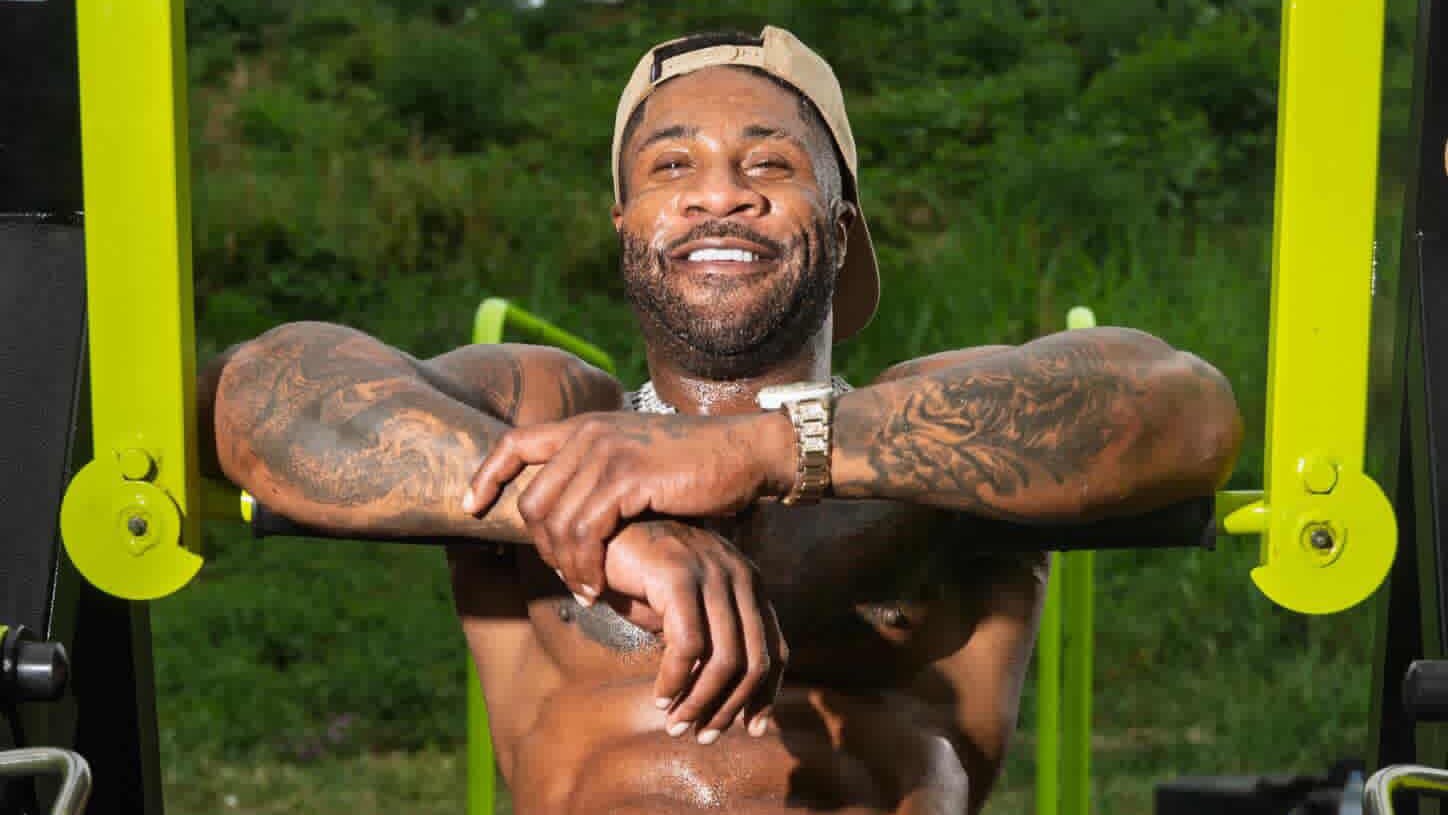
Main photograph by Pierre Monnerville (@studiopm).