
Terrence Higgins Trust CEO: Nigel Farage is wrong about HIV – and the policy he attacks is one that’s working (EXCLUSIVE)
"You cannot end an epidemic while drawing lines around who deserves treatment, because the virus does not recognise the lines," Angell writes for Attitude
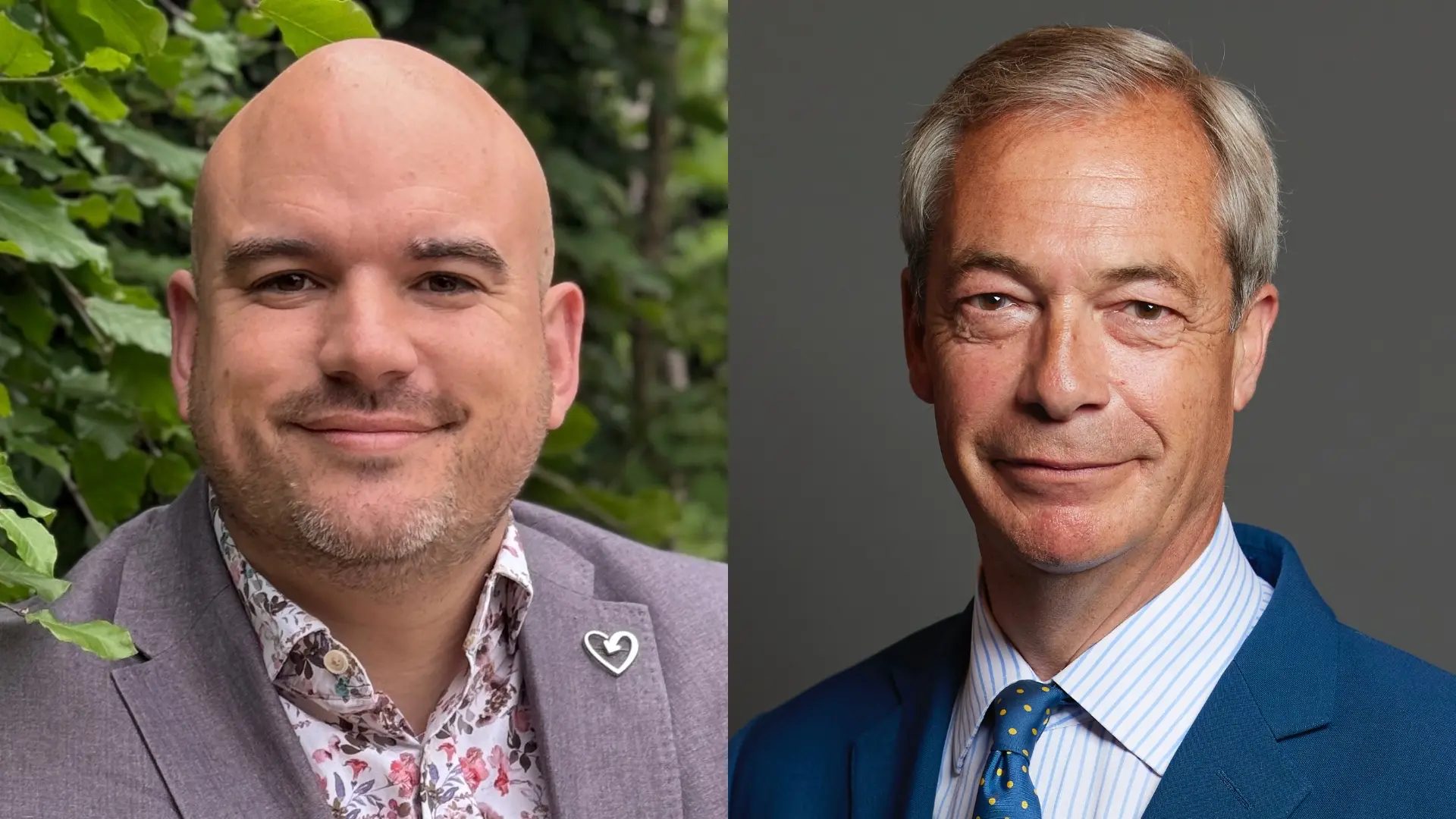
Treating people with HIV is how you stop HIV spreading. Restricting treatment is how you guarantee more people acquiring HIV, alongside more illness and a bigger bill for the NHS. That is the settled science, and the reason Britain is closer than any country in the world to ending new HIV transmissions. Nigel Farage wants to throw that away.
At a Reform rally in April, we witnessed the ugliest episode of the recent elections. Now ballots are closed, we should remind ourselves that Farage and his Scottish leader Lord Offord went after migrants receiving HIV treatment on the NHS. Lord Offord cited a single GP describing three referrals – almost certainly people the British government invited here to staff our hospitals and care homes – and paired it with cost figures that don’t survive scrutiny. Farage then condemned the idea that “somebody can newly arrive in Britain and get expensive NHS treatment, whether it’s for HIV or hepatitis or whatever it is”.
Treatment is now both the prevention strategy and the affordable option
Three anecdotes from a rally does not evidence make. It’s a dog whistle dressed as a story. And the policy it attacks is not some loophole: it is a deliberate public health measure. The NHS charges most overseas visitors for most treatments. The exemptions cover a short list of around two dozen transmissible conditions where charging someone at the clinic door means they walk away untreated and pass it on to someone else. HIV is on that list for a reason. So is tuberculosis. So is hepatitis.
The list exists because successive governments, advised by clinicians, worked out that the cheapest and safest thing to do with a transmissible illness is to treat it.
The evidence for this approach in HIV has only hardened. The PARTNER studies, published in 2016 and 2019, established beyond serious dispute that a person on effective HIV treatment cannot pass the virus on through sex. The studies were based on hundreds of thousands of sex acts where one partner was living with HIV and on treatment and the other was HIV negative.
Meanwhile, the patents on most antiretrovirals have expired, and the cost of treating one person for a year has collapsed. Treatment is now both the prevention strategy and the affordable option. Refusing it is the expensive choice: you pay later, in lifelong care for totally avoidable transmissions.
That goal of ending new HIV cases by 2030 is reachable. It is also fragile
This is the second time Farage has reached for HIV as a wedge. He did it in the 2015 leaders’s debate, arguing migrants with HIV were too great a burden for the NHS. The years since have proved him wrong. New diagnoses have fallen dramatically since 2015. Treatment has gotten cheaper. The UK is now within sight of becoming the first country anywhere to end onward transmission of HIV, without a vaccine and without a cure.
This is on the back of 40 years of work by NHS clinicians, British researchers, Britain-based and British-headquartered pharmaceuticals, and the British public that kept funding the fight for four decades when it would have been easier to look away. The availability of free HIV treatment within a world-leading system should be a source of national pride, not of shame or condemnation.
That goal of ending new HIV cases by 2030 is reachable. It is also fragile.
You cannot end an epidemic while drawing lines around who deserves treatment, because the virus does not recognise the lines. The maths is not complicated, and it does not care who holds a British passport.
We intend to finish the job. Are you with us?
Farage knows this, and I am sure his advisers do too. I bet at least some of them tell him the same thing we do. Tell him that anyone who wants to be taken seriously as a future prime minister has to be judged on whether their policies would make the country better or worse. On HIV, his dog whistle policy would make it sicker and poorer.
The evidence is in the open. The science is settled. The choice in front of the country is whether to finish a job we are winning, or hand a victory back to a virus because a politician saw an opening.
We intend to finish the job. Are you with us?
Richard Angell OBE is chief executive of Terrence Higgins Trust. To learn more about Richard and the team’s work, check out the organisation’s official website.