
Is LGBTQ+ allyship disappearing? Darren Milby investigates in new BBC documentary (EXCLUSIVE)
“We are in strange times," Milby tells Attitude
By Aaron Sugg
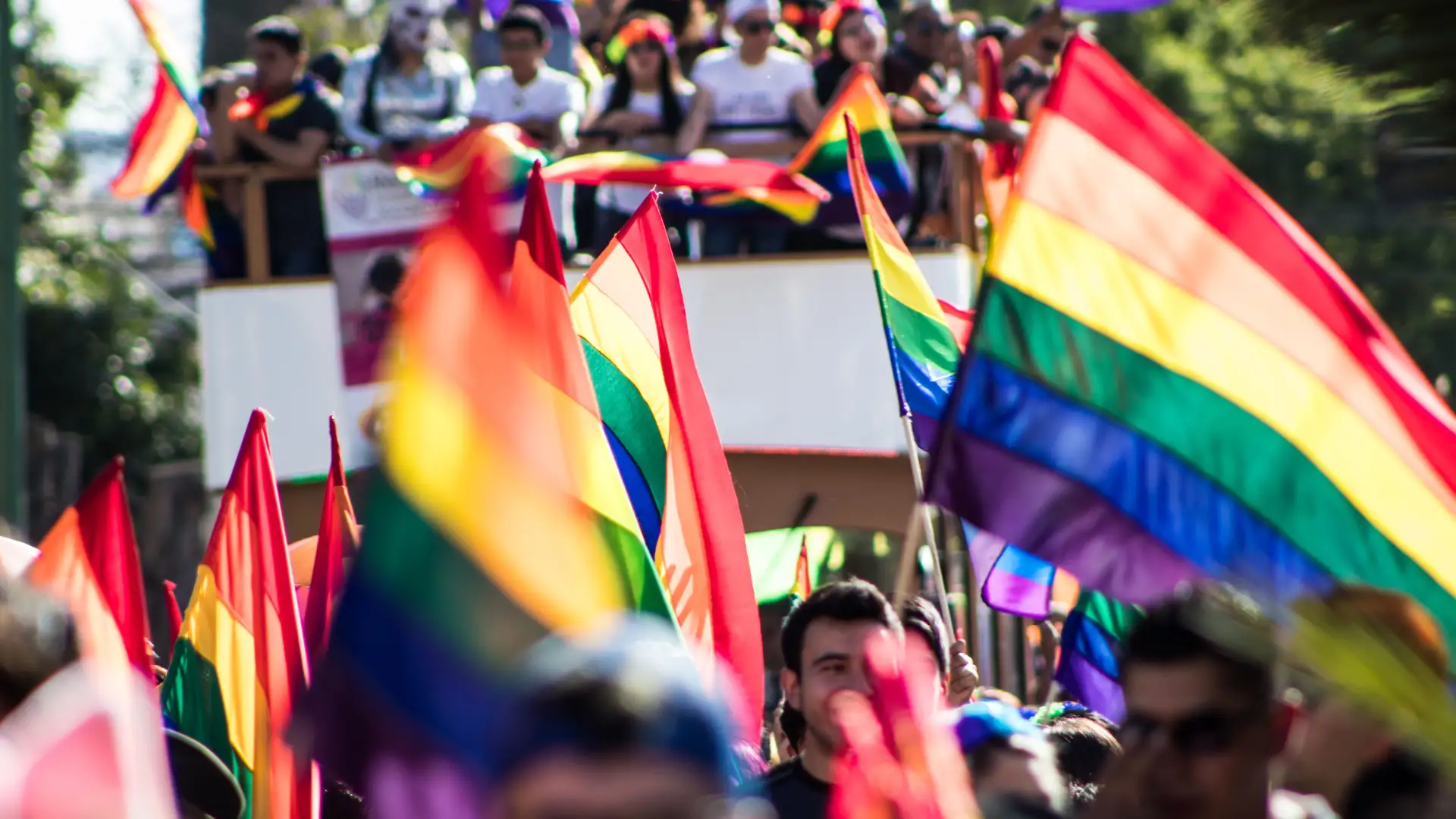
Presenter Darren Milby is set to explore the changing landscape of Pride and declining support for LGBTQ+ allyship in a new documentary for BBC Radio 4.
Titled Pride Before the Fall, the 28-minute audio feature will debut on BBC Radio 4 on Sunday (16 August) at 1.30pm, before airing again on Monday (17 August) at 4pm and Tuesday (18 August) at 5.04am. It will then be available on BBC Sounds as a podcast.
The documentary stems from the downfall of Manchester Pride. Following financial instability, the organisation entered voluntary liquidation and later went out of business.
What is Pride Before the Fall about?
The official documentary description states: “Across the country love for Pride events is waning. Councils are pulling funding, saying that cash is better spent on potholes and emptying the bins, and big companies, once eager to be associated with Pride, are withdrawing their support – and money.
“Last year the company that ran Manchester Pride went out of business owing millions of pounds. The bars of the city’s world-famous gay village on Canal Street are funding a new grassroots celebration. Across the country, Prides are smaller, less corporate and, in some cases, just cancelled altogether.”
Produced by Milby, the documentary asks why LGBTQ+ allyship seems to be weakening and whether the ongoing debate around transgender rights is contributing to the decline in support for Pride.
Producer Darren Milby, said the LGBTQ+ community are facing “strange times”
Speaking to Attitude, he said the LGBTQ+ community are facing “strange times”. “When Manchester Pride went bust last year I was really shocked that could happen in a city so well known for its scene. The more I looked into this the more I realised Prides around the country were changing in 2026.”
“Instead of big celebrations with corporate sponsors, small community Prides seem to be the direction of travel. Growing up I thought I was the only gay in my small home town, so it was impossible to think they would ever have anything like a Pride. It was quite an emotional moment attending their first Pride parade this year,” Milby continued.
“Making this programme I got to visit Prides up and down the country, chat to some lovely people and discover why Pride is changing and the conflicts that exist both outside and within the LGBTQ+ community.
“Pride may be changing but in an increasingly polarised world it seems more important than ever.”
Public concern over trans rights
Trans rights in the UK are becoming an increasingly contentious topic of discussion in politics and beyond. Some campaigners claim that certain members of the LGBTQ+ community are jumping on the anti-trans bandwagon out of fear that their own rights could also come under attack.
Worry first emerged in April 2025, when the UK Supreme Court ruled that the legal definition of “woman” under the Equality Act refers to biological sex.
This raised questions about how trans people would be able to access single-sex spaces. Following several consultations and revisions, the Equality and Human Rights Commission (EHRC) released its final guidance on how businesses should implement the ruling in practice.
The final code of practice is not law; rather, it is statutory guidance setting out how service providers should apply the ruling. It states that single-sex spaces may, in certain circumstances, be based on biological sex, meaning trans women may be excluded from female-only spaces.
More than 13,000 toilets, 5,000 changing rooms and 18,000 signs will be affected by the controversial guidance, covering spaces such as public toilets, gyms, restaurants and more.