
Show me the receipts: Examining Ann Widdecombe’s record on LGBTQ+ rights after her death
While many will remember Widdecombe for her TV appearances, she spent decades establishing herself as one of Westminster's most socially conservative voices
By Callum Wells
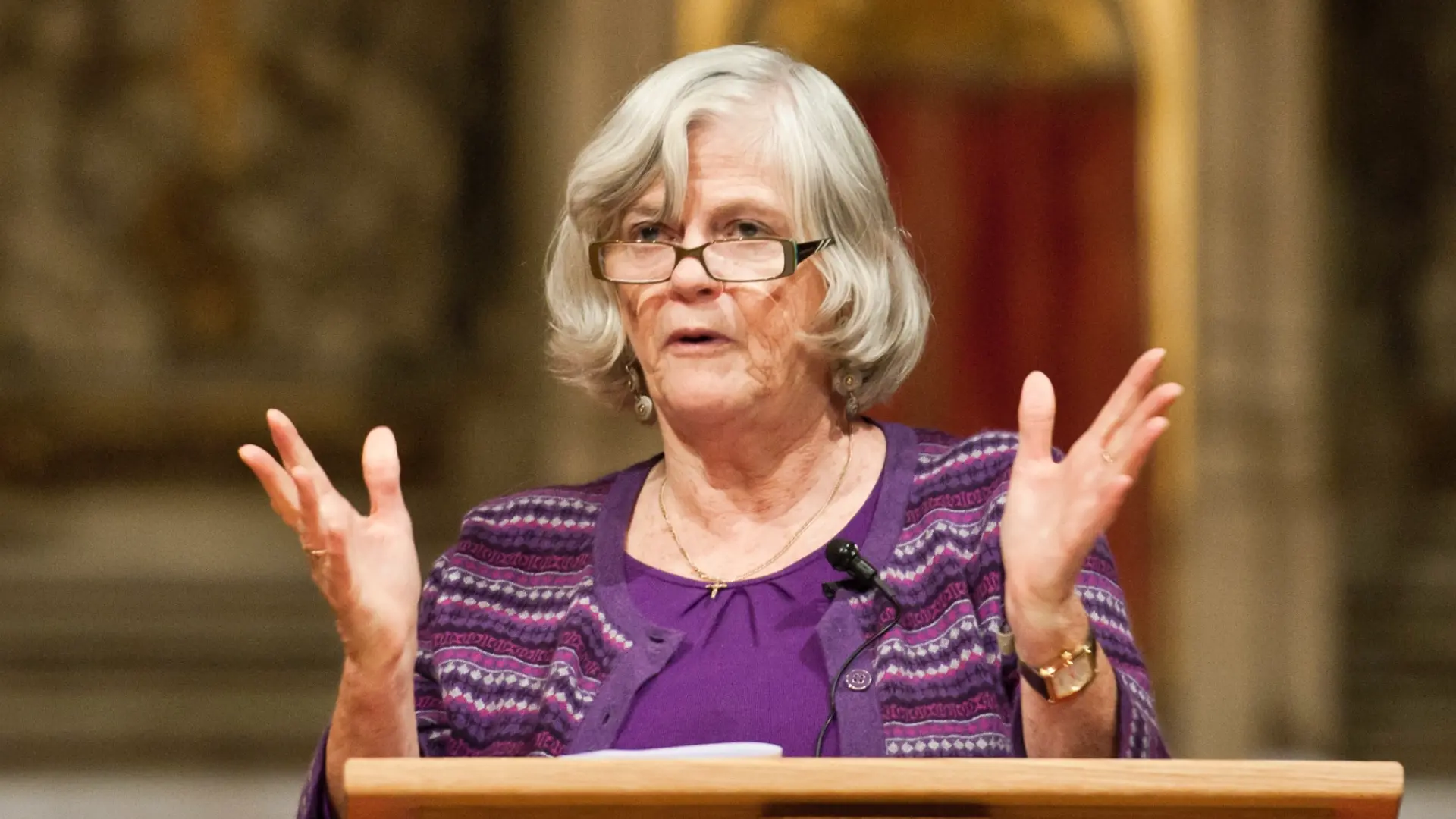
Former Conservative minister and Brexit Party MEP Ann Widdecombe, who later campaigned for Reform UK, has died aged 78.
While many will remember Widdecombe for her appearances on the likes of Strictly Come Dancing and Celebrity Big Brother, she spent decades establishing herself as one of Westminster’s most socially conservative voices. A devout Roman Catholic, she consistently argued that her positions on LGBTQ+ issues were rooted in religious conviction rather than prejudice.
Although Widdecombe maintained that gay people should never face violence or criminalisation because of their sexuality, her parliamentary record tells a different story when it came to LGBTQ+ equality.
Let’s examine the receipts.
1967 ✓
Although she would later oppose almost every major expansion of LGBTQ+ rights, Widdecombe consistently maintained that homosexuality itself should not be a criminal offence.
She later said she supported the partial decriminalisation of sex between consenting men introduced by the Sexual Offences Act 1967, drawing a distinction between legal tolerance and what she saw as endorsing homosexuality.
1998 ×
As Labour moved to equalise the age of consent for gay men from 18 to 16, Widdecombe fiercely opposed the change.
Writing in the Mail on Sunday, she declared: “One of the sundry horrors for which this Government is likely to be remembered will be that it gave its imprimatur to sodomy at 16.”
During parliamentary debates, she argued she did “not believe that issues of equality should override the imperatives of protecting the young.”
The legislation passed in 2000.
1999 ×
During a BBC News webchat, Widdecombe made one of the defining statements of her political career: “I do not think that homosexuality can be promoted as an equally valid lifestyle to marriage.”
She added that she opposed violence or discrimination against gay people but maintained that same-sex relationships should never be regarded as equivalent to heterosexual marriage.
2000 ×
Widdecombe voted against repealing Section 28, the legislation prohibiting local authorities from “promoting homosexuality”. LGBTQ+ campaigners argued the law left teachers afraid to support queer pupils and contributed to widespread stigma in schools.
Section 28 was repealed in England and Wales in 2003 despite her opposition.
2002 ×
Widdecombe opposed plans to allow unmarried couples, including same-sex couples, to adopt children.
She argued that children deserved the “stability” and “security” that marriage provided, adding: “If two people really want to adopt… they should want to marry.”
As same-sex marriage was not legal at the time, her position would have prevented gay couples from adopting together.
2004 ×
Widdecombe voted against the Civil Partnership Act, which gave same-sex couples legal recognition for the first time in the UK.
2007 ×
She voted against regulations prohibiting discrimination based on sexual orientation in the provision of goods and services, arguing they placed an unfair burden on people with religious objections.
2008 ×
Widdecombe voted against measures extending fertility treatment rights to lesbian couples.
2012 ×
Writing in the Daily Express, Widdecombe argued there should be “no ban” on so-called conversion therapy if adults freely chose to undergo it.
Major UK medical and psychological organisations have since concluded there is no credible evidence that conversion practices can change sexual orientation and have warned they can cause significant psychological harm.
2013 ×
As David Cameron introduced same-sex marriage, Widdecombe became one of the legislation’s most prominent Conservative critics.
She told the Guardian: “The state must have a preferred model,” and argued that marriage should remain centred on relationships “generally open to procreation.”
The Marriage (Same Sex Couples) Act passed later that year.
2017 ×
Following Theresa May’s support for reforming the Gender Recognition Act, Widdecombe criticised proposals to make legal gender recognition easier.
She warned on ITV’s After The News: “You get men in women’s prisons or men in women’s refuges,” also arguing the reforms would confuse young people.
2018 ×
Appearing on Celebrity Big Brother, Widdecombe repeatedly clashed with drag performer and LGBTQ+ advocate Courtney Act over same-sex relationships and gender identity. Their exchanges became one of the defining storylines of the series and prompted widespread criticism from viewers, who accused Widdecombe of expressing outdated and harmful views.
Writing that year for the Daily Express, Widdecombe described trans-inclusive policies as “the prevailing lunacy”, claiming Britain had “suddenly gone mad over transgenderism”.
2019 ×
Following her election as a Brexit Party MEP, comments she had made opposing a ban on conversion therapy resurfaced.
Asked by Sky News whether people could change their sexuality, she replied: “The fact that we think it is now quite impossible for people to switch sexuality doesn’t mean that science might not be able to produce an answer at some stage.”
The remarks were condemned by LGBTQ+ organisations, politicians and healthcare professionals.
2020 ×
After the BBC announced Strictly Come Dancing‘s first same-sex partnership in Nicola Adams and Katya Jones, Widdecombe criticised the decision, telling The Times: “I don’t think it is what viewers of Strictly, especially families, are looking for.”
The BBC has since continued featuring same-sex pairings, several of which have received widespread praise from viewers and critics.
VERDICT
Widdecombe always maintained that her opposition to LGBTQ+ equality stemmed from deeply held religious beliefs rather than hostility towards gay people. She supported the decriminalisation of homosexuality and repeatedly said nobody should face violence because of their sexuality.
Beyond that, however, the receipts tell a remarkably consistent story.
From equalising the age of consent and repealing Section 28 to civil partnerships, equal marriage, conversion therapy reform and LGBTQ+ visibility in popular culture, Widdecombe opposed almost every significant milestone in Britain’s journey towards LGBTQ+ equality.