
Stuart Price on Madonna and the making of Confessions II: ‘She’s just not like anyone else’ (EXCLUSIVE)
Madonna collaborator Stuart Price aka Confessions II co-creator, musical director and tour producer paints Attitude an intriguing portrait of what it’s like to work with the Queen of Pop and the inspiration behind her new album
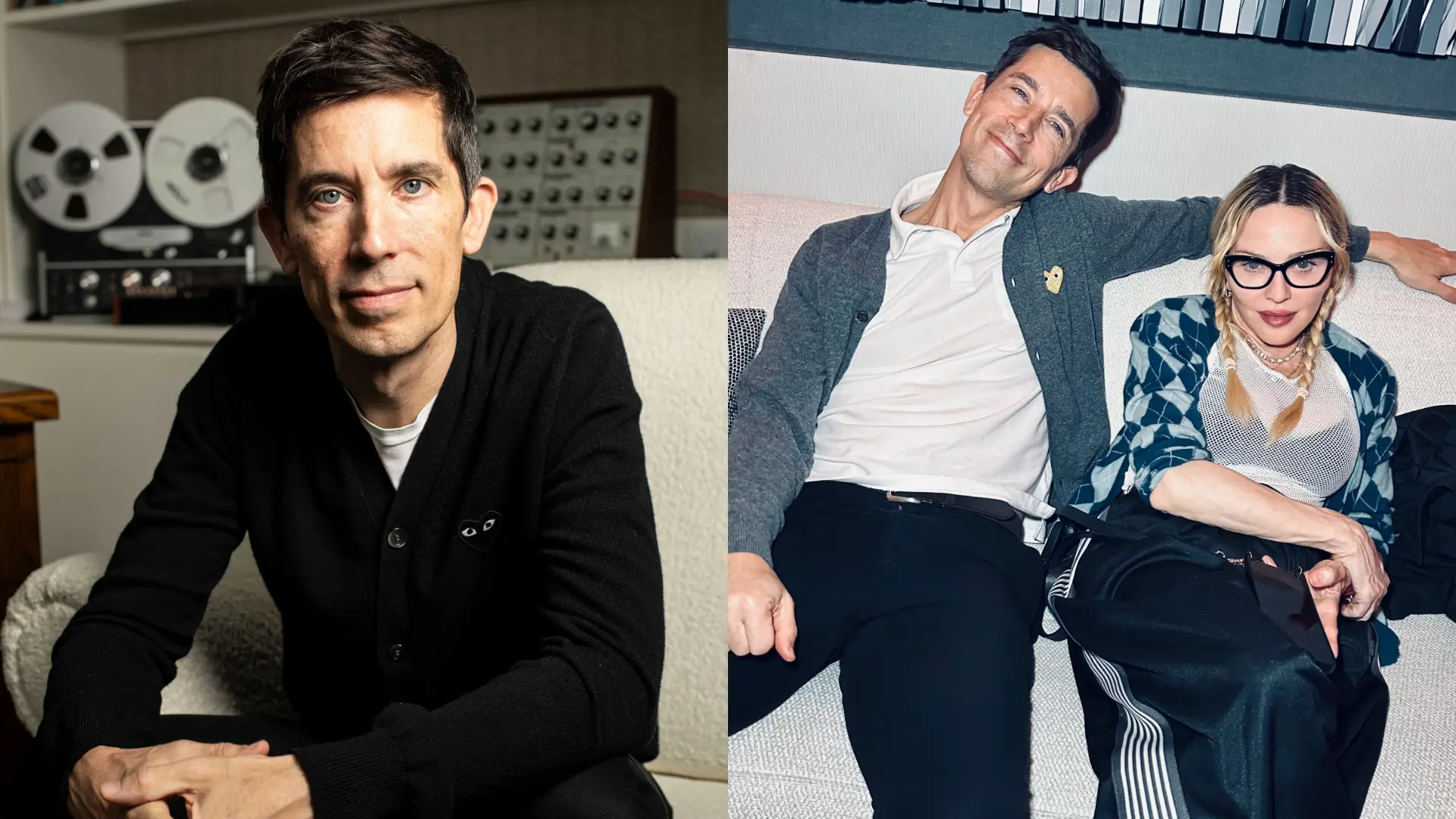
I have officially taken the seat of Madonna, the Queen of Pop. Inadvertently, that is. “She was in here last night; we’re working on something. Actually, you’re sitting in her seat,” he says, pointing to my spot on the end of a long fluffy white sofa in the loft of his Notting Hill production studio.
We are in the hub of where one of the most anticipated albums of the year – for the gays, quite possibly of the past 20 years – was not just recorded, but formulated, tweaked, tightened and then first let loose into the world. It is the birthing place of Madonna’s most intimate and vulnerable record in years. I know this because I have heard the record. And by the time you are reading this, it’s likely you will have too.
“She is as forward-facing today as ever. It’s just that there’s a willingness on this record to look at that experience of life that she had,” Price says, the gentility of his Reading, Berkshire, upbringing coming through in every carefully considered word, as he explains how, post-Celebration tour and going into creating Confessions II, Madonna was ready to reflect on her incomparable life experience, artistic hunger, and that extraordinary discography.
This is more than just a sequel album; it’s an authentic and natural progression of the Confessions concept. It doesn’t just take the core elements of the original album to create new songs, but pushes the sound further, faster, deeper… and deeper… the further you go into the album, from Madonna’s first invitation on track one, ‘I Feel So Free’, to “Come on, meet me on the dancefloor / Come here, baby, I can give you much more”, through to the club-ready beats that call for us to disconnect from our devices and reconnect on a more spiritual, sacred level that the ritualistic process of dancing en masse has provided for thousands of years.
The energy builds, builds and builds further, seamlessly – as per Confessions on a Dance Floor – from one song to the next. From there, Confessions II takes us into Madonna’s life experiences of recent years in which she sings about her brother Christopher – who died of cancer in October 2024 – on the intimate ‘Fragile’, and reflects on her own life journey on emotive album closer ‘L.E.S. Girl’. This is the Madonna you have always known, but unlike you have heard her before.
What words come to mind when somebody says Madonna to you?
First and foremost, a true artist. She’s so singular. She’s so dedicated to her art. I often say one of the reasons I believe in Madonna’s authenticity is there’s no off switch. There’s no point at which she just sits down and eats pizza and clicks on Netflix. It just doesn’t happen. She’s completely honed at all times. Her mind is always creating, studying, reading.
What was the first Madonna song that you fell in love with?
Oh, wow. A Madonna song that gave me that effect where it pulled my neck in a completely different direction to everything else that was going on was ‘Justify My Love’. It has that unique thing in a record where the video was banned. I always think that’s a wonderful thing to happen for the song because it guarantees attention. I remember ‘Justify My Love’ coming along – there was just an inexplicable curiosity in the music because it didn’t sound like anything else. It didn’t have a classic vocal performance. It had an amazing atmosphere to it. That’s really where I started to pay attention to Madonna as a transgressive rule-breaker. She’s just not like anyone else.
Did you ever see her live before you worked together?
No. I mean, actually, I would go so far as to say that I wasn’t deeply aware of her body of work until we started to work together.
You first worked together on the Drowned World tour.
I was DJing and remixing a lot. One of those people that I remixed was Mirwais, who [had] just produced Music. I’d been to his studio in Paris, and he saw that I could play piano and guitar and asked if I would go to LA and rehearse. All the music that Mirwais made with Madonna was simultaneously sophisticated and simple at the same time, and I think that he felt that in a live setting the music could quickly turn into something too vague. He said, “Will you go and play keyboards?” So, I went to LA to rehearse with her. I think that I was the most unqualified musician in the room, but Madonna appreciated the weirdness and what I did with the music. Really quickly, she said, “Why don’t you do the whole thing?” In her very instinctive way, she completely rebuilt how she was going to do the Drowned World tour. So, we started touring first, and then we did the Re-Invention tour. After which, she said, “Why don’t we just make some new music together?” And that’s really where Confessions on a Dance Floor started.
When the call for Confessions II came, what thoughts came to mind?
Well, I knew we were doing Confessions II when Madonna posted on social media saying, “Who’s ready for Confessions II?” We had a long gap of maybe 10-plus years of not working together, and she announced that she was going to do the Celebration tour, and I thought that’s such a good thing to do for her, to pull together all this amazing series of eras and her body of work. I wrote [to]her and I said, “Congratulations on the tour announcement.” And she said, “I was just thinking about you. I need a musical director; can we talk about doing a Celebration tour?” Probably two weeks later, I went to New York; we met, and we started going through the set list, and really quickly we picked up where we left off. I think the most great creative partnerships are not hallmarked by why did you stop working together, they’re hallmarked by how quickly can you pick up where you left off? The only thing that happened is there was, like, a decade of living happening between us working together again.
We spent probably a year and a half recording the [Confessions II] album. So much happens in a year and a half in someone’s life, especially for someone like Madonna, who is just exposed to so many experiences, in some parts due to the number of people that she comes across. Also, her life has rollercoaster-like elements to it. She loses people who she’s known for a long time, or she finds new art that she loves. She’s such a consumer of new and old art. There’s always so much going on, but that doesn’t always regurgitate itself into an obvious pop song. Sometimes it just presents itself in something way deeper than that, or something that reminds her of previous times in her life and then she starts writing about it.
Which elements of Confessions on a Dance Floor did you want to continue, and what new ideas did you want to bring into the space? Because it couldn’t just be a repetition – it needed to have the bones of the first album but to also be an evolution.
To me, the sound of Confessions is the sound of the two of us working together. There’s a certain chemistry in that sound. We have a real shared musical sensibility. We tend to like the same thing stylistically, and why that’s really helpful is because it means you have a musical shorthand. Instead of doing too much talking about what we’re going to do, it was just more action and actually just making music. All the music on Confessions II came very instinctively. It didn’t come from ever saying, “What kind of song do you want to do today?” It was just like with Confessions I, every day something new would just spill out, and that could be just starting on a guitar. ‘One Step Away’ happened because I was just playing an old drum machine and for the sake of just having fun, and Madonna was like, “This is really good.” She was sitting on the couch and she was like, “This is really good. Just keep playing it,” then she began dancing. I thought, ‘This is a really fun moment to be in the studio. This reminds me of being on stage with you.’ But then she said to put the microphone on, and she just did a complete one-take performance which became ‘One Step Away’.
One of the things that we were so keen to create on this record was this immersive feeling of connection – of what clubs are, why they’re important, how they let people express themselves, how they let people find new people. They’re ultimately very liberating spaces. One observation that we’ve made about this era of music is that DSPs [digital service providers] more or less force you into making individual songs; like, your song can be for two and a half minutes and then it must stop. The next song is two and a half minutes and then it must stop, right? And we wanted to go against the grain. Part of the reason for making a continuously mixed album is because it’s somewhat against how DSPs want you to present music. Madonna was always very rebellious in that sense, so to her having the record also be a continuous thing, you know, it just goes against the grain of what is expected.
The theme of identity and ascertaining your place in the world today is very prominent on this record.
You’re not going to find a better advocate for individualism than Madonna. Literally, one of Madonna’s core messages is her tireless advocacy for both her individualism but also encouraging other people to show their individualism as well. It’s a core part of her artistic offering to the world. I think that’s why on the Celebration tour there was definitely some kind of reawakening where she saw what she represents to people in their life. I think that feeling gave her confidence creatively to be both expressive and vulnerable on this record. Lyrically, she is being quite vulnerable, and that’s a bold thing to do, and you can only do that from a place of security and comfort. An artist has to feel that they are able to be themselves unapologetically without fear of embarrassment or failure. I think that some of those themes of this record were a byproduct of her connecting to the audience on tour. We definitely look at this record as a conversation with the audience as much as it is a static moment in time. And what I mean by that is we had this amazing window where we finished the album, started to promote it – the vinyl is still being pressed, the cassettes and digital masters are still being made. When we played at [nightclub] The Abbey in LA [to debut tracks from Confessions II], we made an edit of ‘Love Sensation’, where we had a bigger breakdown in it for a club. We finished doing that show and we went, “Well, let’s just make that the record,” so that’s what’s appeared on ‘Love Sensation’. The breakdown of the song now is because we were trying to rinse it out for that night! The live arrangements of songs that we did on the Confessions I tour have got extra things in them that we end up going, “Oh, that’s really good. I wish that could have been on the record.” This time, we’ve been able to incorporate those things.
At Times Square, there were things that we did in ‘Bring Your Love’ that she loved that became part of the remix. I love that we’re in an era where you can have a new experience, put it on record and release it.
Why for you was Sabrina Carpenter the right artist to be on that record? Because Madonna doesn’t collaborate much.
No, absolutely. Sabrina’s been very open about the influence Madonna had been [on] her. They have very different paths into music, but I think Sabrina was very open that Madonna was always an idol of hers and that she wanted a career like [hers]. Sabrina naturally had this admiration for her, and they were already in touch. There were a couple of things that we thought about on this album which was how do you spread the message? On Confessions I, we had ‘Hung Up’, which had ABBA as a conversation point. On this, the idea of doing a collaboration with someone like Sabrina is in itself a talking point, that creates curiosity, but it only works if there’s some kind of natural connection between the two people.
And the truth is, you just don’t know until you go into the studio. ‘Bring Your Love’ is not really a happy pop song. It is about saying “fuck you” to doubters. The core message of that song is, “If you don’t understand why I do what I do, fuck you.” That people doubting Madonna is something that she has a hard time with. But I think the duality of both the Sabrina version and Madonna’s remix version is the beauty of context around lyrics. That it can either be about Madonna and Sabrina’s shared experience in the music business, or it can be very specifically about Madonna’s sense of what it’s like to be doubted and to be a fighter. The beauty of lyrics is an ambiguity; you should never write a lyric that’s too on the nose. You always need to write and leave enough room for interpretation.
Stuart Price’s full interview will appear in issue 371 of Attitude magazine, on sale in print and digital on 3 July. Pre-order Attitude magazine issue 371 in print now, or in digital on the links below on Apple News+ and the Attitude app.