How returning to Pakistan after coming out challenged the values I was raised with
"My return to my family’s roots was supposed to be a confrontation, but it was a liberation," writes Zafar
Growing up in a very insular Muslim community in east London, my life was dictated by tradition. I am gay and non-binary, but for my family, I was simply “a son” — the bearer of the family name, the destined breadwinner. The first two decades of my life were spent carrying the crushing weight of those expectations, all rooted in the paralysing fear of, ‘What will people say?’
My eventual coming out was an act of survival, a moment of bravery against a culture that demanded I marry a woman while hiding my truth on the side. But it was a trip to Pakistan last year — a country I hadn’t visited since I was a child — that gave me the ultimate perspective on my life in London. I realised that the rules I was forced to live by were based on a frozen, outdated memory of the Motherland. I was fortunate enough to travel with my Amijaan [mother], and care for her on our beautiful trip.
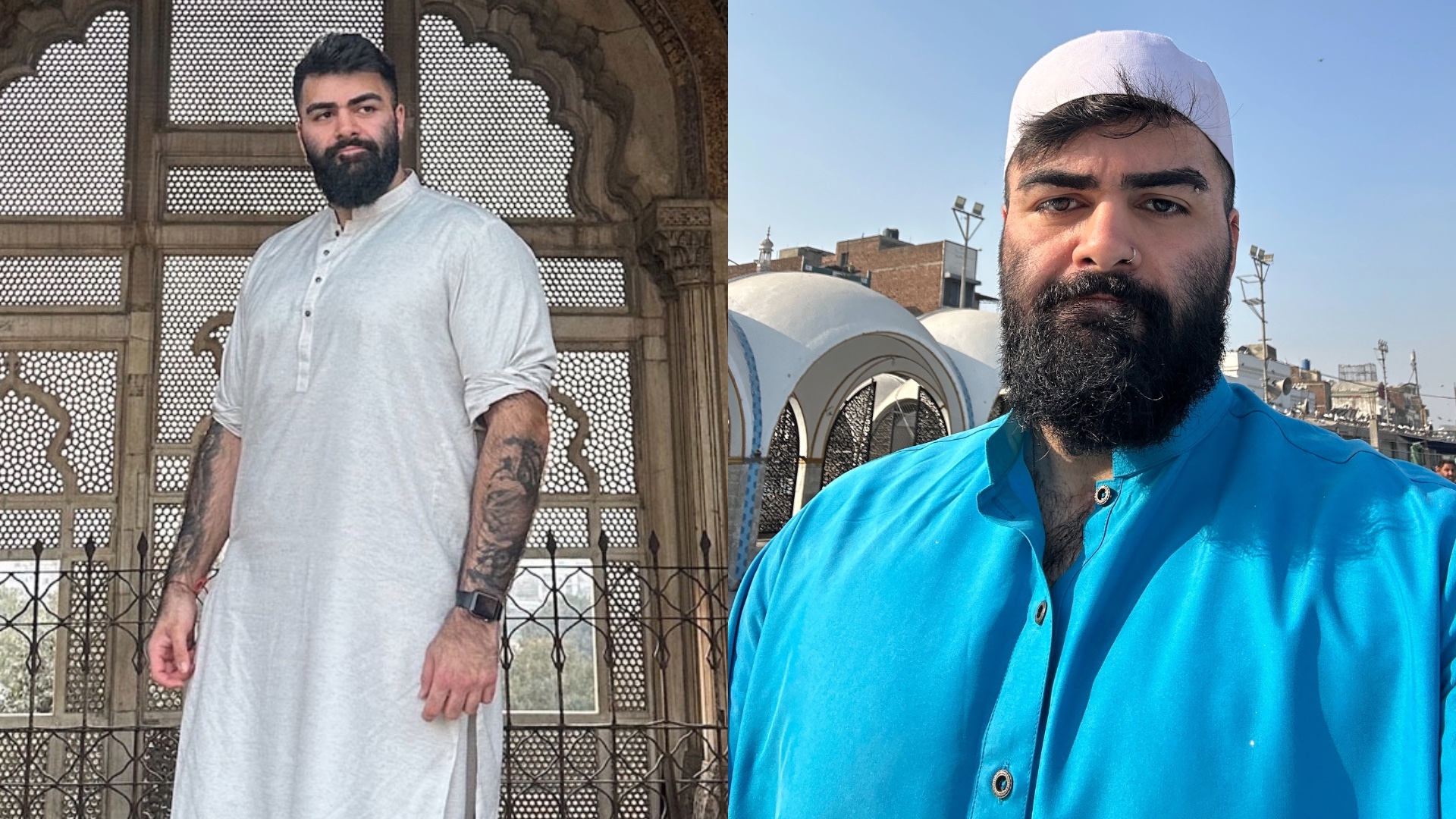
Before I left, I worried about safety. At six foot two and masculine-presenting, I know I benefit from a privilege my shorter, more femme counterparts would not. But I refused to hide. I was going to be myself — piercings, tattoos and all.
“What truly surprised me was the contrast between the progressive reality of Pakistan and the mindset I grew up with in London”
Walking out of Islamabad airport was a moment of pure theatrical absurdity. There were thousands of people, and every head turned. I was an anomaly. My mum immediately said, “I told you to cover your arms — look, they’re all staring.”
But to the driver coming to collect us, all I had to say was: “Look for the guy with the tattoos.” He found us instantly. I realised I could turn their staring into a source of amusement — even an act of rebellion. In a local pharmacy, a woman was subtly trying to video me. I looked her in the eye and said in Urdu, “Auntie, just come take a selfie with me if you want.” She ran away.
This confidence didn’t come from a lack of fear, but from the conviction that my authentic self — the one who wears clothing that feels comfortable and who has rejected gender norms — doesn’t hurt anyone.
What truly surprised me was the contrast between the progressive reality of Pakistan and the mindset I grew up with in London. I saw young, mixed groups of men and women freely enjoying chai together in public. I saw an openness in certain cities. My family here had clung so tightly to a traditional past that they had become more culturally rigid than the country itself. They had frozen Pakistan in time, and that outdated idea became the suffocating template for my own life.
“I found that freedom is not about fleeing your culture; it’s about going back and proving that your existence is entirely valid”
Of course, the queer experience remains underground and repressed. Using Grindr revealed a sea of faceless profiles — the only face was mine! I had to take my picture off after people started messaging me, saying they’d seen me in a rickshaw or at my hotel. The few private encounters I had were heartbreaking, showing me the deep isolation and shame that men who cannot live openly are forced to endure. It was a potent, painful reminder of the life I had escaped while living in London. The parallels dictated by culture were insane.
But even within that repression, I found a fleeting sense of connection. I realised that by simply existing — a visible, tattooed, out non-binary person — I was subtly challenging the narrative. When I visited a mosque, a group of school kids followed me. One asked about my tattoos. My mother told them that tattoos were bad. But I told the curious kid, “Don’t listen to her. If you want to do it, think about it, but don’t let anyone tell you what you can or can’t do.”
My return to my family’s roots was supposed to be a confrontation, but it was a liberation. The heavy, unspoken rule in my community is to worry about what others think. That fear forced my parents into an unhappy life and was supposed to force me into a closeted one.
Instead, I found that freedom is not about fleeing your culture; it’s about going back and proving that your existence — in all its queer and non-binary complexity — is entirely valid, no matter how much the world, or your family, insists on pulling your eyes away.
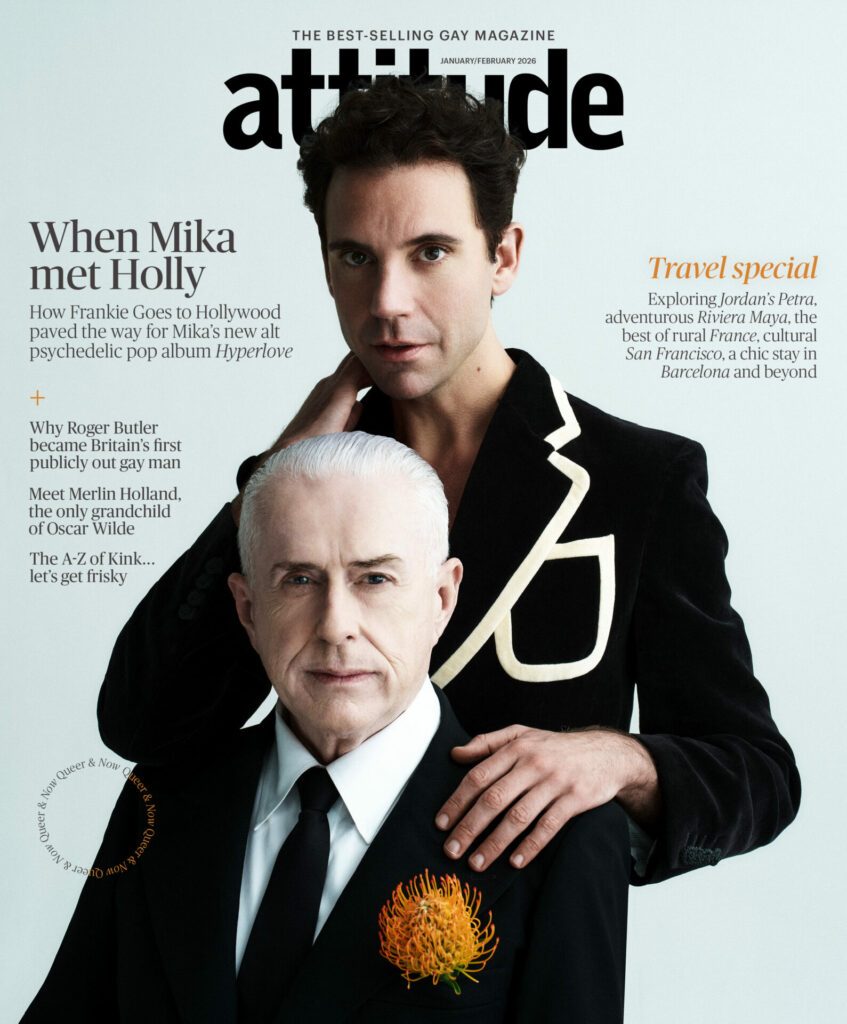
This feature appeared in Attitude’s January/February 2026 issue.
Subscribe to Attitude magazine in print, download the Attitude app, and follow Attitude on Apple News+. Plus, find Attitude on Instagram, Facebook, TikTok, X and YouTube.