
Hannah Einbinder on how queerness shaped Teenage Sex and Death at Camp Miasma (EXCLUSIVE)
The Emmy-winning actor reveals the real-life queerphobia behind the new film, working with icon Gillian Anderson and why she’s “totally” up for a sequel
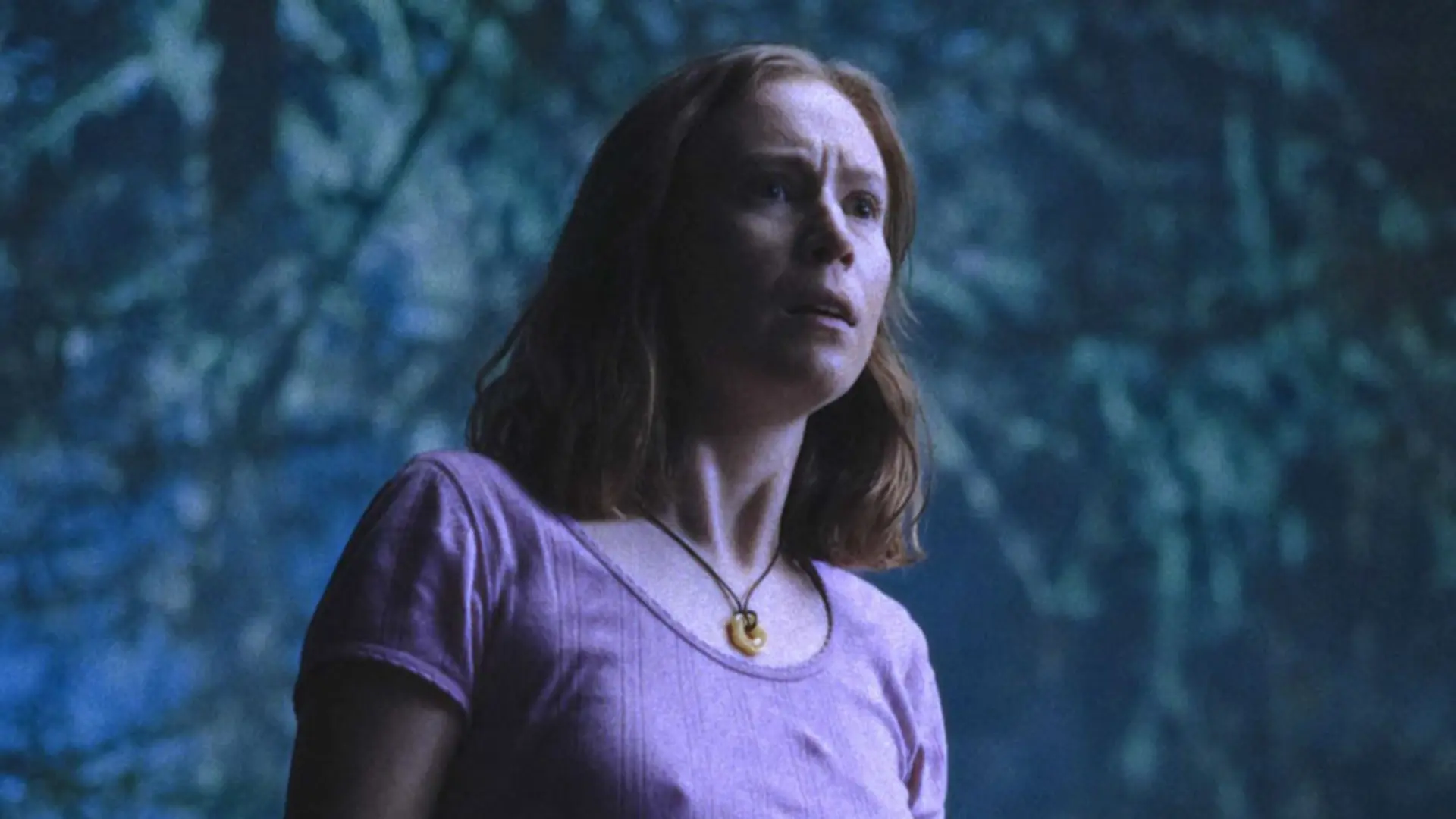
Ravenous is the natural state of the horror buff, so scarce are notable new entries to the canon in the modern age. By which, we mean original, high-quality and genuinely scary additions. Let’s be frank, there are barely a handful of these a year. (Few came close to last year’s best, Sinners and Weapons, for example.) In that context, this summer’s idiosyncratic slasher Teenage Sex and Death at Camp Miasma, starring actor Hannah Einbinder, has arrived at just the right time.
“Silent Hill, Christine, Misery, The Exorcist and The Thing,” are Einbinder’s excellently chosen, one-of-a-kind faves from the genre. “I didn’t realise how much of a horror fan I was until I did this film,” adds the 31-year-old. Directed by Jane Schoenbrun, the movie has scored a bloody brilliant 96 per cent “Fresh” rating on Rotten Tomatoes, and also stars X-Files icon Gillian Anderson, plus Patrick Fischler from David Lynch’s Mulholland Drive (if you know, you know) in a supporting role. In short, this film sells itself.
“My biggest blind spot in horror was actually the slasher sub-genre,” says Einbinder, who won an Emmy last year for her role as comedy writer Ava in HBO’s Hacks. “Jane Schoenbrun gave me a great education there.” (Schoenbrun, if you didn’t know, directed 2024’s I Saw the TV Glow, a mind-blowing exploration of the consequences of denying one’s truth, told through a transgender lens. Anyone who’s danced with denial should find it terrifying.)
Teenage Sex and Death at Camp Miasma is inspired by the law of diminishing returns of almost all horror sequels – think Nightmare on Elm Street’s nine instalments and Halloween’s 13. In it, director-on-the-rise Kris (Einbinder) is tasked with rebooting the beleaguered Camp Miasma franchise, with which she’s obsessed. The challenge leads her to track down the original’s reclusive “final girl” Billy (Anderson, exuding Old Hollywood glamour) in an attempt to lure her back. Life imitates art, however, when it turns out Billy’s wilderness-enclosed home is the set of the first film.
As a physical attraction develops, Little Death (played by Jack Haven) – the vengeful spirit of a trans teen bullied and drowned by peers in a nearby lake – begins to stir. As will your rage, when this major theme – over the way our community has been asphyxiated over the past 10 years – bleeds through the screen.
That said, Schoenbrun’s decision to cast three fierce queer actors in the three main roles – Einbinder’s bisexual, Haven is trans and Anderson has spoken publicly about dating women – is an aggressively queer power move that gives us hope. Moreover, says Einbinder, “I think it is a really universal and relatable concept [for everyone]. Under all of the pastiche and artifice, all of the layers of filmmaking, the core is very relatable.”
Here, the LA native discusses the “beautiful” shoot, her personal experiences of queerphobia and “the embarrassment of riches that has been Hacks and then this.”
Attitude: Had you seen I Saw the TV Glow before this? Did it inform your reaction to the script?
Hannah Einbinder: Understanding Jane’s work is often a vehicle for their experience. Going into reading Teenage Sex and Death at Camp Miasma, I definitely felt, ‘This is the evolution, where they’ve landed, where they’ve come to.’
I feel like everyone has a reckoning around personal truth when they see I Saw the TV Glow. Did you?
I think it was really challenging. When people see it, it shakes them in one way or another. I saw it initially in [a cinema] and then went back to watch it by myself much later. For Jane, it symbolises their transness, but I think for most people who are queer, it does symbolise that area, that moment of questioning or reckoning when you first start to come to terms with the fact you’re not who you thought you were. What does that mean? It can sometimes be painful, especially when your identity is not a binary one, when you don’t have an answer.
There are binary queer identities – I just don’t have one of those. And because of that lack of certainty, you have this thing of… It takes a long time, in my experience, to accept that there isn’t an answer.
Then having that ambiguity take a form, in this case a film, is relieving, because it gives language to something people didn’t have language for before.
Exactly.
What was your reaction when you read the Camp Miasma script?
Oh God, I was just blown away. I could never have anticipated how dazzling the visuals would be, but even in reading the script, you get a sense that it’s going to be this new world. It far exceeded anything I could have imagined.
In my first read, it’s just like watching the movie. Second read, I was homing in on Kris. Again, with Jane’s work, as I’ve described, it forces the viewer to confront themselves and maybe something they don’t want to see. I felt this was the most natural follow-up to TV Glow, because in reading it, I was like: ‘Fuck. Again?! You’re doing this to me again, Jane?! Goddamn it!’
But, ultimately, of course I’m so glad the film exists. Even if I wasn’t in it, I would feel, watching it, that I’d get that same sense of: ‘Is this true for me? It is true for me! Now I have to kind of reckon with that.’ And that’s my highest hope for viewers, if they haven’t yet dealt with the feelings of shame and dissociation, that it inspires them too.
What about The X-Files? Did you watch that growing up, and did you watch any old episodes when you found out you’d be working with Gillian?
I did. I had to stop because I was scared I’d be too starstruck! ‘I’ve got to put this down.’ Too parasocial. I literally restarted it and watched the first three and was like, ‘I need to step away.’
What does it mean to you to be part of a film that is responding to this moment in LGBTQ+ history in this way?
It means everything. Especially in America, but globally of course, our community is under violent attack. Especially the trans community. I really see this film as – sorry to use this language – a radical act of resistance and queer joy. It is meant to grapple with our experience – frankly, the human experience in general. But it’s also meant to depict a happy ending for us, which is not so common. We’re constantly… It’s funny because there’s this trope of, like…
“Bury your gays.”
“Bury your gays.” Obviously, we are killed, but it’s good! We’re not really killed. “Just pretending!”
This is an excerpt of a feature appearing in issue 372 of Attitude magazine, on sale in print and digital on 27th August 2026. Pre-order Attitude magazine issue 372 in print now, or in digital on the links below on Apple News+ and the Attitude app.