
Attitude revisits Frank Ocean’s blond as the genre-defying album turns 10
While Channel Orange felt like a warm, sun-drenched drive through Los Angeles, blond felt like the version of that same drive at 3am
By Callum Wells
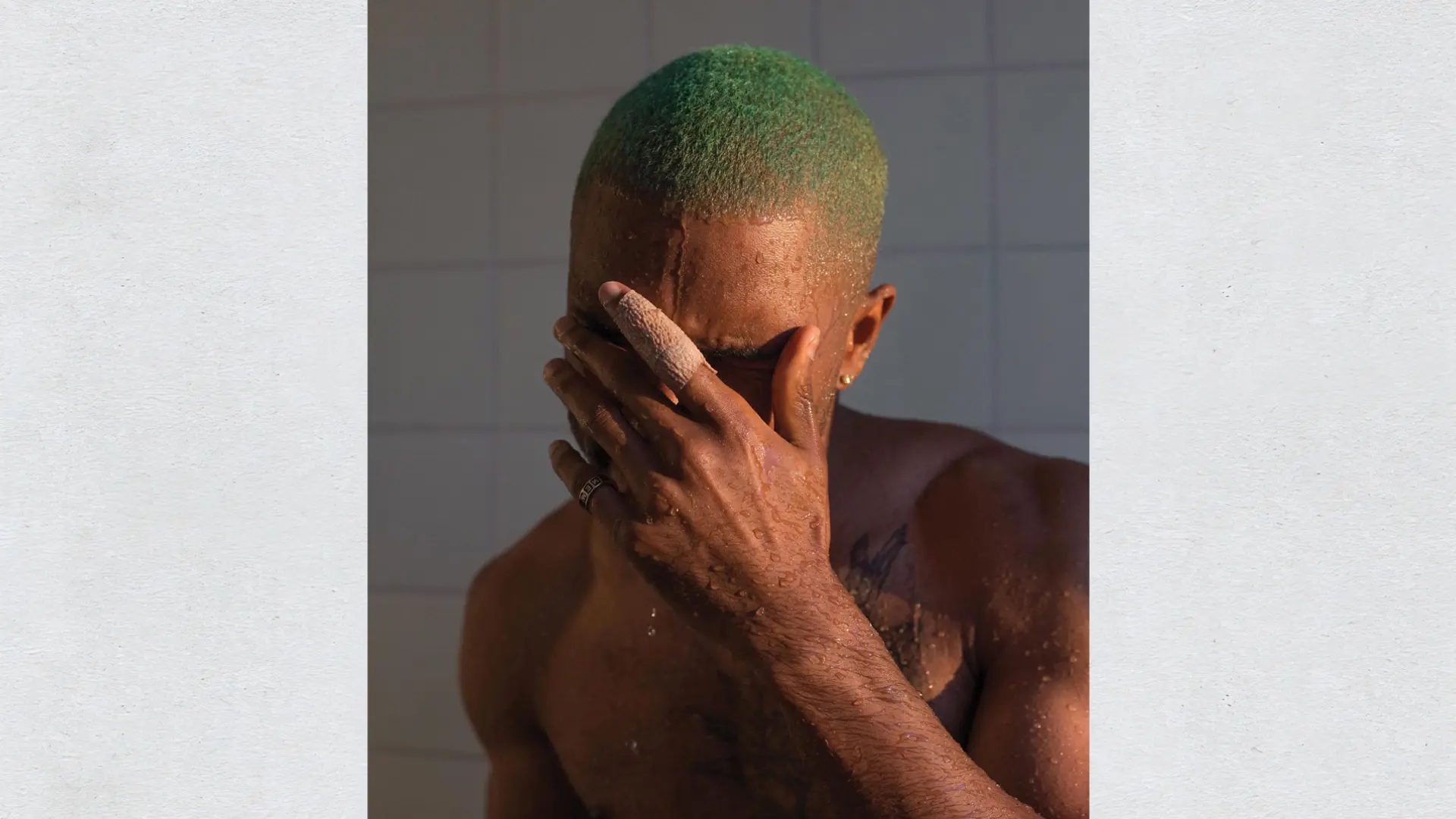
It’s hard to believe it’s been a decade since Frank Ocean released blond. Back in August 2016, the album didn’t arrive with the usual fanfare. No big singles, no glossy rollout, just a couple of billboards and then… there it was. And, somehow, that made it land even harder.
While Channel Orange felt like a warm, sun-drenched drive through Los Angeles, blond felt like the version of that same drive at 3am – half-remembered and slightly out of focus. The guitars are warped, the drums are barely there, and Ocean’s voice drifts in and out like he’s not entirely sure he wants to be fully heard. It’s intimate in a way that almost feels intrusive, like you’re listening to someone’s private voice memos set to music. As Ocean himself put it in a 2016 interview with the New York Times, “How we experience memory sometimes – it’s not linear. We’re not telling the stories to ourselves – we know the story; we’re just seeing it in flashes overlaid.”
The short interlude ‘Be Yourself’ is quietly one of the most touching moments
Tracks like ‘Ivy’, ‘Pink + White’, and ‘Self Control’ still hit hard. On ‘Ivy’, the youthful optimism of past romance is literally distorted, the pitch of his voice warping into a painful, childlike register at the track’s chaotic, screaming end. ‘Pink + White’, backed by Pharrell’s flawless production and Beyoncé’s ethereal, uncredited backing vocals, offers a sunburst through the heavy clouds of grief. Meanwhile, ‘Self Control’ builds from a gentle acoustic strum into a devastating, layered choral crescendo that serves as an anthem for the unrequited and the poorly timed.
Yet, amid these towering compositions, the short interlude ‘Be Yourself’ is quietly one of the most touching moments. Over a soft, dreamy beat, Rosie Avalon (the mother of Ocean’s childhood friend) simply says: “Don’t ever worry about being yourself. Because that’s the only person you can be,” as she warns him against using drugs.
blond‘s influence ripples through artists like Steve Lacy and Tyler, the Creator
What made blond feel quietly revolutionary was how unapologetically soft and vague it was. Ocean never spelled anything out. He didn’t need to. The queerness on this record isn’t in big statements or anthems; it’s in the texture – the emotional openness, the fluidity, the way desire and heartbreak and nostalgia blur together without needing labels or explanations. ‘Good Guy’ drops a casual same-sex hook-up reference like it’s the most normal thing in the world, because for him it clearly was.
The production is messy in the best way: layers of distortion, chopped-up samples, and those gorgeous, fragile guitar lines that feel like they could fall apart at any second. Contributors like Vegyn, Rostam Batmanglij, James Blake and Jon Brion helped craft the sound of someone deliberately rejecting the polished R&B formula everyone expected him to follow. Instead, he made something that felt like a mood, a memory, a feeling you can’t quite name.
A decade removed from my iPhone 5c’s speakers, and with no new album since, blond still sounds like nothing else. In an era where most artists are chasing streams and virality, Ocean doubled down on mystery and restraint, and it paid off in cultural staying power. The album didn’t scream for attention – it whispered, and millions of us leaned in closer to hear it. Its influence ripples through artists like Steve Lacy and Tyler, the Creator’s later solo work, and countless indie-pop copycats.
It’s easily one of the most important and influential albums of the past 10 years
It’s become one of those records that marks a moment in time but somehow keeps revealing new layers. Every re-listen yields something new: a hidden harmony on ‘White Ferrari’, a devastating lyrical double-entendre on ‘Seigfried’, or the heartbreaking realisation of how deeply the weight of ageing is woven into ‘Futura Free’. For a lot of queer listeners especially, it felt like permission to be complicated, to sit in the grey areas, to feel everything at once without performing it for anyone else.
blond didn’t try to be a statement album. It just existed on its own terms, and in doing so became something much bigger. It’s easily one of the most important and influential albums of the past 10 years, and the fact that Ocean has barely followed it up only adds to its myth.
Some records grow louder with age. This one still feels like it’s quietly playing in the next room, pulling you in when you least expect it. Ten years later, we are still leaning in, still listening to the whisper, and still finding pieces of ourselves hidden within.
This is a feature appearing in issue 371 of Attitude magazine, on sale in print and digital on 3 July. Pre-order Attitude magazine issue 371 in print now, or in digital on the links below on Apple News+ and the Attitude app.