
Pro-trans groups challenge EHRC guidance on single-sex spaces as rules come into force
Good Law Project’s trans rights lead, Jess O’Thomson, criticised the government’s approach, calling the code of practice “transphobic”
By Aaron Sugg
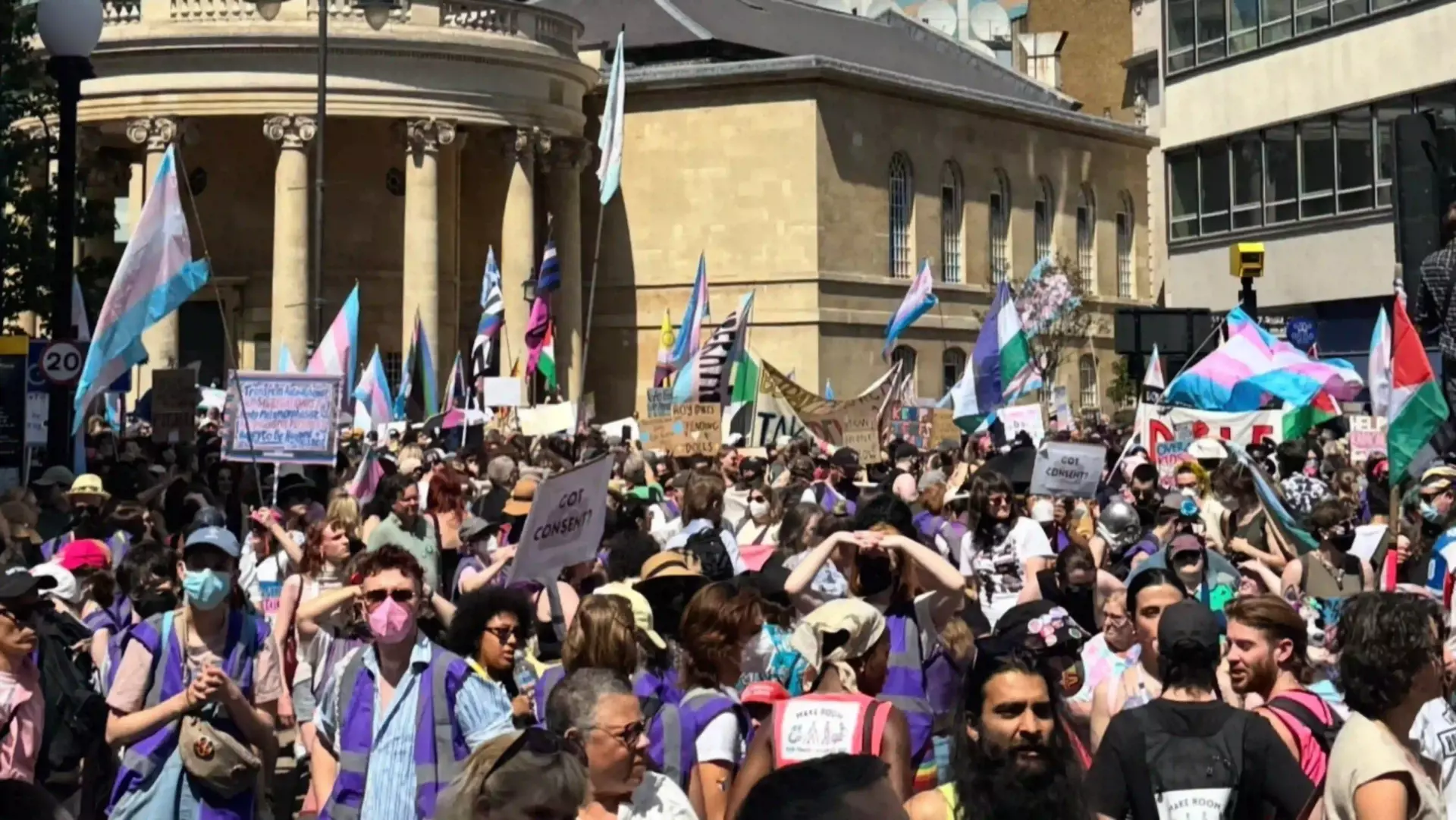
Good Law Project is supporting a legal challenge against the UK Government and the Equality and Human Rights Commission (EHRC) over its new code of practice on single-sex spaces, which comes into force today (5 August).
The guidance will restrict trans people from using facilities that align with their gender identity. Good Law Project is supporting an unidentified trans claimant and various trans-inclusive organisations in the legal challenge.
The group has issued a pre-action protocol letter against the government and the EHRC, which marks the first step towards potential legal proceedings.
Jess O’Thomson from Good Law Project dubs the EHRC guidance “transphobic”
Good Law Project’s trans rights lead, Jess O’Thomson, criticised the government’s approach, calling the code of practice “transphobic”.
“It’s difficult to believe just how far backwards our government has gone on trans human rights,” they said in a news release.
“This Labour government pushed through its transphobic guidance in the face of opposition from many MPs, including nearly a hundred of its own backbenchers. It’s not just immensely harmful. We think it’s unlawful, and completely against human rights. So this challenge is absolutely essential.”
What is the EHRC final code of practice?
The saga originally began after the UK Supreme Court determined that the legal definition of “woman” under the Equality Act refers to biological sex in April 2025, impacting trans people across the nation.
As a result, the guidance says organisations should consider alternative options for trans people. It refers to providing a separate “third space” or gender-neutral facilities. Campaigners say this treats trans people like a “third gender”. If separate/single sex spaces exemptions are in place (such as separate sex toilets), the guidance does say that trans people should use the facility aligned with their sex as noted at birth.
Following the guidance coming into force, more than 13,000 toilets, 5,000 changing rooms and 18,000 signs will be affected across public spaces.
It should be noted that the final code of practice is not law; it is statutory guidance setting out how service providers should apply the ruling in practice.
“Trans people will be shut out of the services they need” – Alexandra Parmar-Yee from Trans+ Solidarity Alliance on the EHRC guidance
Alexandra Parmar-Yee, director at Trans+ Solidarity Alliance, highlighted her concerns in a news release:
“Today the revised Code of Practice to the Equality Act comes into force, without scrutiny, debate or a vote,” she said.
“The Code of Practice has already caused serious harm to trans people across the UK, and these harms will only increase with implementation. Trans people will be shut out of the services they need, made to feel unwelcome and unsafe in public spaces. Our lives will feel smaller and more precarious.”
A threat to human rights
Echoing Good Law Project’s concerns, Parmar-Yee stressed that the legal framework protecting human rights “has been fundamentally undermined”.
“This is the UK Government’s flagship policy for the trans community, and it is chaotic, unworkable and cruel. It leaves the UK an outlier, no longer living up to its human rights commitments.”
She called for action, saying that the law must change to protect trans people.