
Hyderabad protesters rally against India’s trans amendment in fight for gender autonomy
The amendment proposes medical certification, replacing the administrative process for identity cards with a Medical Board
By Aaron Sugg
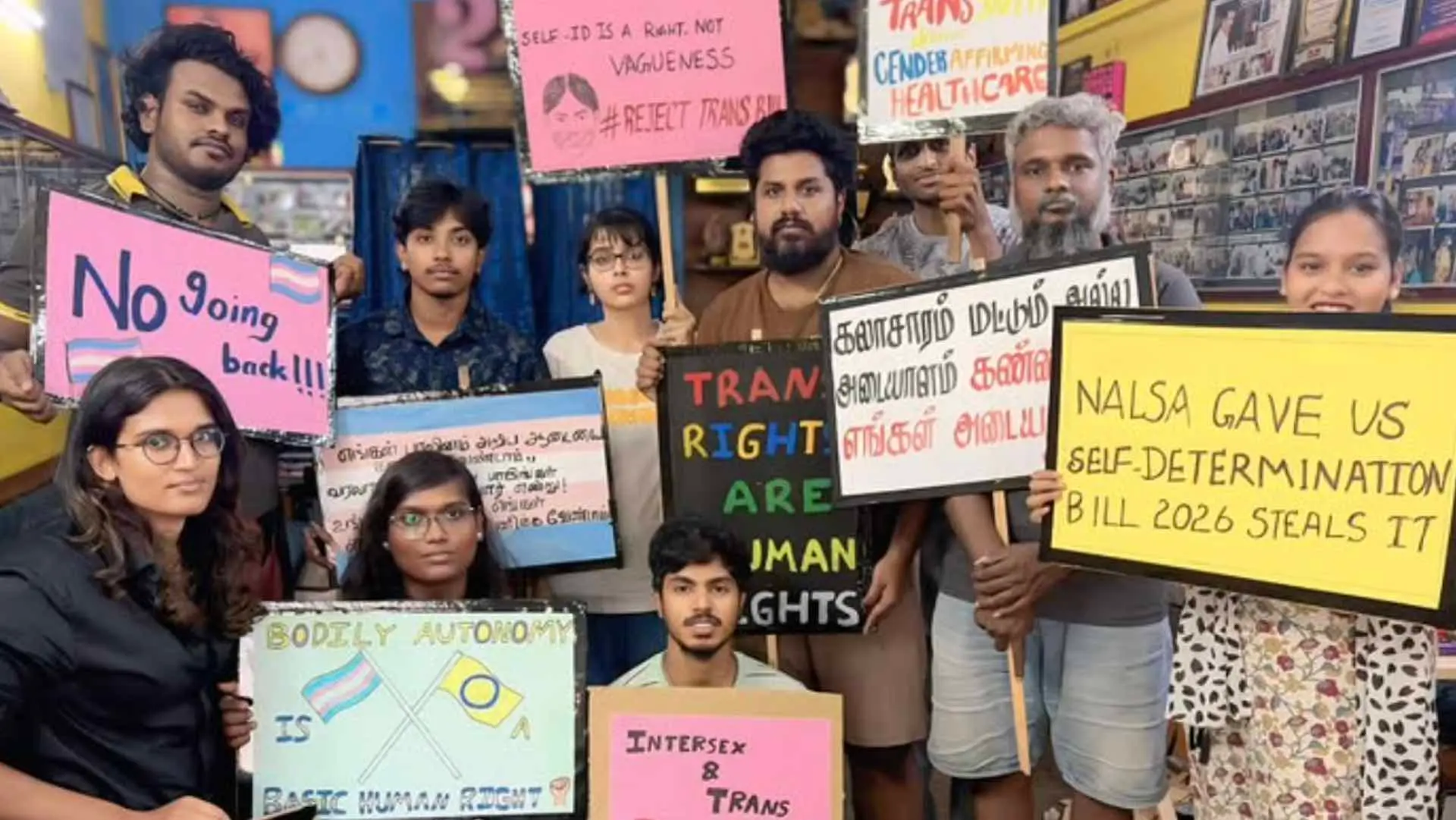
LGBTQ+ protesters gathered in Hyderabad on Sunday (22 March) to oppose India’s Transgender Persons (Protection of Rights) Amendment Bill, 2026, which critics say undermines gender autonomy.
Demonstrators held a protest at Dharna Chowk, campaigning with the slogan “our body, our choice.”
Speakers at the demonstration called the amendment inhumane and demanded its immediate withdrawal, arguing that it violates the privacy, dignity, and right to self-determination of transgender people.
As per the Times of India, advocate G Kiran Raj said that gender identity spoke out against the idea of presenting in front of a medical board to establish ones own gender identity.
“Gender identity must be based on self-identification, not medical examinations” – G Kiran Raj protesting against the trans amendment
“Gender identity must be based on self-identification, not medical examinations,” they said. LGBTQ+ rights groups, including Sahodaran and the Queer Bandhu Parents Association, were among those in attendance.
Introduced earlier this month (13 March), the Union Minister for Social Justice and Empowerment, Dr Virendra Kumar, argued that Section 4(2) of the 2019 Act, which enshrined the right to self-identify as a transgender person, was too “vague”.
The amendment proposes medical certification, replacing the administrative process for identity cards with a Medical Board.
Transgender Persons (Protection of Rights) Act, 2019 protects trans rights in India
Kumar also suggested stricter punishments for kidnapping an adult to force a transgender identity, with a minimum of 10 years’ rigorous imprisonment, and similarly for children, for whom life imprisonment is mandatory.
Under the Transgender Persons (Protection of Rights) Act, 2019, Indian law grants the right to self-perceived gender identity through a certificate of identity.
The legislation also forbids discrimination in education, employment, healthcare, and public facilities, with violations punishable by six months to two years’ imprisonment and fines.