
History-making LGBTQ+ rights activist and former congressman Barney Frank dies aged 86
During his tenure, Frank became a leading liberal voice on banking regulation, housing, pro-immigration policies and LGBTQ+ rights
By Aaron Sugg
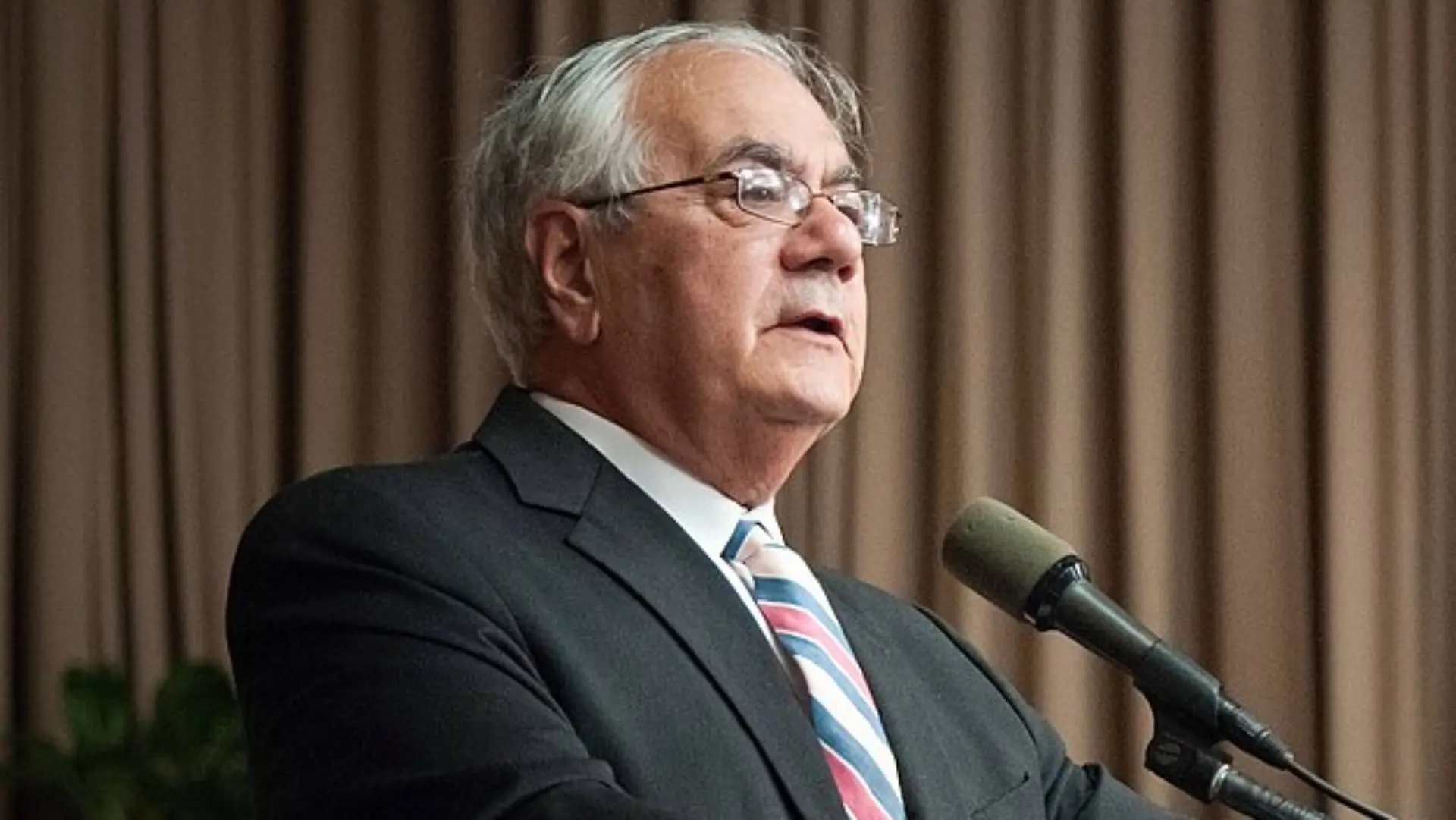
Former Massachusetts congressman Barney Frank has died at the age of 86, after decades of campaigning for LGBTQ+ rights and financial reform in the US.
Confirmed by his sister to NBC Boston on Wednesday (20 May), Frank died on 19 May at his home in Maine after undergoing hospice care for congestive heart failure.
He leaves behind his husband, Jim Ready, whom he married in 2012, and his sisters Ann Lewis and Doris Breay, along with his brother David Frank.
“I was lucky to be his sister” – Doris Breay announcing Barney Frank death
Breay announced Frank’s death, telling the outlet: “He was, above all else, a wonderful brother. I was lucky to be his sister.”
Frank entered politics in 1968 as an aide to Boston Mayor Kevin White before winning a seat in the Massachusetts House in 1972. He served 32 years in the US House of Representatives, having been elected to Congress in 1980, representing Massachusetts until 2013.
During his tenure, Frank became a leading liberal voice on banking regulation, housing, pro-immigration policies and LGBTQ+ rights.
Frank initially repressed his sexuality before publicly coming out in 1987
In 1987, Frank publicly came out as gay, becoming one of the first men in Congress to do so. He later made history in 2012 as the first sitting member to enter a same-sex marriage.
On growing up gay, he told 60 Minutes: “It was hard internally, wasn’t hard externally, because I just never told anybody I was gay.”
Frank realised he was gay at age 13, saying he was “frightened”, and admitting he tried to “repress” his sexuality during his adolescence.
When did Frank come out to the public as gay?
He came out to the Boston Globe in 1987. When asked if he was gay, he said: “I am, so what?”
As well as becoming a beacon for LGBTQ+ people in US politics, Frank played a role in removing discriminatory immigration rules that had previously allowed people to be excluded due to “sexual preference”, under the Immigration Act of 1990.
In an op-ed appearing in the Wall Street Journal in 2024, Frank said he was “one of the panel’s strongest advocates of a welcoming immigration policy”.
What did Frank do for US immigration policies?
“I argued for the highest level of legal immigration politically achievable, and I voted to extend Temporary Protected Status to refugees fleeing failed governance. I also worked to expand the grounds on which victims of oppression can claim asylum,” he continued.
Frank also played a key role in ‘Don’t Ask, Don’t Tell’ (DADT), a policy issued under a Department of Defense directive which prohibited military personnel from discriminating against closeted LGBTQ+ servicemen – though it barred openly gay, lesbian, or bisexual people from serving.
Frank also fought for legislation which would have banned workplace discrimination against LGBTQ+ workers, with a 2007 bill stating that equality in the workplace is “a fundamental principle of fairness.”
“People discovering the gap between our reality and the way we were painted” – Frank on his impact as a publicly gay politician
He retired from Congress in 2013 after choosing not to seek re-election in 2012. As reported by NBC, Frank celebrated his impact on advancing LGBTQ+ rights in the US.
“I think the key to our having made the enormous progress we made in defeating anti-gay prejudice had to do with us all coming out and people discovering the gap between our reality and the way we were painted,” he said.