
Ahead of Valencia’s 2026 Las Fallas festival we revisit its LGBTQ+ offerings
Attitude’s travel editor first experienced Valencia’s explosive Las Fallas festival in 2025. One year on, with the city preparing for another unforgettable March and the Gay Games in 2026, we revisit that trip
Attitude visited Valencia in 2025 for the start of Las Fallas, a 19-day March festival that is unique to the Spanish eastern coastal city. Every day at 2pm, the mascletà — the Spanish name for these daytime pyrotechnic explosions of smoke and colour — fills the city’s Old Town with noise.
We had been advised to arrive an hour early to get a prime spot outside the square’s Rialto Theatre, where LGBTQ+ members congregate for the event. And soon after we arrive, we start seeing people gathering who are clearly from the queer community.
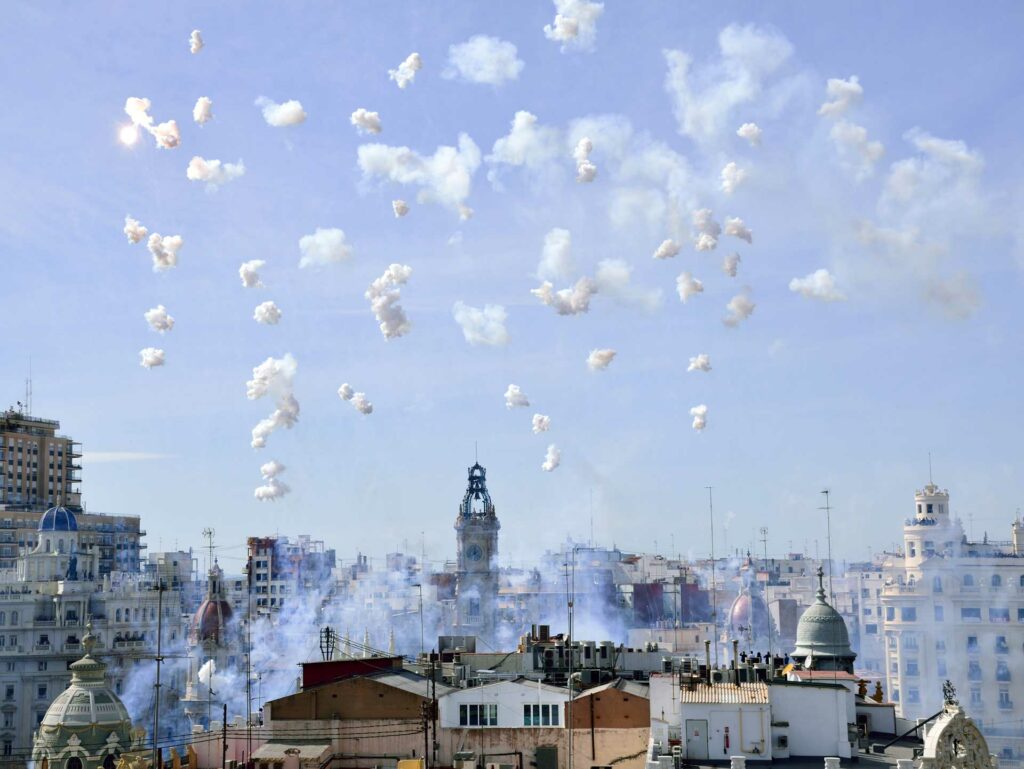
Each day, a different master pyrotechnician enters the chain link-fenced area erected in the square and sets off the firecrackers to create a unique symphony of noise. Unlike traditional firework displays, the mascletá’s sound and fury take precedence over the visuals.
The mix of firecrackers on the ground and shot into the sky creates a lot of smoke, and as it climaxes into an absolute cacophony just before the five-minute mark, it feels like we are at the centre of a thunderstorm as the crowd howls and leaps for joy at the crescendo.
The earthquake effect is addictive: many locals attend every one of the 19 mascletás that take place each year. But as thrilling as the spectacle is, it’s not the main event of the festival.
What is the history of Las Fallas?
Dating back to the mid-18th century, Las Fallas is a bit like Guy Fawkes Night but taken to the height of artistic achievement and far more bombastic. As with the popular UK event, effigies (fallas) are set alight, but their scale and preparation is on a completely different level.
Throughout the year, neighbourhoods fundraise to build around 700 fallas. Of various sizes and skill levels, they are constructed all over the city.
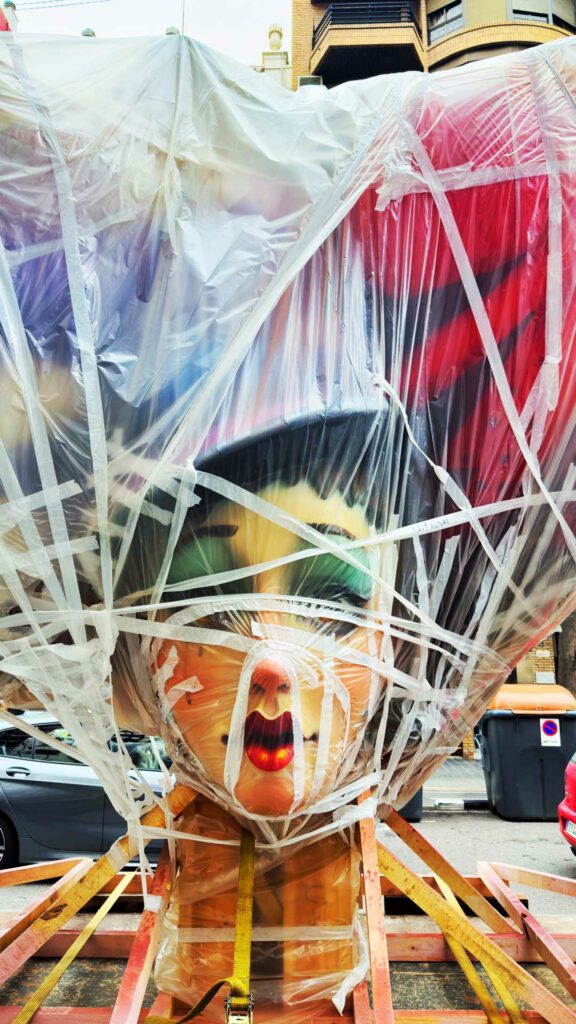
As we walk around, we spot lorries carrying and unloading ninots, the brightly coloured figures that make up the fallas. The sculptures, which are made of wood, papier-mâché and styrofoam, are covered in clear plastic and left in the street ready for construction on 15 March. Many ninots are human height, but the heads of some of the larger ones are metres high.
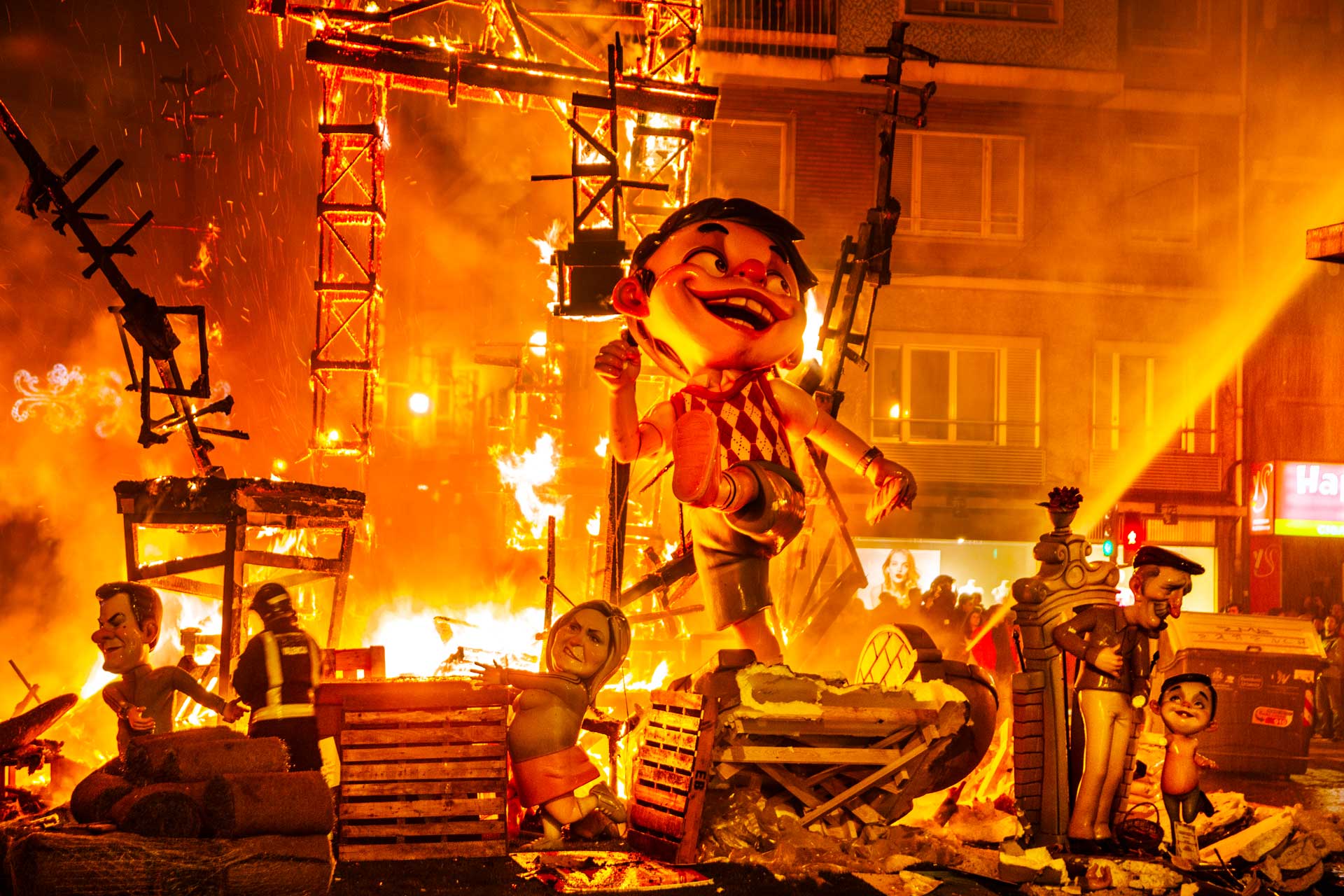
On 19 March, St Joseph’s Day, the fallas are set alight and burn to the ground. The medieval tradition, which likely has Roman roots based in spring renewal, is linked to the traditional trade of carpenters, whose patron is St Joseph. Each spring they would take their old materials, including lamp brackets that lit their workshops in the winter months, and burn them in the streets.
In 1934, one fallas artist called for a “pardon from fire”, and the tradition of saving one ninot from the most popular fallas endures today. As a result, nearly one hundred years’ worth of the saved ninots are on display at the Fallas Museum. It is interesting to see the ebb and flow of popular styles.
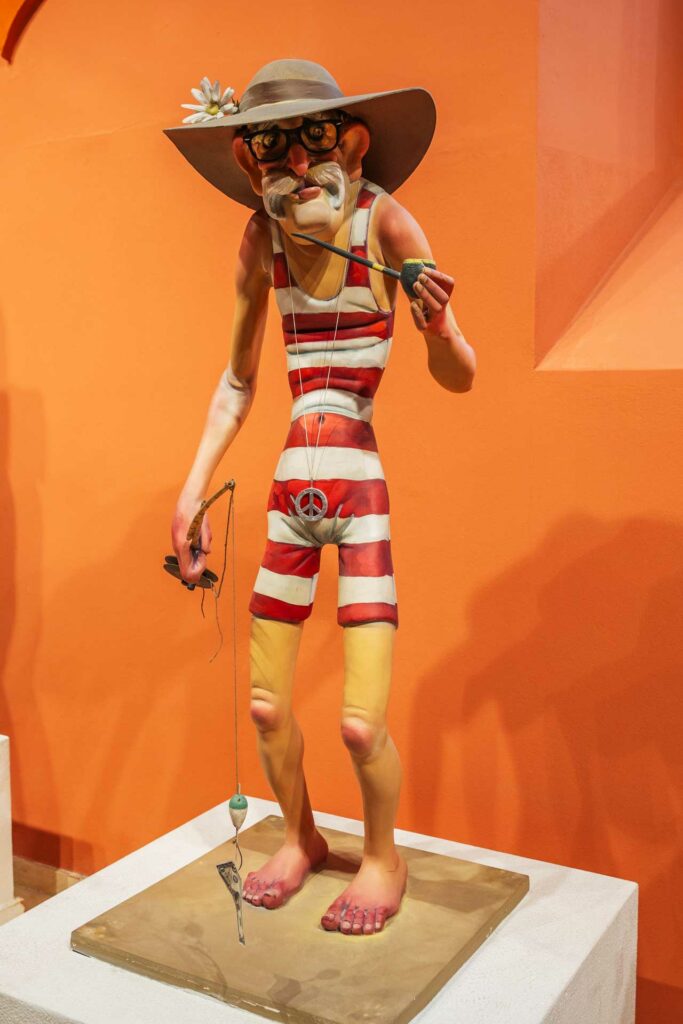
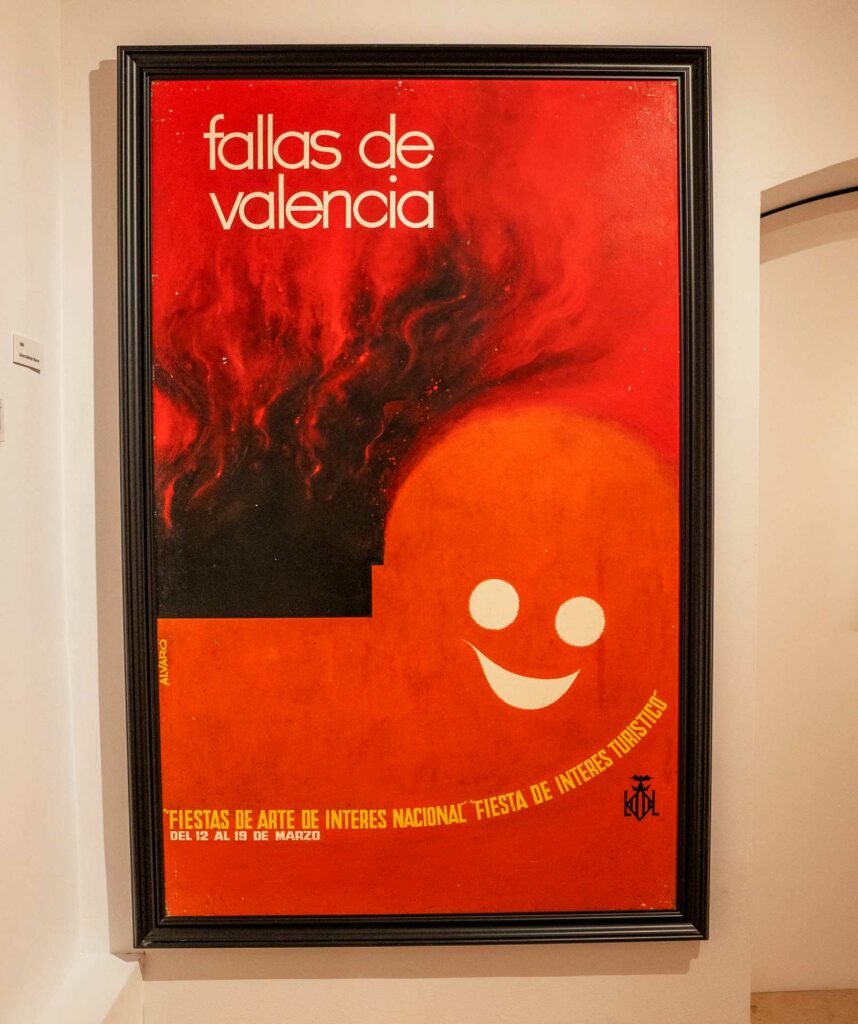
The first few decades of ninots are focused on the older generation, but from the late 1950s they become comical and cartoonish, featuring everything from cavemen to hippies before sliding into sentimental scenarios in recent years. In addition to the sculptures, there is a poster for each year of the festival, tracing the evolution of graphic design over the decades.
Across the street from the museum is Valencia’s City of Arts and Sciences, a collection of several buildings that extend for nearly two kilometres. Futuristic in design, the iconic white buildings house an aquarium, a 3D cinema, an opera house and much more.
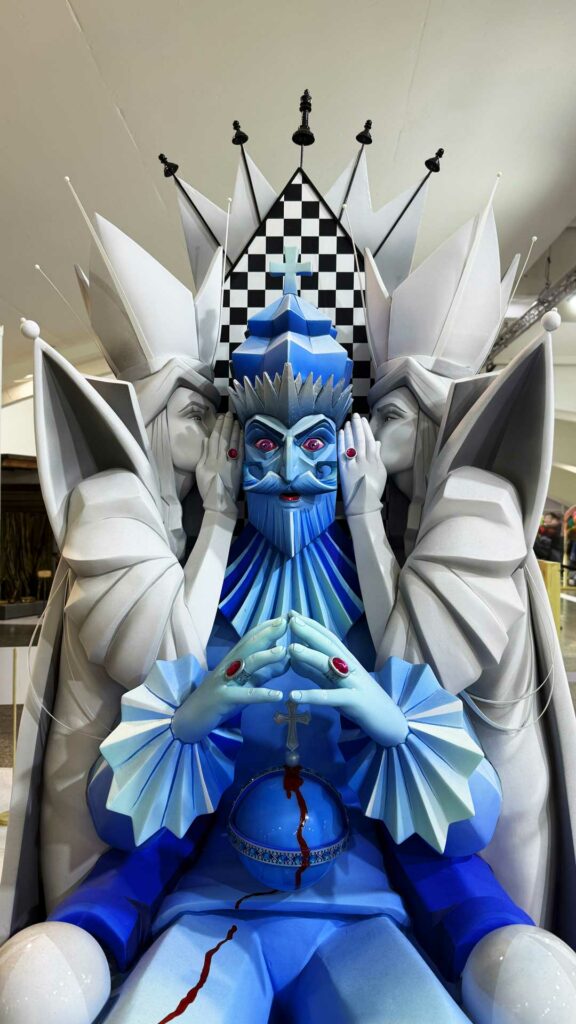
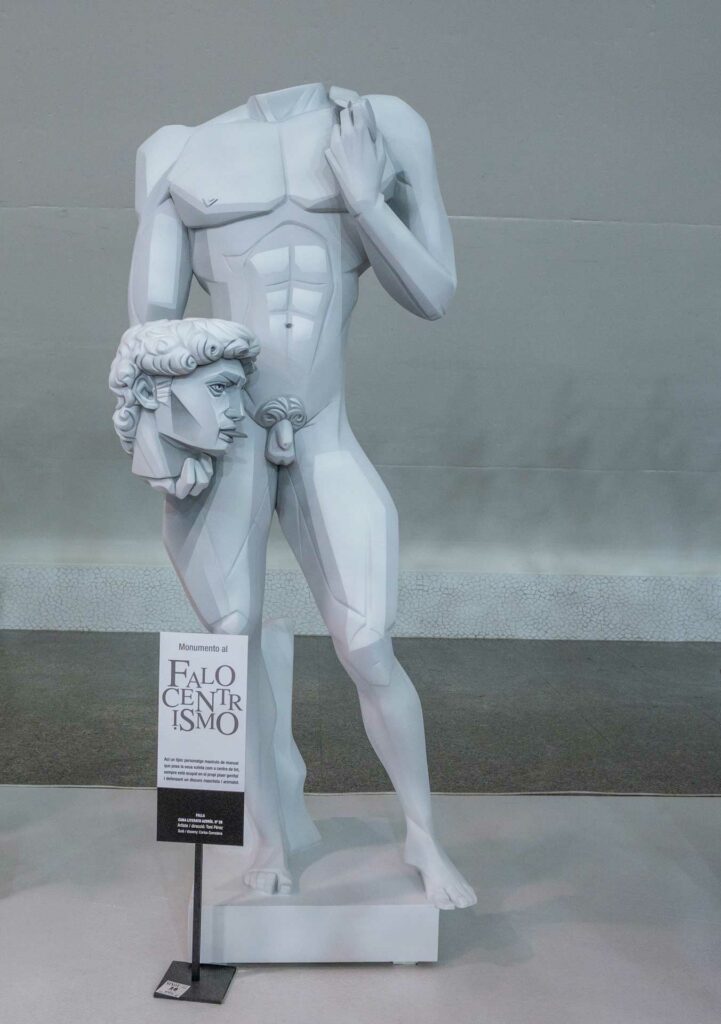
We head to an exhibition in the Science Museum where every fallas artist has placed a ninot to be saved from the fire — a vote will be taken and those that don’t make it will be added to their fallas on 15 March. There are hundreds of ninots and as we walk along the display, they progressively get better and better.
Some have clear political messages; some are sickly sweet. Our favourites are bright and animated in style. We spot a couple of LGBTQ+-themed ninots, including one featuring two realistic men, one pregnant and the other behind him holding his baby bump.
Meeting a gay fallas artist
Last year, the spotlight fell on one of the city’s top fallas artists, Mario Gual del Olmo, for creating a large-scale, LGBTQ+-themed fallas titled Mama, Soy Gay, or Mum, I’m Gay. The 41-year-old sculptor, who has been creating fallas full-time since 2007, tells me he had to wait years before finding someone who was brave enough to commission his gay opus, but it proved to be a hit.
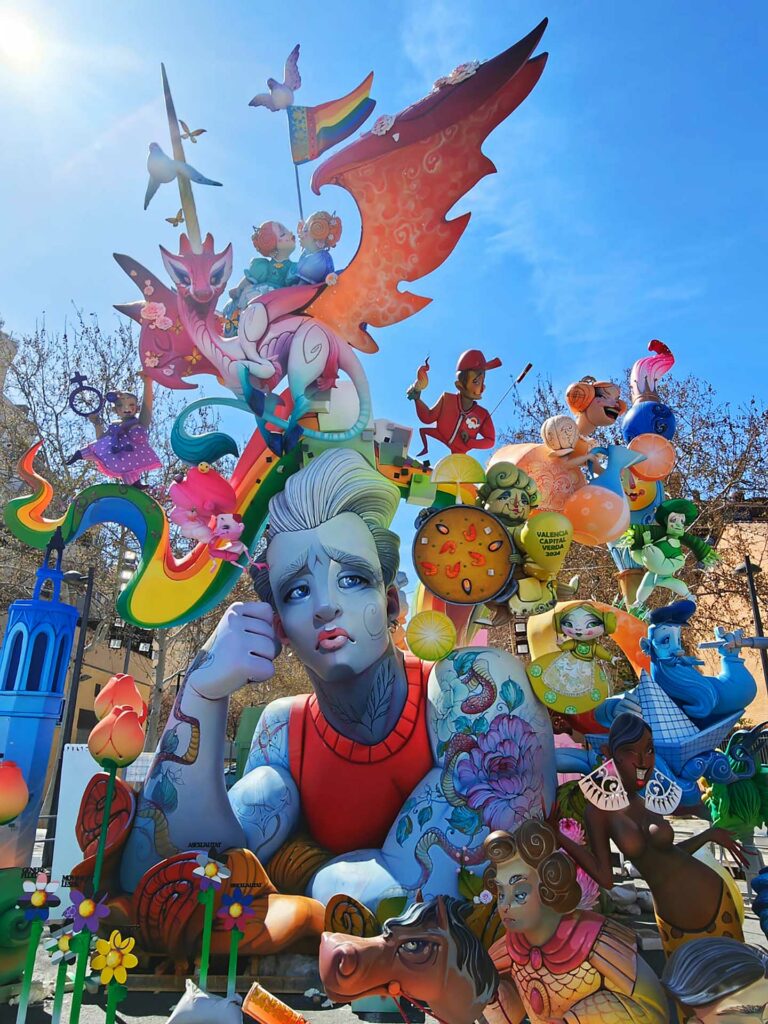
It featured a giant, heavily tattooed young man looking forlorn and surrounded by numerous figures, including a lesbian couple kissing astride a pink dragon-unicorn hybrid while holding aloft a fag of Valencia which had been combined with the Pride fag. Also included were six prominent LGBTQ+ figures — three from Spain and three international, one of which was Alan Turing.
“Since the moment we presented the idea, we had many calls from newspapers and magazines,” Gual del Olmo tells me. “I was overwhelmed by everything that started to happen. Once the fallas was planted in the city, we had many very important political people come and visit it.”
Despite last year’s warm reception, Gual del Olmo’s hopes of creating a trilogy of fallas were dashed. He wanted to create two more, one focusing on the lesbian community and the other on the trans community, but the commissioners wanted to go in a different direction. Instead, Gual del Olmo’s fallas this year is called Travelling to the Centre of Life, and features a goddess who creates the universe.
Sadly, we will miss the big reveal and the ritual burning of the fallas, so I ask Gual del Olmo what the experience is like. “You can see fireworks from all over the city, and it is a very magical evening. The air has an orange colour, and the whole city stops. There are no cars. Everyone is having fun,” he explains.
Seeing his year’s work go up in flames is an equally unique experience. “It is like freedom. What I really enjoy is my work. And when the fallas is on the street I become uncomfortable or insecure because I don’t want it to be rained on or damaged. Once my work is done, I don’t want to keep it. I want the capacity of making one again.”
Even in this early stage of the festival it is hard to escape its influence on the city. There are illuminated displays on many streets — if we didn’t know better, we would think they had left the city’s Christmas lights display out for three months too long.
We see numerous marching bands playing in the streets, and everywhere there are people, mostly children, letting of firecrackers. We have many jump scares as the bangs ring through the streets. On one occasion, while we are having breakfast alfresco, a man lets of a piercingly loud firecracker to everyone’s shock and surprise. I’m all for fun and games but let me have some peace to enjoy my eggs and coffee.
What else does Valencia have to offer?
Festivals aside, the city has plenty to offer. To the east is a long sandy beach and Albufeira Natural Park, which is famous for its rice fields that grow the crucial ingredient for the city’s signature dish, paella.
But as it’s unseasonably cool when we visit, we stick to the Old Town and surrounding area. Founded by the Romans in 138BC, Valencia’s ancient streets are rich for exploring. One spot that mixes the past with the present is the Hortensia Herrero Art Centre in the old Valeriola Palace, an iconic 17th-century building. Opened at the end of 2023, the gallery features a basement displaying the remains of the Roman circus.
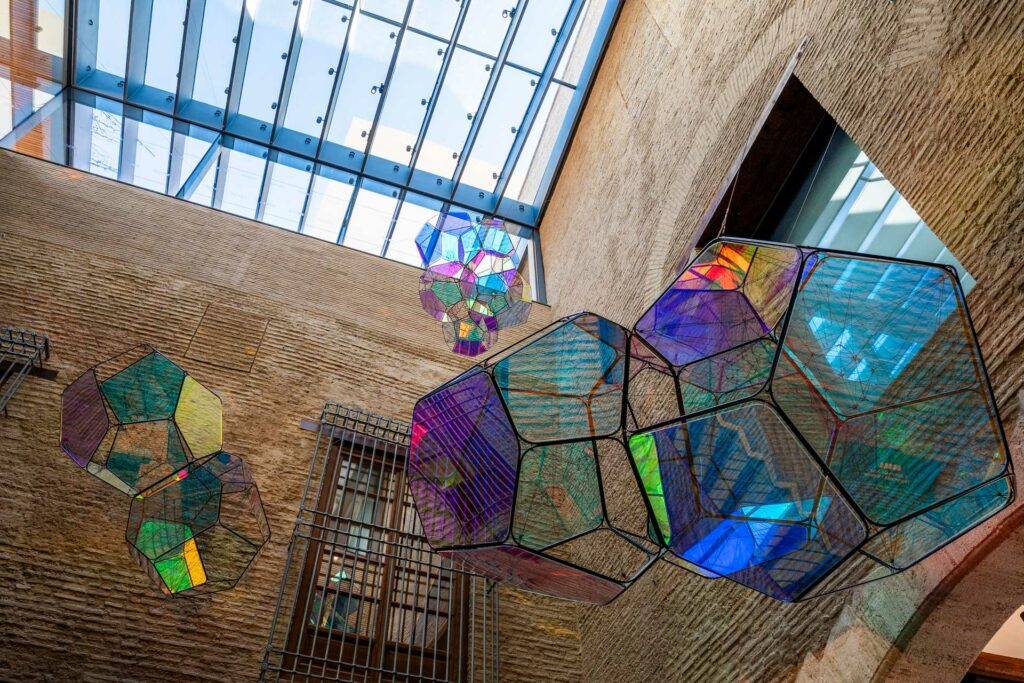
Elsewhere, there are seven works of art that were made specially for the four-storey museum. Those pieces sit alongside works by over 50 renowned international artists, including household names like David Hockney and Roy Lichtenstein.
By the end of our visit, we are enamoured by the gallery and the refurbishment of the former palace by businesswoman Hortensia Herrero. She also funded the restoration of St Nicholas Church’s elaborate frescos which have been compared to the Sistine Chapel.
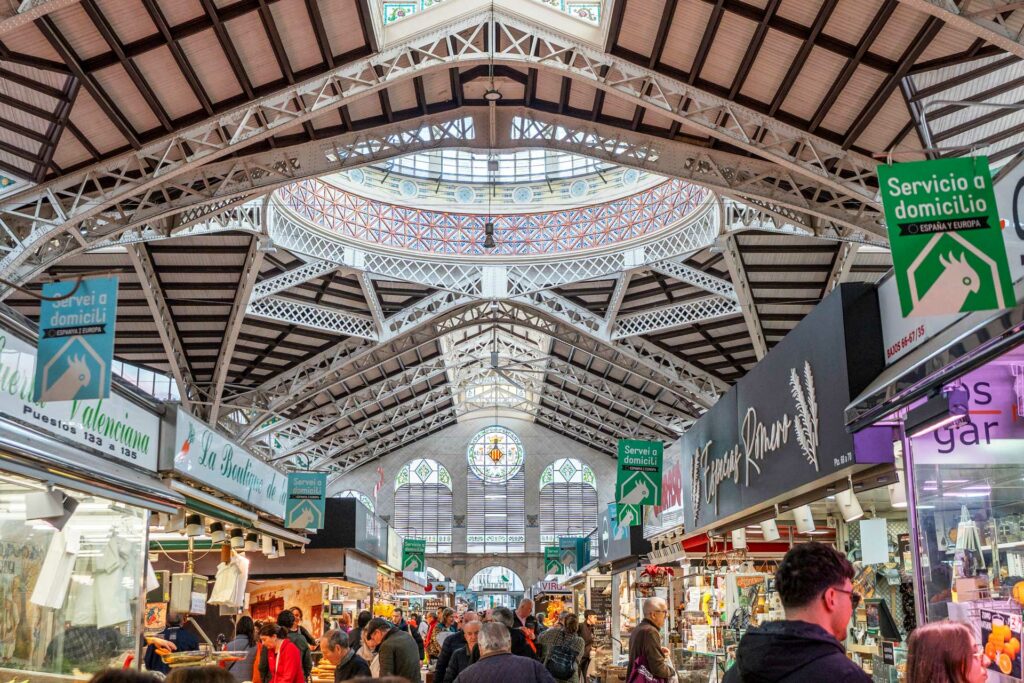
We also stop at Valencia Cathedral to see what is claimed to be the Holy Grail, before making our way to our preferred place of worship, Valencia’s Central Market. One of Europe’s biggest food markets, it offers over 200 stalls of beautiful produce, housed in a stunning Art Nouveau building.
Next to the market, the Silk Exchange presents another thread in the city’s history. This museum is small, but its rooms feature Gothic spiral columns and an intricate carved timbre coffered ceiling.
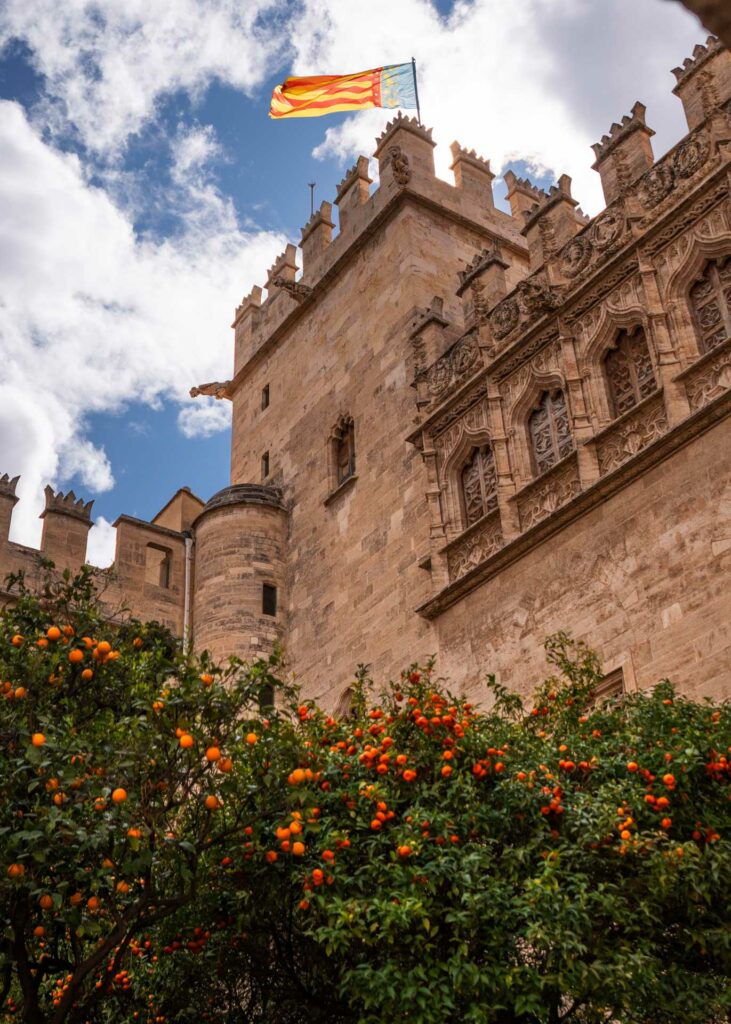
Outside, in the courtyard of the UNESCO World Heritage Site, there’s an orchard of the city’s famous oranges. Orange trees replaced the area’s mulberry trees, which silkworms feed on and which made Valencia one of the silk-producing capitals of the world before the industry declined in the 19th century.
In October 2024, Valencia made world headlines when foods devastated the southern, suburban part of the city, with more than 200 people losing their lives. The rest of the city only escaped damage after a food in 1957 spurred the government to divert the river that flowed through the city. The 12-kilometre riverbed, which hugs the north-east of the Old Town, was turned into Europe’s longest park.
Although much of the city was left untouched by the foods, we are later told that they had a similar effect on the tourist trade as Covid: tourists stopped coming and events were cancelled. Valencia is still feeling the ramifications now, which is a shame as the city is stunning and has so much to offer.
We walk through the Old Town as I’m keen to photograph a famous archway to the former Muslim area, as well as a tiny house built into a wall that was apparently meant for the city’s stray cats. On the way, we pass Café Mestizo, which has a Pride flag fluttering outside its door, and La Mandragora, a vegan restaurant, which has a trans flag proudly displayed. But we don’t spot any queer bars.
Gay Games coming to Valencia in 2026
To find out more about the LGBTQ+ scene, we meet up with Jose Ferri, who has been running Valencia Guias, a tour guide and bike rental company, for over 20 years. While the company doesn’t have any LGBTQ+-focused tours, Ferri is one of the community, as are many members of his staff, and you can always make a special request for one of them to host your tour.
Ferri was a key member of the team that helped win the bid for Valencia to host the Gay Games in 2026. Over 60 countries applied to stage the world’s biggest LGBTQ+ sporting event before it was narrowed down to three, with Valencia beating rivals Munich, Germany, and Guadalajara, Mexico.
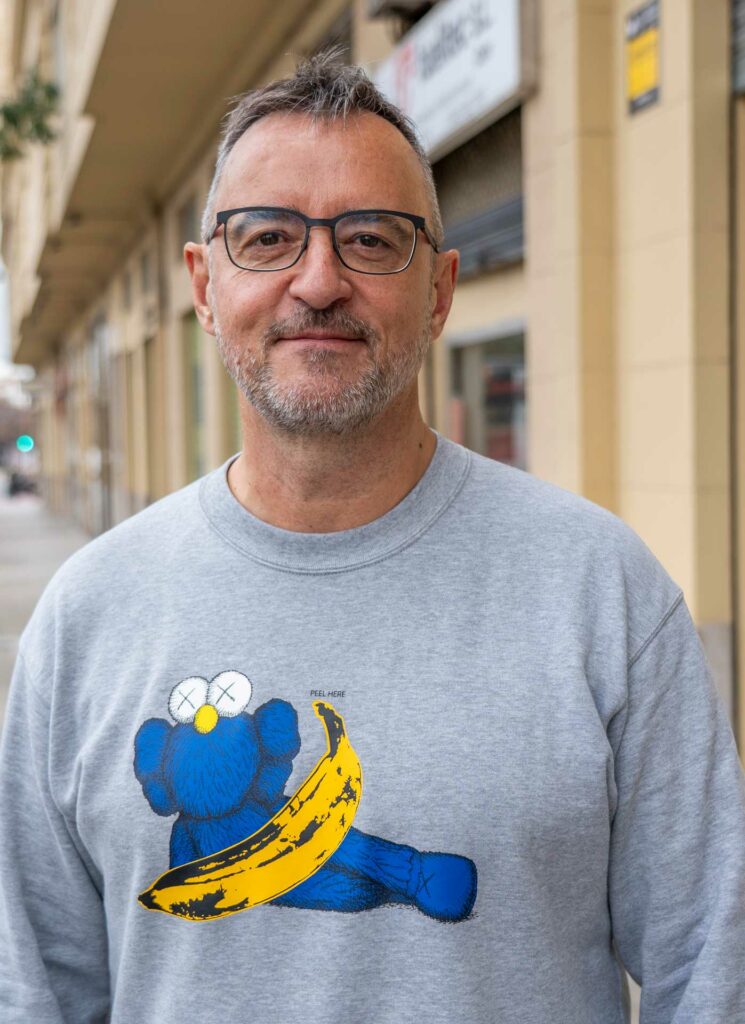
“Normally when the Gay Games is done in Europe, it’s been between 12,000-15,000 participants,” Ferri claims.
Hosting it is sure to deliver a huge boost to Valencia’s LGBTQ+ visitor numbers as all those athletes will bring their friends too — at 1998’s Gay Games in Amsterdam there were well over 200,000 visitors.
With the June 2026 Gay Games still a way off, we discuss the city’s gay life. “While it is not the major hubs of Madrid and Barcelona, or the gay meccas of Sitges, Torremolinos, or Gran Canaria, Valencia has always been a very open-minded city,” explains Ferri. “Even in the 1980s, you could see guys holding hands. It has always been very tolerant. In the ’90s, there were gay bars in the Old Town, but because of the apps they have spread out.”
Ferri goes on to tell us that the remaining gay bars and clubs are mostly just outside the Old Town. There are two clubs to the north, a bear bar to the west, and more bars and clubs in the Ruzafa neighbourhood to the south.
Valencia’s queer Café de la Horas
But one prominent queer venue in the Old Town has stood the test of time. Café de la Horas was opened in 1994 by Marc Insanally and two business partners. We have passed the café several times during our time in Valencia and it often has a queue outside the door.
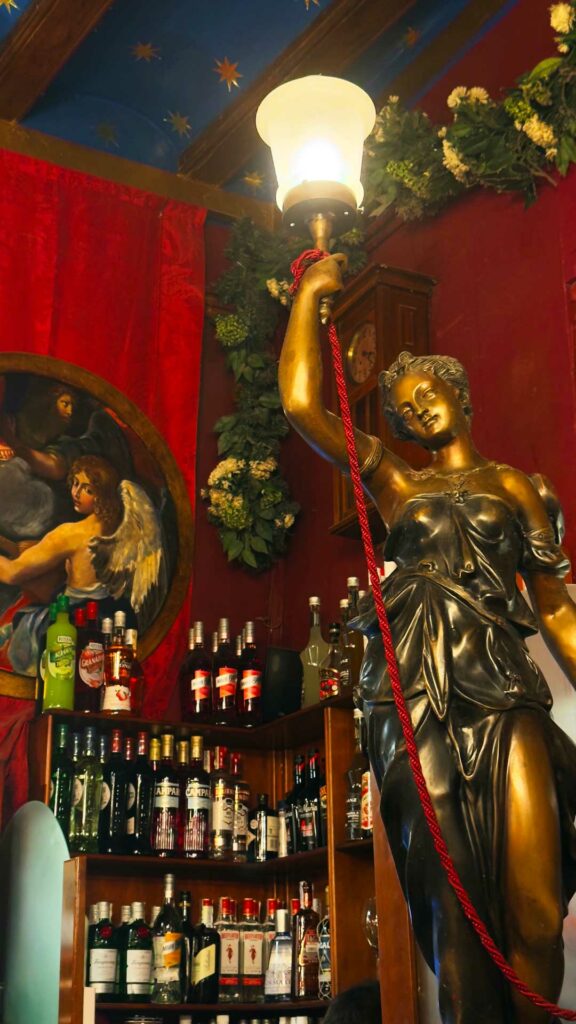
Inside the small café, the décor is lavishly Baroque. The red walls and curtains reveal frescos and framed paintings lit by antique brass light fixtures under a ceiling painted navy with gold stars. The venue is elegant, yet whimsical, with a heavy dose of kitsch.
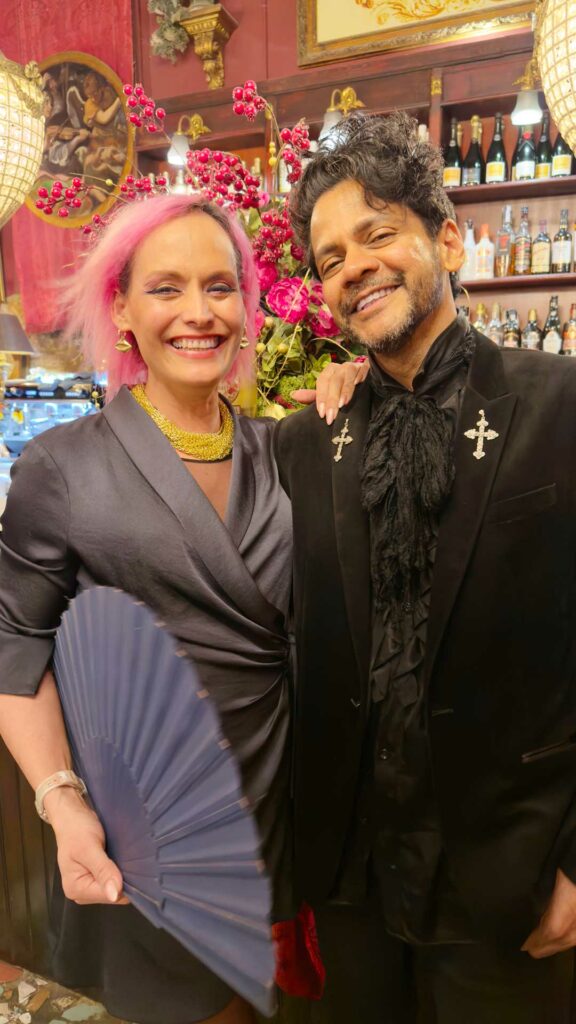
Even though we had yet to meet Insanally, he is easy to spot, dressed in a velvet suit and shirt with a pussy bow, all as jet black as his hair. We sit down with him, and he asks his “in-house diva” to bring us a jug of Agua de Valencia, a local drink made of orange juice mixed with numerous alcohol spirits that the site is famous for — it is as delicious as it is dangerous.
Insanally is from Guyana. He did a stint of studying in London before coming to Valencia. He says he was too busy coming out of the closet to move on to another city and so opened the café. “I started the café back in the ’90s, when there were no cafés. There were no cocktail bars; there was no tea in a teapot,” he reveals. “We started doing gay stuff, fun stuff, literary stuff and theatrical stuff in a café society when no one was doing this. And because of my international background, I was bringing something no one else was to Valencia in the 1990s.”
The café is full and bustling around us, and as it is a café and not a bar, everyone is sitting down. But that is not always the case, Insanally tells us.
“We have been here for 30 years, so we are a classic in Valencia, but we are still pushing boundaries. Last Valentine’s, we had a showing of Shibari, Japanese rope bondage,” he tells us as we raise an interested eyebrow.
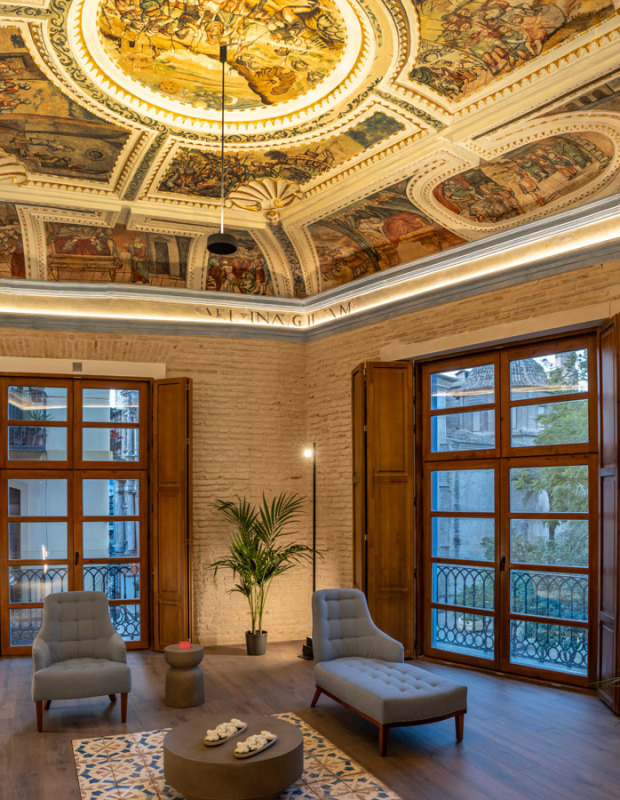
Insanally is also bringing Café de la Horas to the Axel Hotel Valencia, which opened in late 2025. He promises this second venue is as gay as possible. Think “jockstraps and Maria Callas” he declares Axel, the world’s first LGBTQ+ hotel chain, has acquired two adjacent buildings including an old palace known as Casa Vella in the Old Town to house their latest property. Café de las Horas acts as the hotel’s restaurant and bar.
“My intention is to be unique, so that I am the gay bar that any gay man has to visit when he comes to Valencia, that any fashionable person or anyone who presumes to be in the art of the vanguard of anything has to pass through my doors, not just the classic venue,” Insanally proclaims.
Our trip began with a bang of firecrackers and ends with a stumble as we depart the café having consumed one too many Agua de Valencias. But we leave this glorious city with so many reasons to return.
Get more from Attitude