
RS Group’s Umut Payzin-Kögel and Roberta Schiappadori on navigating cultural identity, LGBTQ+ allyship
In partnership with myGwork
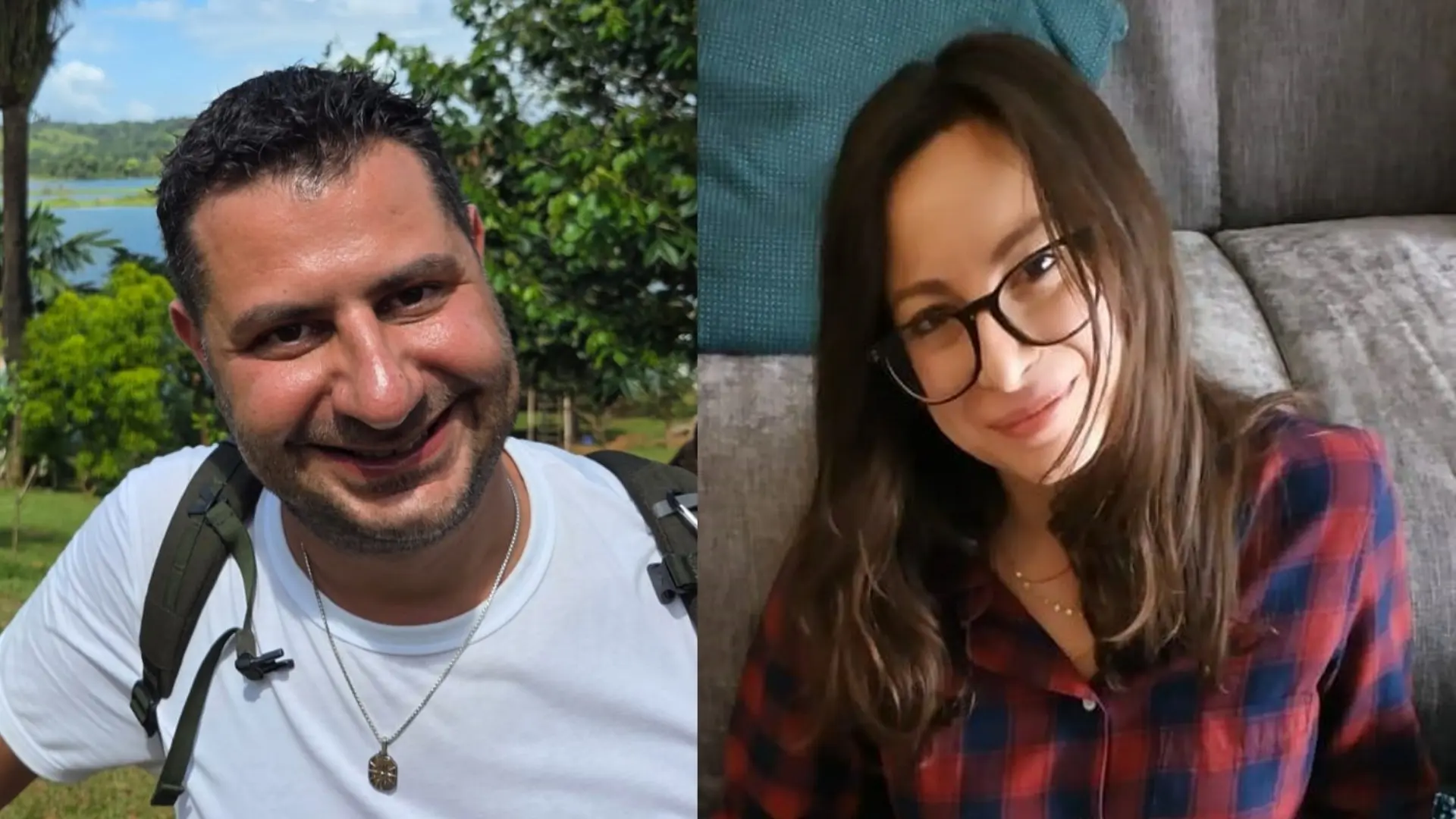
In different corners of Europe, two careers began with a fascination for stories and for industry. Today, those paths cross at RS Group, where Umut Payzin-Kögel and Roberta Schiappadori speak to myGwork about identity, experience with inclusivity, and the practical realities of creating workplaces where people feel safe to be themselves.
Umut grew up in Pforzheim, Germany, the third-generation child of Turkish immigrants. As a teenager he was eager to work, taking part-time jobs that began in the warehouse of a paper machinery manufacturer. He still remembers the smell of oil, metal and dust there, an early connection to industrial environments that quietly shaped his path. After his Abitur he moved into industrial distribution for mechanical spare parts at a global UK-headquartered business, in a role focused on Germany with only occasional contact with international colleagues.
The turning point came when he took on responsibility for VMI Services, joining a core team building a new service from scratch. Working closely with peers across markets and central functions showed him how approaches and communication styles differ from country to country, sometimes in ways that felt confusing but also sparked deep curiosity. That experience cemented his interest in value-added services and prepared him for his role at RS Group, where he operates across sales, customer service, product and supplier management, marketing, digital and regional leadership. Today he balances a consistent strategy with local needs across EMEA, watching ideas from one market inspire innovation in another.
Roberta’s route into RS also began with a clear ambition. Growing up in Milan in a traditional family where her father travelled for work and her mother focused on raising two daughters, she imagined herself as a journalist. She wanted to work with people’s stories and have impact on company life. Gender roles at home were flexible. Barbie dolls, Lego, toy kitchens and football all sat side by side and were treated as equally normal. Her parents encouraged critical thinking and independent opinions, which became especially important when she entered a very traditional Catholic high school with conservative views on identity, relationships and sexuality. A diverse group of friends from different countries and backgrounds helped her look past narrow perspectives.
Over time Roberta moved into communications roles with expanding scope. Aligning messaging and supporting business priorities became central to her work. One former boss, a woman she met at a French energy company, left a lasting mark. Battling lung cancer, that leader still mentored her, helping her find her voice, stand up against injustice, face struggles and speak her mind in professional and personal life. Roberta now brings that experience into her role as EMEA Communications Manager at RS, where she works with the global team after three years leading communications in Italy. Her days involve three languages, adapting approaches to different markets and creating consistency that still respects local perspectives. She describes her career with simple pride as a journey of building bridges between teams, functions and cultures and helping drive clarity in a complex international context.
Both leaders’ understanding of identity and belonging grew from early experiences of difference. For Umut, childhood meant living between Turkish culture at home and German society outside. He remembers thinking about why he looked different, had a “strange” name, did not eat pork and spoke what classmates heard as a funny language with his parents. In Germany he was seen as ‘the Turkish’. In Türkiye, where he spent vacations with relatives, his reduced fluency marked him as a visitor. People called him ‘the German guy.’ He recalls asking himself: “Who was I? Was I Turkish? German? I didn´t know.” Over time he stopped trying to resolve that question, instead describing himself as someone who found an identity that is not tied to background alone. When he meets kind people, belonging and inclusion tend to follow. When he encounters poor treatment, he moves on rather than seeing himself as a victim, preferring to view himself as a very normal person, as normal or strange as any other.
Roberta’s sense of inclusion sharpened through friendship. During her teenage years, one of her closest high school friends was part of the LGBTQ+ community. Through that friendship she saw what it meant to feel different, misunderstood or judged, and she witnessed difficulties around acceptance even within a family. The issues stopped being abstract and became personal, and that experience strengthened her belief that everyone deserves respect, dignity and freedom to be themselves. She has wanted to step out as an ally ever since, especially as conditions for many LGBTQ+ people in Italy remain challenging. She cites research from the European Union Agency for Fundamental Rights, showing that 68% of LGBTQ+ respondents in Italy reported bullying, insults or threats at school, and 60% felt that anti-LGBTQ+ violence had increased over five years, alongside declines in legal protections and equality rankings.
Umut’s connection to the LGBTQ+ community is personal. He came out as gay around 30, during a very open conversation with his parents. Given the norms in Turkish culture, he feared their reaction, but the reality was very different. They accepted him and his husband without concerns or prejudice. The fear that had built up over years explained why he had kept his feelings private and shared little in his early work life. As time passed, he felt it was difficult to suddenly reveal he was gay, worried that colleagues might see him as someone who had lied. But growing up between cultures and identifying as gay gave him a strong sense of what it feels like to stand at the edge of belonging, and sharpened his belief that people need to feel safe to be themselves at work. Joining RS changed the picture.
“When I started working in RS, I found an environment where people gave me the feeling that I am okay as I am. No hiding, no secrets, no pretending, just being my true self.”
Both see RS Group’s approach to LGBTQ+ inclusion as distinctive. Umut says he has never seen another company drive a diversity and inclusion agenda so successfully and consistently with full senior leadership commitment. In his experience, other organisations often have initiatives that feel more like obligations. At RS he feels inclusion is something people experience in daily work. Roberta echoes that view, highlighting clear definition of the agenda and genuine integration into operations. What stands out for her is the way RS creates space in terms of time and resources for meaningful conversations and initiatives that support equal opportunities. In her eyes this practical investment allows diverse perspectives to be welcomed and encouraged, and helps people feel safe to contribute as their authentic selves.
Their roles give them a view across EMEA on LGBTQ+ conversations. Umut sees markets where dialogue is open and supported by visible networks, and others where the topic feels sensitive and people speak more cautiously. Some regions lack clear allies. Others seek to engage and feel unsure how to start. He notices that intent to be respectful is present across regions and expression of that intent changes with local norms and maturity. For him this confirms the importance of cultural awareness, empathy and flexibility when addressing LGBTQ+ topics, alongside a consistent message of respect and inclusion. Roberta observes a wide spectrum in awareness, language and comfort, while also recognising that corporate environments like RS create a relatively privileged space where discriminatory behaviour is formally prohibited and socially discouraged. Even in that context she hears colleagues voice concern about travel to certain countries, including Italy, and worries about reactions toward LGBTQ+ people, especially trans people.
Both leaders connect future progress to daily practice. Umut believes the greatest impact will come from treating inclusion as something people experience consistently rather than a message. He points to visible leadership commitment, strong allyship, safe spaces, education and ongoing dialogue across cultures, and to small everyday actions in how people speak, react and support others. Roberta places emphasis on prevention, education and accountability. She advocates environments where people can learn, ask questions and meet different perspectives, particularly in schools where norms are first shaped. At the same time, she argues that when discriminatory behaviours occur, even in subtle forms, they should never be normalised or overlooked, and that responses from society and institutions need to be clear and firm.
Both chose to share their stories in the hope of contributing to change. Umut admits he hesitated, wondering whether highlighting LGBTQ+ topics risks making them feel different rather than normal, but he is clear that the world still requires visibility and awareness. As he puts it:
“If sharing my perspective contributes even in a small way to that journey, then it’s absolutely worth doing it!”
Roberta hopes for a different narrative about queerness, one that does not frame LGBTQ+ identity only through difficulty. She asserts that every life contains both positive and hard moments, regardless of identity, and that the goal is to remove extra barriers and judgement.
“For me, true inclusion means ensuring that sexual orientation or gender identity is not part of a ‘complication equation,’ but simply one aspect of who a person is, fully compatible with joy, success, everyday normality, and belonging.”
RS Group is a proud partner of myGwork, the LGBTQ+ Business Community. Find out more about LGBTQ+ friendly job opportunities at RS Group.