
Is the ‘Kink at Pride’ debate a distraction?
The same question comes back around every year, so we thought we’d reframe it. As LGBTQ rights regress globally, we ask: should our focus be elsewhere?
Yesterday, an X user from Germany known as @AceTheFemboi – a self-described “femboy and pup” – posted about receiving backlash for wearing fetish gear on a train. (“Full hate to this guy actually,” wrote one X user. “Even just from seeing his eyes, I know he has the most punchable face,” another added.) “It always shocks me that such hateful people exist,” the 20-year-old wrote. “They even get to the point of sending death threats. Can’t people mind their own fucking business?”
Indeed: aren’t there more important things to worry about than someone wearing a dog mask in public? The tweet reminded us of this series of mini op-eds on the subject of kink visibility at Pride, first published in last year’s Pillion-inspired, kink-themed Attitude Uncut, the first issue of an all-new digital magazine that will be published six times a year (between Attitude print issues) and available on Apple News+ and via the Attitude app.
Here, we look back at five informed opinions on the subject, as five LGBTQ community voices offer their response to the question: Is the ‘Kink at Pride’ debate a distraction?
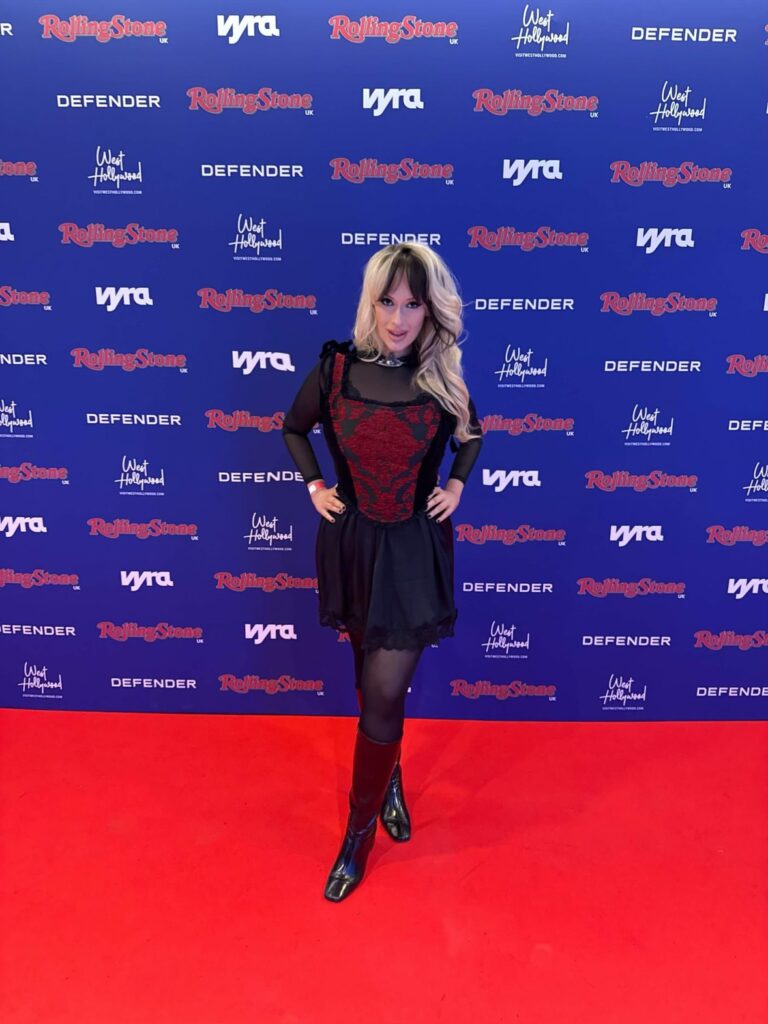
Katerina Muszanskyj, 32
Why wouldn’t kink be at Pride? It is part of our culture! I’ve never understood the ‘debate’ myself. I find it quite dull actually and usually zone out when somebody starts discussing it because quite frankly, why do you care? If other people’s sexual preference bothers you so much, you’re leaning closer to a day in the life of a classic homophobe than a member of the LGBTQIA+ community. Kim, people are dying.
Jokes aside, we have fought so hard to be seen and celebrated as LGBTQIA+ people that turning our back on a huge inclusive section of people in our own community is just so unbelievably backwards. Kink is also huge business; it’s not just sexual preference. Queer owned kink events and brands pay members of our community’s bills and I’m all for contributing.
The two main points I see people reference when discussing kink not having a place at Pride is that it is straight inclusive. To that I say, so was the Mayhem Ball but I saw you there, twice! Are we going to stop playing Lady Gaga at Pride because she’s marrying a man? I think not. When did removing allies become so high up on the agenda?
Another, is the topic is children being exposed to over sexualised adults. Don’t get me wrong, I understand this part entirely, no child should ever see anything that is inappropriate. Common sense must prevail. The parts of Prides that children attend, such as the parades are appropriate, public indecency is an arrestable offence. People know the rules.
“Whilst learning who I was, I found kink communities and spaces to be where I found refuge… and I truly mean that. I’ve never had a boundary crossed in a kink space, I’ve never been groped or felt uneasy. However, the rules seem a lot less clear in the local pub where I experience most of the above, weekly. I feel safer where rules and consent are the most important thing to the people in the room. If only the world would abide a set of rules surrounding behaviour and consent and we could eject anyone who didn’t follow them without question.
Let’s also not forget our asexual family. I can only speak from the experiences of the asexual people in my life, but the reason they tell me that they are so drawn to kink is that they can take part in alternative forms of intimacy that don’t require sexual attraction to have a fulfilling experience.
I think it’s ignorant to remove kink from Pride and as long everyone has common sense and follows the rules, they won’t need punishing! *cracks whip*
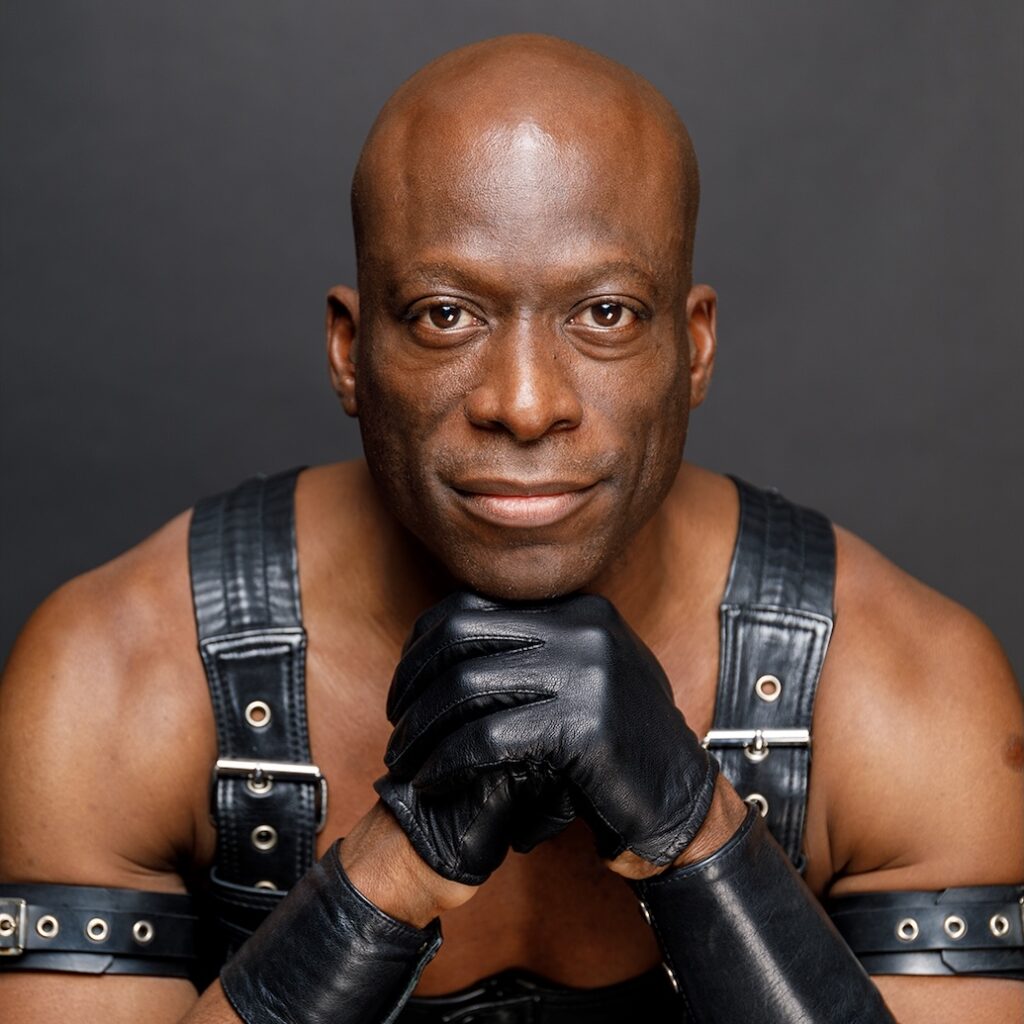
Antoin Strachan, 54
It’s a redundant question – and yet it’s asked again and again. Why? Maybe because smartphones and social media have added a layer of visibility and chatter that wasn’t there before. But Pride is a coming together of subgroups of the broader LGBTQIA+ community. Kinksters are themselves a subgroup. They’re part of the community. There’s this mystery that exists, so, through no fault of their own, they’ve already been othered. But if Pride’s to be truly all-inclusive, the debate shouldn’t even be a topic.
But in the community, in gay circles, even among my own friends, there’s this moral stance. ‘The bad gays, the naughty gays.’ It’s interesting. And yet, I’ve seen kink elements added to Pride events in cities, especially in other parts of Europe, where there’s no need for discussion. It’s embraced and celebrated. In San Francisco, kink will be at Pride, but there’s also Folsom Street Fair – I work as a brand manager at Recon, the fetish network and app, and we’ve been one of the main sponsors of Folsom for 20 years. I’ve been more times than I can count!
We’ve also had a marching spot at the Pride in London parade for some years. I always go to the Pride briefings. At one, they talked about – thankfully, it wasn’t from our group! – someone complaining; they were like: ‘Group leaders, tell your marchers, even if they’re in a jock – we don’t want to see their anus!’ It’s something you’d hope any sensible, mature adult would think about, especially when you’re in an area where there are children around. Some people just need reminding of common sense. Wear what you want, but there needs to be boundaries.
It’s interesting to see all the Americans, Canadians and South and Central Americans coming over to Europe to explore their kinks and fetishes. We have a different way here, and people have caught on. It’s down to visibility – that’s the upside of phones and social media – but also events like Beyond Darklands Festival Antwerp and Folsom Europe in Berlin. Organisers have done a great job of putting it out there. These are safe spaces for people to explore and make meaningful connections.
Fetish Week London, for example, is Recon’s big event that happens in July. It runs for eight days. We start the week casual: social events, cabarets, screenings. No sexual element at all. People go to engage. Before the play parties begin, we hold our big Masterclass event. It’s a series of educational sessions that touch on things like consent, sober play, and general kink safety practices. At Recon events we want to be open and welcoming. We create safer spaces for people to explore, make connections and enjoy fetishes with like-minded kinksters, without fear of being judged or excluded. This is an extension of the meaning of Pride.
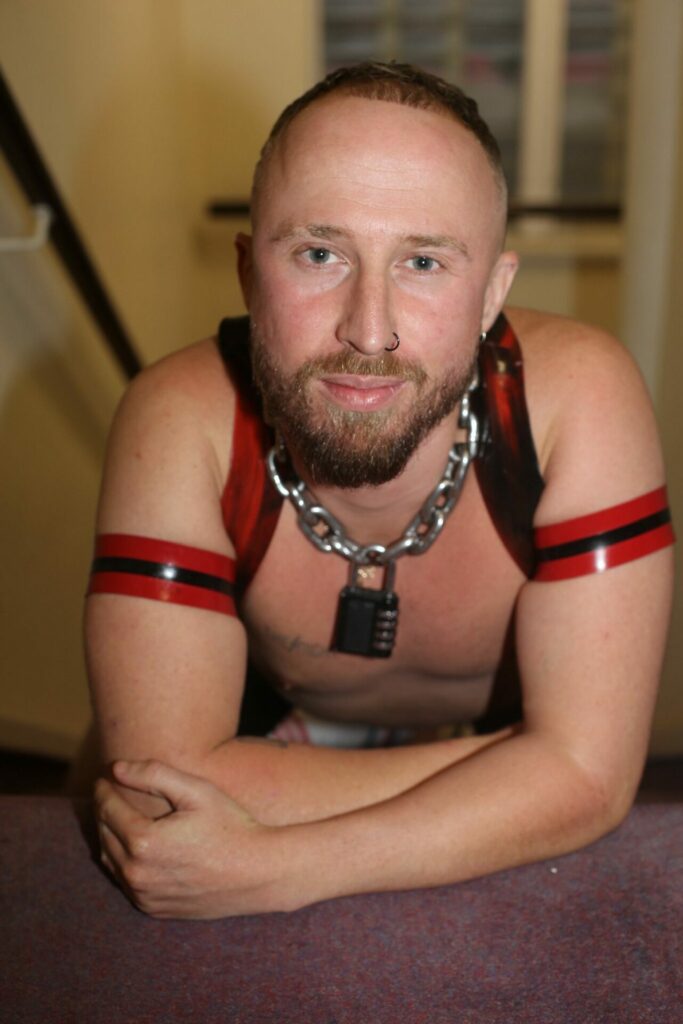
Nic Flanagan, 34
“It’s a weaponised question loaded to stir fear, confusion and hatred”
Personally, I think kink completely has a place at Pride. A lot of LGBTQ+ people have been conditioned with shame growing up. I believe this is a continuation on shaming people who are just living and expressing themselves and their sexualities authentically. We shouldn’t be tearing each other down but celebrating the beauty in our uniqueness and our unique sexual desires. If we stand together, we show the world that we’re proud. I believe people in the kink community are very aware and respectful of others and are kind.
For me, the kink community provided a space to explore my different sexual desires. I’ve met incredibly kind, lovely and self-aware people from around the world, from different cultural backgrounds, with whom I wouldn’t have crossed paths with otherwise.
I think the ‘kink at Pride question’ is just a weaponised question loaded to stir fear, confusion and hatred in the community where our enemies delight in seeing the community tear each other down when we should be standing together.
If you’re curious, be curious. Ask questions. Personally, I’m always very open to anyone from our community asking me questions about my kinks. I always want people to feel sexy and safe. I think education is power. The more informed we are, the quicker it is to shut down groups that demonise us.
I also believe, especially as I’m getting older, it’s incredibly important to be part of a community. A sense of belonging and to be able to feel safe and to be able to express yourself freely without judgment amongst people you connect with. I’ve seen many find joy in their lives when discovering a kink group they connect with. This then positively influences other aspects of their life, as they grow in self-confidence while being supported by their kinky friends.
Being open at Pride shows LGBTQ+s who are kink-curious and wanting to explore the community that it’s safe to do so and again reduces shame.
Let’s get back to remembering what Pride is actually about. A protest. A day of celebration of our unique selves from all different races and cultural backgrounds. It’s a day to express and share our love for each other.
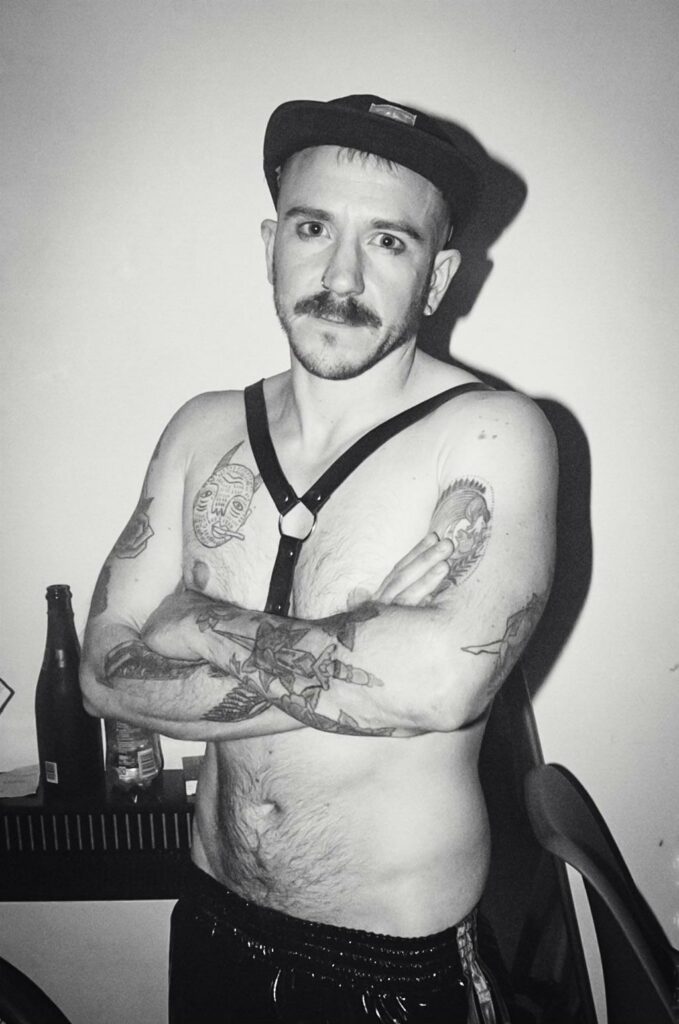
Zach Ellams, 35
“The ‘YMCA’-style leather daddies are certainly not the face of it these days!”
I don’t think I can call myself a certified kinkster by any stretch, yet I’ve been seduced by the surprisingly warm, caring and considerate community that surrounds the kink scene. I admit I was daunted going to my first Klub Verboten night. I questioned whether it was the right starting point for a novice like me. But it was. Before you’re even allowed to step foot through the door, consent, respect and safety are drummed into you through rules and a vetting process, meaning once you’re in, you’re probably in a safer environment than most of us experience riding the Tube or perusing the aisles of Tesco’s.
What’s interesting is KV isn’t designed as a queer space, it’s just queer-friendly, yet I witnessed men in heterosexual relationships comfortably exploring their gender and sexuality without shame and without judgement. I remember being surprised seeing an average-looking straight couple, however the man was wearing stilettos and fishnet tights and appeared to be having the time of his life, while his girlfriend looked on adoringly. How amazing for them. How amazing this space exists and even more amazing that this space appears to bridge a gap between two previously very separate worlds.
The kink scene has grown. It’s more widely accepted within the straight world but has also opened from just gay to a diverse queer scene, that has so much more to it than what people associate with traditional gay kink. The ‘YMCA’-style leather daddies are certainly not the face of it these days! Parties like Joyride have morphed it into something vibrant, free and new. Most importantly, they are more inclusive than ever.
In a year that’s seen trans rights attacked with the recent Supreme Court judgement, which feels like the modern-day Section 28, it’s more important than ever that we aren’t pitted against each other or making judgements on face value. Keeping this debate is maybe pointless? We’ve asked the world to be openminded about us. The least we can do is offer the same to the kink community. Who knows, maybe we’ll both get a fresh perspective? I think Pride should be all about uniting because of our difference, not despite it.
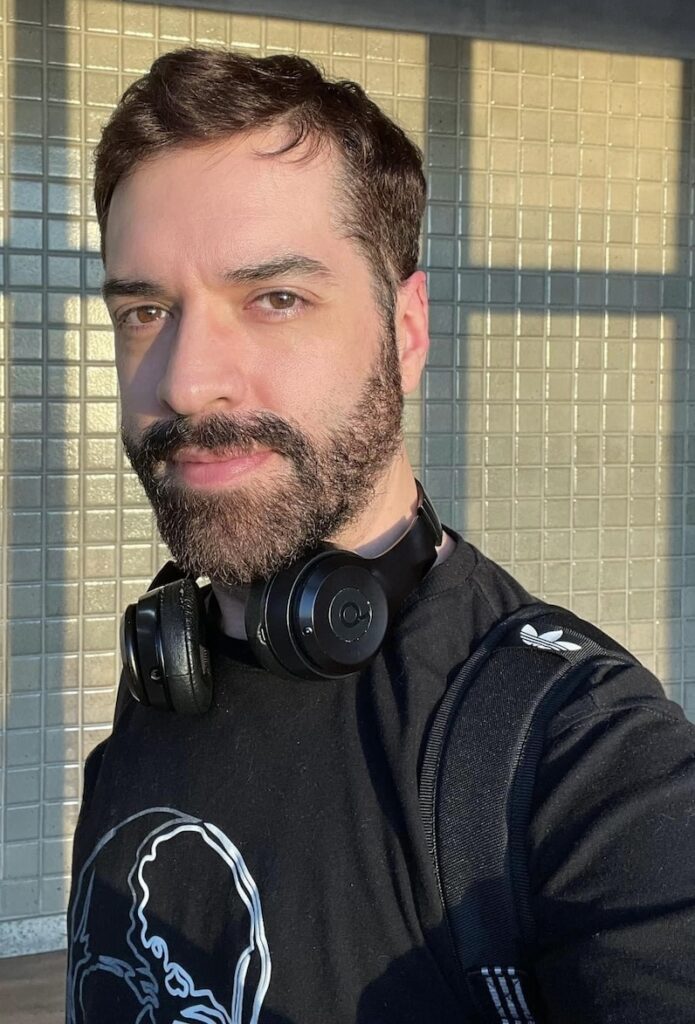
Glauber Westphalen, 39
It feels like a distraction from bigger issues that affect the LGBTQ+s in general. I’m seeing every year, people arguing if things like leather and latex outfits, pup play style or other forms of kink should be allowed at Pride. But when I look at what is really going on in a city like London, I only see real problems that deserve more attention, like crime rising, the social tension about living costs being increased every year, refugees who must leave their countries and try to find a safe space to live. The argument about what people wear at Pride feels so small to me, compared to those big and real issues.
That does not mean the topic is not important. Pride started as a movement to protest for freedom, equality and visibility. For many queer people, kink is not just about sex, it’s part of who they are. Leather, BDSM and pup play groups bring self-expression and confidence to this part of the community. People should have the right to express themselves, if they do so in a respectful and safe way.
Our focus can be more balanced. London, for example, is becoming more complicated to live in. The cost of living keeps going up. Crime in the streets feels more prevalent, and the government is making things more difficult, especially for immigrants and refugees escaping war or poor living conditions. How many LGBTQs are included in these groups?
Maybe the focus here needs to be completely re-targeted, as to how we can deal with real problems, talking more about how to make the city safer and more inclusive. That means better planning for housing, social support and safe spaces where both queer and migrant communities feel respected.
Get more from Attitude