
The true story behind Spanish gay epic La Bola Negra
The film takes its name from an unfinished play by gay Spanish poet and playwright Federico García Lorca, who was assassinated in 1936
By Aaron Sugg
Spanish gay epic La Bola Negra is taking the film world by storm following its cinematic release on 16 October.
Directed by Javier Ambrossi and Javier Calvo, the film weaves together three stories spanning a century of Spanish history, exploring queer identity and the importance of remembering those who came before us.
The film takes its name from an unfinished play by gay Spanish poet and playwright Federico García Lorca, who was assassinated in 1936.
Who was Federico García Lorca?
Lorca was a socialist and a gay man. He was reportedly assassinated by fascist forces, leaving behind a body of work whose significance continues to resonate decades later.
His identity and beliefs were closely connected to the social climate of the time, when homosexuality was heavily stigmatised in early 20th-century Spain.
Lorca’s sexuality influenced his writing. Works including The Public (El público), a play exploring desire and social conventions, and Sonnets of Dark Love (Sonetos del amor oscuro), published after his death, demonstrate his exploration of same-sex desire.
How Federico García Lorca inspired La Bola Negra
Although Lorca completed only four pages of his unfinished play La Bola Negra before his death, the surviving fragment provided the starting point for the film’s first storyline, set in 1932.
It follows Carlos (Milo Quifes), a young man in Granada who hopes to join an exclusive social club at a local casino, like his father. However, rumours about his sexuality lead to his rejection.
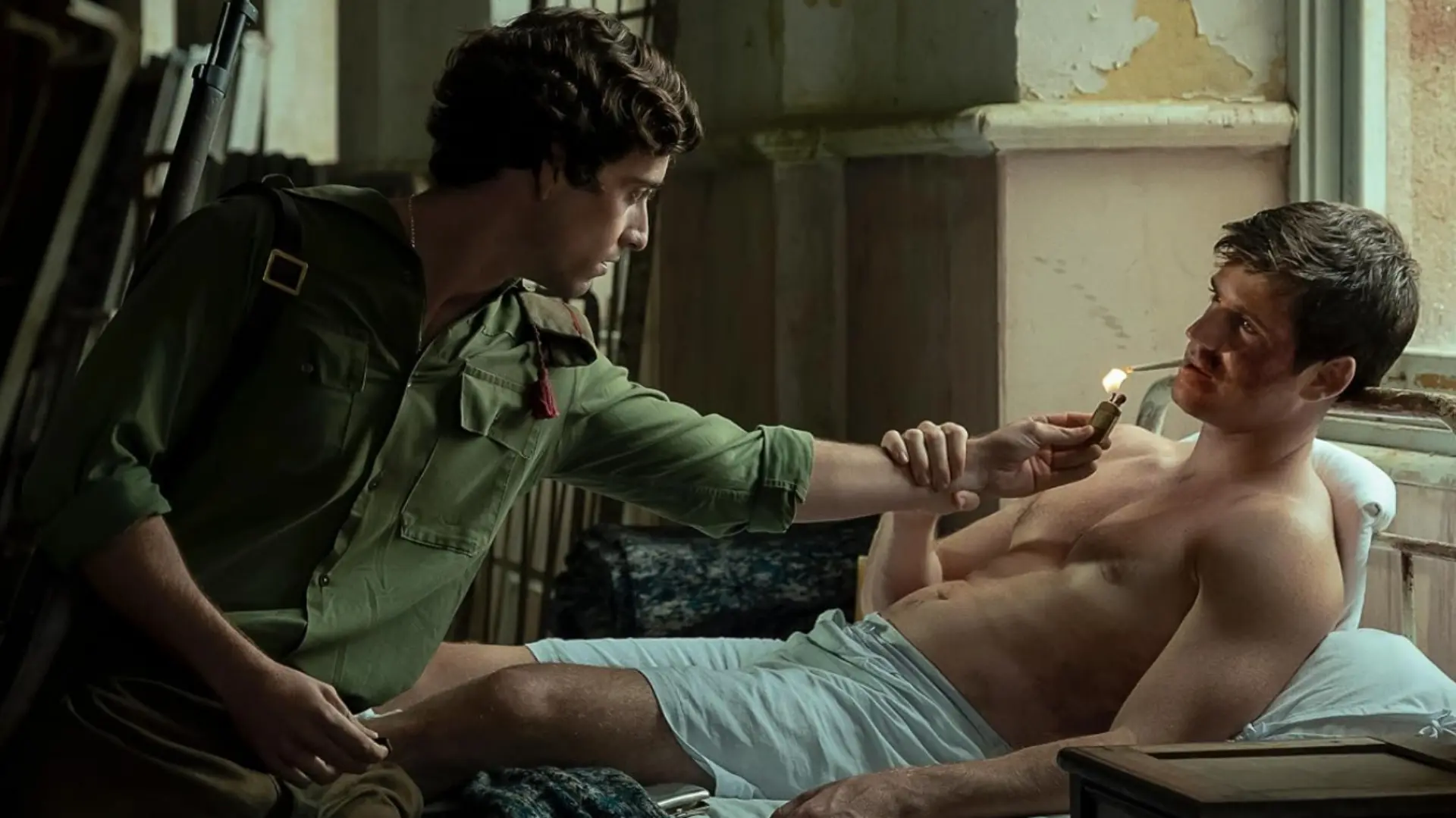
Lorca’s personal life also connects to the film’s second storyline, set during the Spanish Civil War in 1937. This section features Rafael Rodríguez Rapún (Miguel Bernardeau), a real-life theatre collaborator believed to have been Lorca’s lover.
Reports state that Rapún joined La Barraca, Lorca’s travelling theatre company, and the two men are believed to have fallen in love in 1935.
Rapún and Sebastián
In the film, Rapún is portrayed as a wounded political prisoner watched over by Sebastián (Guitarricadelafuente), a trumpet player who becomes caught up in the conflict.
Rapún joined the Republican Army after Lorca’s assassination in 1936. He was seriously wounded in a bombing raid in 1937 and died from his injuries shortly afterwards.
Decades after his death, Lorca remains an important figure in LGBTQ+ cultural history. Speaking to Tudum, the La Bola Negra directors, Calvo and Ambrossi, said: “When we began writing La Bola Negra, we wanted to tell a story about freedom, legacy, and the importance of LGBTQ+ visibility.”
Remembering the late poet, they added: “We are deeply grateful and excited that its message will reach millions of viewers and help carry Federico García Lorca’s legacy to audiences around the world.”
La Bola Negra is to be released in the UK by Altitude from 6 November.