
Moonlight at 10: An Oscar-winning milestone revisited
“The Academy has long salivated over Black trauma framed as progressive, tasteful cinematography – but this wasn’t a white-saviour narrative,” writes Lerone Clarke-Oliver, as the Oscar-winning Moonlight turns 10
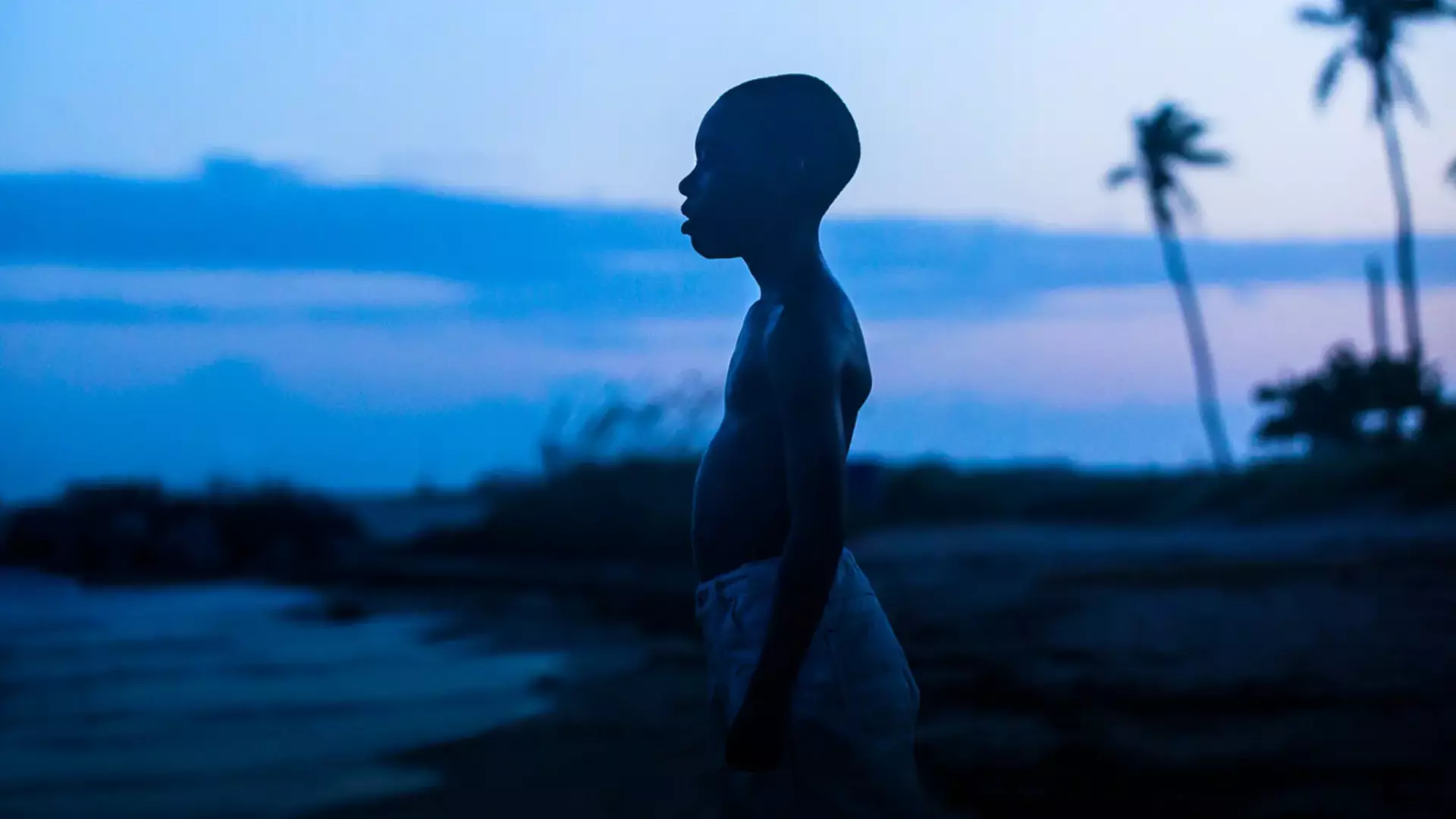
I don’t remember where I was, who I was with or when I initially saw Moonlight. What I do remember is how it made me feel. I often shrug off mainstream gay cinema, in which a white – if not two white men – have their story unfold. Moonlight was different, an all-Black cast, and a story rooted in reality; on rewatching, I was again left feeling uncomfortably exposed.
Ten years ago, Moonlight made history. Directed by Barry Jenkins (who is straight), it became the first LGBT+ film and the first with an all-Black cast to win the Academy Award for Best Picture.
The now-infamous envelope mishap, in which the wrong film was read out, is now Hollywood folklore. But beyond the chaos, Moonlight’s win felt important. Not just for queer cinema. Not just for Black cinema… not just for queer Black cinema. But for anyone who had grown up believing their story was too sad, too complicated, or insignificant to be Hollywood-worthy, let alone awarded Best Picture.
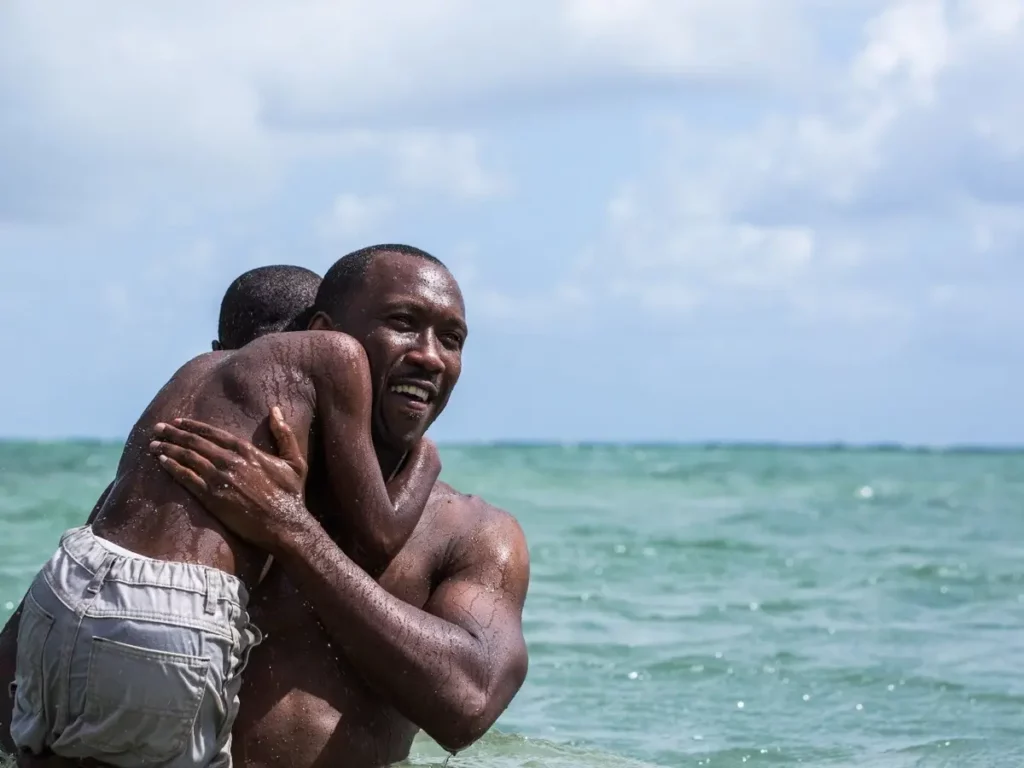
Set against the now common A24 graded humid tones of Miami’s housing projects, Moonlight follows Chiron, played by three actors in different aching chapters by Alex Hibbert, Ashton Sanders, and Trevante Rhodes, as he learns to navigate the world as a gay Black man. We meet him as “Little,” a quiet, yearning child. We see him as a brittle teenager discovering desire and shame in equal measure. Finally, as “Black,” a hyper-masculine adult who has sculpted himself into something that looks like power. Across these life stages, Chiron doesn’t simply age or evolve; he armours up.
For many gay Black men, Chiron’s familial relationships and early life experiences are triggering. He’s essentially adopted by others – not necessarily chosen family – he’s taken in by others, he’s chosen. That subtle act of recognition shifts Moonlight early on into hope: a reminder that even when blood fails us, someone will make space.
In a landscape now dominated by glossy queer futures – think the optimism of Heated Rivalry – Moonlight remains a deliberate stake in the ground. It refuses fantasy. It refuses ease. It offers instead a portrait of survival in Black skin that is intimate, observational, and, at times, almost unbearably confronting.
Each new incarnation of Chiron arrives with knowing punctuation, a loss of the previous version as his armour is slowly built. The effect is emotionally brutal, underlining a loss of innocence and how gay Black identity fractures under pressure from the world around it. Each version is an environmental adaptation, a mask designed to secure perceived safety, respect, and, occasionally, invisibility. Chiron shape shifts not because he wants to, but because he has to.
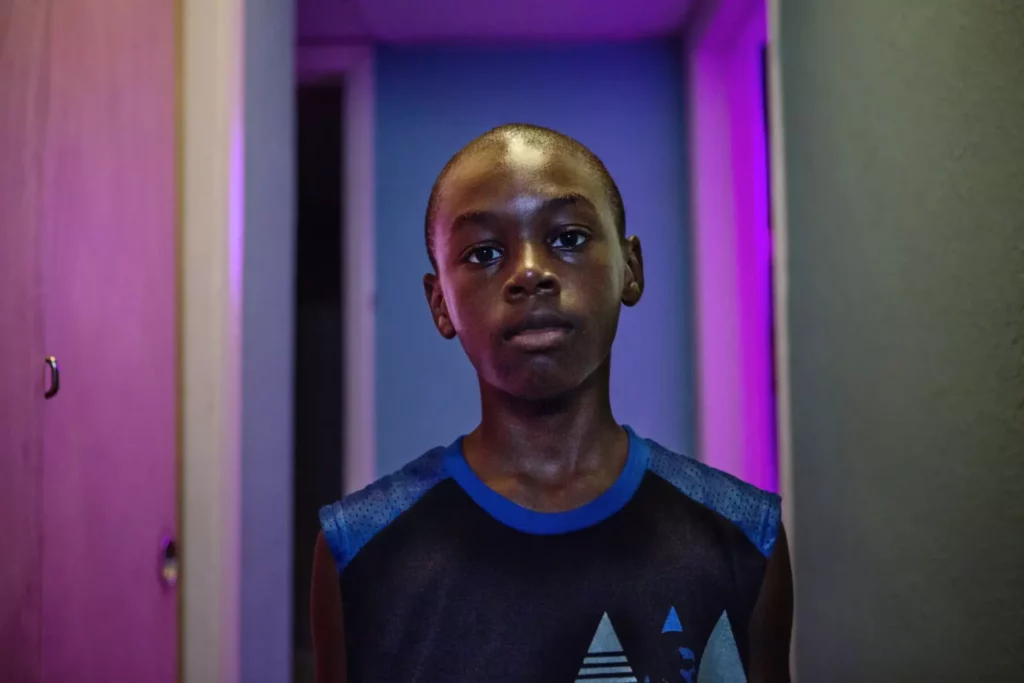
Rewatching Moonlight in 2026, what strikes hardest is its visual confidence. My memory recalls the pain; my eyes rediscover the beauty. The camera lingers on skin, on water, on silence. I’ve often been asked: “Is it harder to be Black and gay?” “I don’t know” has always been my response. But those lingering shots perfectly recall the heavy loneliness that I, too, have felt. At times, Moonlight can feel disturbingly immersive, or voyeuristic. Perhaps I’d, in fact, been spared watching, half-invested, Hollywood’s preferred version of queer leading men.
Moonlight is empathetic, yet brutal, a hyper-reflective study of masculinity on the spectrum of homosexuality. Chiron is fragile, but he wears an armour of strength. He is resilient but deemed weak. His silence speaks volumes about fear, about desire, and the violence that polices both. Moonlight isn’t an easy watch, and that’s its power. It resists the dopamine rush of fantasy and instead roots itself in realism. Life here is framed by culture, race, and class. There are no sweeping declarations, no grand romantic crescendos. Just the treadmill of survival.
For so many men growing up like Chiron, Hollywood-style happy endings are distant notions. Moonlight offers something more radical than a fairytale: self-recognition, reality, and struggle. Chiron finds his way not because the world transforms around him, but because he understands the space he occupies within it. His happiness, when it arrives, is tentative, problematic, and loudly small-scale. It isn’t Hallmark happiness. It is resilience softened into possibility.
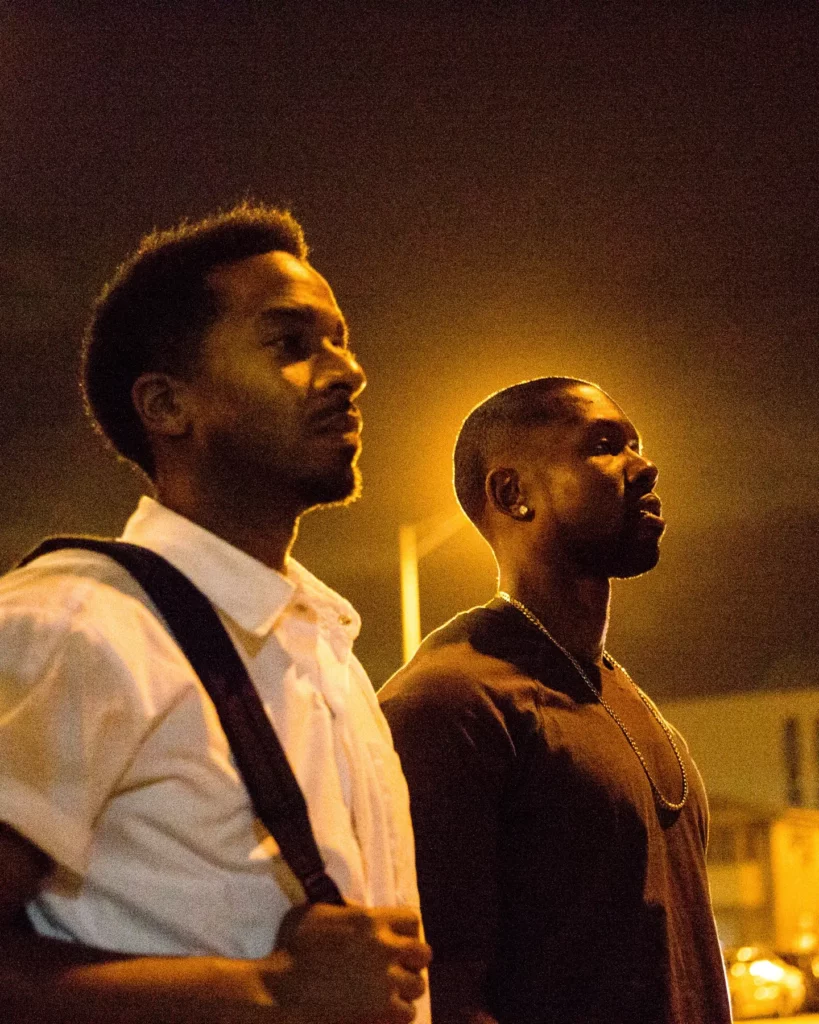
There’s an uncomfortable truth here, too. Moonlight arguably walks the “Black suffering” corridor that Awards bodies so often reward. The Academy has long salivated over Black trauma framed as progressive, tasteful cinematography. But this wasn’t a white-saviour narrative.
There was no benevolent outsider redeeming Black pain. We weren’t betrayed by Hollywood distortions. Instead, the story centred men within our own community whose lives are rarely granted this level of care. Intersectionality and marginalisation were not window dressing; they were the architecture. The film’s voyeuristic rawness is balanced by its own tenderness.
Made on a Hollywood shoestring budget of $1.6 million, Moonlight grossed over $65 million worldwide, proving there is an appetite for compelling queer Black narratives. Not caricatures. Not sidekicks. Not trauma without texture. Stories that breathe. Stories that linger.
And yet, for the vast majority of gay Black men today, the terrain remains complicated. Racism, homophobia, and stereotyping – these forces do not evaporate with an Oscar win. Within the LGBTQ+ community itself, fetishisation and exclusion are just as rampant. Belonging can feel like a battleground. Representation, while powerful, does not equal liberation.
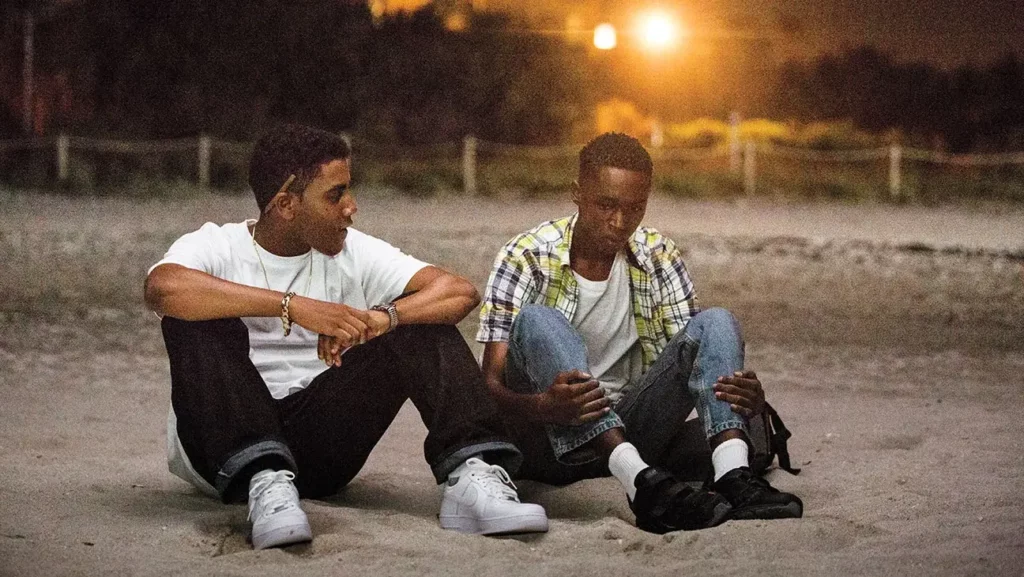
Moonlight holds up because it understands that tension. Its delicate fusion of trauma, identity, and growth feels truthful to the Black men watching it. It doesn’t promise that the world will change. It doesn’t insist that love conquers all. It simply insists that our stories matter.
Will we see a Heated Rivalry-level cultural celebration for queer Black stories any time soon? Perhaps not. Because within the community, we know that celebration without systemic change can feel hollow. Until the world outside shifts, until racism and homophobia lose their grip, stories like Heated Rivalry feel like someone else’s happy ending.
Yet, 10 years on, Moonlight endures. Not as a relic of an awards-season upset, but as a mirror. It reflects the fragility and ferocity of growing up at the intersection of Blackness and queerness. It reminds us that survival is its own form of poetry. And in its final, tender moments, it dares to suggest that even the most armoured among us can, sometimes, find home.
This article first appeared in Attitude Uncut, an all-new digital magazine that will be published six times a year (between Attitude print issues) and available exclusively on Apple News+ and via the Attitude app. Featuring long-read journalism inspired by themes resonating within the LGBTQ+ community, each issue will provide a deep dive into topics as varied as sexuality, identity, health, relationships and beyond.