
Lizzie No: ‘OnlyFans is the last place on the internet where I exist without censorship’
The folk and Americana artist on anti-Black backlash in roots music, why she embraces propaganda, and finding creative freedom ahead of her Long Road Festival debut
By Poppy Jarvis
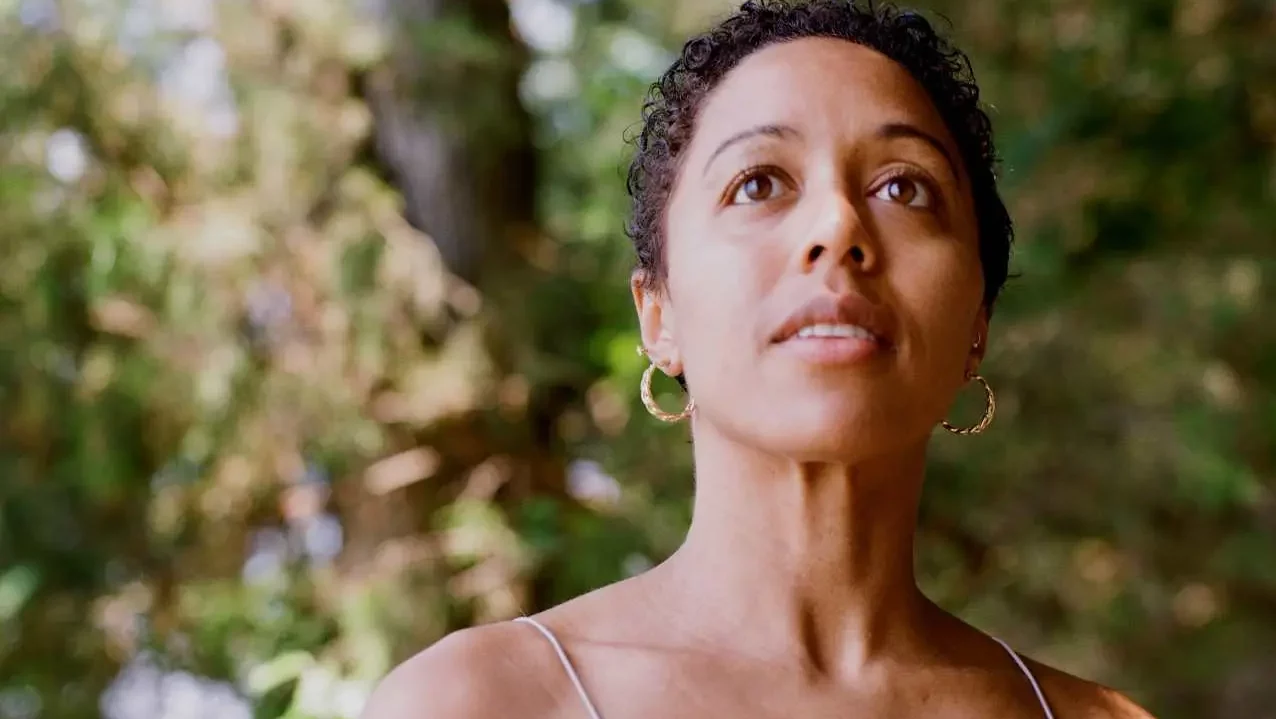
Lizzie No is one of the most compelling voices in folk and Americana, pushing the genre into fresh and revolutionary queer-lit territory. As a Black artist whose music blends emotional storytelling with an inherent political edge, Lizzie No is redefining what folk and Americana can look like as she sculpts a version of the genre that reflects her own identity: expressive, unapologetic, self-defined and bringing a refreshing LGBTQ+ perspective to the scene.
As she prepares for her debut at The Long Road Festival this August, the artist talks about Pride, queerness and the power of taking control of your own narrative.
You’ve spoken about your presence in folk-country spaces being inherently political. With The Long Road Festival coming up in August, what does that mean for you as a queer Black artist? Country and Americana have been expanding in exciting ways with more diverse voices and perspectives. How do you see the scene evolving, where do you feel your work fits into this shift?
We are experiencing a harsh anti-Black backlash in roots music in the United States, exacerbated by the Trump administration’s efforts to terrorise and disenfranchise Black folks across the country. The rightward culture shift has been felt in this music scene in interesting ways – a couple of years ago festivals, labels, and powerful artists were at least paying lip service to the idea of diversity in country and folk music, whereas now we are in a situation where Black speech is being restricted more than ever. I’m seeing more all-white festival lineups than would have been accepted a few years ago, and fewer white artists using their platforms to stand up for their Black peers. These repeating historical cycles have always shaped American culture, and I find myself looking to previous generations of Black artists for strategy, guidance, inspiration, and the will to continue. I am a neurodivergent Black queer woman, which means I am often the person saying the thing that is supposed to remain unsaid. But first and foremost I am an artist, which means that I am in an earnest relationship with the truth. My calling is to turn inspiration into sound, without allowing capital to dictate the content or tone of my work.
Artists like Maren Morris have spoken about challenging old expectations within country music. What kinds of conversations do you think are happening now that weren’t happening even a few years ago?
Coming out is extremely personal for every queer person, but Maren Morris’ coming out as bisexual was also a public and collective leap forward for country music. Maren has always been an advocate for women and minorities, and her music always pushed the racialised boundaries of what country music can sound like. But since she has been singing more openly about queer experience, her catalogue has become essential listening. She’s brave as hell for singing about the sexy, messy, confusing, spiritual, and heartbreaking shades of queer women’s lives. We are living in a more sapphic and fun world in country music thanks to her.
You’ve mentioned that music and activism are inseparable. Why do you think activism needs such a visible place in music today, particularly in genres like folk and country?
Propaganda gets a bad name but I embrace it. Part of our job as artists is to help people envision what the world can be, which is a political act. Without music that sounds like the future, how will people know how to move beyond the status quo? Artists are often the first people to see what’s next and describe it to everyone else before it becomes more broadly accepted. It is a joy and privilege for me to be a spokesperson for Black women’s freedom and dignity, so that we can live that freedom and dignity in the real world.
It’s Pride Month! How are you celebrating, and how has your relationship with Pride evolved over the years as your career and community has grown?
I am celebrating Pride Month by releasing a folk compilation album on my label, Miss Freedomland. It’s called Outlaws’ Almanac and it features country comrades like Nathan Evans Fox, Tray Wellington, Kaia Kater, Olivia Ellen Lloyd, Nick Shoulders, A.J. Haynes and more. We are responding to the 250th anniversary of the American Revolution with our own revolution of live sound and solidarity. Give it a listen when it comes out June 19th!! https://lizzieno.bandcamp.com/album/outlaws-almanac
Pride Month is also for dancing, parading, giggling loudly, swimming in the ocean, napping, gossipping, crying, and listening to music. So I’m doing those things too.
Are there any queer artists who have been especially inspiring to you along the way?
Mali Obomsawin and Paisley Fields helped me come into a fearless understanding of my gender fluidity. Evil is the blueprint for whimsical nonbinary ren faire-ready country twang. Brandi Waller-Pace continuously challenges me to honour the inherent queerness in Black womanhood. Joy Oladokun demonstrates radical vulnerability in a way that keeps me accountable to my own soul. Patrick Haggerty aka Lavender Country blazed a trail for communist country girlies like me.
The Long Road describes you as a ‘rising star on OnlyFans’. What does that platform give you, creatively or personally, that the traditional music industry hasn’t?
OnlyFans is the last place on the internet where I exist without censorship. Social media went from being a wild, unregulated, creative, expansive place for weirdos to connect, to being a place where artists present the most polished versions of our CVs. I don’t know any musicians who don’t self-censor on social media for fear of bullying or loss of opportunities if we express politically inconvenient opinions. My fans on OnlyFans pay a monthly fee to see and hear whatever unfiltered content I choose to post. I don’t have to choose between being seen as an artist, an intellectual, a queer person, a sexual being, and a vulnerable human experiencing life on earth. It’s incredibly freeing in that sense. And the money I earn on OnlyFans comes with no strings attached, musically.
Do you see platforms like OnlyFans as part of a new empowerment model for musicians? A way to take back the narrative and financial control?
OnlyFans, like any kind of sex work under capitalism, is a symptom of our lack of resources as feminised people. People join OnlyFans because they need access to food, healthcare, and housing so I would not say that OF is empowering in itself. But there is definitely value in having a platform where femmes can charge money for the emotional and sexual labour that we are normally expected to provide for free. It’s never just one thing, it’s never black and white.
How are you approaching your set for The Long Road Festival, and what do you hope your presence brings to a festival with such a broad country music audience?
I can only ever be Lizzie No onstage. Country fans and country music sceptics alike are welcome to the show. I welcome outlaws and outcasts, and I hope they see themselves in my music. To that end I’m taking care of myself this summer spiritually, mentally, physically and intellectually. I need to be whole when I step onstage, and that requires protecting myself from bullshit.
What kind of community or energy do you hope to create on that stage? For fans that already know you and for people discovering you for the first time?
Intimacy is my middle name, so I want the audience to feel like they’re sitting across from a friend. Closing that distance, between the stage and the people, requires me to become a one-woman circus, teasing out secrets three minutes at a time as I invite the audience to inch closer and closer to me and to one another. I hope we get to the end of the set and feel that no time has passed.
Your writing blends character, politics and personal truth. What’s exciting you creatively right now?
My attention is on the body these days. When I first started writing songs I was obsessed with lyrics, which is probably why I ended up in folk music in the first place. It’s a storytelling genre. But the older I get the less I care about puzzling out the meaning behind words [can language even create meaning?] and the more concerned I am with moving my body in ways that feel good. I love my friend Son Little’s latest record, Cityfolk. I loved Robyn’s latest too.
What feels urgent in the next chapter of your work? Politically or musically?
My greatest priority at the moment, in terms of creativity, is making sure that I am always learning and deepening. Being a touring artist requires constant motion, which paradoxically can put you in a rut creatively. Doing a show for a new audience night after night is incredibly challenging in some ways but it also requires you to go through the motions a bit. I am going back to school this autumn to get a Master’s degree in Music, Sound, Culture, and Media from Dublin City University. My hope is that by spending some time away from the stage and in the library, I’ll turn my attention outward. Folk music can be so many things – I’m trying to explore as many of them as I can.
Long Road Festival tickets are available now, with the event taking place from Thursday 27 August to Sunday 30 August at Stanford Hall in Leicestershire.