
Orville Peck opens up on overdose, addiction and rehab in Attitude cover interview: ‘I was so lost’ (EXCLUSIVE)
The country star reflected on the darkest period of his life while speaking ahead of the Virgin Atlantic Attitude Awards 2026, in partnership with M&S and electrified by Polestar
By Callum Wells
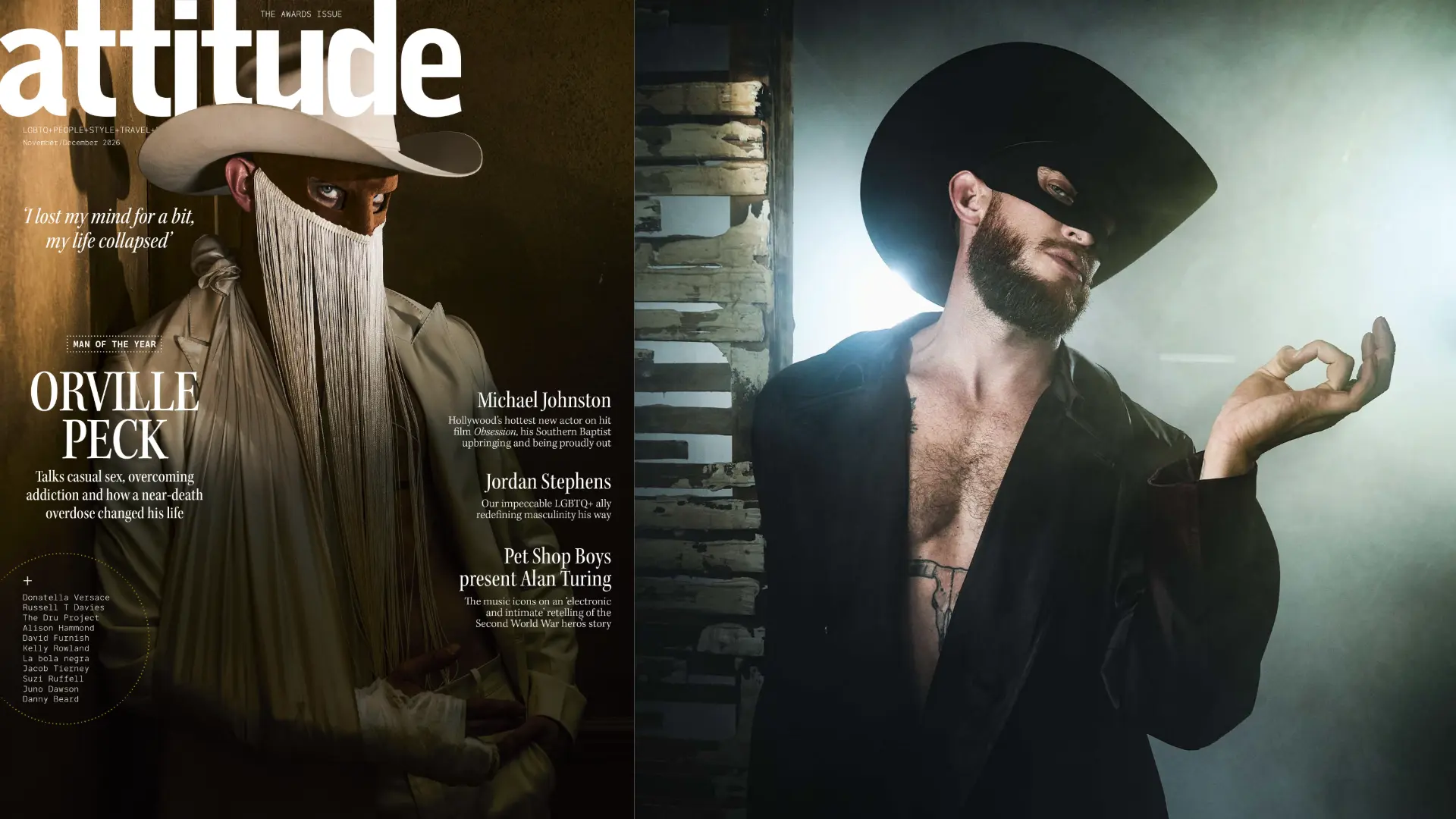
Orville Peck has opened up about the overdose and addiction crisis that led him to rehab, saying he had reached a point where he believed there was “no other path” for him.
The country star reflected on the darkest period of his life while speaking to Attitude for his Man of the Year, supported by Virgin Atlantic, cover for the Virgin Atlantic Attitude Awards 2026, in partnership with M&S and electrified by Polestar.
Peck’s new album Mule was shaped by the events of 2023, when his life “collapsed” amid addiction, the end of a four-year relationship and the pressures of his rapidly rising career.
“I went to rehab, I kind of lost my mind for a bit, and my life collapsed” – Orville Peck reflecting on life in 2023
“Mules are half horse, half donkey – they’re kind of trapped between two worlds,” Peck explained. “This is an album about a year that I spent in 2023 when I got sober. I went to rehab, I kind of lost my mind for a bit, and my life collapsed.”
Following the breakdown of his relationship, Peck returned alone to his home in Los Angeles, where he said he found himself isolated and struggling with addiction.
“For the first time in my life, I was living alone in a house way too big for me, in an industry that I was too sensitive to navigate, and in the first swing of addiction,” he said.
The crisis culminated in a near-fatal overdose
“Back then, I was so reckless with myself because I think I just truly believed that there was no other path for me. I didn’t believe that I was ever going to really be happy. And so it was easy to be self-destructive because I was just so lost.”
The crisis culminated in a near-fatal overdose, after which Peck entered a treatment facility and cancelled a year’s worth of tour dates.
When he went to rehab, the singer said he was forced to confront the effect his addiction had not only on himself but on the people around him.
“My band, when I went to rehab, I cancelled my tour for a year, but that meant I also cancelled their jobs for a year,” he said. “Their livelihoods stopped because of a personal thing for me.”
Peck said he remains grateful that his touring band chose to return after his recovery.
“They didn’t have to come back and trust that I wouldn’t do that again to them. And they did come back. For that, I’m incredibly grateful, and incredibly aware of the effect my actions can have on the people around me.”
His time in rehab also became part of the creative process behind Mule, including the track ‘Rehab Blues’.
“You’ve got to be in a pretty dark place in your life to sort of casually think about not having a life” – Peck
Rather than presenting recovery as a neat transformation, Peck said the song reflects how difficult the process actually was.
“It wouldn’t have been authentic for me to write some big epiphany rehab song, because I was a little asshole in rehab,” he said. “So, I had to make the song like a cheeky little comedy song because that was my attitude.”
Looking back on the person he was during that period, Peck became emotional.
“You’ve got to be in a pretty dark place in your life to sort of casually think about not having a life,” he said. “So, when I think about that person, I have a massive amount of compassion.”
Peck said that, despite the pain of that period, he ultimately needed to experience it to reach the place he is now.
“I am truly happy with who I am” – Peck
“I had to go through those series of events, as painful as they were, to get to the place I am today,” he said. “I feel really grateful for those really hard moments because it made me wake up and want to change.”
Now sober and in a new relationship, Peck said the biggest change in his life has been learning to accept himself.
“When I look at where I was three years ago versus now, the biggest difference is that I am truly happy with who I am,” he said. “I have a lot more grace and patience for myself, and a lot of gratitude for the people who stayed in my life.”
The full interview appears in the Attitude Awards 2026 issue, available on digital platforms and in print. Print copy available for pre-order here.