
Leather daddies dominated the “Fashion is Art” Met Gala
The leather clad worlds of Tom of Finland and Robert Mapplethorpe proved to be the ultimate reference point in menswear for the annual fashion event
With a dress code as broad as “Fashion Is Art,” the Met Gala 2026 red carpet was filled with artistic references ranging from Van Gogh’s post-impressionist blooms to the marble sculptures of Greek antiquity.
For menswear, however, one look appeared to dominate the evening: the leather-clad “daddies” associated with queer artists Tom of Finland and Robert Mapplethorpe, whose depictions of masculinity, eroticism and power have moved from subversive queer art into mainstream fashion.
The theme was fitting for an event centred on art. After all, the event marked the opening of the Metropolitan Museum of Art’s spring 2026 exhibition, “Costume Art,”. The latest blockbuster from Costume Institute curator Andrew Bolton, explores the relationship between fashion and fine art across 5,000 years of dress history.
But with such a vast cultural canon to draw from, the question remains: why did this kink-inflected visual language popularised by Tom of Finland and Robert Mapplethorpe emerge so prominently – and who, among the attendees, did the source material justice on the red carpet?
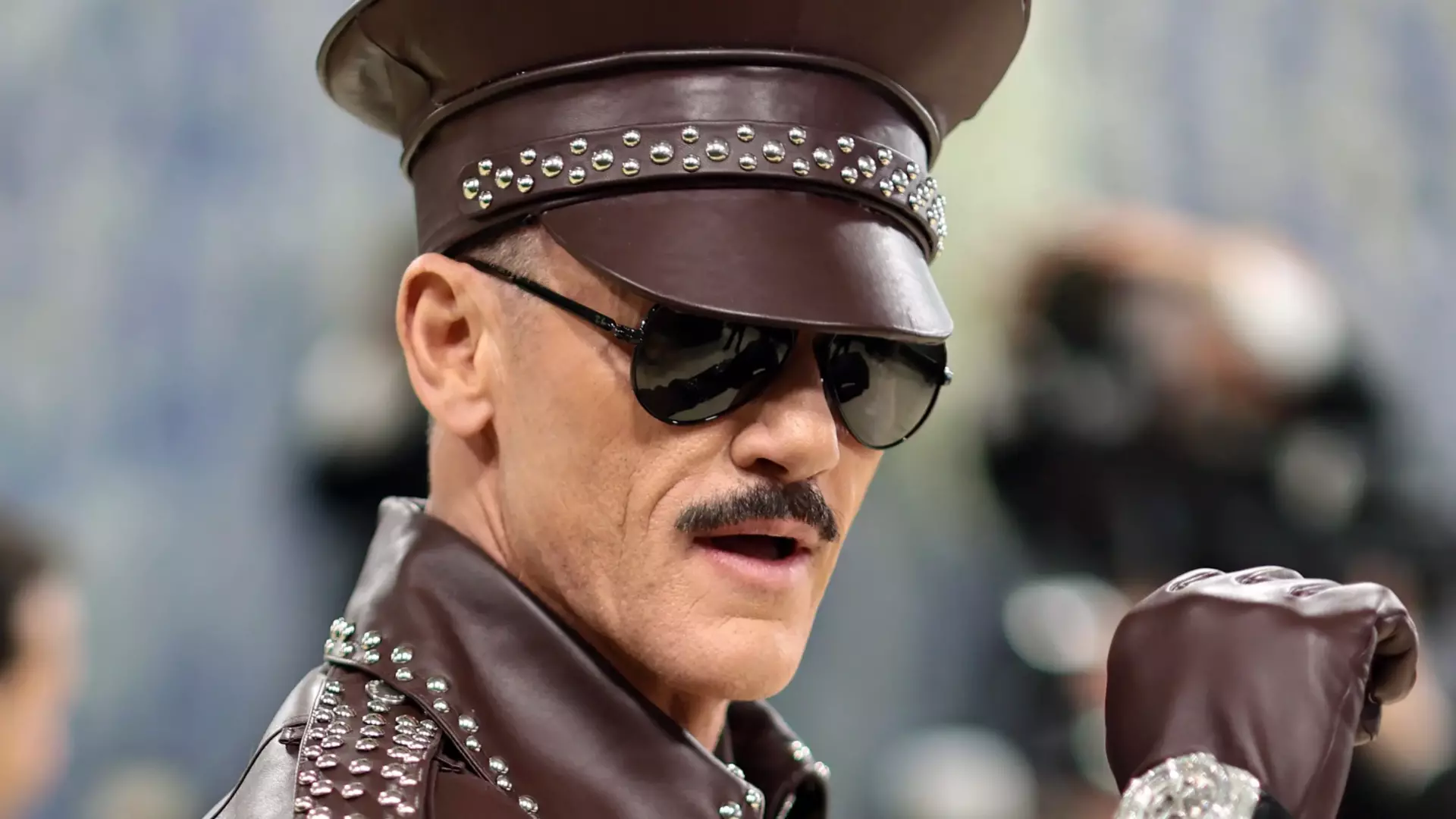
Luke Evans
Setting the tone for an evening that leaned heavily into Tom of Finland-inspired aesthetics was Welsh actor and Attitude Award recipient Luke Evans, who channelled the Herculean proportions found in the pages of Physique Pictorial.
Working with Spanish label Palomo Spain, Evans wore a custom, burgundy leather set with studded detailing, including more provocative embellishment along the seat of the trousers.
Nicholas Hoult
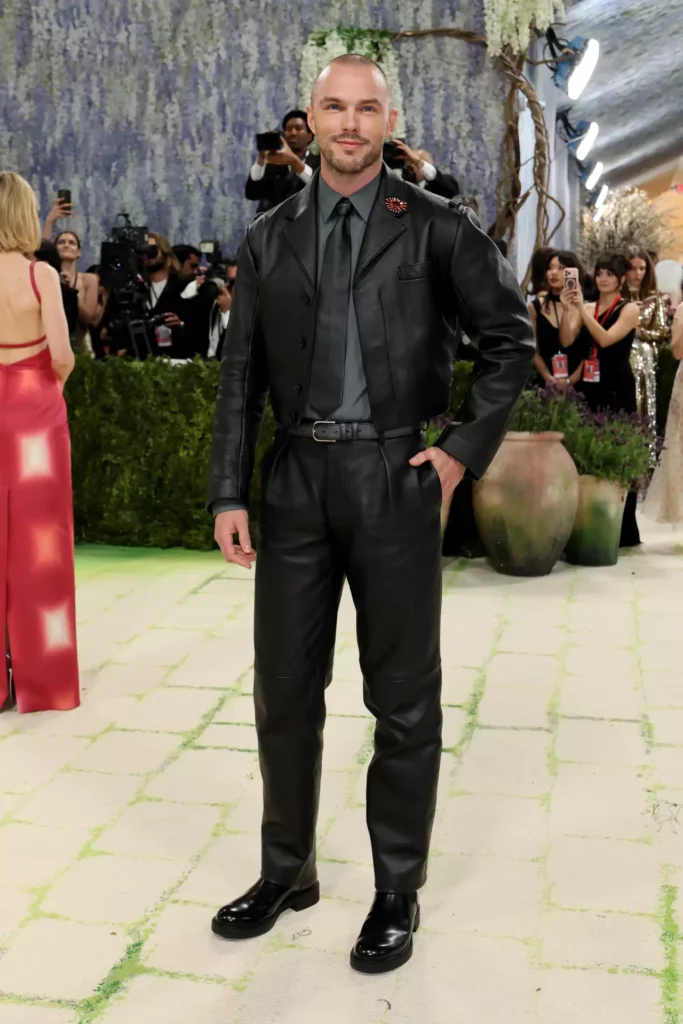
While Luke Evans leaned into a faithful interpretation of Tom of Finland’s instantly recognisable leathermen, actor Nicholas Hoult took a more modern, minimalist approach.
Wearing a custom leather set by Prada, Hoult’s look featured clean, refined lines with subtle nods to police and military uniforms.
The result echoed the structure and severity of Finland’s linework, translating its domineering shoulders and sense of authority into a restrained, contemporary silhouette that found the perfect balance between Folsom and red carpet.
Troye Sivan
Elsewhere, Troye Sivan paid homage to American photographer Robert Mapplethorpe, whose poetic imagery captured both bodybuilders and members of the kink community, alongside still lifes and self-portraits.
Sivan’s interpretation focused less on Mapplethorpe’s subject matter and more on his personal style, drawing notably from his 1982 self-portrait. The look featured a leather tie and carefully coiffed hair, echoing Mapplethorpe’s own sharply composed, deliberate aesthetic.
Patrick Schwarzenegger
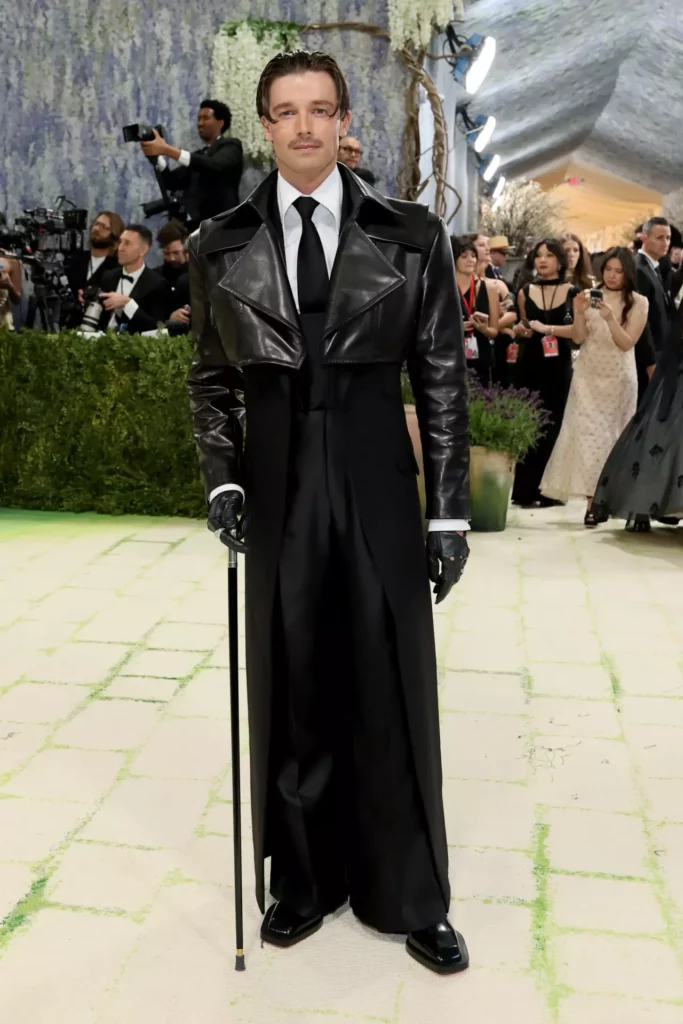
Also inspired by Robert Mapplethorpe, Patrick Schwarzenegger drew on Skull Walking Cane (1988), a poignant, symbolic photograph created shortly before the artist’s death from AIDS-related complications in 1989.
The cropped leather trench coat and wide-leg trousers were created by New York label Public School. The look quietly nodded to Mapplethorpe’s late-period work, holding beauty, fragility and finality in deliberate tension.
Leather’s enduring legacy
“It’s an honour to see Luke Evans and Nicholas Hoult represent Tom of Finland at the Met Gala”, says Richard Villani, the Director of Global Partnerships & Exhibitions of the Tom of Finland Foundation. “Showcasing how Tom’s iconic imagery continues to inspire and shape fashion and culture today”.
For decades fashion has absorbed underground erotic art into its vocabulary of masculinity, turning it into a powerful shorthand for strength and sexuality.
Both niche and global designer brands have engaged directly with this legacy from JW Anderson to Diesel mining the Tom of Finland Foundation archives as inspiration for kink-fuelled capsule collections.
Fashion’s broader fascination with reclaiming coded imagery also drives the dominance of this aesthetic. Luxury houses and stylists have steadily recontextualised the “leather daddy” archetype. Once confined to nightlife and subcultural spaces – into a symbol of confidence, control and deliberate visibility.