
British artist Alex Chinneck brings his distorted sculptures to Dior
The Maison’s New York and Beverly Hills flagships explore twisted motifs, reflecting a creative connection between the USA and Paris
Jonathan Anderson’s debut cruise show earlier this month brought Christian Dior’s relationship with Hollywood back into focus, placing cinematic references to Alfred Hitchcock and American glamour in the spotlight.
Now, the house is broadening that dialogue once again through a new artistic collaboration that bridges fashion, sculpture and urban culture, tapping British artist Alex Chinneck to create a series of sculptures for flagship locations in New York City and Beverly Hills.
Alex Chinneck
Known for his surreal, illusion-driven installations that bend and distort familiar architectural forms, Chinneck’s work has been exhibited internationally, cementing his reputation as a leading figure in contemporary sculpture.
His knack for distortion mirrors that of creative director Jonathan Anderson, both sharing an irreverent, art-inflected approach to design.
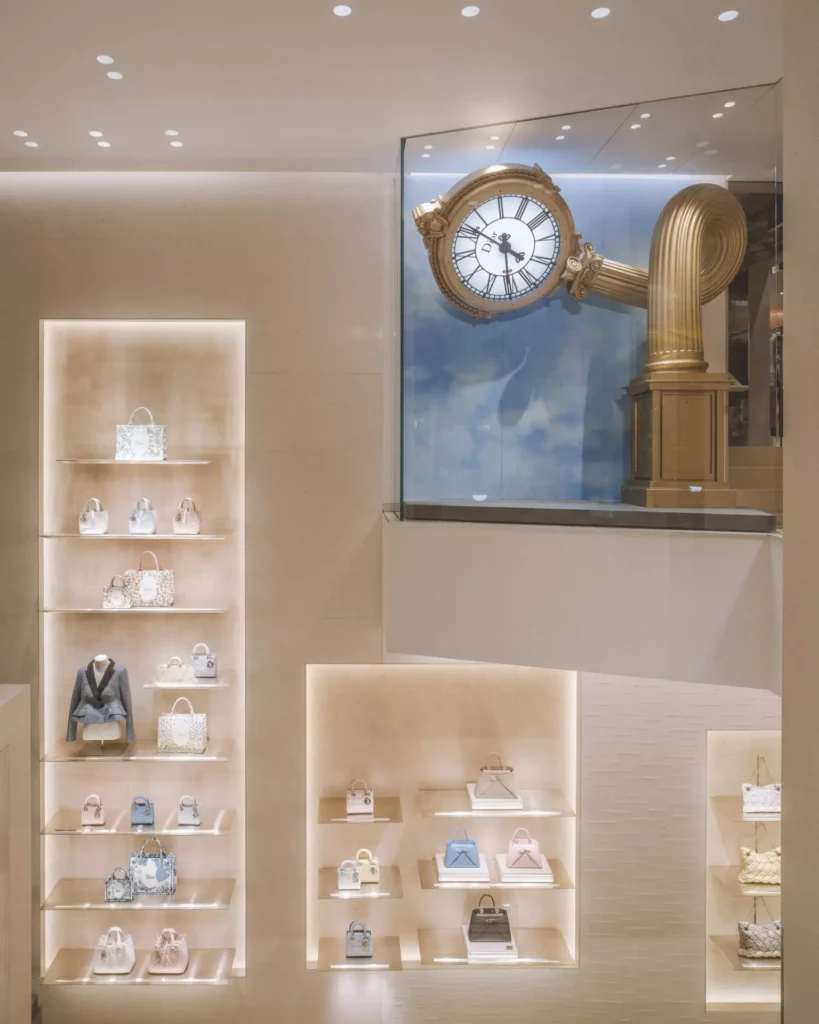
“Chinneck brings his signature visual language to two of the brand’s most prominent retail spaces, transforming them into immersive experiences.
New York City
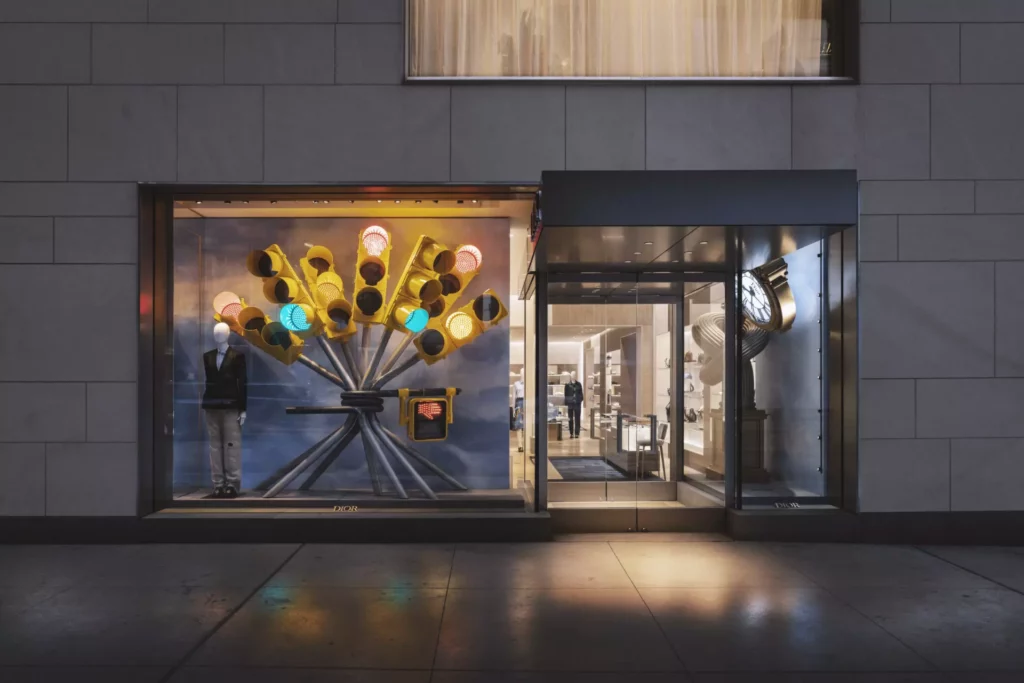
In New York, the concept takes on the energy of the city itself. Chinneck reimagines quintessential “concrete jungle” motifs through his playful, twisted aesthetic, turning everyday urban symbols into unexpected works of art.
Iconic yellow taxis appear as if gently distorted in motion, while streetlamps curve and fold in impossible directions, challenging the rigidity of the city’s grid-like structure.
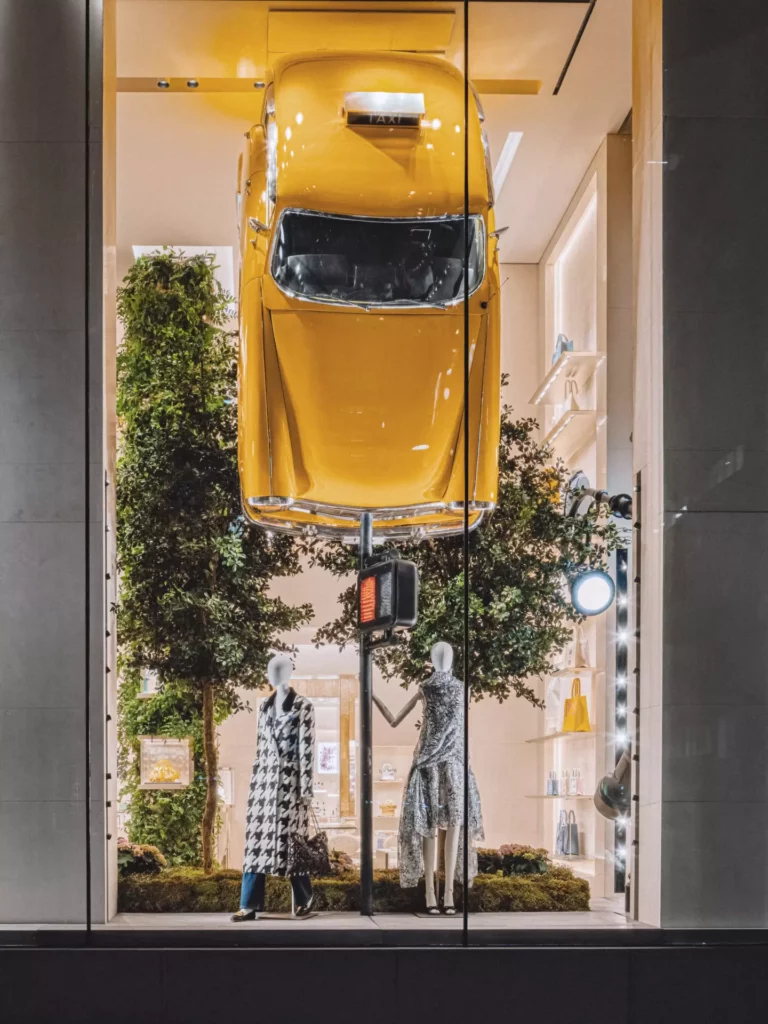
“The work creates a dreamlike reinterpretation of New York’s visual identity that feels familiar yet subtly undone and echoes Dior’s ongoing conversation with American cultural codes.
Beverly Hills
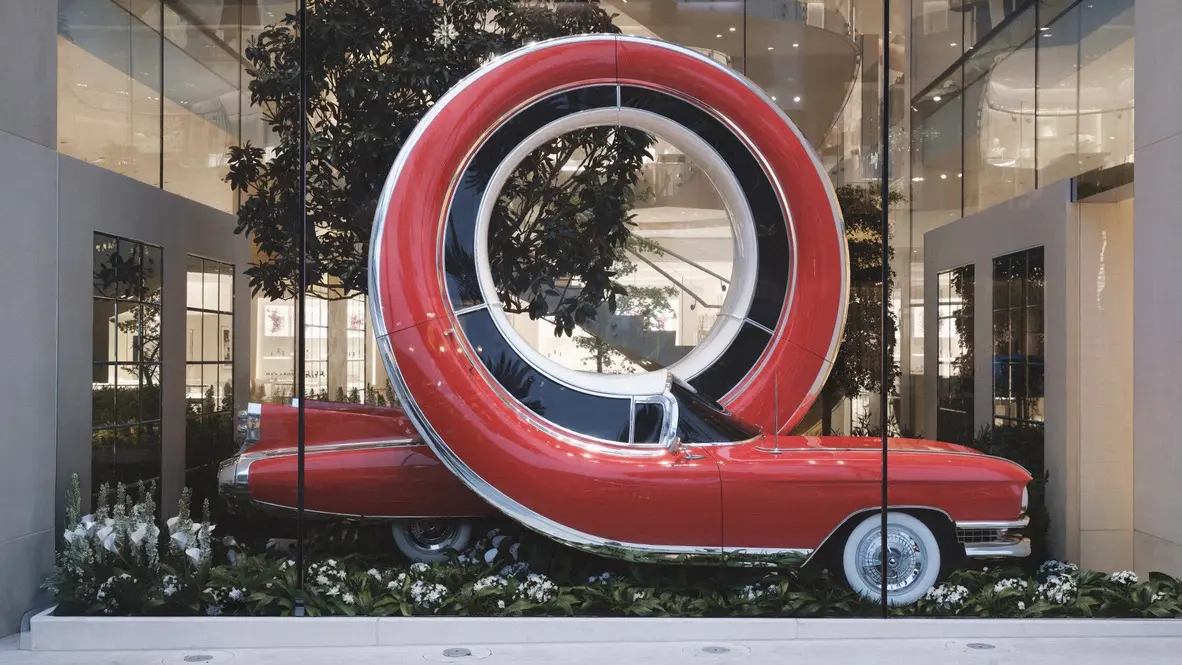
Meanwhile, in Beverly Hills, the narrative shifts into a more cinematic register. Here, five sculptural works continue Chinneck’s exploration of distortion, this time drawing on the iconography of luxury and Californian glamour.
Cars, ornamental lamps and architectural details are reworked into fluid, exaggerated forms, as if shaped by couture itself. Bent into ribbons, bows, threads and draped gestures, the objects take on the softness and elegance of fabric, blurring the boundaries between industrial design and high fashion.
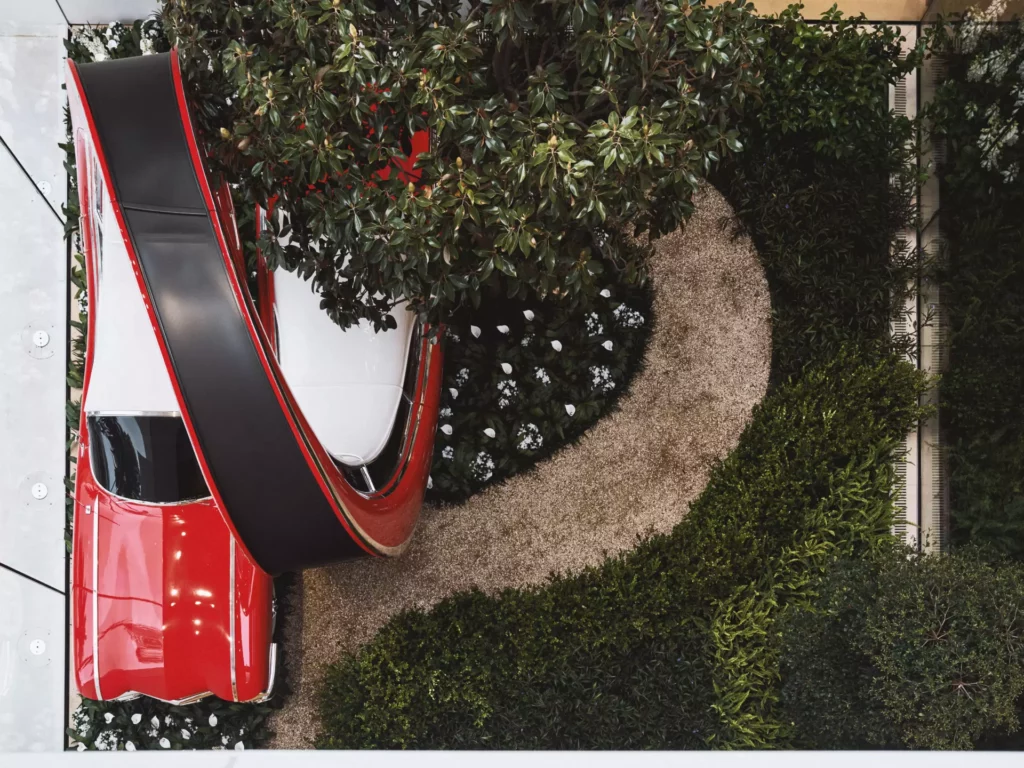
Across both cities, Chinneck’s interventions extend Dior’s storytelling beyond the runway and into the urban landscape, offering a physical manifestation of the Maison’s cultural dialogue with America.
In doing so, Dior reinforces its position not only as a fashion house, but as a cultural force that engages with art, architecture, and place to continually reshape how audiences experience its heritage in the modern world.