
How does the Equality and Human Rights Commission’s final draft affect trans people?
From the April 2025 UK Supreme Court ruling to the final Code of Practice, campaigners are challenging the final guidance
By Aaron Sugg
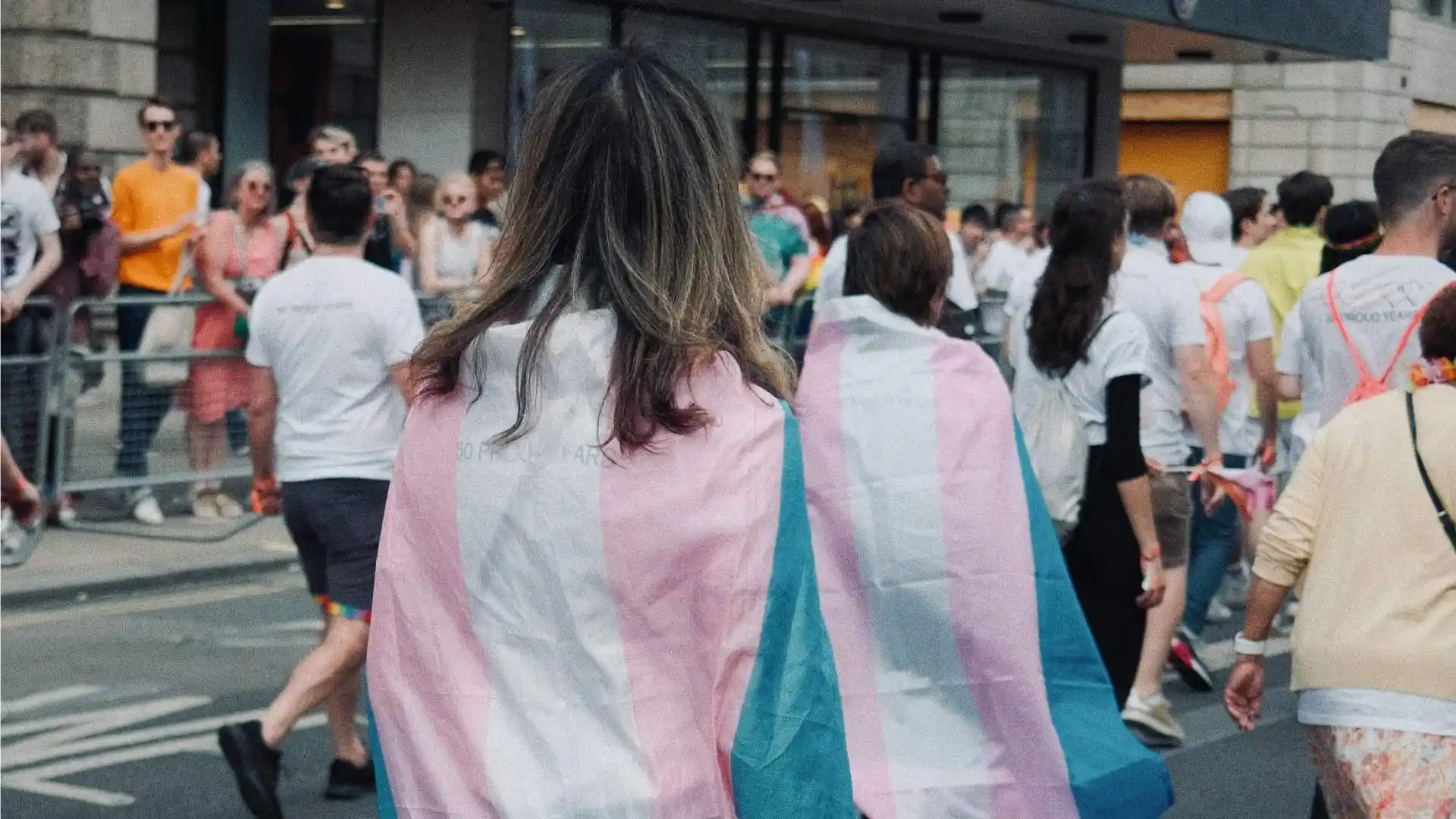
Today (5 August), the Equality and Human Rights Commission (EHRC)’s final Code of Practice on single-sex spaces comes into force, affecting trans people across the nation.
Laid before Parliament on 21 May 2026, its final draft restricts trans people from using facilities that align with their gender identity, with campaigners arguing that it treats trans people as a “third gender”.
The policy applies across England, Scotland and Wales and follows the April 2025 UK Supreme Court ruling, which determined that the legal definition of “woman” under the Equality Act refers to biological sex.
April 2025 UK Supreme Court ruling
It is worth noting that the Court’s ruling was made without hearing from any trans people about their experiences, and has also been described as “scientifically illiterate” by 50,000 members of the British Medical Association.
Following this ruling, the EHRC issued interim guidance explaining how organisations should apply the law to single-sex spaces. This led many public services to reconsider their policies involving trans women in settings such as toilets and changing rooms.
This raised several practical questions, not only within the trans community, but also among those responsible for implementing workplace policies.
The interim guidance was later withdrawn following further review and criticism. The Good Law Project brought a legal challenge to the High Court relating to the EHRC’s guidance, arguing that its interpretation of the Equality Act 2010 was incorrect and would unlawfully affect trans people.
In February 2026, the High Court reportedly said the EHRC had not misinterpreted the law in a way that made the guidance unlawful, and that service providers could lawfully allow trans women to use women’s facilities. “Further legal analysis” was encouraged.
What does the EHRC’s final draft guidance say about trans people?
The EHRC carried out several consultations and revisions before producing updated guidance, which was formally laid before Parliament on 21 May 2026.
The final code of practice is not law; it is statutory guidance setting out how service providers should apply the ruling in practice. It states that single-sex spaces may, in certain circumstances, be based on biological sex, meaning trans women may be excluded from female-only spaces.
Campaigners say the EHRC’s guidance treats trans people like a “third gender”
As a result, the guidance says organisations should consider alternative options for trans people. It refers to providing a separate “third space” or gender-neutral facilities. Campaigners say this treats trans people like a “third gender”. If separate/single sex spaces exemptions are in place (such as separate sex toilets), the guidance does say that trans people should use the facility aligned with their sex as noted at birth.
More than 13,000 toilets, 5,000 changing rooms and 18,000 signs will be affected by the controversial guidance, which requires widespread changes across public spaces, such as: gyms, hospitals, leisure centres, restaurants, hairdressers, council services and sports clubs.
On public bathrooms specifically, the guidance also states that it is “unlikely to be practical or appropriate to challenge people in ordinary toilet settings”.
TransActual raises concerns that the guidance affects the whole of the LGBTQ+ community
Trans organisations and campaigners have raised serious concerns about what this means for the future of trans rights in the UK.
TransActual said: “The newly published EHRC Code of Practice leaves trans people in the UK today with fewer rights than they had prior to last year’s Supreme Court ruling.” They added that it has not only failed to protect trans rights and “dignity”, but appears “to have weakened protections for the LGBTQ+ community as a whole.”
Gender reassignment remains a protected characteristic
Importantly, this guidance does not create any criminal law prohibiting trans people from accessing single-sex spaces such as bathrooms, and does not encourage harassment in those spaces.
Gender reassignment remains a protected characteristic under the Equality Act 2010, meaning trans people are legally protected from discrimination and harassment in all settings.
There is no single official UK document that can reliably prove a person’s sex. Driving licences do not record sex, while passports and, in some cases, birth certificates can be updated to reflect a person’s gender. Organisations cannot routinely require people to produce documentation to prove their sex.
Campaigners challenge the EHRC guidance
Campaigners have raised concerns over the guidance, including the Good Law Project, which is supporting a legal challenge brought by an unnamed trans claimant and several trans-inclusive organisations against the UK Government and the EHRC.
The Good Law Project’s Trans Rights Lead, Jess O’Thomson, criticised the Government’s approach, calling the Code of Practice “transphobic”. Alexandra Parmar-Yee, Director of the Trans+ Solidarity Alliance, described it as “chaotic, unworkable and cruel”.