
European Court of Justice rules Hungary’s anti-LGBTQ+ laws violate EU policy
Under Viktor Orbán’s rule, anti-LGBTQ+ legislation was introduced, which the European Court of Justice says should now be overturned
By Aaron Sugg
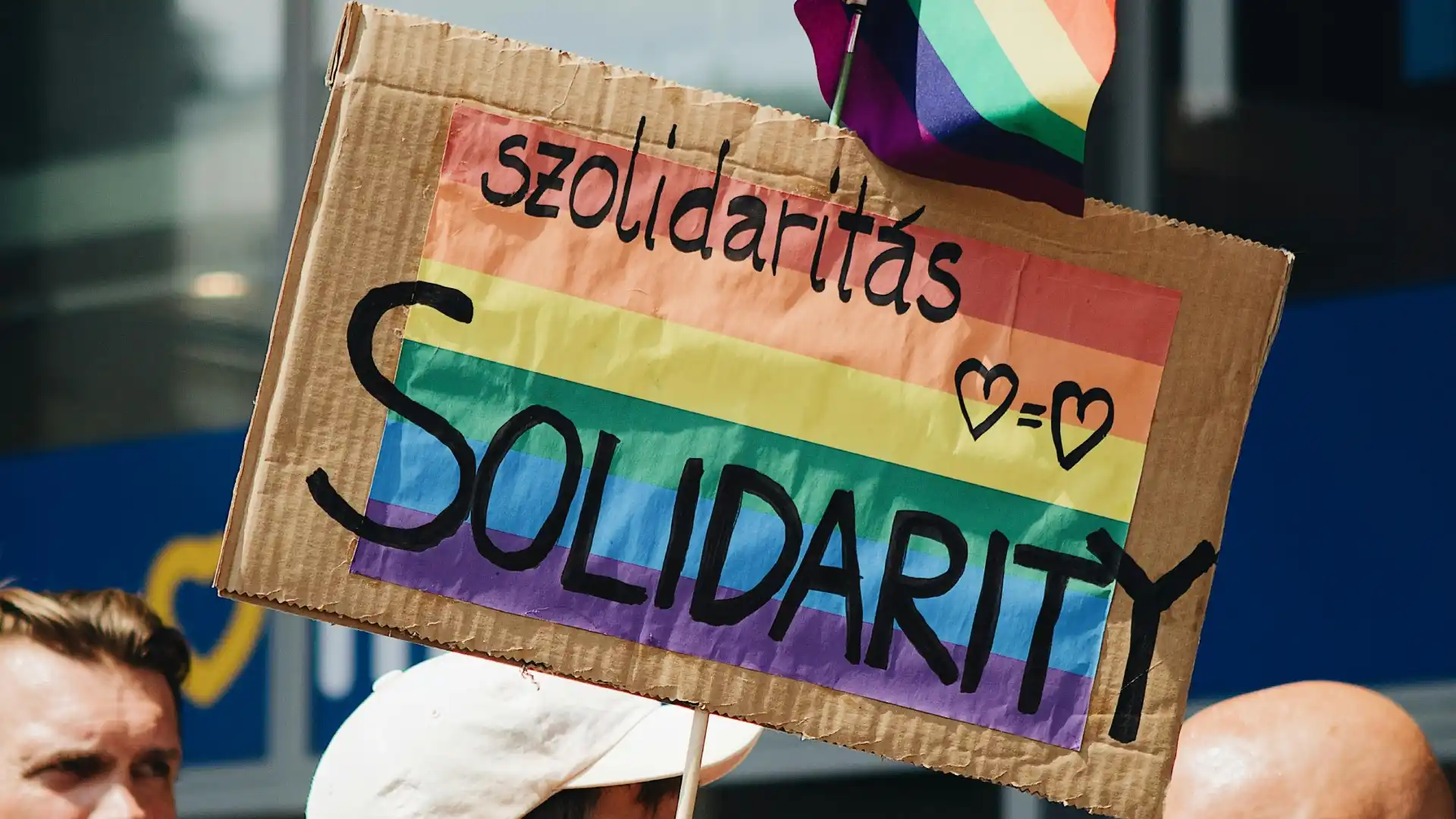
The European Court of Justice (ECJ) has ruled that Hungary’s anti-LGBTQ+ laws violate European Union policy and fundamental EU values.
Following a historic vote in Hungary last week (13 April), the country’s prime minister, Viktor Orbán, was voted out of office after 16 years in power.
During his time in power, LGBTQ+ rights across the nation were under threat, notably in 2021 when the government banned the “promotion” of homosexuality or gender change to people under 18.
Is Hungary LGBTQ+ friendly?
Under his rule, the government also amended the constitution to define marriage as between a man and a woman, limited legal recognition for the trans community and cancelled Budapest Pride.
Orbán’s administration faced ongoing disputes with the European Union over rule-of-law concerns, leading to Hungary being referred to the ECJ in 2022.
The highest court of the European Union has now come to a conclusion.
What did The European Court of Justice say about Hungary’s anti-LGBTQ+ laws?
The ECJ found Hungarian legislation breaches multiple EU rights, including protections against discrimination based on sex and sexual orientation, respect for private and family life, and freedom of expression and access to information.
Judges said the law stigmatises LGBTQ+ people, particularly transgender individuals, and wrongly associates them with paedophilia.
As per the official news release, the ECJ stated: “Following an action for failure to fulfil obligations brought by the European Commission in that regard, the Court of Justice finds that Hungary has acted in breach of EU law on a number of separate levels: the primary and secondary law relating to services in the internal market, the Charter of Fundamental Rights of the European Union, Article 2 TEU and the General Data Protection Regulation.”
What happens if Hungary does not comply with ECJ’s findings?
The body warned: “An action for failure to fulfil obligations directed against a Member State which has failed to comply with its obligations under EU law may be brought by the Commission or by another Member State.
“If the Court of Justice finds that there has been a failure to fulfil obligations, the Member State concerned must comply with the Court’s judgment without delay.”
Award-winning researcher Dr Koen Slootmaeckers praised the court’s judicial decision in a statement to Attitude.
“LGBTQ+ rights are a core part of EU values” – Dr Koen Slootmaeckers marking the landmark ruling
“For the first time, the European Court of Justice (ECJ) confirmed that LGBTQ+ rights are a core part of EU values,” said the Associate Dean for Equality, Diversity and Inclusion at City St George’s, University.
“This judgment does something the European Court of Justice (ECJ) has never done before: it found a Member State in breach of Article 2 of the Treaty on European Union as a distinct and independently justiciable infringement,” Slootmaeckers continued.
“The Court has effectively said that the Union’s foundational values are not aspirational language; they are enforceable obligations,” explained the researcher.
Péter Magyar is set to become the next prime minister of Hungary
“This is a key ruling and linking it to the identity of the EU produces important safeguards for LGBT rights in Europe.”
Following Orbán being ousted, Péter Magyar, leader of the Tisza Party, defeated him in a landslide election victory, setting him up to become the next prime minister of Hungary.
The responsibility will presumably fall on Magyar’s shoulders. During his election campaign, the politician remained silent on LGBTQ+ rights.