
BBC documentary to explore whether King James VI and I was gay
The Queen James documentary will draw focus to Robert Carr, Earl of Somerset, who has been described as James's favourite courtier
By Aaron Sugg
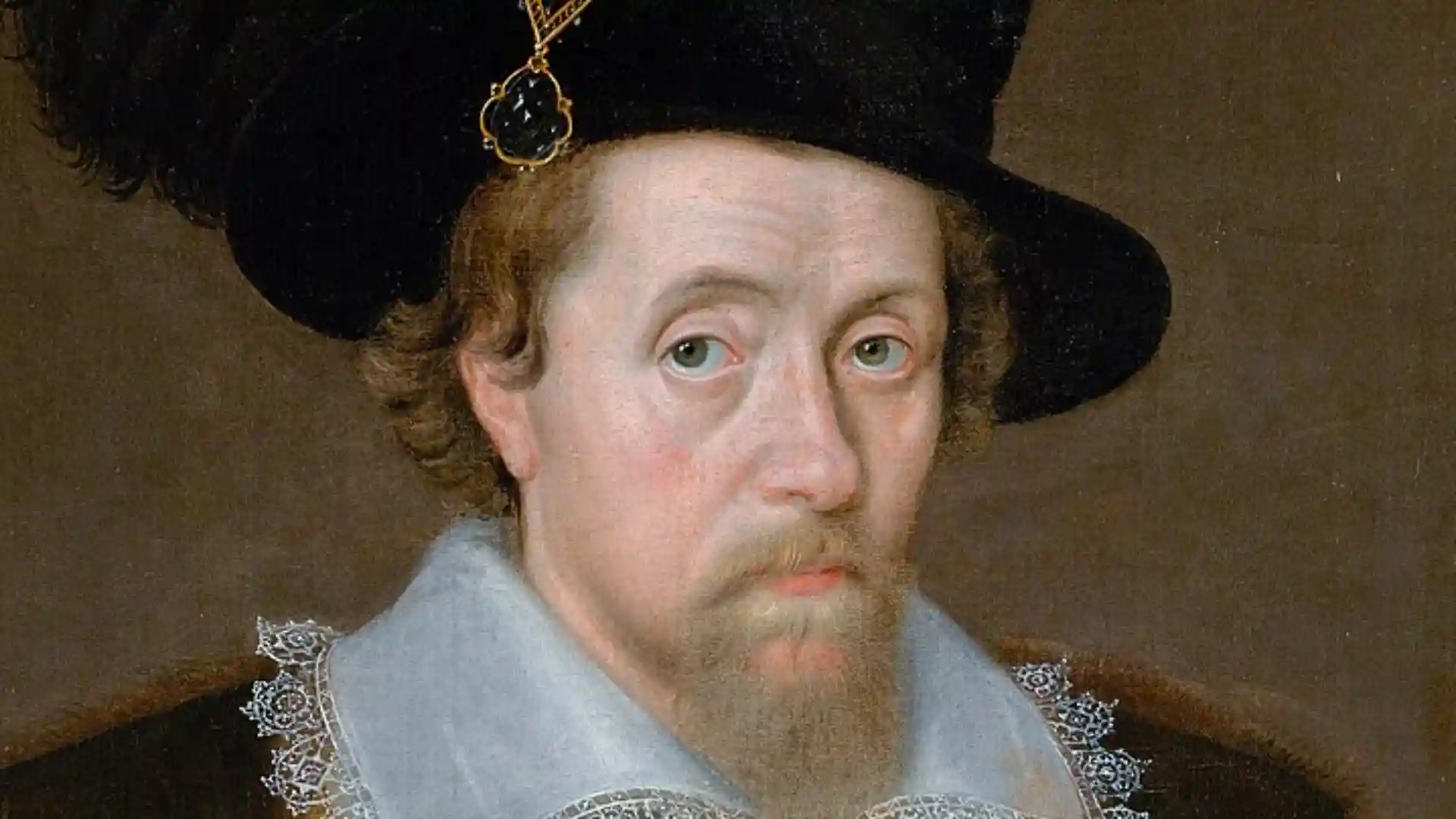
The BBC are releasing a new documentary titled Queen James, exploring whether King James VI of Scotland and I of England was, in fact, gay.
Produced by BBC Northern Ireland, Queen James will air on BBC Two and iPlayer on 18 June at 9pm as part of Pride Month, offering an in-depth look at the late monarch’s history with male courtiers.
Presented by historian and author Gareth Russell, the hour-long programme will examine the “intense and passionate same-sex relationships King James formed”.
James McArdle will read through King James VI and I’s historical records
In particular, Russell will explore how one relationship with Scottish courtier Robert Carr “concluded with a scandalous murder trial that threatened to end his reign on the British throne”.
In the documentary, actor James McArdle, star of Four Mothers, reads excerpts from James’s letters, writings and speeches.
Queen James will include contributions from a range of historians and academics, including Leanda De Lisle, Lucy Hughes-Hallet, Dr Alexander Courtney, Dr Steven Veerapen, Professor Clare Jackson, Professor Tracy Borman and Dr Will Tosh.
Who was King James VI and I?
James VI and I was King of Scotland as James VI from 24 July 1567, and King of England and Ireland as James I after succeeding Elizabeth I in 1603.
He died on 27 March 1625, at the age of 58, at his hunting lodge, Theobalds House in Hertfordshire, of natural causes.
The late king was married to Anne of Denmark, whom he wed in 1589, and fathered as many as seven children, though this did not stop rumours that he was gay.
Historians suggest James had his courtiers visit his bedchambers
Historians report that he had favoured male courtiers, which was particularly noticeable in his bedchambers, where “only very few courtiers were allowed to be present”.
Joe Ellis admits that despite there being little to known evidence of the nature of James’s relationships with his male courtiers, there were signs historians have picked up to indicate something romantic.
“Because there’s no real hard evidence. However, many at the time, and now, suspect that they were sexual in nature,” he said on the HistoryExtra podcast.
“Sexual acts between men were reasonably common at the time” – historian Joe Ellis on same-sex Tudor relationships
“Sexual acts between men were reasonably common at the time,” said Ellis. “It was very much seen as a physical act, as opposed to a kind of partnership in the sense that we see it now. Obviously, men were friends, and this is often how [such a relationship] was viewed by contemporaries.”
The Queen James documentary will draw focus to Robert Carr, Earl of Somerset, who has been described as James’s favourite courtier.
Their relationship hit an all-time peak in 1607 when Carr was hospitalised after being thrown from his horse and breaking his leg. James reportedly visited him daily.
Queen James will air on 12 June via BBC iPlayer
Carr eventually married Lady Frances Howard, to which James permitted. Carr later became involved in a murder trial that threatened to reveal the King’s closely guarded secrets – all of which will be explored in the documentary.
Queen James will air on 12 June at 10:55pm on BBC One Northern Ireland and BBC iPlayer. The film will air 18 June at 9pm on BBC Two.