
Standard Chartered’s Agata Banas and Lewis Shaw on the making of Business, Belonging and Beyond podcast
In partnership with myGwork
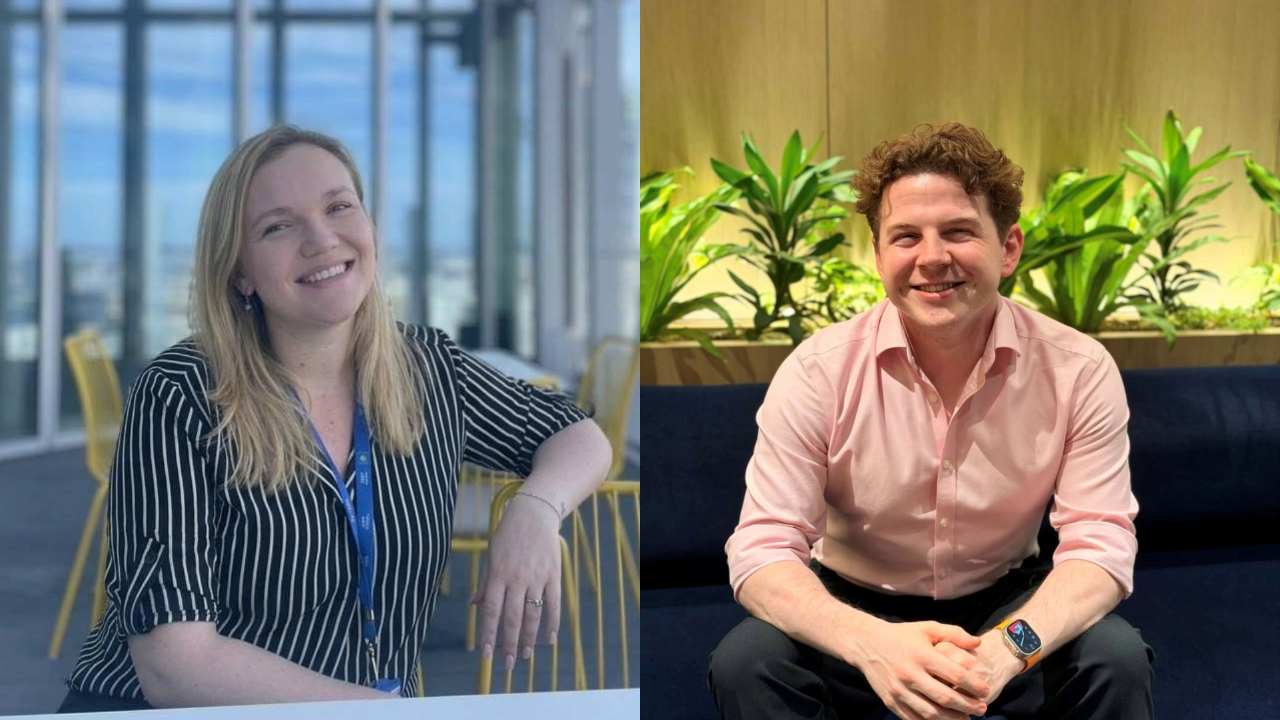
Business, Belonging and Beyond is a podcast about how inclusion shapes real decisions, relationships and cultures at work. In this interview with myGwork, hosts Agata Banas and Lewis Shaw from Standard Chartered talk about how the series is made, the moments and stories that have stayed with them, and where they hope to take the podcast next.
For anyone discovering this podcast for the first time, please introduce yourself, briefly describe what you do, and the perspectives you bring to Business, Belonging and Beyond?
Agata: I’ve been project managing “Business, Belonging, and Beyond” since it launched, overseeing everything from shaping episode themes and identifying guests to coordinating production, approvals and publication. In my day-to-day role at Standard Chartered, I lead digital governance and support content delivery across our web and social channels, helping ensure it reaches the right audiences and provides a consistent digital experience.
That perspective has shaped my approach to the podcast. I want each conversation to feel authentic, practical and relevant – not just highlighting why inclusion matters, but demonstrating what it looks like in everyday business. By bringing together leaders with different experiences and perspectives, we aim to create conversations that encourage reflection, inspire action and show that creating a culture of belonging is something everyone has a role to play in.
Lewis: I joined the team on Business Belonging and Beyond for its second season – when production came to the UK – as a Logistics Coordinator, mostly managing the behind-the-scenes jobs for the recording sessions. I’m a Business Assistant for Financial Markets at Standard Chartered, looking after sales teams on the trading floor. I also work at an LGBT venue on the weekends, so I keep pretty busy!
The trading floor can really feel like its own world, separate from a lot of bank functions, but I think the markets culture at Standard Chartered is amongst the most social and open in the bank. I wanted to bring this open and candid mindset to the podcast, encouraging our guests to be their most authentic selves.
What first moved inclusion and belonging from being important topics to becoming central to your careers and the work you choose to do?
Agata: Inclusion and belonging have always mattered to me personally, but joining Standard Chartered gave me the opportunity to turn those values into action. I found an organisation that encourages colleagues to contribute beyond their day-to-day roles and create positive change within the workplace.
Today, as Co-Chair of the Polish Pride Colleague Community, I’ve had the privilege of helping create opportunities for learning, conversation and allyship. That experience has reinforced my belief that inclusion isn’t something achieved through a single initiative or campaign – it’s built through consistent actions, open dialogue and a genuine willingness to listen to different experiences.
Working on “Business, Belonging, and Beyond” has been a natural extension of that. It allows me to help amplify voices, share practical examples of inclusive leadership and contribute to conversations that can inspire meaningful change both inside and outside the workplace.
Since starting the podcast, have any moments stood out to you? Perhaps changing your perspective or educating you, or allowing for an opportunity to educate others?
Lewis: Working with senior colleagues who were drawing on a wealth of experience was incredibly insightful. I think it’s so easy to get caught up in your day-to-day life that the perceived distance between where you are and where other people are feels a lot greater than it really is.
It was inspiring to hear the perspectives of people from all different walks of life and how they approached their work, development, relationships, everything. It’s easy to feel completely mystified by senior colleagues in a bank, assuming they are all sitting on esteemed finance degrees from top universities, or to have come from a long line of CFOs and financiers. But the backgrounds of our senior leaders are so varied; there is so much to be gained from listening to their stories – and I hope that this translates on the podcast. Perhaps a bit of a cop out as it’s not a single moment, but each time we sat down to hit “record”, I knew I was in for a treat.
You’ve previously discussed ‘inclusion in action’. Since launching the series, has it changed or developed your perspective of inclusion in any way?
Agata: One of the biggest things I’ve taken away from the series is that inclusion is less about grand gestures and more about everyday decisions. Across every conversation, regardless of the topic or guest, there’s been a common thread: people create belonging through the way they lead, communicate, collaborate and support others.
The podcast has also reinforced that there isn’t a single blueprint for inclusion. Different communities and individuals experience barriers in different ways, so meaningful progress comes from listening, staying curious and being willing to adapt.
For me, inclusion in action means embedding these principles into everyday business rather than treating them as something reserved for awareness days or special initiatives. When inclusion becomes part of how decisions are made every day, that’s when it starts to have a lasting impact.
Working together on the podcast, what do each of you bring to the table – and how has that mix shaped the tone and direction of the series?
Agata: While we both share the same goal of creating meaningful conversations, we each bring something slightly different to the series. My background in digital communications means I’m always thinking about how to tell stories in a way that is engaging, accessible and relevant for our audience. I enjoy shaping conversations that balance personal experiences with practical insights people can take back into their own organisations.
Lewis brings another perspective to the discussions, helping to guide conversations with guests and ensuring each episode reflects the wider purpose of the series. Together, we’ve worked to create a podcast that feels open, authentic and grounded in real experiences, encouraging listeners to see inclusion not as a theory but as something that can be put into practice every day.
Lewis: I am on Standard Chartered’s UK Pride Committee, and I managed the bank’s reception team in my previous role. This meant that I had built a bit of a rapport with many of our guests over the past few years, and so I felt more comfortable to coordinate with them, leveraging my connections with them or their PAs to ensure they would be comfortable to record each episode. I think that no matter who you are, seeing a friendly face will always put you more at ease, and I hope this helped our guests feel comfortable enough to communicate their thoughts freely and openly.
I was so excited to work with Agata, as I’d seen the fruits of her labour with the first season of the podcast. She really has a good sense of how to conduct natural conversations that draw out the best responses from the guests! She was also a great mentor – when I did my interview, she encouraged me to trust my gut feelings and take direction if the moment called for it. I think Agata’s direction shaped the podcast into more of an unscripted, candid dialogue between the hosts and guests, which is why it works so well!
Has anything discussed on the podcast had an influence on the business culture, policy, or way of working at Standard Chartered?
Lewis: I think the podcast’s existence itself is a product of Standard Chartered’s business culture; senior leadership is much more enthusiastic to have these conversations. Our guests championed this culture of inclusion and acceptance, and the advantages of working in such an environment.
I work in financial markets. I can see first-hand how the topics discussed in this podcast are present at work. In one episode, we talked about the importance of working with young people and the importance of investing in junior talent; this summer, the trading floor welcomed a huge number of interns. In another episode, we discuss the benefits of a diverse workplace; a big part of my job is supporting colleagues in markets as they internationally transfer to other offices.
And on a more personal level, I can see for myself how the people I interact with at work have become more thoughtful about their work – I think people are taking more care to consider how their work can benefit from diversity and inclusion and consulting more colleagues. Tasks no longer feel like an uphill battle, but more like an open conversation.
Looking ahead, what communities, stories or themes do you feel Business, Belonging and Beyond hasn’t explored enough yet, and how do you hope to address that in upcoming episodes?
Agata: One of the most exciting developments has been the evolution of the podcast itself. What began with a strong focus on LGBTQ+ inclusion has grown into a broader conversation about belonging, reflecting many different communities and experiences that make up today’s workplace.
Going forward, I’d like us to continue exploring the intersections between different aspects of identity and to hear more stories that demonstrate how inclusion benefits everyone – not just specific groups. There’s also an opportunity to showcase more practical examples of organisations embedding inclusion into everyday leadership, culture and decision-making.
Ultimately, I hope the series continues to create space for honest conversations that help more people recognise that belonging isn’t about fitting into a particular mould – it’s about creating environments where everyone has the opportunity to contribute, grow and feel valued.
Standard Chartered is a proud partner of myGwork, the LGBTQ+ business community. Find out more about LGBTQ+-friendly job opportunities at Standard Chartered.