
A queer wrestling love story: Scotty Rawk on how the ring saved his life (EXCLUSIVE)
Working-class Grimsby emo outsider-turned-wrestler Scotty Rawk caught the UK wrestling scene’s attention when he came out as bisexual last year. Here, he tells Attitude how nobody was more surprised than him to fall in love in the ring
By Jude Jones
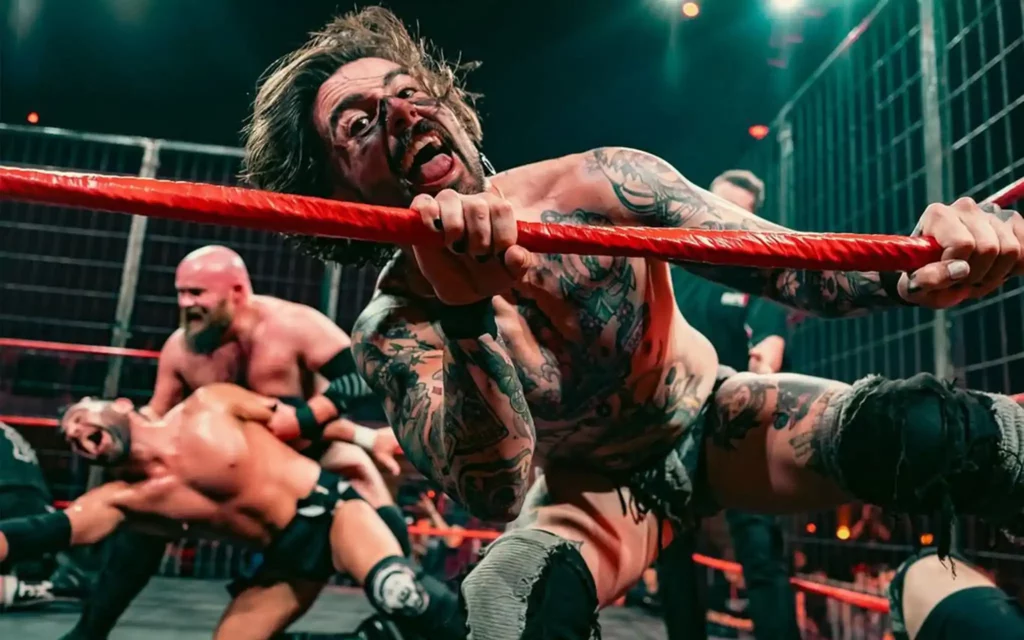
Standing atop a 10-foot steel cage, Tyler Devlin – a bearded, six-foot-two behemoth of a man – towers over his best-friend-turned-nemesis Scotty Rawk. A year earlier, on 8 July 2023, at BWR Anniversary Six, at Cleethorpes Memorial Hall, Rawk had eviscerated their brotherhood by bludgeoning Devlin with a spray-painted briefcase. Now, on 22 November 2024, perched in front of the 900 spectators sardined into Grimsby Auditorium for the Viva La Revolution event, Devlin is staring sweet revenge in the eyes – if only from a sizeable height.
Devlin leaps, but gravity goes against him. Only half hitting Rawk, the sheer impact of this kamikaze salvo dislocates his right elbow and leaves his arm as floppy as a politician’s promise. However, Devlin stays determined, while the crowd is hungry for blood. Willing Rawk onto his shoulders, he drives his rival’s neck firmly into the ground. The crowd erupts. The referee counts to one, then two, then three. It is over. Goliath has beaten dastardly David: Tyler Devlin has defeated Scotty Rawk.
Scotty Rawk thanks wrestling for saving his life
“It was pure cinema,” recalls Connor Gregory, the man behind the professional wrestling persona Scotty Rawk “because that’s what we do.”
Pulling this off was even more impressive given that in the hours leading up to the clash, Connor admits to having a “full mental breakdown”.
A career-long mental-health advocate, Connor has credited professional wrestling with “saving his life”, a topic which shaped his 2019 TEDx Talk, Wrestling with My Mental Health.
But his personal battles persisted. In the run-up to the Viva La Revolution clash and over the months following it, Connor went through a hugely turbulent period – for reasons that would later become clear.
Where it all began
Connor started watching professional wrestling at the age of two. Raised by a single mother, the pair would stay up late, past Cartoon Network’s 9pm curtain call, and watch Monday Nitro, the weekly American World Championship Wrestling show.
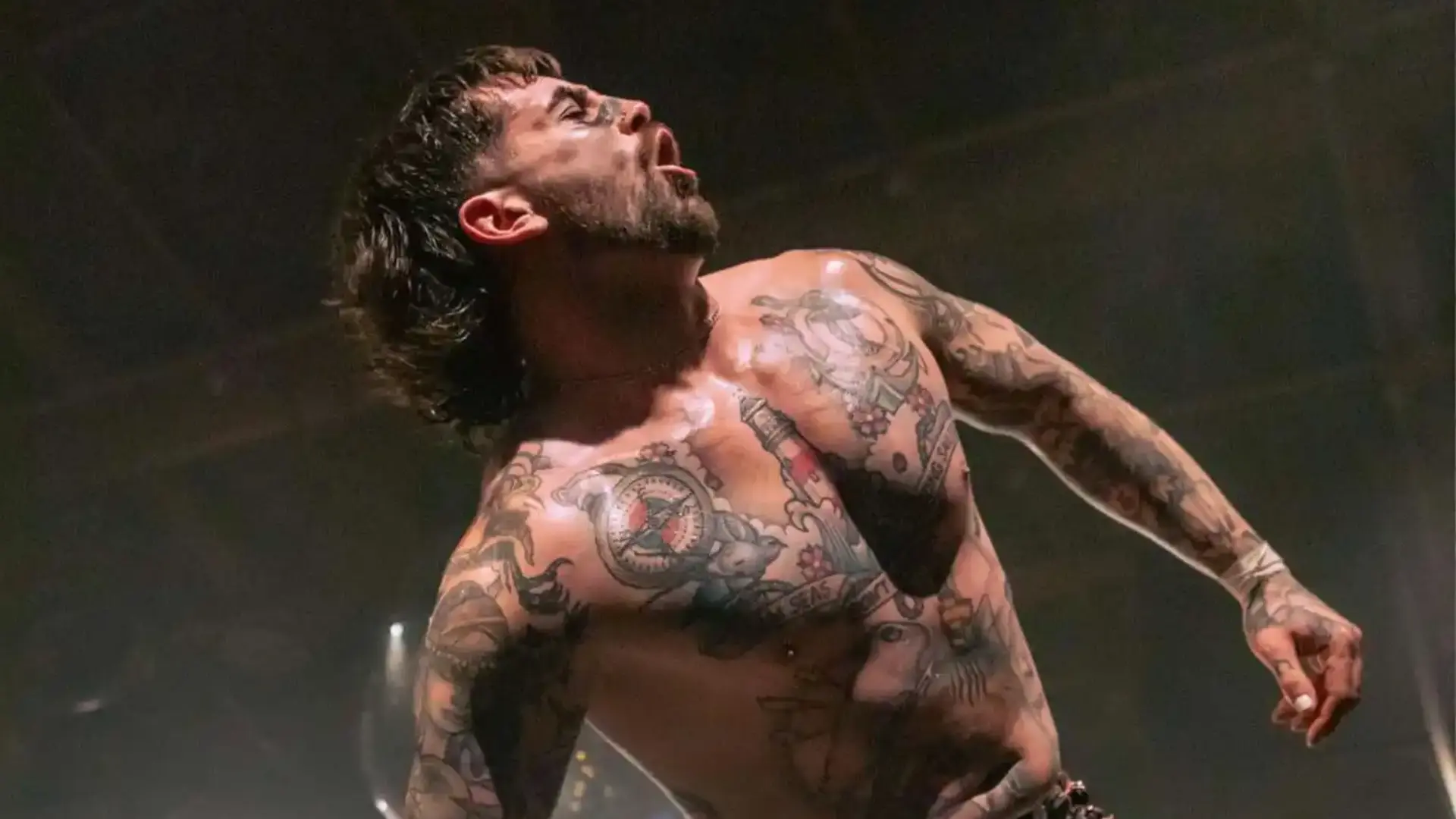
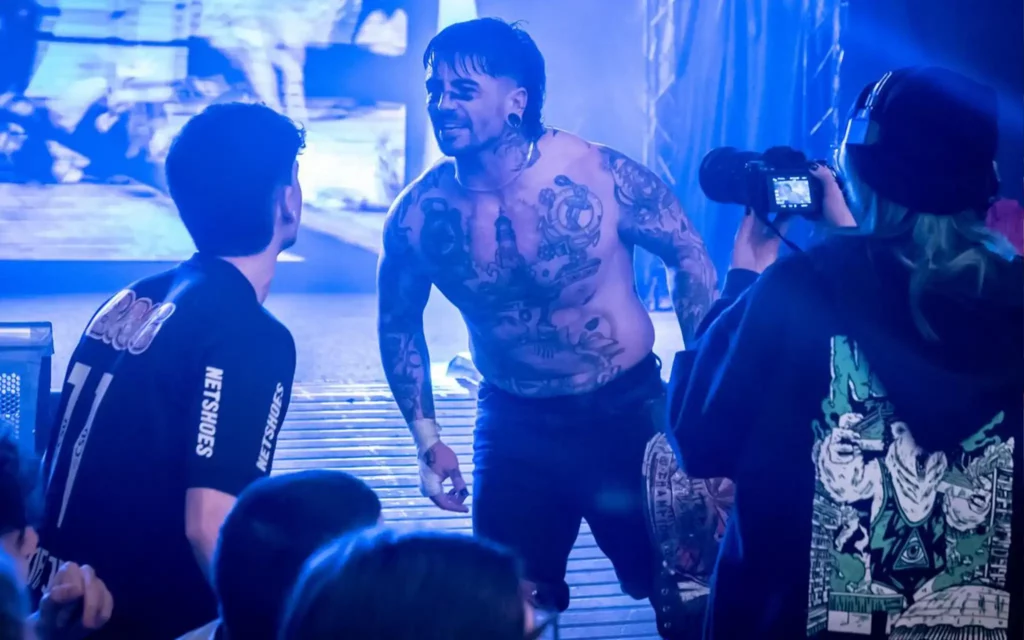
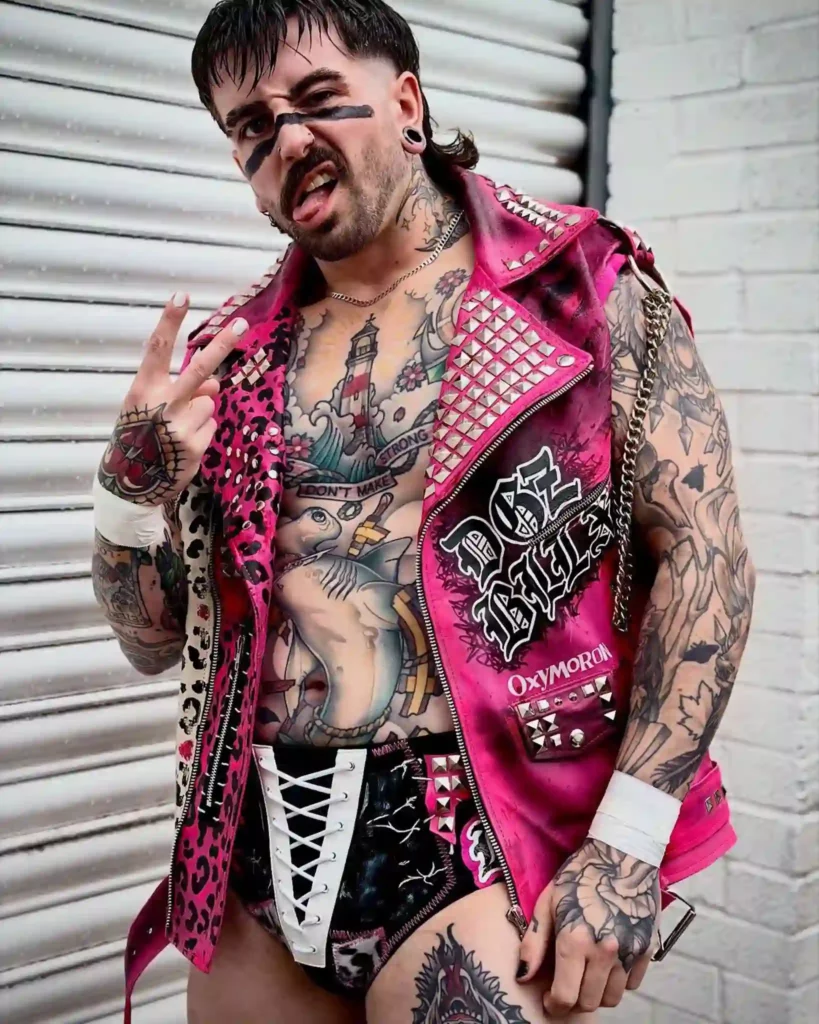
A young Connor gravitated towards smaller, airborne performers like Eddie Guerrero and the legendary Rey Mysterio, known for lucha libre, a theatrical Mexican wrestling style. Another of Connor’s early favourites was Jeff Hardy, a wrestling punk rocker known for his technicolour tattoos and face paint, tapered earlobes and extreme in-ring style. These influences on Scotty Rawk are indelible. Connor describes his alter ego as a hardcore high-flyer. His left ear bears a Hardy-esque one-inch ear taper.
“I’ve always been flamboyant” – Rawk on pushing against the grain
“I’ve always been flamboyant,” says Connor. “I’ve always pushed against the grain.” As a kid, he was part of his school’s after-hours acting club and routinely bagged the big roles in its Nativity productions, playing Joseph or maybe a wise man. In his teen years, he dipped his toes into music and performed in a rotation of pop-punk bands, producing “the kind of stuff you’d hear at the skate park”. He started as a guitarist but felt the glamour of the frontman moniker calling his name. “I was a kid that was dying for attention,” he says.
This flamboyance, plus his teenage emo appearance, marked Connor as an outsider in his hometown of Grimsby, a former fishing mecca feeling the force of post-industrialism’s Five Knuckle Shuffle. The town spiralled into economic malaise after Britain’s defeat in the so-called Cod Wars, a series of maritime skirmishes over fishing rights with Iceland. Half a century later, over half of its residents are still experiencing unemployment. Crime rates in the area remain well over double the national average; East Marsh, a seaside ward in the town, is the fourth most deprived in the country.
Rawk began training at 17
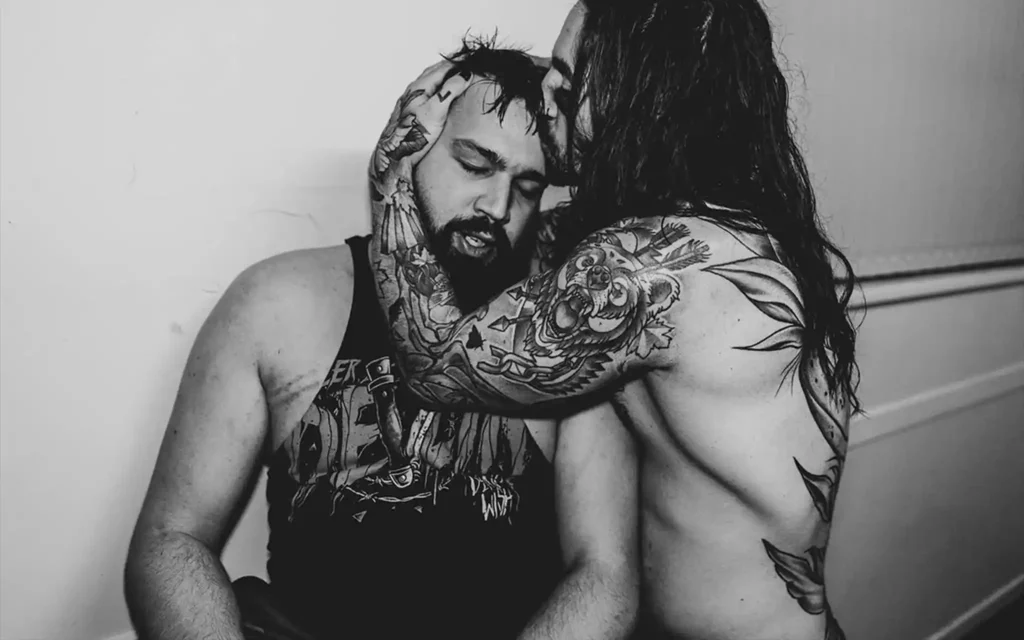
It was a town of bleak futures. From early on, Connor’s family encouraged him to pursue a career as a mechanic or butcher – something with his hands. Instead, aged 17, he opted to begin training as a professional wrestler.
For him, it felt like a natural progression. He was already a black belt in Jeet Kune Do, a martial art pioneered by Bruce Lee, and thought wrestling combined the gritty physicality of combat with his in-built knack for showmanship. Professional wrestling is violent and visceral – Connor has suffered several concussions and a dislocated knuckle – but it is also campy and character-driven, a heady combination that keeps him coming back. Scotty Rawk’s nickname is the Dogz Bollox.
“It’s really for everyone” – Rawk on being a queer wrestler
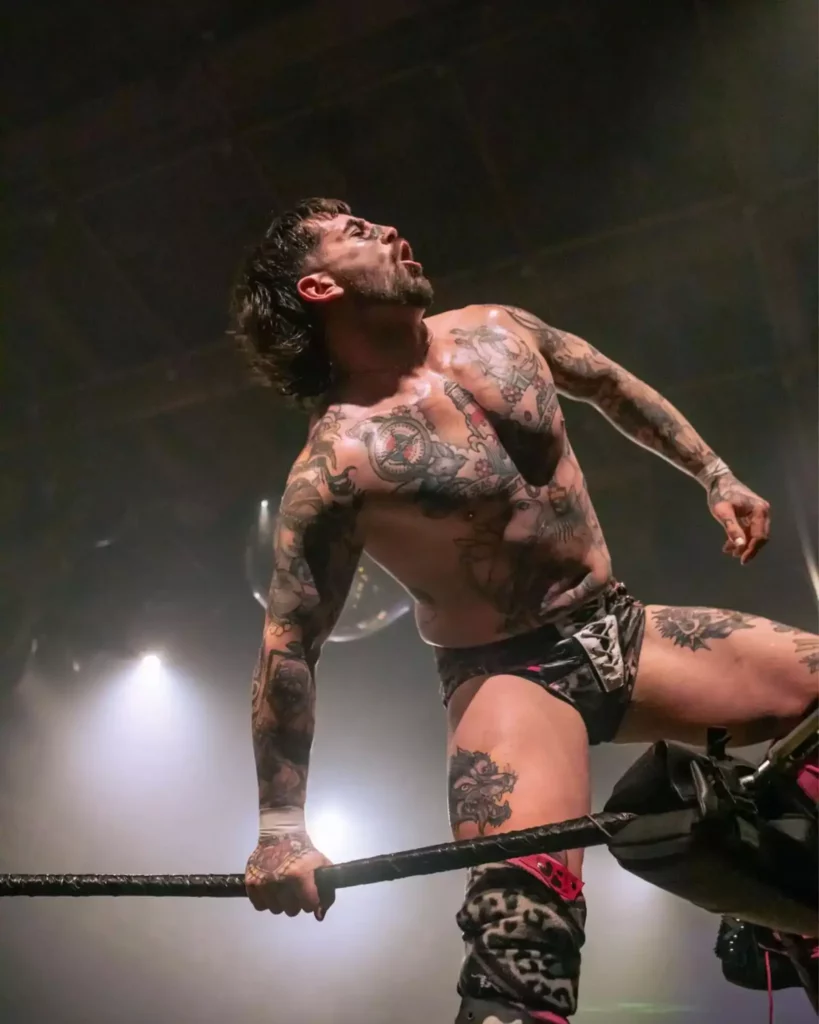
“People think wrestling is this hypermasculine environment,” Connor explains, but this is an assumption with which he wholeheartedly disagrees. He promises he’s no villain in real life – unless you happen to catch him on a bad day. “We’re not really different,” he says, “Scotty is just me turned up to 11.”
Sure, he has dealt with his fair share of snarling meatheads and locker-room hazing, especially during his younger days. As a wrestling bairn, he remembers an “old-school” mentor insisting he take a suplex – an offensive throw in which an opponent’s body is lifted vertically then slammed to the ground – onto hard laminate floor. But the professional wrestling crowd is, in his overall experience, very inclusive. “It’s really for everyone,” he says.
This is an excerpt from feature appearing in the May/June 2026 issue of Attitude magazine. Subscribe below.