
Jacqui Rhule-Dagher on how working in law helped her come out: ‘Your queerness is not a liability’ (EXCLUSIVE)
Rhule-Dagher reveals how working at a law firm helped her come out at a time when representation in her field was lacking, inspiring her to create change with Legally Queerly
By Aaron Sugg & Dale Fox
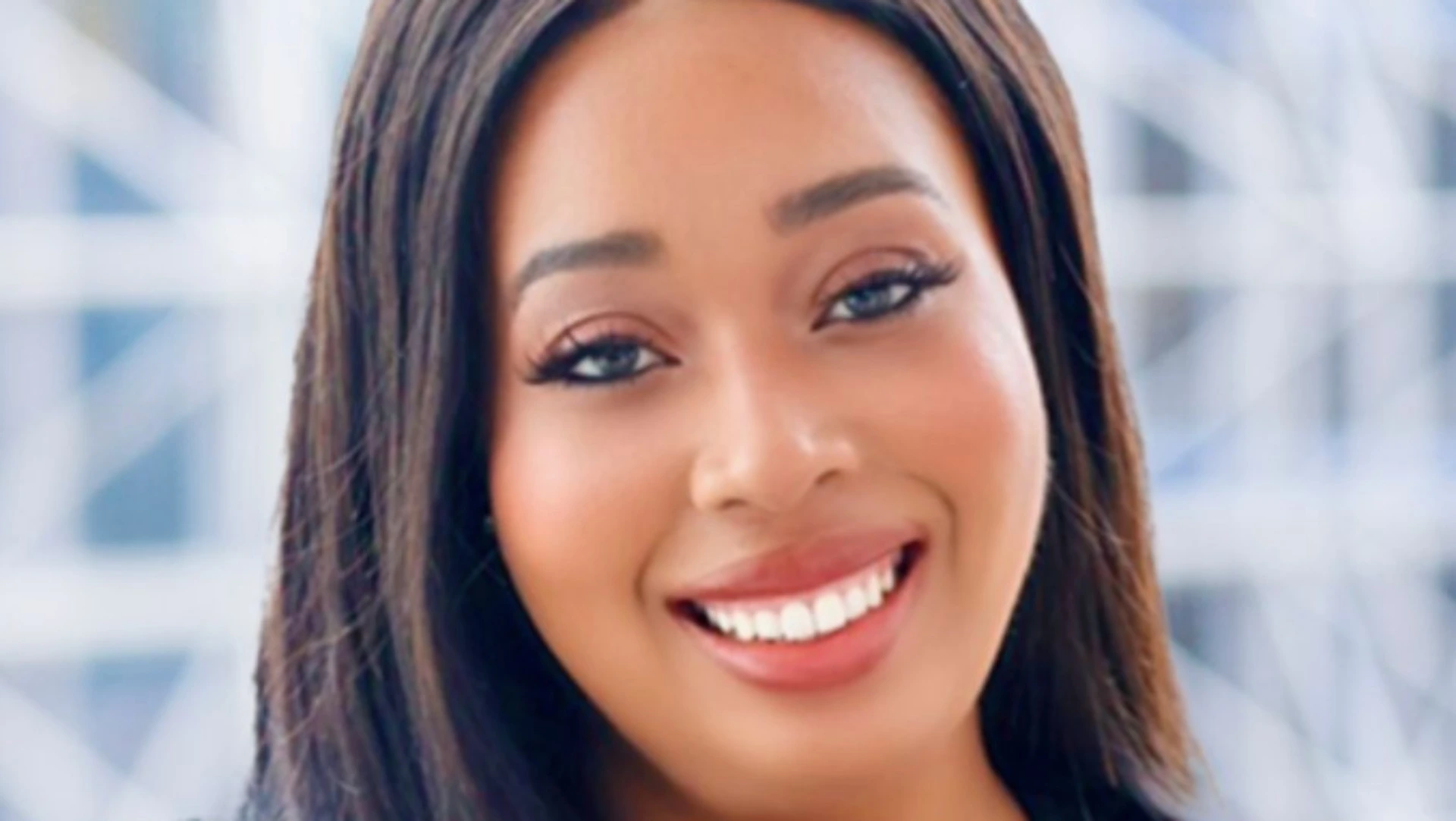
Marking Lesbian Visibility Week 2026, lawyer Jacqui Rhule-Dagher, founder of the Legally Queerly initiative, shines a light on solicitors’s untold battles with sexuality – far from just the courtroom. Formerly Legally Lesbians, the 2024 Attitude 101 honouree renamed the initiative in 2025, expanding it to include over 100 LGBTQ+ individuals fighting not just for the rights of others, but for their own. In her exclusive interview with Attitude, Rhule-Dagher reveals how working at a law firm helped her come out at a time when representation in her field was lacking, driving her to create change.
Attitude: For anyone discovering Legally Queerly for the first time – what is it, and why did you feel the legal industry needed it?
Rhule-Dagher: I founded Legally Queerly (formerly known as Legally Lesbians) in April 2023 during Lesbian Visibility Week. This groundbreaking initiative provides lesbians and queer individuals in the legal industry, or in-house lawyers, with an opportunity to write about their careers and reflect on the importance of visibility. These bios are collected to form an article which is published annually by DIVA magazine.
I started Legally Queerly because I remember how discombobulating, frightening and isolating it was when I entered the legal industry and there was a dearth of lesbian and queer role models, particularly at senior levels. I didn’t want anyone else to experience this.
Although great strides have been made to change things, the legal industry is still very conservative, homogeneous and traditional. Legally Queerly exists because many aspiring or junior lawyers enter the profession without seeing people like themselves openly celebrated, represented or uplifted.
It is worth noting that Legally Queerly deliberately prioritises lived experiences over corporate messaging. The initiative collects personal writing rather than position papers or DEI statements. This allows contributors to articulate what inclusion looks like in practice to them, and where challenges still remain.
You’ve now had over 100 people take part in Legally Queerly. What’s been the most surprising or moving story you’ve come across?
Over the years, I’ve been fortunate to have so many fantastic contributors to Legally Queerly. Some of the bios have been profoundly moving and have left a lasting impression on me. I can’t narrow it down to just one bio, so I’ll pick a bio from each series, if I may.
From the 2023 series, Aderonke Apata was almost forcibly removed from the UK on a Home Office charter flight to Nigeria in January 2013, after her asylum claim, based on the fact that as a lesbian who had been persecuted in Nigeria her life would be in danger if she returned there, was rejected. In a lovely full circle moment, in 2022, she was called to the Bar of England and Wales.
In 2024, the UK’s first trans judge, Dr. Victoria McCloud, took part in Legally Queerly. She explained that she resigned as a judge due to her encountering relentless gender critical abuse which she felt made her role as a trans female judge both untenable and unsafe. It’s really sad to think that not only did the legal profession lose an exceptional legal mind, but a brilliant person too.
Last year, Karen Jones, from Bloomberg, wrote about marching for LGBTQ+ rights in Washington in 1993. I was reminded that the LGBTQ+ community really does stand on the shoulders of giants.
Very recently, Nneka Cummins, from the law firm Bates Wells, took part in Legally Queerly. Impressively, they’re also an Ivor Award winning composer, which is pretty rare. It’s great to see lawyers pursuing their passions because the profession can be all-consuming.
The legal world can still feel quite traditional. How visible do you think LGBTQ+ lawyers really are in 2026?
That’s a fair assessment. The legal profession remains hierarchical, reputation-driven, precedent-bound and unusually sensitive to perceived deviation from homogeneity. Even where individual firms are progressive, the profession as a whole still provides opportunity by informal sponsorship, rewards conformity in presentation and retains conservative gatekeeping at senior levels.
I am going to jump on a trend from earlier this year and rewind back to April 2016. Back then, I was a trainee solicitor at a magic circle law firm. Remembering how isolated I felt in my previous role, I had made the decision to start my training contract out at work. This was the first time that I had ever worked with other out lesbians, which gave me the confidence to be out at work too. There were, however, just a handful of them.
It’s also worth flagging that, in 2016, legal LGBTQ+ networks were pretty much in their infancy. The Law Society’s LGBTQ+ Solicitors Network Steering Committee was established in 2016, for example. Now, there are networks such as FreeBar (an LGBTQ+ network for barristers) and OutLaw (for LGBTQ+ lawyers in Ireland).
I wish I could tell you that a decade on from 2016 the city is awash with out LGBTQ+ lawyers. Sadly, this is not the case. LGBTQ+ people are still significantly under-represented in the legal industry compared to the wider population: 2.6% compared to nearly 10%. I’m not aware of any figures for the proportion of lawyers who are out, but either we’re massively under-represented in this industry or people still don’t want to out themselves.
What you tend to see across the city is that there is a fair amount of visibility at entry and mid-career level, but that this drops sharply at partnership, leadership and judicial levels. It seems like geography, practice area and firm culture also add an additional straightjacket to visibility.
This year the Deputy Mayor of London for Communities and Social Justice, Dr. Debbie Weekes-Bernard, is supporting the initiative. How significant does that feel?
I am immensely grateful to Dr. Weekes-Bernard for providing the foreword to this year’s Legally Queerly article. She is someone who is a longstanding and active ally to the LGBTQ+ community, so it is great to have her onboard. Her contribution signals that Legally Queerly is not merely a niche or community-only initiative, or a personal project operating at the margins of the legal profession, but something the city’s political leadership considers credible, relevant and worthy of public endorsement.
I reached out to Dr. Weekes-Bernard because the Loved and Wanted campaign, which she launched alongside the Mayor of London in 2025, really resonated with me. It’s a campaign that speaks to Londoners from all walks of life and backgrounds, and sends a clear message that in London, regardless of where you come from, you will always be loved, valued and respected. If ever such a message were needed, it is now.
You wrote for us last year about the importance of inclusive spaces – has anything changed since then, or does it feel like we’re having to fight the same battles all over again?
I think that, in some respects, we’re facing greater attacks than when I wrote last April.
A defining feature of 2025 was the rollback in inclusion initiatives. A number of organisations reduced public DEI commitments, softened the language around inclusion or withdrew from visible advocacy despite (at least sometimes) maintaining internal policies. Unfortunately, this has created environments where LGBTQ+ staff must once again assess whether they can be out at work or speak up. Worse still, some people are experiencing situations where inclusion becomes conditional on “tone” or market comfort.
In this context, inclusive spaces function as buffers against institutional inconsistency. The situation is compounded for individuals who exist at multiple intersections. Reports across the legal and broader workplace sectors consistently show higher vulnerability for trans and non-binary lawyers, LGBTQ+ people of colour, disabled LGBTQ+ professionals and those outside elite commercial practice environments. Typically, inclusive spaces are the only settings where these intersecting experiences are legible, rather than shoehorned into a single “diversity” narrative.
Most western legal systems formally prohibit discrimination on the grounds of sexual orientation and gender identity. Notwithstanding this, multiple current reports show that legal protection has not translated into uniformly safe or equal workplaces. The Human Rights Campaign’s State of the Workplace 2026 report states, for example, that LGBTQ+ workers continue to experience elevated levels of workplace anxiety, concerns about career progression, and disproportionate exposure to bias. This is particularly the case for trans and non-binary individuals.
Inclusive spaces are clearly still needed not because rights legislation is absent, but because risk and vulnerability remain unevenly distributed. One of the most persistent myths is that visibility is the inclusion panacea. Data from the legal profession actually shows that visibility alone does not guarantee equity. Inclusive spaces, therefore, remain a practical necessity for diverse individuals to speak candidly, and to share lived experiences and risk management knowledge without professional consequences.
We’re publishing this during Lesbian Visibility Week – why does observing Lesbian Visibility Week still matter in 2026?
Just in case any of the readers are unfamiliar with Lesbian Visibility Week (LVW), it was founded by the wonderful Linda Riley in 2020. One of the reasons she started it is because of what she saw as the increasing marginalisation of lesbians within the broader LGBTQ+ acronym. In the workplace, lesbians and queer women experience distinct challenges that differ from those faced by gay men because of the intersection with misogyny. Research cited by Stonewall and Just Like Us shows that lesbians (particularly young lesbians) report the highest levels of shame and discomfort among LGBTQ+ people in the UK.
Gendered homophobia continues to exist. Lesbians sit at the intersection of misogyny and homophobia which produces distinct forms of exclusion. This includes, but is not limited to, having their relationships trivialised, their sexuality fetishised, their authority questioned and their careers limited by assumptions about femininity and power. Characteristics such as class, race, religion and gender can further interact to create unique experiences of privilege or oppression.
Lesbian Visibility Week matters because it creates a space where an individual’s lesbian identity is not conditional, apologetic or secondary and it provides a space for people whose identities are not adequately addressed by generic Pride narratives.
What advice would you give to a young queer person considering a career in law right now?
This is a really important question and one I am asked a lot. The most fundamental advice is this: your queerness is not a liability you need to neutralise even if you might feel that you do sometimes. It is true that the legal industry has, historically, been conservative in culture, expectations and language, which can leave people thinking that there is a “right” kind of lawyer to be. Fortunately, that stereotype is narrowing slowly but materially. The Legally Queerly initiative has shown, for example, that there are queer solicitors, barristers and even judges. I should also say at this point that it is okay if you don’t want to or can’t be visible. There is no single way to be legally queer.
Remember that it’s important to choose environments and not just titles. A recurring lesson many queer lawyers learn the hard way is that where you practise matters as much as what you practise. Two firms, chambers or organisations can look identical on paper and feel entirely different in reality. When considering roles or training opportunities, look beyond glossy marketing and consider the following: Are there visible LGBTQ+ people in senior or decision-making roles? What are the firms’ policies when it comes to LGBTQ+ health benefits and parental leave?
Finally, I would encourage people to “find your tribe” early on. Queer networks in law are not “nice extras”; they are career infrastructure. This “tribe” might look like an LGBTQ+ student society, an Inn or Law Society network, a Bar association, or informal friendships with people a few years ahead of you. You want at least one person you can ask “Is this normal?” and get an honest answer. You also want access to people who can model a future version of the career that you have envisaged. Above all, it’s important to have peers who remind you that difficulties are often structural and not personal failures.