
How Liv Hospital Is Advancing the Field of Regenerative Medicine
In partnership with FL Comms.
By Daniel Fusch
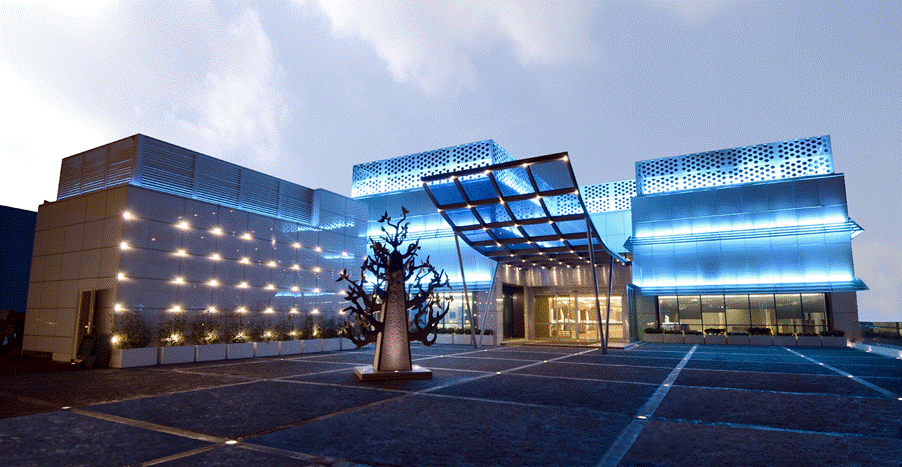
Modern medicine is changing quickly, moving from just treating symptoms to actually repairing the body from the inside. Liv Hospital is contributing through its work in regenerative medicine, thanks to its advanced stem cell treatment center. This is not science fiction. It is real, regulated medical science that brings new hope for people with conditions like degenerative joint disease and complex neurological disorders.
A Foundation of Trust and Quality
LivMedCell, the hospital’s Regenerative Medicine and Stem Cell Production Center, is at the core of this effort. What makes this facility unique is not just its goals, but its strong credentials. The center was founded in 2014 to connect advanced research with real patient care. Experts like Prof. Dr. Erdal Karaöz, who started the Stem Cell Center, have guided its growth with a focus on ethical science. The center’s mission is to use the body’s own healing abilities by offering new, personalized cell therapies within a strict scientific and ethical system.

How Stem Cell Therapy Works
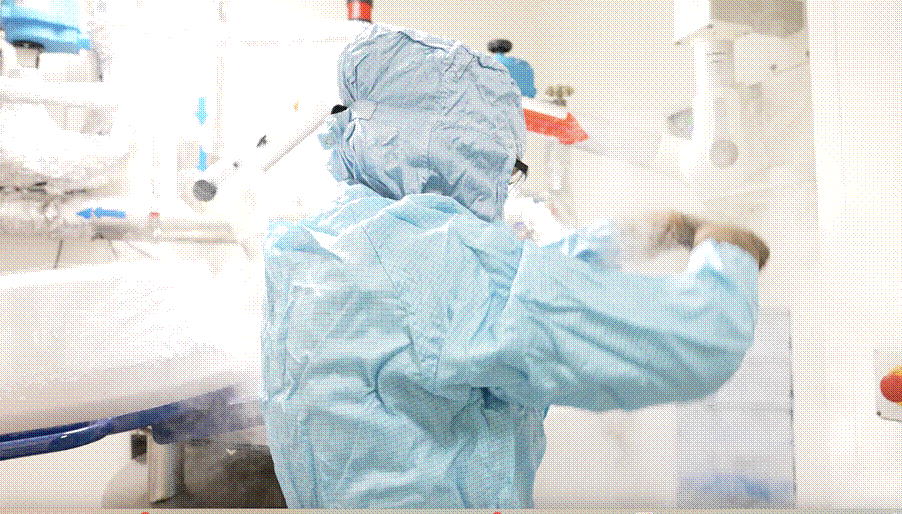
So, what are these therapies, and how do they work? Stem cells are the body’s foundational “master cells,” possessing the unique ability to both replicate themselves and differentiate into various specialized cell types, be it cartilage, muscle, nerve, or skin. Regenerative medicine seeks to leverage this potential to repair, replace, or restore damaged tissues and organs. The process at Liv Hospital is a testament to its personalized approach. The journey can begin in one of two ways. The first is autologous, using the patient’s own cells. A small sample of fat (adipose) tissue or bone marrow is collected. From this sample, powerful Mesenchymal Stem Cells (MSCs) are isolated. The second path is allogeneic, using cells from a healthy, screened donor, most commonly, the rich, potent stem cells found in umbilical cord tissue. Once procured, these cells are transferred to a controlled laboratory setting for further processing. Here, technicians nurture and expand them, growing them from a small initial sample into a therapeutic dose numbering in the millions. This cultivation process, which can take three to four weeks, is monitored at every stage. Before release, the final “product” undergoes stringent quality control tests to help assess its readiness for treatment. Only then is it prepared for the patient and administered by specialist physicians using methods tailored to the condition, such as precise local injections, systemic IV infusions, or even targeted inhalation.
Therapeutic Applications
Liv Hospital uses these therapies in many ways, showing how flexible stem cells can be. In orthopedics, they offer new options for treating chronic joint pain. Patients with hard-to-treat problems like cartilage or tendon injuries, or avascular necrosis of the knee or hip, may benefit from these treatments beyond standard replacement therapy. Stem cells can lower inflammation and may support the body’s natural responses related to cartilage damage. The same ideas are used in cosmetic treatments to fight signs of aging. Fibroblast cells, grown from a small sample of the patient’s skin, are put back with the goal of supporting skin appearance. Stem cell and exosome therapies are also being explored in applications such as aesthetic procedures and skin repair. Some of the center’s work is in treating chronic and complex diseases. For people with certain neurological disorders, stem cell therapies may help protect nerve cells and support repair. The anti-inflammatory and immune-balancing effects of mesenchymal stem cells can help calm an overactive immune system, bringing relief and possibly slowing disease. Research is ongoing into how regenerative therapies might support healing in various chronic conditions. Liv Hospital also has a specialized Bone Marrow Transplant Center, especially at its Ankara location. This center uses hematopoietic stem cells in the well-established treatment of blood cancers like leukemia and lymphoma, showing the hospital’s broad expertise in cellular therapy.
Leading the Future of Medicine
Liv Hospital recognizes that some people are skeptical about stem cell therapy. To address this, the hospital is open about its work, shares its research, and participates in clinical research and studies. It does not claim to offer a “magic bullet,” but instead provides an advanced medical tool that is used carefully and guided by ongoing research and clinical data. As Turkey becomes a leader in medical tourism, Liv Hospital aims to provide high standards of care. By building a top-quality facility and bringing in leading experts, the hospital gives excellent care to patients from around the world and helps advance medical knowledge for the future. As interest in cellular medicine grows, Liv Hospital has become involved in the field’s development.
This article is for informational purposes only and does not substitute for professional medical advice. If you are seeking medical advice, diagnosis or treatment, please consult a medical professional or healthcare provider.