
Global Organon employees on leading Pride Network and building inclusive workplaces
In partnership with myGwork
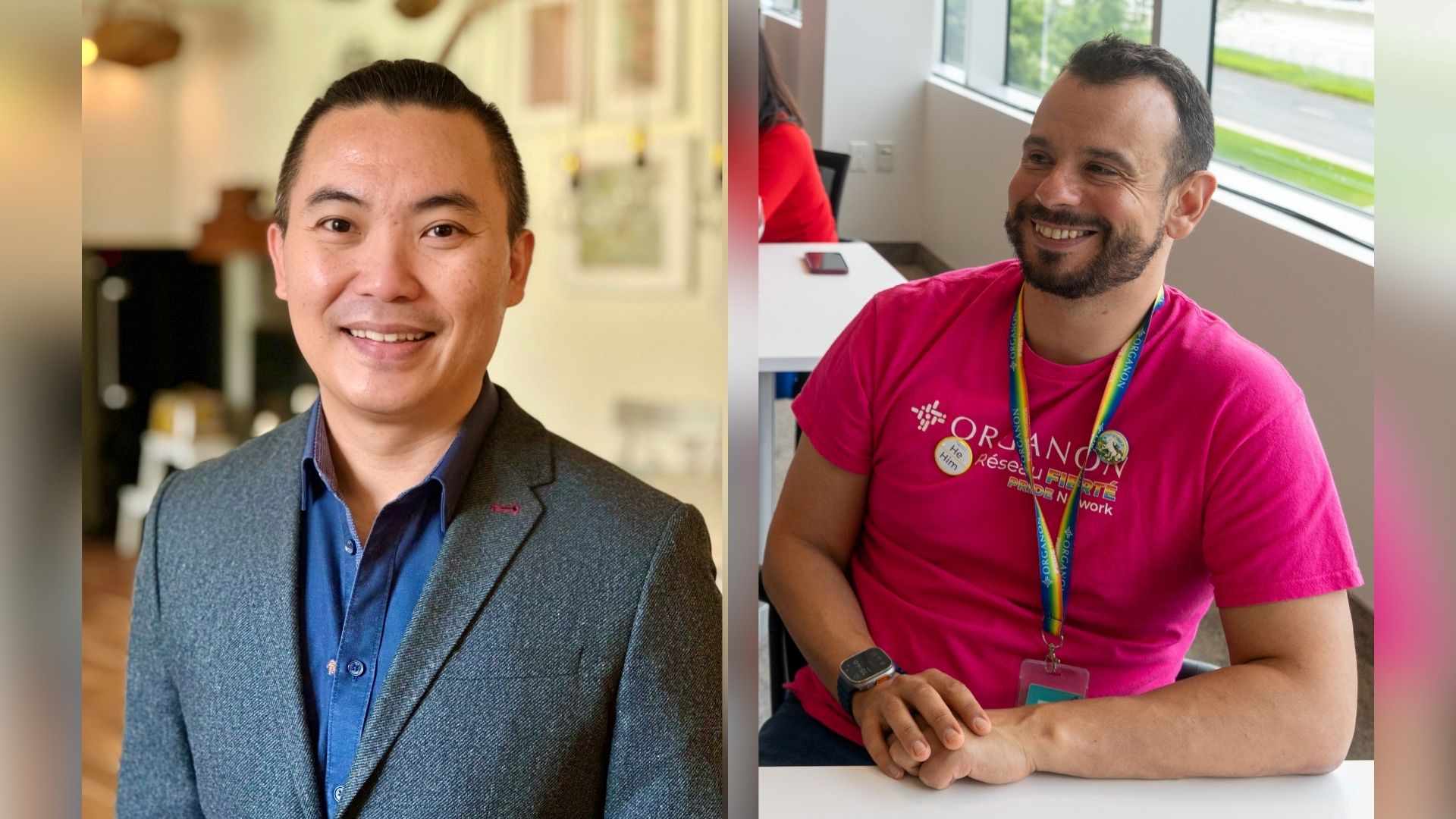
In this insightful Q&A, myGwork interviews Edison Chen and Mohamed Amine Guerfali, co-leads of Organon’s impactful Employee Resource Group, the Organon Pride Network (OPN). They describe their individual journeys and shared motivations for taking on leadership roles, exploring the exciting opportunities for OPN to expand its influence both within Organon and the wider community.
Could you introduce yourself and your role at Organon?
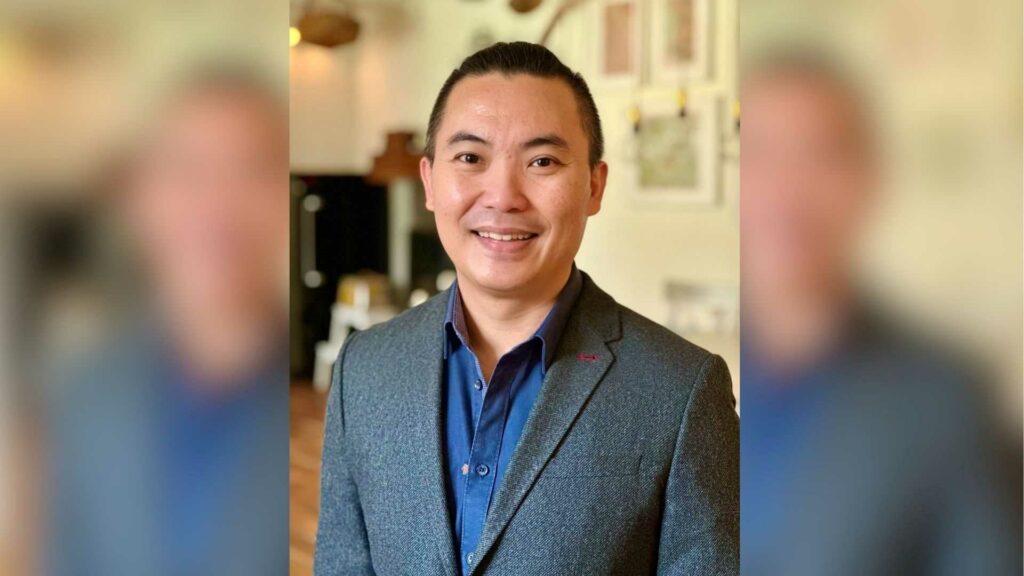
Edison: My name is Edison Chen, and I co-lead the Organon Pride Network, one of 10 Employee Resource Groups (ERGs) that foster workplace culture across our company. Our ERGs are more than communities – they’re catalysts for cultural change, helping shape policies and programs that make Organon a truly equitable workplace, where every voice matters.
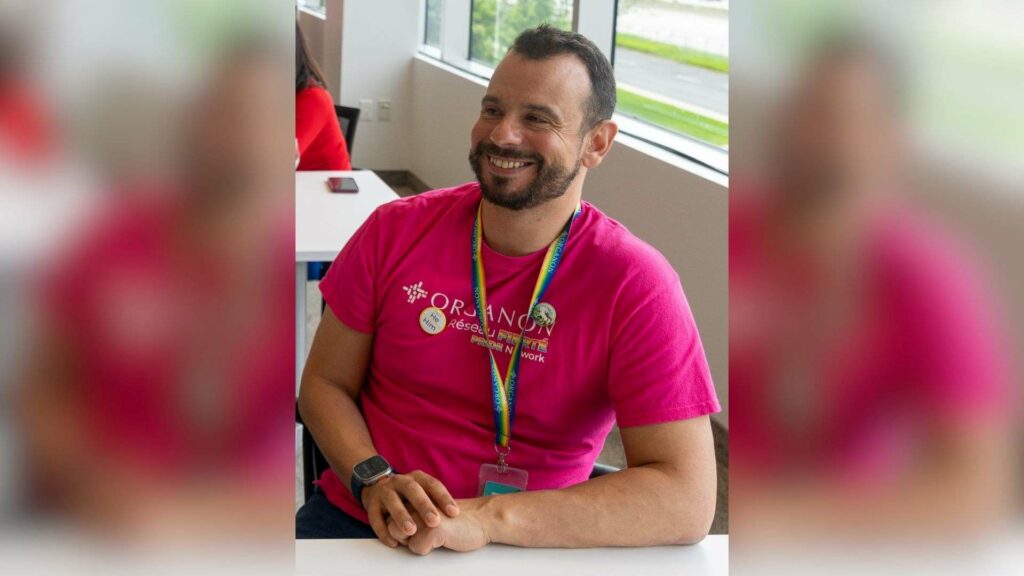
Mohamed: My name is Mohamed Amine Guerfali. I am a Senior Project Manager in Regulatory Affairs based in Montreal, Canada. After a few years being active as a country than a regional lead, I have joined recently Edison in Co-leading Organon Pride Network at a global level last August.
What inspired you to take on leadership roles within the Organon Pride Network?
E: For me, this role is deeply personal. As a gay Asian man who grew up in a region where being LGBTQ+ is still criminalised, I know what it means to hide parts of yourself because I never truly felt safe to be myself. Since moving to Europe, the workplace became the only space where I could show up authentically.
As someone who has lived in multiple countries, witnessed different perspectives and intersectionality – leading the Organon Pride Network allows me to create that same sense of safety for others. It’s about equity, amplifying voices, and building leadership opportunities for LGBTQ+ colleagues globally. ERG leadership also develops critical skills such as strategic thinking, influencing change, and cross-cultural collaboration – all of which benefit our employees and the organisation.
M: I have always been an advocate for LGBTQ+ rights in my personal life. After experiences in different professional environments, it came to my attention that different notions and aspects related to the community are still mystified and not well understood. Being at Organon, a company that celebrates the diversity of each employee and promotes a culture of belonging, has encouraged me to get out of my shell and to speak. I felt safe speaking about my personal journey but also about the richness and struggle of my own community.
Most importantly, I felt more inspired about my role when I was approached to support other colleagues questioning themselves, sharing available tools at Organon. Being of service for someone else, especially a child, was always one of my big motivations to advocate for LGBTQ+ rights.
Why is intersectionality a critical aspect of your work with OPN and within the broader organisational context?
E: I believe workplaces can – and should – be places where authenticity thrives. Intersectionality is at the heart of that, because our identities don’t exist in isolation. They intersect, and when organisations embrace that complexity, they unlock the full potential of their people. LGBTQ+ employees often navigate overlapping identities, such as race, gender, age, disability, that shape unique workplace experiences. For example, LGBTQ+ people of color report higher exclusion rates than white LGBTQ+ peers, and LGBTQ+ women face compounded barriers to leadership.
A Deloitte report noted that 33% of Asian LGBTQ+ people worry about discrimination affecting their career, and 30% of transgender respondents expect negative impacts on advancement. Transgender applicants in Asia receive 50.6% fewer positive responses to job applications compared to cisgender applicants, even when qualifications are equal.
Ignoring these intersections may lead to one-size-fits-all belonging strategies that fail the most marginalised voices. Research shows that inclusive workplaces considering intersectionality improve retention, engagement, and innovation which are key drivers of business success. I am fortunate to work in Organon because of our culture. We recognise inclusion, innovation, and belonging as essential to fostering an environment where everyone has a voice and feels valued.
M: LGBTQ+ community have always been one of the most inclusive communities. As long as you are not a hater, you are welcome to our parties, gatherings, venues/bars, manifestations, celebrations. That is what I always witnessed and experienced in the LGBTQ+ community in the different countries I have the chance to visit or to live in. No matter your skin colors, no matter your origin, no matter your language, no matter your age, no matter your ability/disability, no matter your gender, you fit among us. Your difference, as complex as it can be, just makes you beautifully unique.
I am personally convinced that intersectionality constitutes not only part of the community spirit but has been one of the drives to transcend the message of the community for justice, recognition and dignity. Organon Pride Network, as a small group of individuals, correlates to the reality and values of our communities at large. Exposing our differences is critical to fostering the sense of belonging, especially in the context of a multinational company where one should feel safe and celebrated.
Can you share a specific example where considering intersectionality impacted your initiatives?
E: One example is our collaboration between Pride Network and Asia Pacific Association ERG on a book club that features Asian LGBTQ+ experiences. The event created a safe space for employees to discuss layered challenges, like cultural stigma and misconceptions, that Asian LGBTQ+ people often face. By designing programs through an intersectional lens, we’ve increased participation and created safer spaces for employees to share experiences that go beyond single faceted inclusion. These collaborations also foster networks among employees and ERG leads, helping develop closer relationships and understanding among us.
M: I completely agree with Edison that cross-collaboration between the 10 active EGRs is the greatest opportunity for highlighting intersectionality in our activities at Organon. The measurement of success of a chosen ERG event is translated not only by the pertinence of the topic but also by the number of participants from within and outside the ERG itself.
We have witnessed, whether at a global or local level, that the most successful events are the ones that attract and speak to a larger audience. For example, in a speaker’s event, special care is placed in the choice of a speaker that has a multilayer identity and real experience or understanding of challenges that represent more than one community.
Besides the consolidation of a safe space with limited boundaries, cross-collaboration among ERGs creates open channels of communication for sharing and feedback and deepens the sense of solidarity between different sub-communities represented by ERG at Organon.
What opportunities do you see for expanding OPN’s impact within Organon and the wider community?
E: Internally, ERGs can influence talent strategy – research shows 83% of employees who find ERGs effective report high inclusion scores, and ERGs are a proven pipeline for leadership development. Externally, we partnered with advocacy groups such as myGwork which gave the opportunity to share and learn best practices to advance LGBTQ+ equity. With Gen Z projected to make up 30% of the workforce by 2030 and 20% identifying as LGBTQ+, inclusion isn’t optional – it’s a business imperative for attracting and retaining talent.
M: I like seeing OPN as a mimic miniature of the LGBTQ+ community in the real life. Being successful with ERGs accepting and celebrating individuals with their uniqueness is how we can inspire other coworkers and give them examples on how intersectionality can be leveraged in the benefits of everyone. From another perspective, the intersection between Organon mission: (‘’We believe in health for every woman, her family, and her community. We know that supporting women’s health is foundational to a healthier world’’) and community organisations and associations is a starting point where OPN can reach out to the wider community.
Organon has been a big supporter of charity work. As an example to an external reach out, Organon, through the OPN effort, we were able to support the Breast Cancer Foundation of Quebec to provide Breast Cancer Awareness during Pride week in Montreal. This collaboration is one of the opportunities that we would like to multiply whenever it is possible in different regions. OPN, as an ERG served as bridge between Organon and its founders and external LGBTQ+ communities.
Organon is a proud partner of myGwork, the LGBTQ+ business community. Find out more about LGBTQ+-friendly job opportunities at Organon.