
Michael Newton from Cvent shares his story of living with HIV to help remove stigma around the virus
In partnership with MyGWork
By Steve Brown
“Some people look at HIV and think that it’s a gay disease, and it isn’t. And people often think back to the 80s or 90s way back when, to a time when treatment isn’t what it is today. All of that is around lack of conversation.” Michael Newton from Cvent shares his story of living with HIV and helping to educate people to remove the disease’s stigma.
Michael has been living with HIV for seven years and since being diagnosed has been vocal and open about his status.
“The effect it has on my life is that at 2pm every day I take three tablets at my desk, and they keep my HIV at an undetectable level. If anyone asks what they are, I tell them it is my HIV medication, and sometimes that has opened up into more educational conversations. I’m very open about my status.”
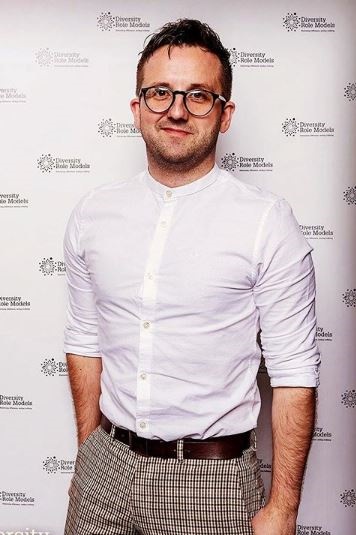
For Michael it’s the understanding of what it actually means to be undetectable where people’s knowledge cuts off.
There can be stigma in the workplace towards anyone, irrespective of their HIV status, and Michael is an advocate for dialogue and open conversations.
“People that don’t talk about whatever issue they may have, can often just be left alone, and that isn’t great. Workplace resources need to be made visibly accessible, and that’s a major thing, letting people know what support, policies and groups are out there. I know I’m in a fortunate position.”
Michael also talks about how to get those conversations started. “We can’t always wait for other people to start conversations, that’s when people become afraid of talking about themselves, any medical conditions, their sexuality etc.
“If you are comfortable speaking up, then you can be that voice, and you can start people understanding each other and each other’s stories a little more.”
Michael’s openness is something that came fairly quickly after his diagnosis, but he does share with me the story of how he came to terms with this.
“I was diagnosed on 3rd October 2012 with HIV, and it’s one of those moments in life where the dates and times are ingrained in your brain.
“When I found out I was at the hospital, and I was sort of left to it. They told me that they’d get in touch with me in two weeks’ time and I was left to go home.
“There was no support offered, and I went straight from the hospital to work. I put my hoody on at my desk and just sat there typing away. I cancelled my plans that evening and got my hairdresser to shave my head (My friends now refer to this as my Britney moment!”.
That moment was now over seven years ago, and [NM4] Michael was able to come to terms with it fairly quickly, but a lot of other people don’t or can’t because of the way that it was represented. Michael too, struggled in the initial stages.
“Everything I’d known about it had been you might die from this, you’ll look pale and weak. I contemplated suicide, bought some tablets and huge bottle of vodka, and had a really tough night.
“I didn’t know how to deal with it, but finally I told myself just to sleep on it and I went to bed.
“The next day I was annoyed myself that I had even thought that was any kind of solution. Although I understand why people can easily go to that place.”
When he woke up, he realised he had to do something and scheduled meetings with his managers, while he was working at Yelp, and shared what had happened.
“Everyone was so supportive, and I even comforted some of them who were upset to hear I had an illness. From that I knew that I needed to be open about it. I needed to be that voice.”
And from that point on, Michael has been hugely vocal and an advocate for change in the community.
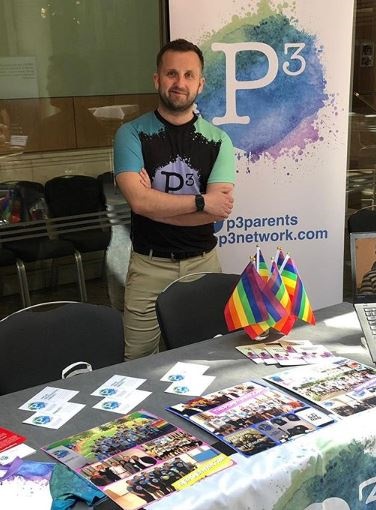
He joined P3 the LGBT parenting charity, which is open to everyone, where he’s working to remove HIV stigma, hosts events for people to learn about how to navigate the parental journey and is passionate about changing the landscape for future LGBT parents.
“I wanted to make sure that when I get to that stage of my life, looking at having a family, I want to start building that unit, I want to make sure that I won’t have to go through the other issues that people might have to go through as they go through this journey.
“I want to make sure that the work is done and there is a strong foundation.”
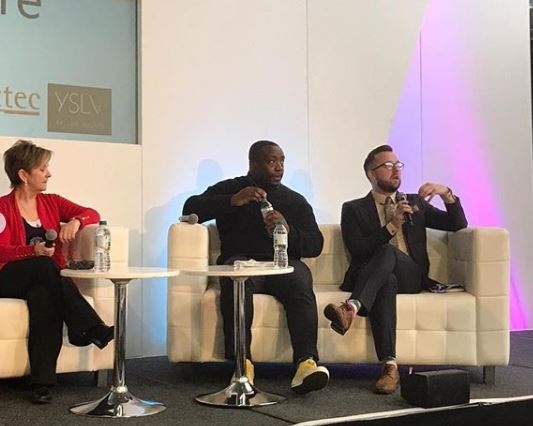
In 2017 the network ran some panels with LinkedIn and Michael, along with two mothers, talked about HIV, HIV stigma and how HIV doesn’t pick gay people.
In terms of stigma Michael says there’s still a long way to go.
“There’s a gap in the education to where the medicine is and how far we’ve come in 2019. I have no side effects from my medication, but people sometimes think the worst and revert back to 90s press, representation and culture when they hear the word HIV.
“Being British we are always afraid about being politically correct, so a piece of advice I would give is that there’s a way of asking a question, if you genuinely want to educate yourself.
I’ve been asked multiple times where someone wasn’t sure if they were being offensive.Then we’d chat through their question and I might suggest another way they could word or ask their question next time.
We can have that stiff upper lip sometimes, and be very British, but if we don’t change a little bit, then nothing is ever going to change.
We do need to develop, and we need to be not afraid of asking, then we can talk together about how to improve how we ask things. It’s all about the intentions, its okay to be corrected, and then move on from there.”
For anyone that wants to open up about having HIV Michael says that whether it’s around HIV or any other illness, people assume the worst and oftentimes their imaginations run wild.
“When I look at my story I worked it up in my head to be huge and thought my Mum would be angry, and none of that happened.
“There’s no right or wrong, around that, just like there’s no should or shouldn’t around coming out. I came out when I was 22, and I know people that did when they were 11/12.”
Michael also talks practically about coming out as gay or sharing your HIV status at work, saying that if someone doesn’t feel 100 per cent comfortable then perhaps they could get involved with the LGBT network.
“That isn’t you coming out, but its showing that you’re an ally to that community. You’ll slowly get to know people, and perhaps you could just tell a couple of people following that.”
Michael’s company Cvent hires a lot of graduates and he wants them to know that they can be totally themselves; whatever that means to them.
Things have been changing there too, with people including their pronouns in their email signatures, and reviewing other areas like hiring [NM11] so no bias towards or against any community.
While Michael is still working to combat stigma around HIV parenting, where there are misconceptions around children contracting HIV, he also wants to ensure that media representation and the shift of the past few years continues to improve.
“If you’ve got the confidence, why not, if we all waited for somebody else to make a change that would never happen?”
Michael is a member of myGwork, the LGBT+ business community.