
Primate review: A bananas thrill ride that apes horror conventions
"Were Ben human, this might have been yet another by-the-numbers, gratuitously gory slasher – but Primate’s violence feels justified, even honest," writes Attitude's Jamie Tabberer
Natural horror was not a sub-genre this scary movie connoisseur cared for until 2008’s The Ruins, a film about plants (“plants?!” we hear you cry) with a majestic scene where a vast chorus of chittering vines greet some not-so-final girls in a Mayan temple.
Plants, I realised, to my sudden disgust, are alive. And so are apes.
Enter the excellently titled Primate, directed by Johannes Roberts, which might have seemed superfluous after the amazing killer ape subplot of 2022’s Nope and high-concept curio that was 2025’s The Monkey, but on viewing, feels fresh for its straight approach. Seriously acted and slick to look at, it has nothing in common with the hundreds of comedies-disguised-as-horrors/abysmal B-movies about sharks, piranhas, dogs, etc. it shares roots with.
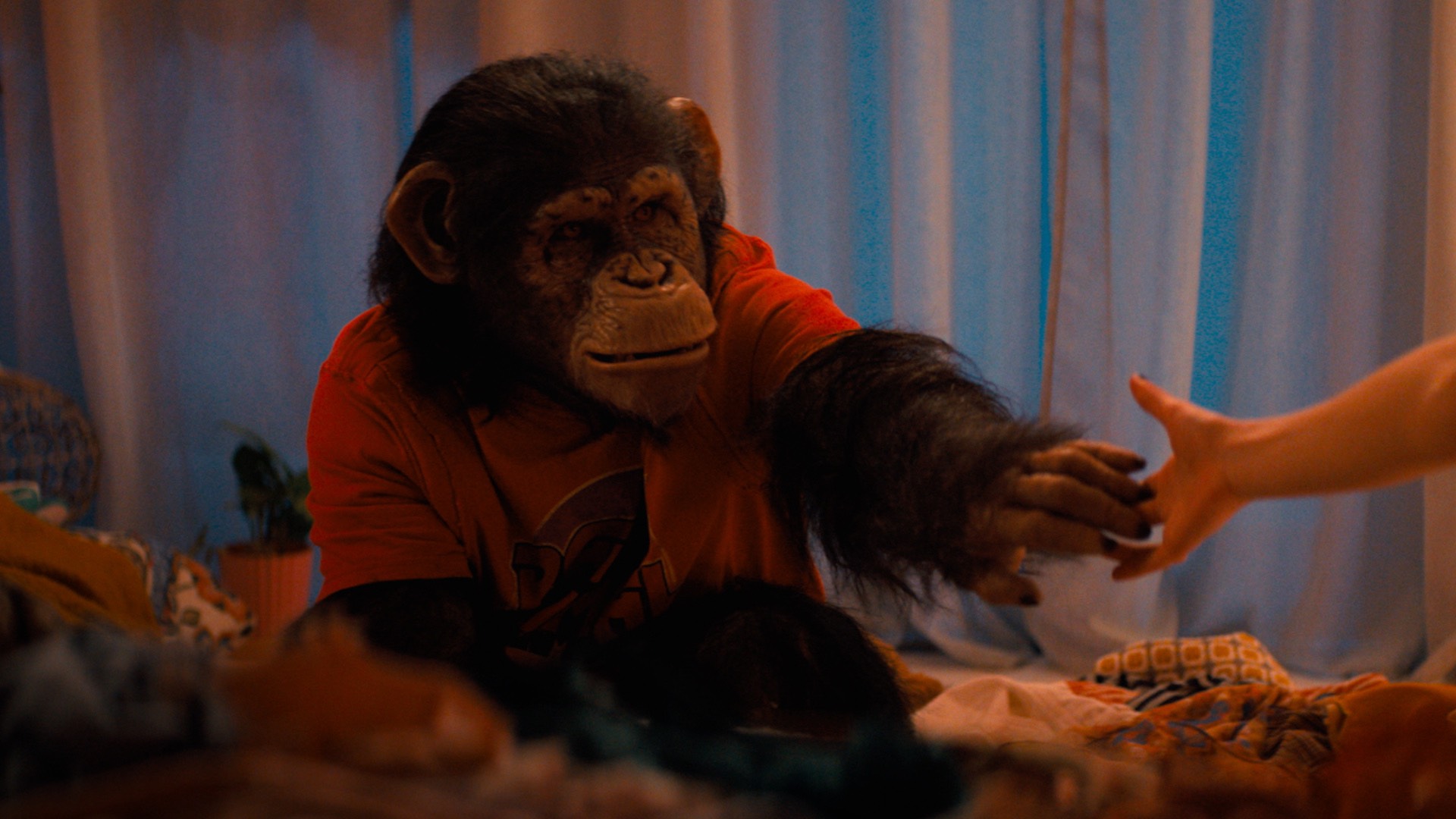
Because, for all its campy absurdity – the titular character is an adorably T-shirted chimp called Ben, after all – what heightens Primate’s horror is its plausibility.
The storyline is brilliantly basic. Upon contracting rabies, Ben loses all domesticity and targets his owners Johnny (Lucy Pinborough, plucky, impressive) and Erin (Gia Hunter, heartbreakingly vulnerable), along with the gaggle of teen buddies Johnny’s invited over for a sleepover at her dad’s clifftop abode. He proceeds to stalk each one with breathtakingly violent vigour.
Indeed, were Ben human, this might have been yet another by-the-numbers, gratuitously gory slasher. But Primate’s violence feels justified – even honest. Rabies can cause encephalitis, or inflammation of the brain, leading to uncontrollable aggression and frenzy. The lethality of the actual virus itself aside, the dramatic engine here is the physical threat posed by this previously sentimentalised, immensely strong animal – and the god-awful sounds it makes; the teasing, grinning charisma it displays between attacks. That animals can have a sense of humour is pretty scary, when you think about.
All bets are off by the time Ben hoists one teenage boy into a compromising position on a bed (“buy me dinner first!” the jock exclaims) and a truly disturbing, unthinkable horror comes briefly into view. The character’s ultimate fate – uniquely grisly though it is – is a relief by comparison.
There are a lot of impressive plays here. The first kill uses a smart casting trick to subvert expectations; the pre-sold-as-paradise setting of Hawaii proves quite the rug-pull (the fact chimps aren’t native to the island makes things all the weirder) and the combination of CGI and practical effects is excellent, lending Ben a sublime ugliness you can’t look away from.
The characters are a tad thin, but in an era when we’re lucky to get five decent, big-budget horror films a year, there’s little more to criticise of Primate: a staggeringly simple film executed with near perfection.