On place and identity in On the Sea: The film about ‘gay love’ and Welsh fishermen heading to BFI Flare
As Helen Walsh's queer independent film heads to BFI Flare: London LGBTQIA+ Film Festival, the director reflects on its themes of isolation and belonging in an op-ed for Attitude
By Helen Walsh
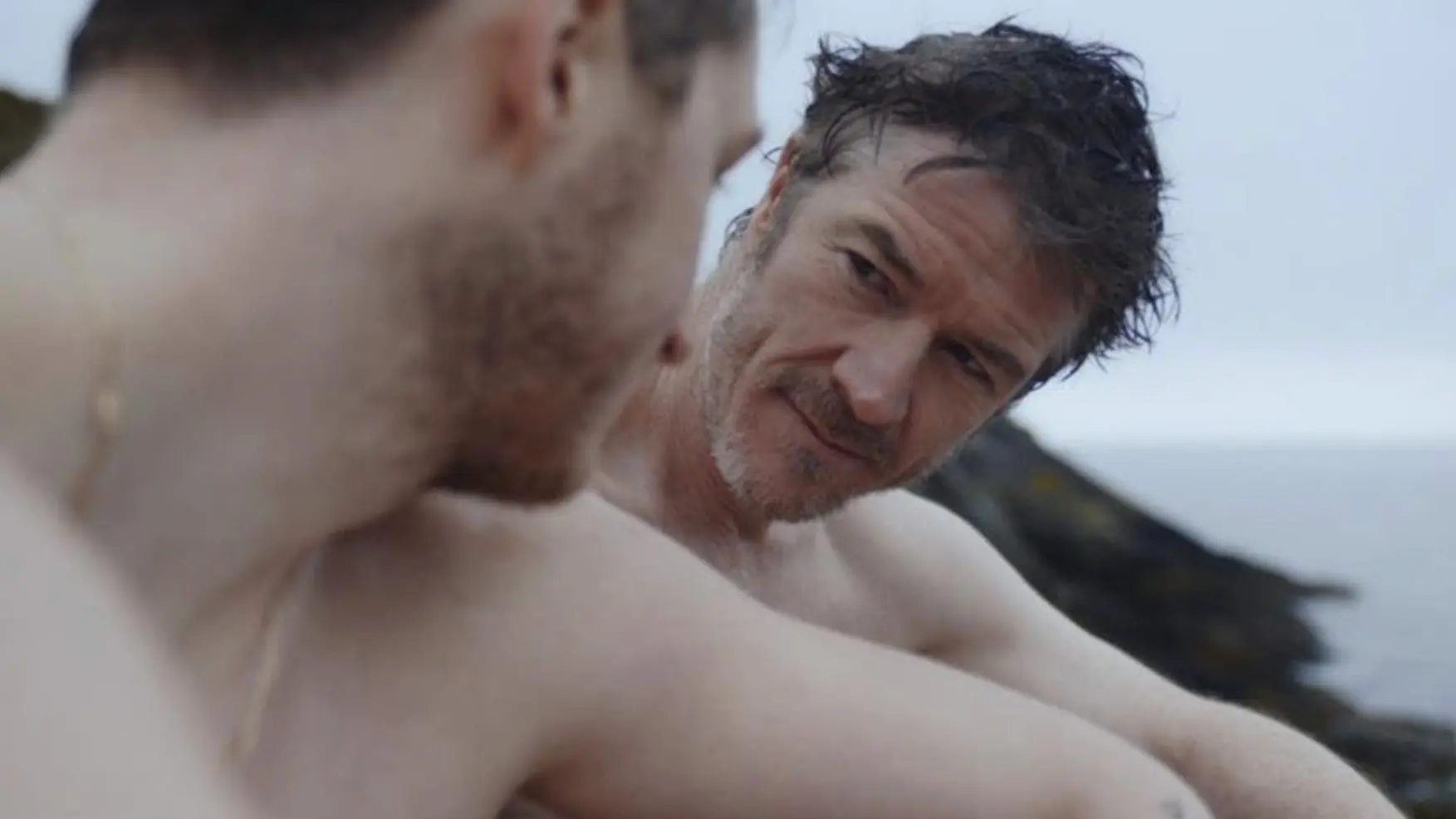
My sophomore film, On the Sea, screens at BFI Flare this week. It’s a film about love – marital love, fatherly love, gay love. But it’s also a film about place – how place informs and shapes our identity.
The film is set amongst a family of brothers and sons who work the mussel beds of the wind-lashed Menai Straits in Wales. It’s hard, physical graft – men’s work – which gives rise to a masculine ideal that is very much aligned with tradition, the church and the ‘natural family.’ Jack Morgan, played by Barry Ward, is a married father who has long since buried his yearning to be with men. When he is outed by his younger, bullying brother, played by Celyn Jones, he is forced to confront the limitations of place.
Anyone who has ever been othered or marginalised or diminished by the status quo, shares a common sociopolitical kinship. Long before intersectionality entered our political parlance, David Wojnarowicz, the New York artist and AIDS activist who documented the ‘invisible’ life of queer spaces in the years building up to and during the AIDS crisis, shone a light on how people’s struggles were linked through their mutual oppression within certain spatial-power structures. While I never experienced anything like the violence he was exposed to as a kid, I know how it feels to be chased around a playground by a gang of boys screaming “PAKI!” I know the shock-sensation of a boot to the head and the bitter after-sting of indignation when the voice of authority tells you they ‘didn’t see it.’
I grew up in a small northern town on a white neighbourhood in Thatcher’s Britain. I spent most of my summer holidays tucked away in the local library where I’d burn through entire shelves. But I never once saw myself represented in books until I was handed a copy of Hubert Selby Junior’s Last Exit To Brooklyn – a tale of homophobia, transphobia and racism set in the violent dockland of 1950s Brooklyn. It was the first time in my life I felt seen. Within the year I had sought out gay enclaves and communities in Manchester and London and, latterly, Barcelona – spaces where my sense of difference was immediately erased, places where I felt I could belong, and where I found some of my closest and longest-lasting friendships.
In the summer as a kid, my family would holiday in nearby coastal towns. Alongside his dark-skinned wife and his brown-skinned children, my blue-eyed, blonde-haired father learnt what it meant to be othered. We would routinely be turned away from B&Bs displaying ‘vacancies’ in the window. My father, a factory worker and drummer, worked the summer season with his band in those same holiday resorts, and he knew all too well why these guest houses were suddenly fully booked.
With a grudging acceptance of our fate, he would make us wait around the corner while he went on ahead and secured us a room. Once we were ‘in’, the owners quickly warmed to my Sri Lankan mum and commended her on her well-mannered children. But not all prejudice is born of fear or lack of understanding; sometimes it comes from a place of hatred and is realised through violence. Jack Morgan would have grown up in one of these small, close-knit towns and, under the shadow of Section 28, the right to remain ‘invisible’ was not simply a choice, it was a means of survival.
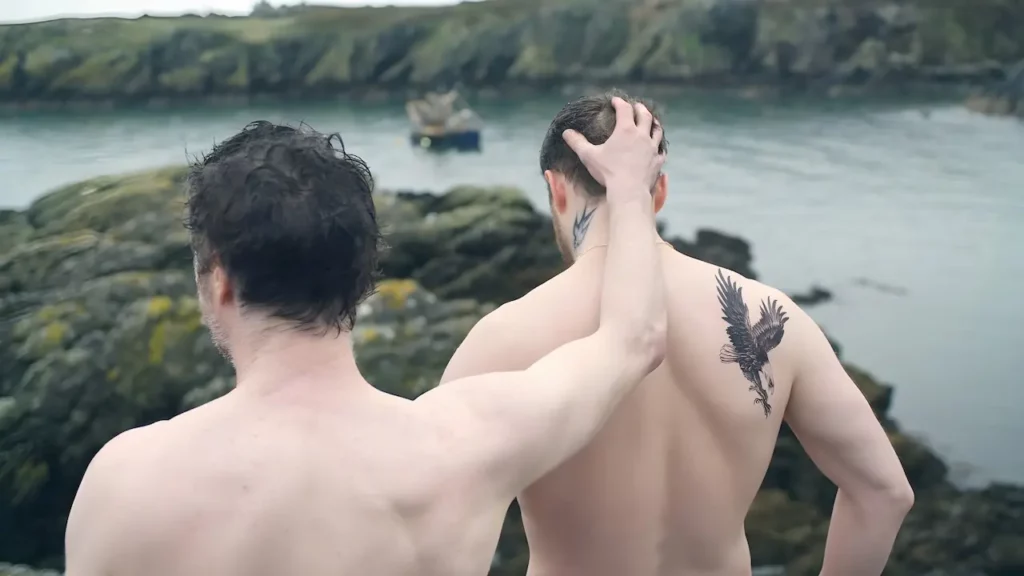
But when Daniel, played by Lorne MacFayden wanders into town, Jack is forced to rethink his own understanding of place. Daniel, a scallop diver, also hails from an unforgiving environment in the hard-bitten Hebrides. Banished by his father, a violent drunk, Daniel has spent most of his life rootless. He exhibits none of Jack’s fear or restraint in the one-horse towns he passes through. His nomadism imbues him with a resilient fuck-you-ness. When Jack eventually leaves his marriage and finds Daniel in his local pub, playfully flirting with a trawlerman, he is crushed. It’s not so much the betrayal that slays him but the realisation that no one seems to care; a different life might have existed for Jack, all along.
At a screening in Thessaloniki earlier this year, a farmer from a rural part of Greece told me he had waited until his 50s to come out, for fear of rejection from his community. Yet, his longstanding partner, also from a rural background, had come out aged 20 and been accepted, with his traditionalist father taking the lead. What Daniel ultimately reveals to Jack is that no place, no matter how constrained, should irredeemably shape our identity. It’s how we respond to an environment, how we resist it, subvert it and challenge a place to evolve that ultimately defines us, too.
Get more Attitude