
‘Queer people have always found ourselves in Shakespeare’: Rising star Mary Malone on role in A Midsummer Night’s Dream
"Playing Helena isn’t an act of defiance because she’s trans. She isn’t. It’s powerful because I’m trans, and the production trusts that I can tell her story as truthfully as anyone else," says Mary of her part in the Regent's Park Open Air Theatre production
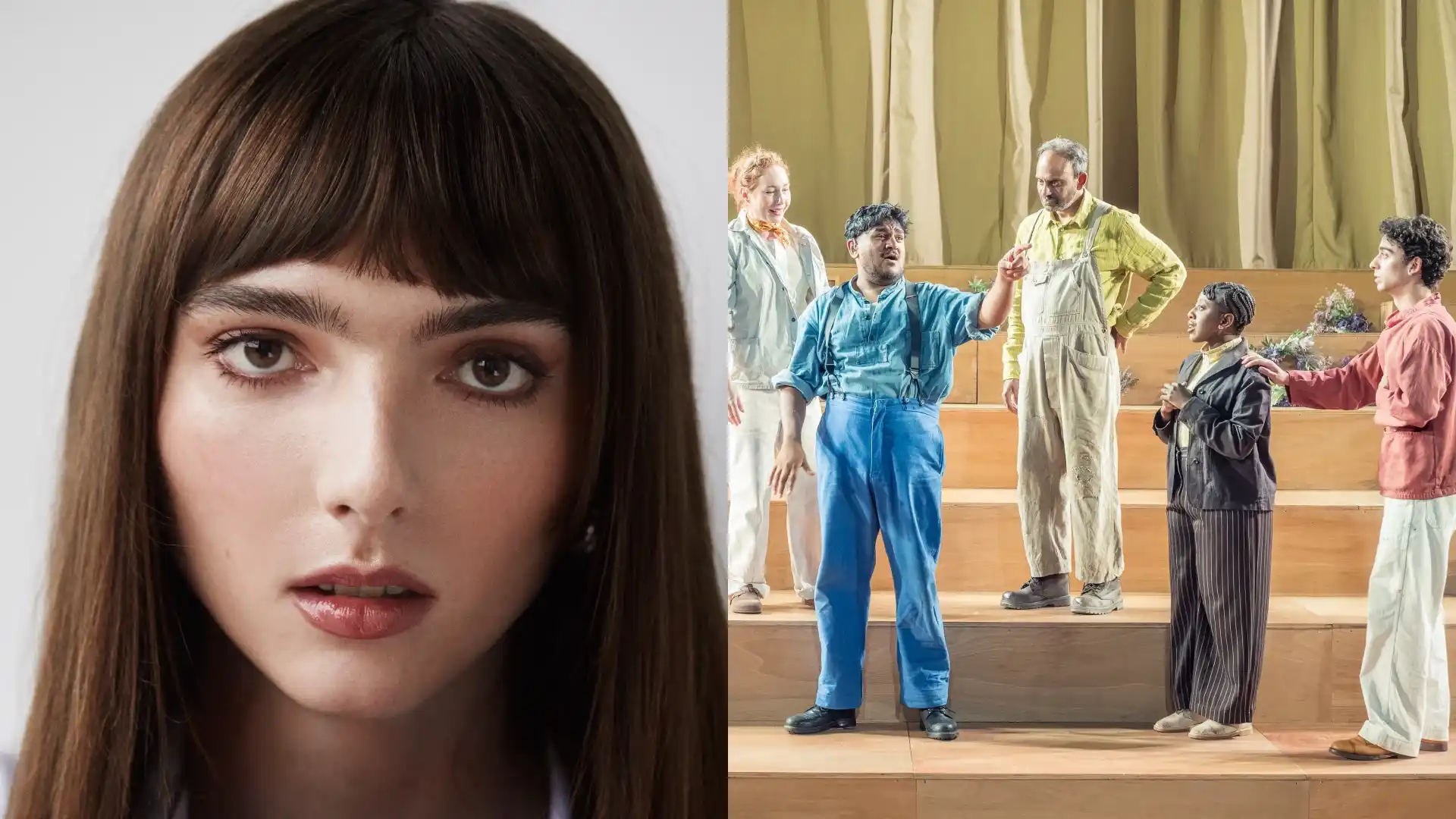
Tell us about this new production of Shakespeare‘s A Midsummer Night’s Dream…
For me it’s a play about love, identity and transformation. There’s lovers, fairies and a group of amateur actors, and together they tell a story about community and the power of storytelling. I think it’s about how theatre can create connection, offer escape and help imagine different possibilities. In a world that’s increasingly divided there’s something hopeful about this show, it’s about the magic of creation and connection.
Tell us about your character – who do you play?
I play Helena, one of the lovers. At the start of the play she’s desperately in love with Demetrius, her sort of ex, but now he’s pursuing someone else… her best friend Hermia. She spends much of the play chasing him, begging and suffering for his love. But this doesn’t make her pathetic in my opinion. I think she’s resilient, intelligent, funny and incredibly relatable. She connects directly with the audience from the very start, she needs them, and I think they need her too. I also love how she actively pursues her own desire. She’s a woman who refuses to be passive. She understands the risks of making herself vulnerable but she does it anyway. There’s power in that. Oh, and she’s tall… totally trans girl coded. My mates have been messaging me saying ‘Finally trans Helena is here – we’ve been waiting for this!’
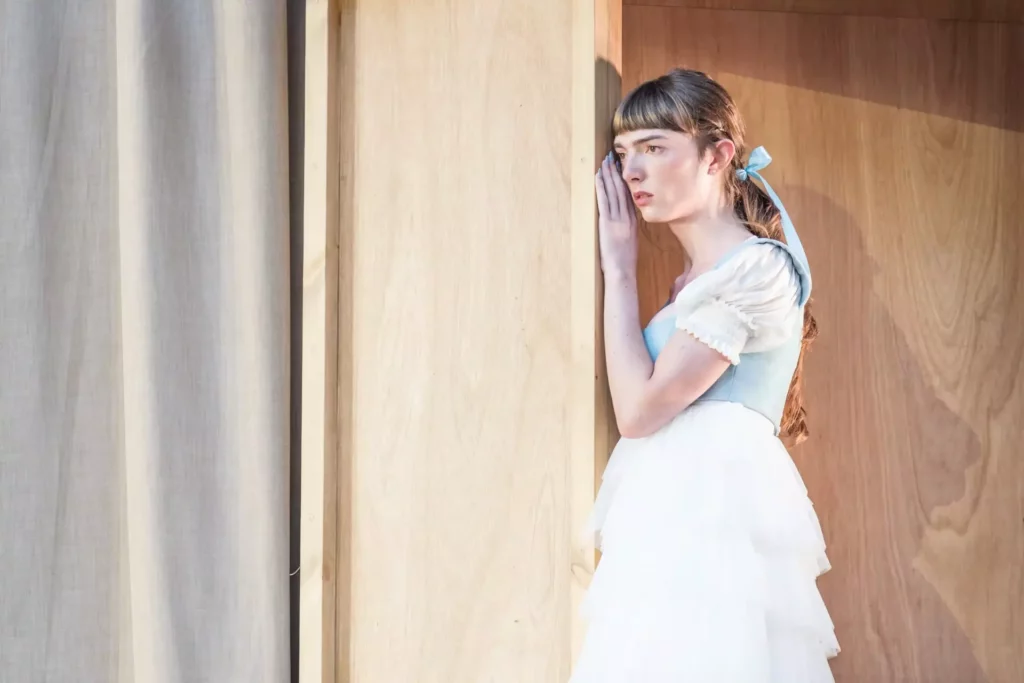
What are you looking forward to about performing in the great outdoors, the beautiful setting of Regent’s Park Open Air Theatre?
There’s something about being outdoors that breaks down the barrier between the actors the audience and the world around us. It feels communal to me. It’s also so magical how the outdoor setting becomes part of the storytelling. One night we’re in a rain soaked forest, another night it’s a heatwave, another night a butterfly lands on stage, another night a fly on your face! Nature comes in to remind you that theatre is a live event.
What’s it like working with this cast and creative team?
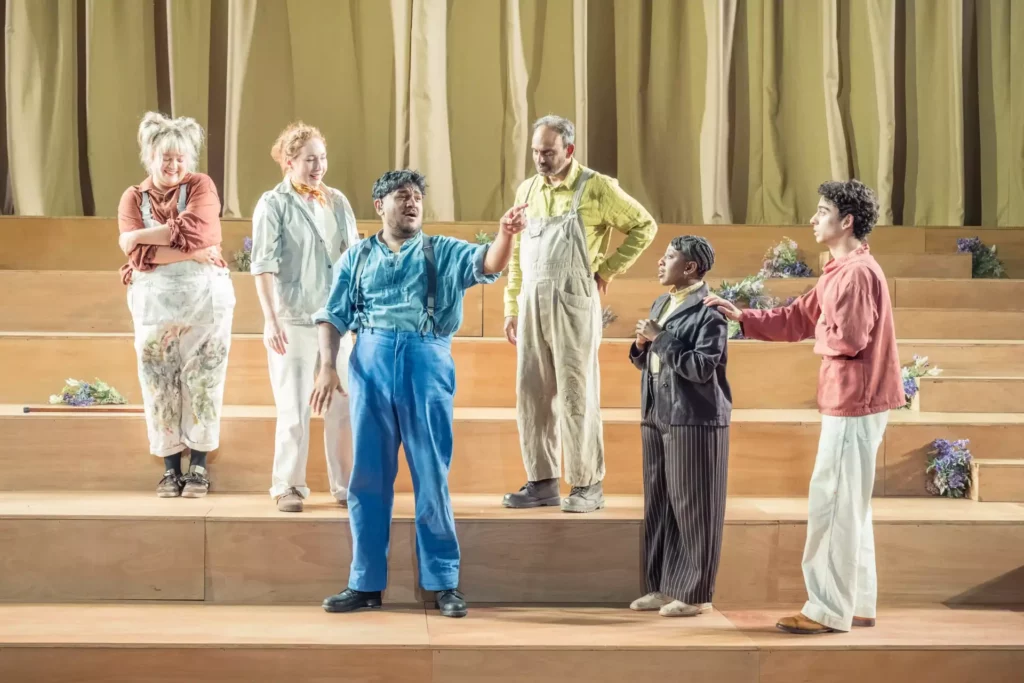
Aww, I’ve genuinely fallen in love with this company. Everyone is so jokes, kind and unbelievably talented. It’s also a wonderfully diverse room and that breadth of experience makes the work richer and the room feels safer to me. Atri [Banerjee, the director] has created such an open and relaxed rehearsal process where I’ve felt able to play and experiment. Somehow, in all that freedom, we’ve achieved an enormous amount. It really feels like an ensemble in the truest sense, and I think audiences will feel that shared spirit on stage.
What is your favourite scene and character?
I love the scenes between Titania and Bottom. Jenny’s Titania is electric and Nadeem as Bottom is a complete wonder. Their scenes together are glorious, sexy, hilarious, absurd, but they’re also unexpectedly tender. This play has such a generous view of desire, that it can be irrational, surprising and wonderfully strange and their scenes capture that perfectly.
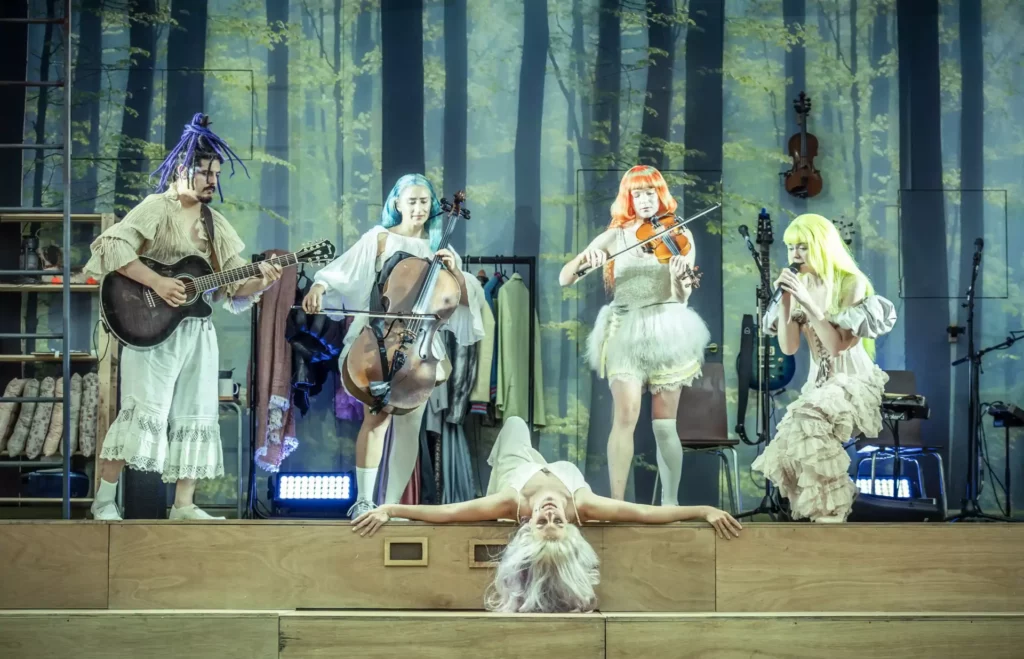
What drew you to this project?
I was drawn to Helena first and foremost because she’s such a rich and complex character. Who wouldn’t want to play her! But I was also excited by the opportunity to play a role that hasn’t often been imagined through the lens of a trans actor. The production isn’t trying to make a statement about that, it simply trusts that these classical roles belong to all of us and that’s something I’m really looking for in projects right now.
How important is it to you to see more publicly LGBTQ+ performers cast in major classical roles like this one?
At a time when trans lives are so clearly under threat, there’s something important about being able to embody roles like this… and also something a little scary about it too. To be honest, whenever I’m doing theatre, I spend the first scene with a little voice in my head saying “maybe this audience are upset to see me here.” But by the end, I often feel like I’ve won their hearts, that they’re with me, laughing with me, rooting for me, seeing something of themselves in someone like me.
Playing Helena isn’t an act of defiance because she’s trans. She isn’t. It’s powerful because I’m trans, and the production trusts that I can tell her story as truthfully as anyone else.
Shakespeare’s comedies are full of chaos, desire and mistaken identity — themes that still feel very current. What do you think this play has to say to audiences in 2025?
I think the play reminds us that we’re all a bit ridiculous. We all fall in love with the wrong people, make terrible decisions, lose ourselves and find our way back. In a world that can feel increasingly polarised, our play invites us to laugh together, forgive each other and imagine a different way of being. That’s a surprisingly radical thing for a 400-year-old comedy to do.

Has there been a role, or a moment in your career, where you felt you could be fully and authentically yourself on stage?
I’m not sure I want to feel authentically myself when I’m playing a character. For me, I’ve felt most free when I’m able to tell a story without having to carry my identity on stage with me. When I feel trusted to do my job. That experience makes me feel most powerful.
What would you say to LGBTQ+ audiences who might be wary of Shakespeare, to convince them this production is for them too?
Queer people have always found ourselves in Shakespeare. His plays are messy, funny, sexy, full of transformation, desire, performance and people refusing to fit into boxes. You don’t need to know the text before you come. Just bring yourself. I think you’ll be surprised by how much of yourself you find reflected back.
Do you have a favourite Shakespeare play?
Honestly, I think A Midsummer Night’s Dream has my heart right now… And let’s be honest, any play full of fairies is going to have a head start with me. I’ve always been a fairy girl.
What do you hope audiences will take away from seeing A Midsummer Night’s Dream?
I hope children leave talking about it all the way home. I hope couples go home snogging. I hope trans people leave feeling inspired to make something new. I hope people working in our industry leave excited by what more inclusive casting can unlock. More than anything, I hope everyone leaves feeling like they’ve truly connected with each other, the story and themselves.
A Midsummer Night’s Dream runs at Regent’s Park Open Air Theatre until 18 July.