
Man to Man at Royal Court Theatre in London review: Tilda Swinton, supercharged
"It's a relief to be reminded that some of our leading artists have been questioning gender norms for longer than some of us have been alive," writes Attitude's Jamie Tabberer, as Swinton's hit solo show is revived after 39 years
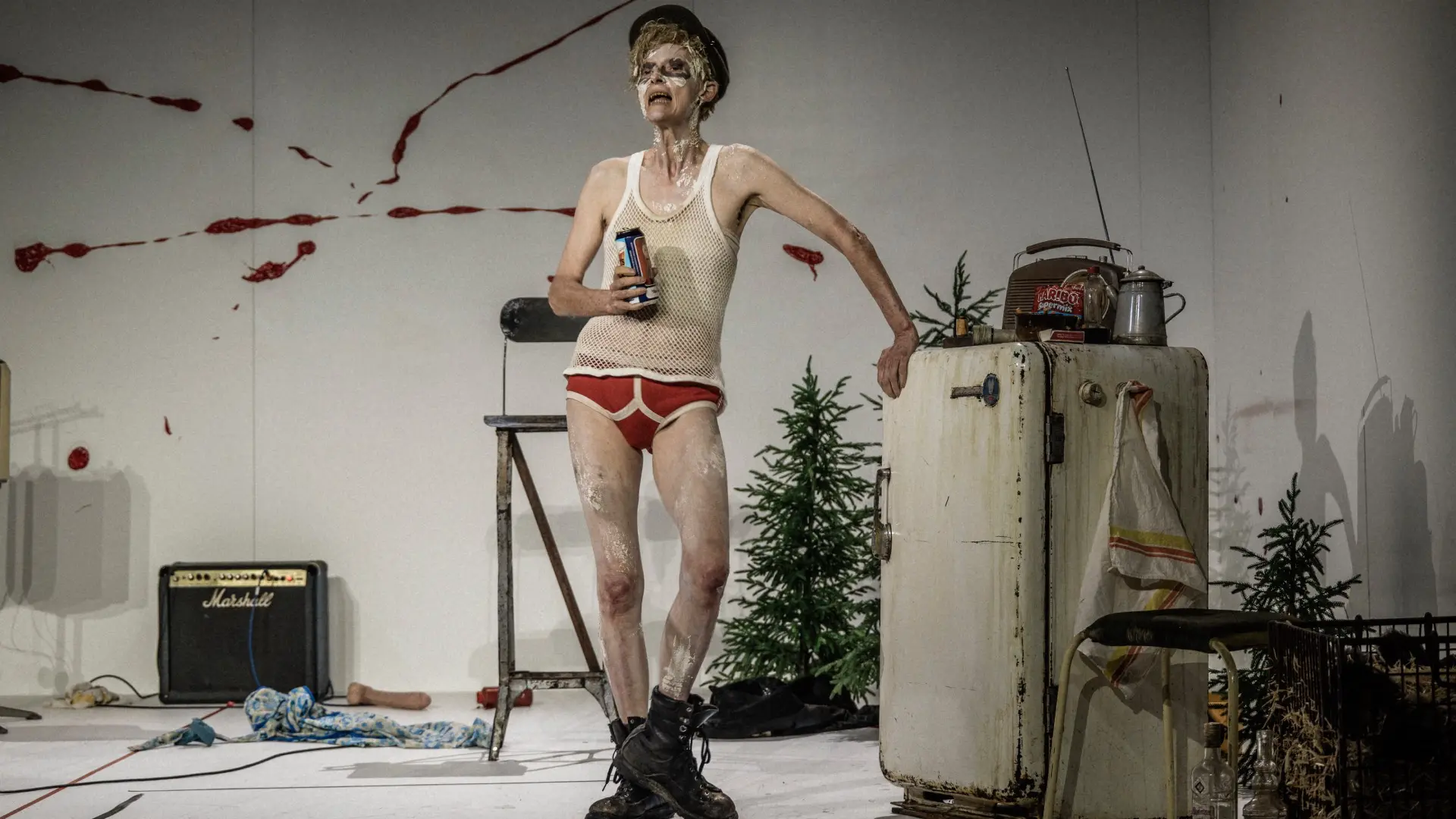
“It’s no exaggeration to say Beyoncé moved more last night than this writer has in the last month,” wrote this reviewer of the pop superstar’s tireless dancing at her show at London’s Tottenham Hotspur Stadium last year. We must now make a similar distinction to fully illustrate Tilda Swinton’s commitment to her craft after we caught her in the solo show Man to Man at the capital’s Royal Court Theatre last week. In the several days it’s taken us to find the time (or should that be the wherewithal? The guts?) to write this review, the Oscar-winner has taken to the stage and been doused in beer umpteen more times in the gruellingly complex role of Ella and Max, a woman in 1930s Germany who assumes the identity of her dead husband to take his job as a crane operator and (barely) avoid penury. That said, the show is not exactly waiting on reviews to sell tickets: the London run was sold out before press night. Dates in Edinburgh, Berlin and New York City are to follow.
Attitude has only found the cognitive realm to give Swinton’s mesmerising performance, and this heinously disturbing story of struggle the deep thought it deserves after a tooth extraction; just as well, as it means the modern curse of diminished empathy for the suffering of others feels briefly undone, and the play’s relevance to the modern day, depicting as it does decade upon decade of merciless societal and global volatility and conflict, feels all the more urgent. The time elapsed has also granted ample opportunity for research after we entered the show blind: written by Manfred Karge, translated by Anthony Vivis and revised by director Stephen Unwin, this eagerly anticipated revival reunites Swinton with much of the same creative team as in the show’s acclaimed UK debut 39 years ago, when the horrors of Nazi Germany were a more recent memory, and the notion of a far-right party winning a huge victory in a Germany state – as Alternative for Germany (AfD) did in Saxony-Anhalt earlier this month – was implausible.
Despite some challengingly impressionistic language as she recounts Ella/Max’s dramatic life story, Swinton speaks in a deliciously excessive Cockney accent throughout: a brave creative choice that makes the dense German history she describes – the rise of fascism through to the fall of the Berlin Wall – as uncannily accessible as a classic British sitcom. (“Those holiday cruises back in Hitler’s time were really something,” is the play’s opening line, teasing the absurd humour to come.) The gritty kitchen sink realism sees a solitary Max trundle around his uncomfortably bare flat with a ‘70s TV set, some fatigued furniture and little else for company.
The grim simplicity of the production is almost torturous, but keeps the focus entirely on Swinton, whose anecdotes, though relentlessly depressing, are charmingly delivered. Swinton’s transformation from ethereal being to string-vest-and-Y-front-wearing lagar lout feels cellular, his laugh out loud eccentricity boasting shades of her addictive performances as grotesque lads’ mag editor and brisk Londoner Dianna in Trainwreck and West Country artist-turned-cosmopolitan drama queen Elizabeth in Problemista, both of whom, one imagines, constructed new identities to escape similarly punishing beginnings.
He’s intensely likeable, yes, but Max’s palpable, almost puerile masculinity verges on rancid; that he improbably reminds us of two glam, ostensibly high femme antagonists from the more crowdpleasing end of Swinton’s filmography is so her. This is a star whose flexible attitudes to gender in her life and work have made many an LGBTQ person feel more at ease. As she said in a 2021 interview with British Vogue: “I don’t know if I could ever really say that I was a girl. I was kind of a boy for a long time. I don’t know, who knows? It changes.” Her openness makes her the perfect steward for the queer sensibility this story vibrates with, even inadvertently. As she indeed reflected in a recent Financial Times interview of her Man to Man debut in 1987: “It did open up a whole kind of flexible gender part of my work. Sally Potter saw it and invited me to work on Orlando [the 1992 film of the Virginia Woolf novel] . . . My position on Orlando is that if Woolf had written another 300 pages, maybe the next week Orlando would have transformed into a spaniel or a nightingale. It’s not about a binary option; it’s about transformation: a flexible and free sense of identity, a plurality.”
While hardly marketed as an LGBTQ story – would Max identify as trans today? It’s a question we’d love to put to Karge – it’s a relief to come away from Man to Man reminded that some of our leading artists have been questioning gender norms for longer than some of us have been alive. A dinky theatre programme that doubles up as a copy of the (surprisingly short) play is the cherry on top of a bitter sundae.