
‘They’re all very unique’: Galantis on working with Madonna, Kylie Minogue and Britney Spears (EXCLUSIVE)
The Swedish producer talks to Attitude about new single ‘Can’t Take My Eyes Off You’, and what working with three of pop's biggest gay icons has taught him
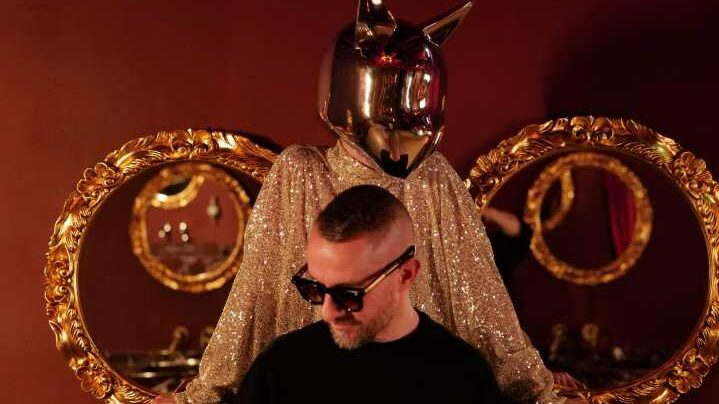
Galantis, the dance music project from Christian Karlsson, is responsible for hits such as ‘Peanut Butter Jelly’, ‘Runaway (U & I)’ and ‘No Money’ and has collaborated with the likes of Madonna, Kylie Minogue and Britney Spears (co-writing hit ‘Toxic’).
Now, he’s back with a new EP, The Devil’s Tax Return: Volume 1, set for release on 16 October, a project which features a collection of reworked tracks by Galantis from the likes of The Killers, Frankie Valli and Feist, with Karlsson acknowledging the need for something new while entertaining within the familiar.
As he releases new single ‘Can’t Take My Eyes Off You’ this week, we caught up with him to talk about reinvention, collaboration and the enduring connection between dance music and LGBTQ+ culture.
Attitude: Your new EP The Devil’s Tax Return: Volume One is a collection of reworked songs. What sparked the idea for this project and why did now feel like the right time to reinterpret songs that have already become classics?
Galantis: I’d been cooking The Devil’s Tax Return for years before it really took shape. The biggest challenge was reworking someone else’s work. I’m a songwriter and producer, and I’d never really done this before. It’s difficult because you either have to beat the original, or find a completely new angle that brings something to the song you haven’t heard before. That might be easier with some songs, but with classics you already love, it’s much harder. I was drawn to the idea of the project because of that challenge. It took way more energy than starting something from scratch because there are so many ways to fail. I had to find an angle where I felt like I was doing the original song justice while still making it my own.
As for why now, there are almost a million new releases every week, so we’re not exactly short of new music. For me, I found more comfort in looking back than looking forward, and that’s part of my own story too. I discovered a lot of Motown classics through samples in early ’90s hip-hop. I’d hear something, want to know where it came from, and that would lead me to this incredible older music from my parents’ generation. I think a lot of these songs can do something similar now, because there’s a younger generation who may never have heard the originals.
Can you talk us through your creative process for transforming a classic track into something that is still recognisable, but also still sounds like Galantis?
I didn’t really focus on that at all. There was never an aim for the songs to be recognisable or unrecognisable. Sometimes I’d make something and the original was still very recognisable, and I felt good about it. Other times it wasn’t, and I felt great about that too. As for sounding like Galantis, I hope everything I do sounds like Galantis. I don’t really think about it beyond that. I do what I do, and whether people like it or not is up to them.
You’ve reworked artists as diverse as The Killers and Frankie Valli on the EP. What links these artists together in your mind?
All the songs on the EP, apart from the Frankie Valli rework, come from a specific period in my life. They take me back to when I stopped producing and writing for other artists and decided to focus on making my own music, around the time I started Miike Snow. They were songs that were part of my life then and that I really loved.
‘Can’t Take My Eyes Off You’ doesn’t connect to the other songs in quite the same way, but it felt right to include because it’s so timeless, and where it ended up sonically just seemed to fit. From a songwriting perspective, I’d always found that song so interesting and unique. I wanted to take it apart and put it back together to understand what made it so special. Is it the chord progression, the vocal delivery, the arrangement? I couldn’t stop working on it, and eventually it just sat really well alongside the others.
Were there any songs that you initially wanted to include on the EP but ultimately couldn’t make work?
Yes, absolutely. Even some of the ones that made it onto the EP didn’t work for a long time. The Killers track only made it over the finish line right at the end. I’d tried so many times and never felt like I’d really nailed it, and then eventually I found that one idea that made everything click. There are definitely a bunch that didn’t make it, but I don’t throw those away. They’re just for another day. I guess I find it hard to give up on things – the ones that didn’t work this time might work one day.
Over the course of your career you have worked with the likes of Kylie Minogue, Britney Spears and Madonna – three artists who’ve become LGBTQ+ icons. What do you think gives certain pop stars lasting appeal with queer audiences?
Of the three you just mentioned, they’re all very unique in their own way and they built something that makes them really strong within their own brand. They are incredibly strong in their own originality. I think what gives that lasting appeal is the acceptance and positivity they put out. People connect with artists who are completely themselves and who make everyone feel included, and that sense of belonging is what keeps the love going.
What have you learned from working with artists who have such fiercely loyal LGBTQ+ fanbases?
I learned a lot from Kylie, Britney and Madonna but that’s because they were all great to work with in completely different ways. Every artist I work with, I learn something from. And if a loyal fanbase teaches you anything, it’s the power of making people feel seen and included.
Dance music and queer culture have always been deeply intertwined. As an artist creating music for connection, how conscious are you of that history?
It’s just always been there for me organically in dance music. I don’t know if that’s because of where I grew up with it. For me it was always there, it was just part of the culture. I do feel like dance music should be about open-mindedness, love and being completely non-judgmental in every way.
Club culture is also all about shared experiences – what do you hope your audiences feel when they hear these new versions for the first time live, and how do you envision these reworked tracks translating into your live shows?
I’m working these songs into the live set right now, but ultimately, I want people to feel what I hope they feel at any Galantis performance. Everything I put into my set is there because it gives me a certain feeling or emotion, and I hope the audience connects with it in the same way. It’s not really calculated beyond that. If something moves me, it belongs there, and I hope it moves someone else too.
Which song did you feel the most pressure when reworking it?
All of them carried a lot of pressure, but the Killers one was extremely hard. I gave up on it many times because I felt like I didn’t succeed, so it was a big win when I finally had something I was happy with. ‘Do You Mind’ had the most versions by far. That doesn’t mean I disliked the earlier versions, I just kept going with it for the longest time.