
The Obituary of Tunde Johnson review: ‘Layered eulogy to Black gay teen’s life is urgent viewing’
Time loop teen drama, with its echoes of Euphoria and Donnie Darko, is part of BFI FLARE: London LGBTIQ+ Film Festival
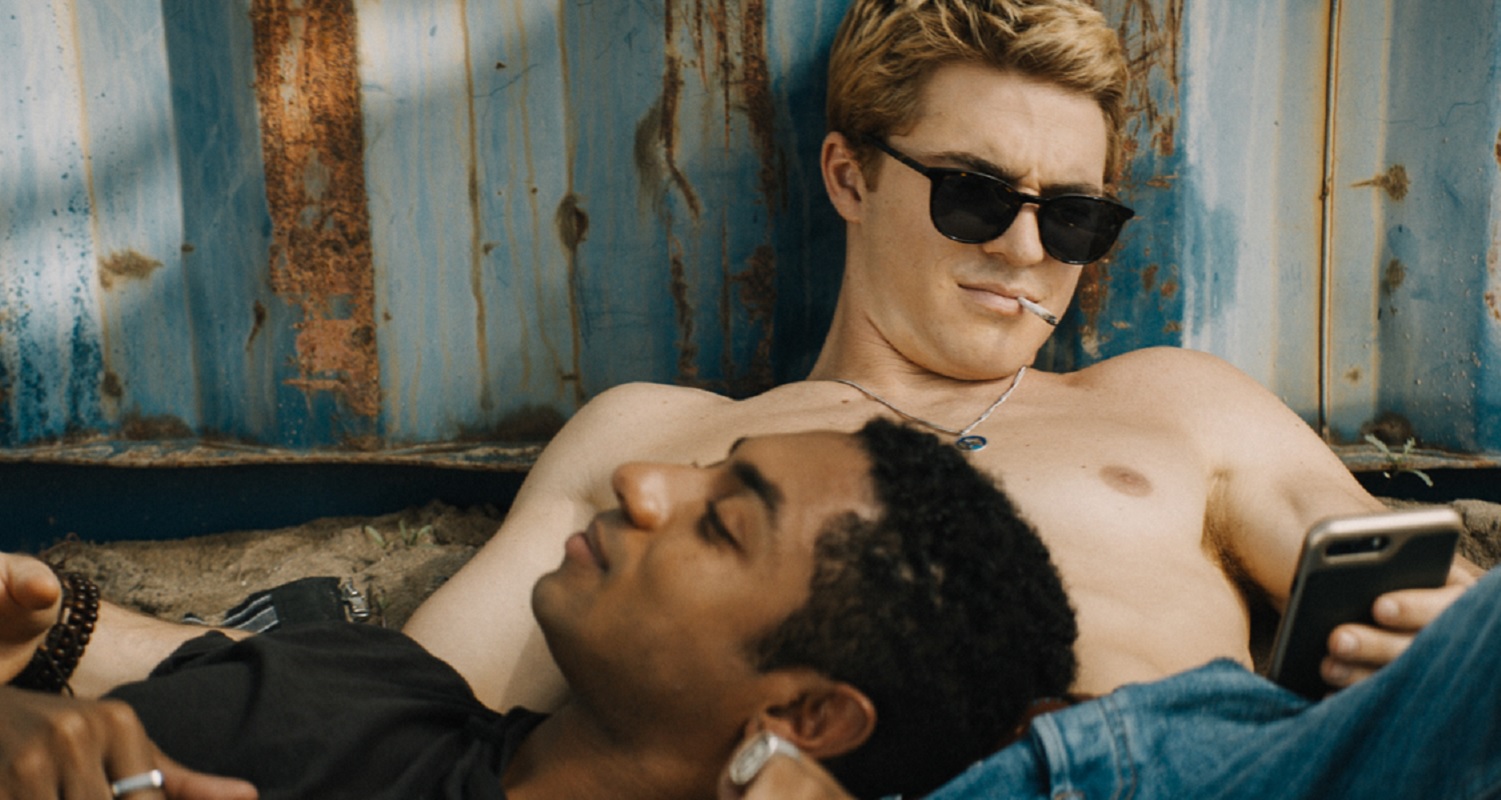
Words: Jamie Tabberer; picture: Wolfe Releasing
Numbness is all but inevitable in this years-long era of relentlessly horrific and tragic news. Searingly powerful movies like The Obituary of Tunde Johnson, playing now at BFI Flare: London LGBTIQ+ Film Festival, are an essential antidote to such a feeling.
The film follows a charming but intense African-American teen named Tunde, who’s forced to relive the day of his racially motivated shooting by police officers on a loop.
TOOTJ first screened almost 18 months ago; today, it prompts meditations on the deaths of George Floyd and Breonna Taylor, to name but two unarmed Black people shot dead by US police officers in 2020, and the global clash between Black Lives Matter protestors and police that followed.
For UK viewers, the Flare outing also follows reports of allegations of racism within Pride In London, and debate around the organisation voting against a motion to ban the Metropolitan police from taking part in the procession earlier this month.
But if TBOTJ feels especially timely in March 2021, it’s worth considering the long history of police brutality against Black people in the US and beyond. When wouldn’t it have felt timely?
Indeed, this film’s power is not in its timing, but its artistry. Actor Steven Silver, known for his role in Netflix TV series 13 Reasons Why, is magnetic as the brooding Tunde, expressing, or rather quietly carrying, complex emotions like a dead weight. This reviewer was reminded of Jake Gyllenhaal’s mysteriousness in Donnie Darko – and also of that film’s tricksy, and occasionally confounding, multi-level storytelling.
In a wide, varying role, Tunde experiences different struggles with each new beginning, with Silver in turn striking subtly different notes.
The same, unusually, applies to the supporting characters: Spencer Nevill plays Tunde’s secret gay lover Soren, with Nicola Peltz is Soren’s girlfriend Marley – who, a touch conveniently, is Tunde’s best friend since childhood.
Peltz is the stronger presence of the two: compassionate in one scene, sexy the next, then everything from confused to Regina-George-furious to, by the end, drunk. A lot is asked of her, while there’s a frustrating, albeit arguably deliberate, flatness to Nevill’s performance. It perhaps suggests Soren’s destined to live out the same muted, closeted, stereotypically jockish existence in numerous parallel universes.
Elsewhere, Sammi Rotibi and Tembi Locke are a delightful dream as Tunde’s parents Ade and Yomi. The first time he comes out to them, I didn’t see it coming. The moment is so direct and well-acted, I was taken aback.
There are many shocking, uncompromising moments in TOOTJ, but they don’t define the film. Fittingly, it has layers: the pace is nimble, the soundtrack Shazamable, the direction (from Ali LeRoi) polished. The overall effect is like a sped up and strangely cool prestige TV drama in the vein of Euphoria, with the mind-bending unpredictability of Russian Doll.
Some of the locations are epic – particularly the Johnsons’ jaw-dropping LA home – although I conversely found a nondescript school building for key scenes between Tunde and Marley unmoving. But this is a minor complaint of a powerful entry in the LGBTQ film canon.
4/5
Read the Attitude April Style issue, out now to download and to order globally.
Subscribe in print and get your first three issues for just £1 each, or digitally for just over £1.50 per issue.