
Thomas Hitzlsperger: This World Cup proved why positive masculinity beats the Manosphere (EXCLUSIVE)
"Positive masculinity in football isn't about giving players a gold star for decent behaviour. It’s much simpler," Hitzlsperger writes for Attitude
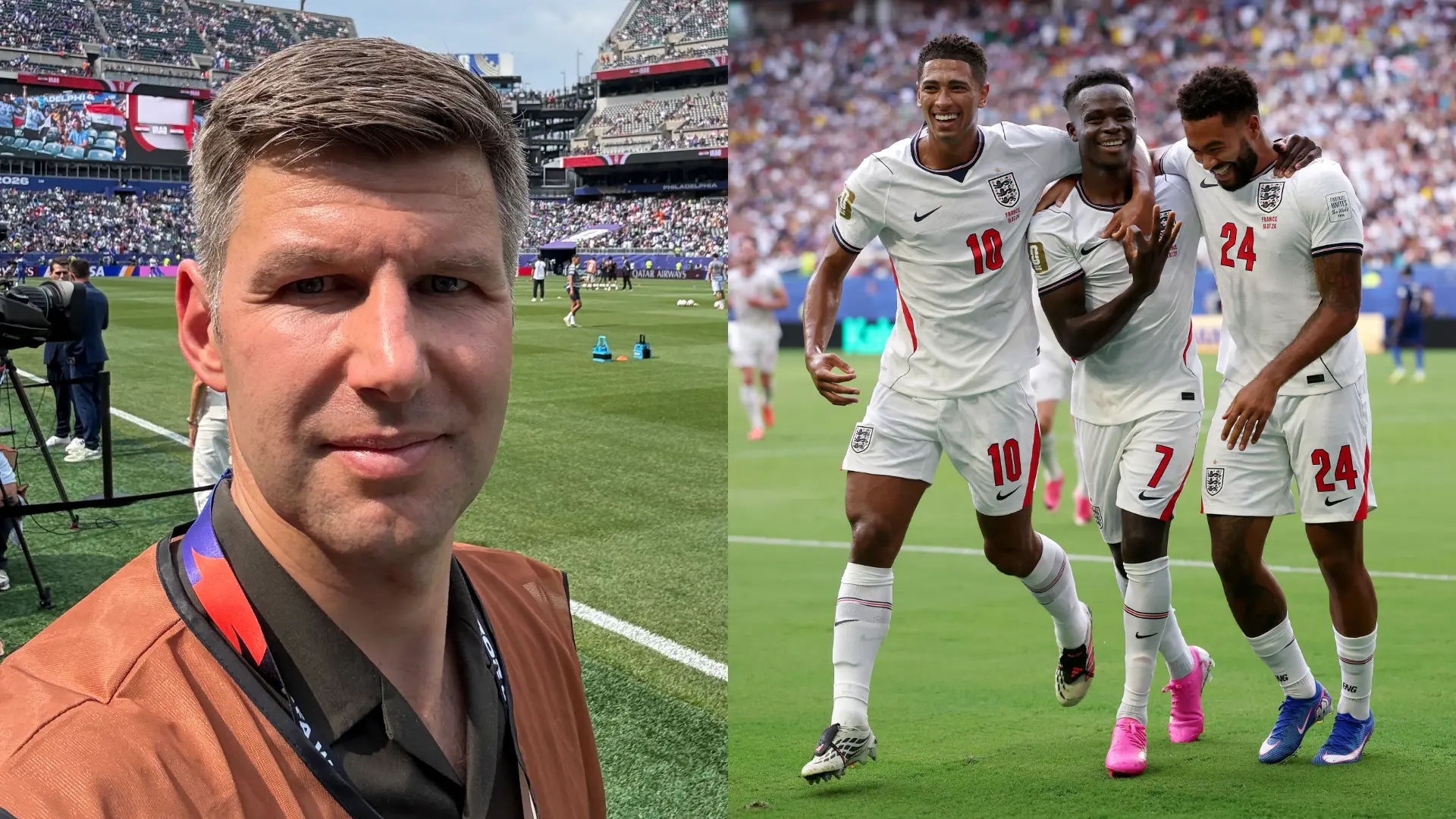
When you spend two weeks living out of a suitcase – tracing a route from Kansas City to Philadelphia, Vancouver, and San Francisco – you get a very loud reminder of just how inescapable football is. It is everywhere, all the time, broadcast on loop. But as I travelled across North America watching the World Cup unfold, I wasn’t just paying attention to the pitch. I was watching how the players presented themselves off the pitch – and what those small, quiet interactions say about where the men’s game is actually heading.
For decades, football was trapped in a narrow frame. It was a culture built on stoicism, aggression, and a very specific idea of what it meant to be a man. If you played in my era, you know the unspoken rules that applied more often than not: you took the hits, you kept your head down, and you definitely didn’t show vulnerability.
That culture hasn’t vanished, but during this tournament, something better kept breaking through.
Bellingham, Haaland, Mbappe or Harry Kane redefine what strength actually looks like
You saw it in moments that went beyond standard sportsmanship. Look at Jude Bellingham actively pushing Bukayo Saka to go and get his hat-trick. That isn’t just tactical advice; it’s leadership built on backing your teammate instead of feeding your own ego. Knowing the horrific online abuse Saka suffered after missing his penalty a few years back, seeing a teammate lift him up on the global stage meant something. It proved that real strength on the pitch comes from raising people up, not standing alone.
Or take the moment off the pitch when Bellingham stopped in a mix zone to speak with a journalist in a wheelchair while everyone else walked straight past. It wasn’t scripted, and it wasn’t a PR stunt. It was just basic human empathy. When a superstar takes ten seconds to acknowledge someone who is so often ignored, the ripple effect is huge. It tells an entire community: “You exist, and you belong here.”
These details matter because footballers have global reach. Young people today are looking for direction, and a lot of them end up down internet rabbit holes looking up to figures like Andrew Tate – people preaching a version of masculinity based on dominance and stepping on others.
Footballers offer a counterweight. When young fans see players like Bellingham, Haaland, Mbappe or Harry Kane – men at the absolute peak of their sport – showing kindness and working as a team, it redefines what strength actually looks like. You don’t need to be a “hard man” who kicks people to win. In fact, you have a much better chance when you stick together. Look at Spain: their success wasn’t built on one domineering ego, but on collective trust.
Football is a deeply straight-dominated bubble
We shouldn’t get naive about this. If you look for toxic behaviour in football, you’ll still find plenty of it. The old habits haven’t disappeared overnight.
And the game still has massive blind spots – most obviously the fact that we still don’t have publicly gay male players in Europe’s top leagues. People always ask me why that barrier remains so stubborn. The truth is, football is a deeply straight-dominated bubble. When a young player is trying to figure out who he is, he’s usually surrounded by agents, clubs, and family who simply have no idea what it’s like to be gay, and who can’t picture a positive future for an out athlete.
Breaking out of that takes time and immense courage. To change it, players need people around them who can show that life is much bigger than football – that you don’t have to compress yourself into a single, rigid identity just to survive in the game.
Positive masculinity in football isn’t about giving players a gold star for decent behaviour
Things are changing, even if it’s slow. Social media has stripped away the old barriers. Players today want to express themselves; they care about fashion, how they present themselves, and showing more than just their athletic side. David Beckham started that shift decades ago, but this generation has run with it, bringing a much more human side into the public eye.
When we look back on this tournament, I hope we remember it as a step forward. Beyond the commercial noise and the massive expansion to 48 teams, the core of the sport held up: people coming together, celebrating, and finding common ground.
Positive masculinity in football isn’t about giving players a gold star for decent behaviour. It’s much simpler. It’s about building a culture where men support each other, where empathy isn’t mistaken for weakness, and where leadership means bringing everyone along with you.
Thomas Hitzlsperger is a former German footballer, famously nicknamed “Der Hammer” for his powerful left-foot striking. A 2007 Bundesliga champion with Stuttgart who earned 52 caps for Germany, he made history in 2014 as the highest-profile male footballer to come out as gay, becoming a pioneering global voice for LGBTQ+ inclusion and diversity in sports.