
Netherlands Prime Minister Rob Jetten on Pride, politics and the power of showing up (WORLD EXCLUSIVE)
The Prime Minister of The Netherlands on his formative years, LGBTQ+ visibility and the far-right
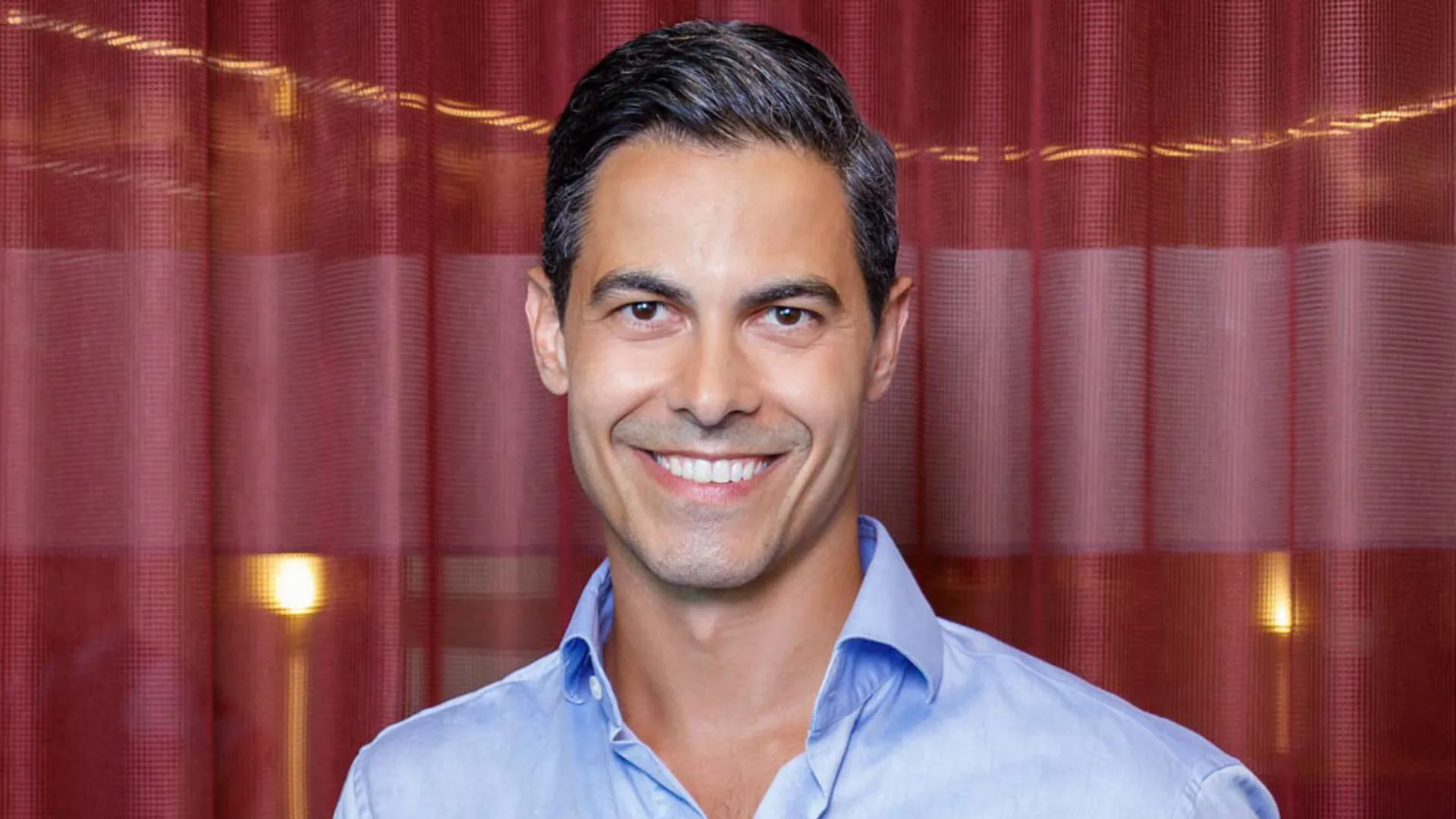
Rob Jetten is speaking not to me, but to his younger self when he says, “Don’t be afraid – your life is only going to get better as soon as you are brave enough to open up.” When the Netherlands became the first country in the world to implement marriage equality, he was 14, fearful of coming out, worried he would never find love. Twenty-five years later, that boy from Brabant is engaged, running his country, and has become the youngest and the first openly gay prime minister in Dutch history.
We meet in Amsterdam during WorldPride for his Attitude cover shoot at OBA Oosterdok, Amsterdam’s largest public library, days ahead of the human rights conference at which he will speak. Just a week earlier, I was in Berlin when its Pride celebration was violently attacked. The shock of that moment still sits somewhere in the body. The mood in Amsterdam is both celebratory and defiant. Hours earlier, Jetten stood on a boat in the Canal Parade, becoming the first Dutch prime minister to participate. The symmetry and symbolism are almost too perfect. But for all the crowds cheering him from the canals and bridges, there are also the online trolls and critics sending hate and threats every day. This is no fairy tale.
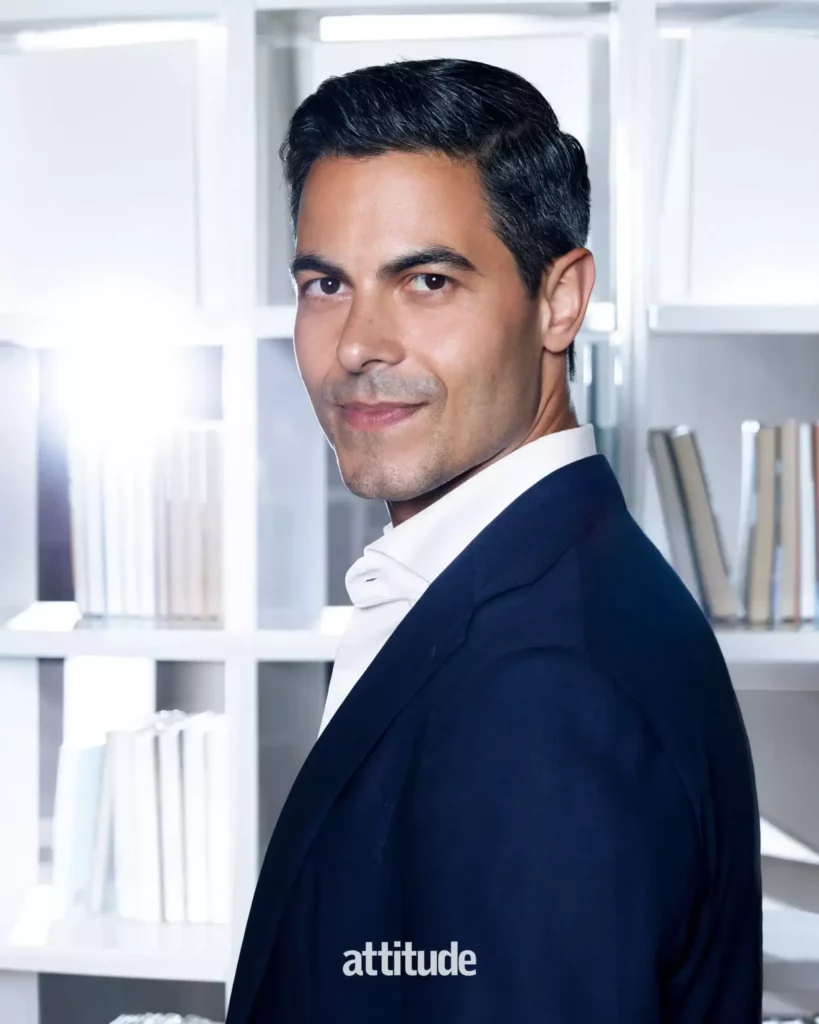
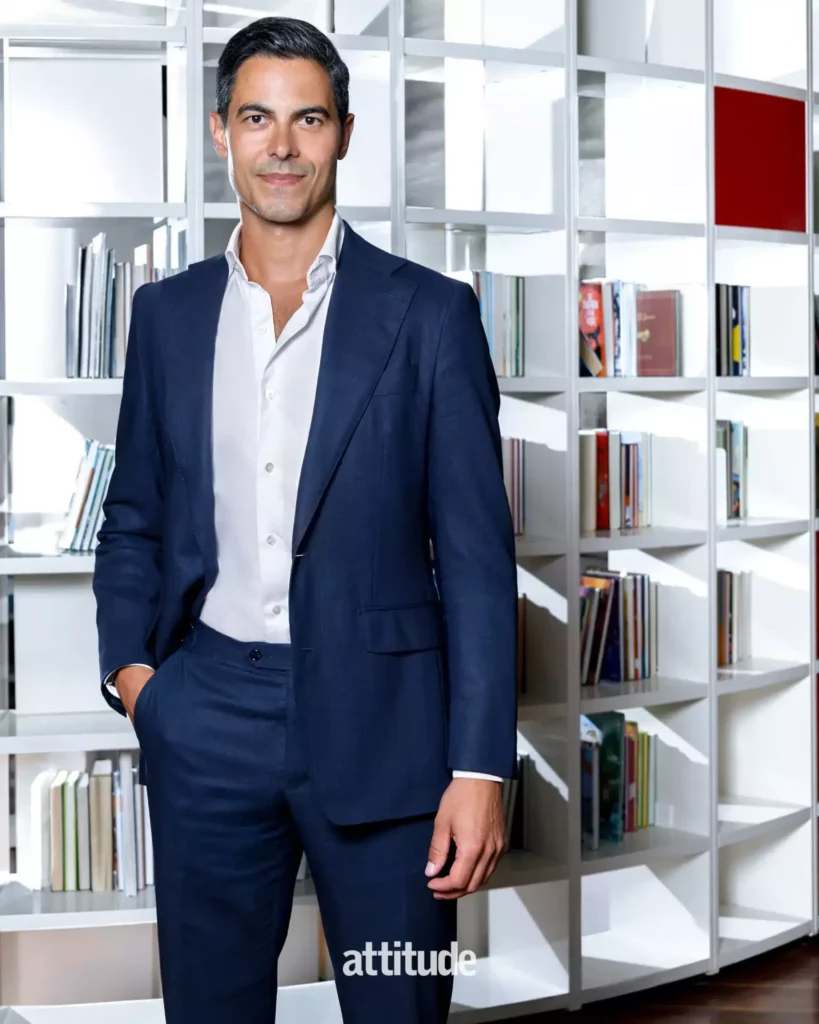
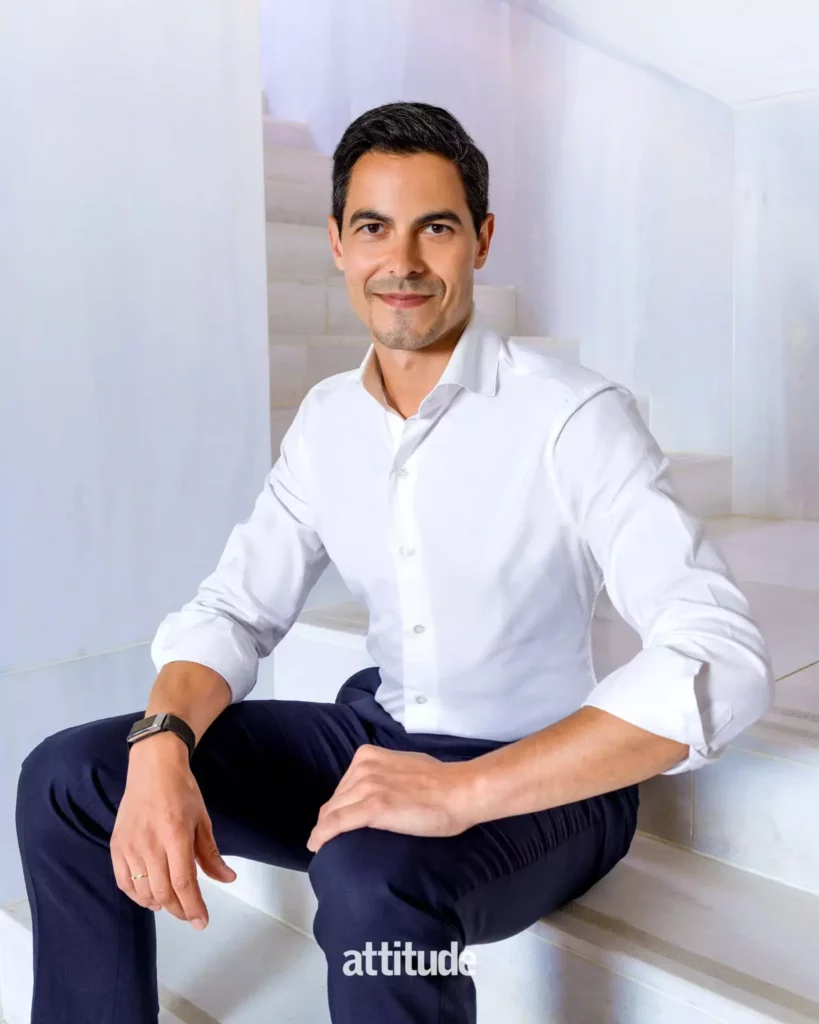
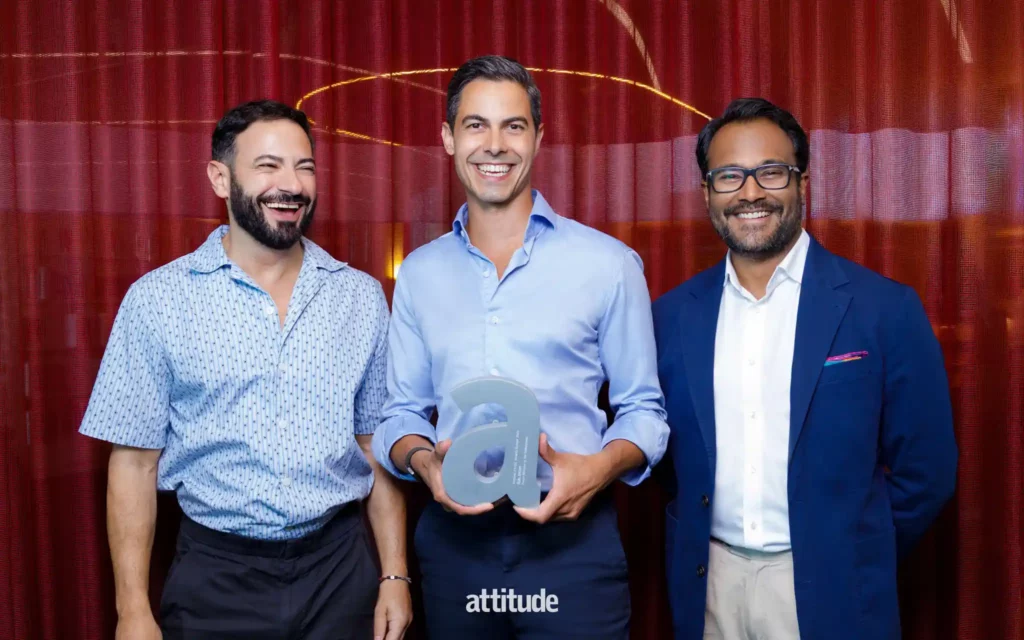
I’ve known him since before the possibility of last autumn’s snap election, before polls suddenly shifted in his favour, before the idea of him leading a coalition and becoming prime minister was on the horizon. Three things have struck me about him: his courage and fearlessness, not the grandstanding kind but the quiet and determined kind; his grounded optimism; and his empathy and ability to create dialogue. It’s why Attitude is presenting Jetten with a special Attitude PRIDE Awards Europe Award in recognition of the representation – and hope – that he has brought to the political world stage.
Jetten’s Democrats 66 (D66) party’s surge from nine seats to 26, tying with Geert Wilders’ Party for Freedom (PVV) in last year’s election, paved the way for him to negotiate a wide and complex coalition that came into power in February this year, and which will be tested in the coming months.
In a political era defined by fragmentation and distrust, Jetten insists on dialogue. He tells me about campaigning in towns where his party had never won, about sitting with people who disagreed with him. “People don’t expect you to fix all their problems,” he says. “They expect you to take them seriously.”
He is also clear that the job is not about spectacle. It is about the essential work: “My job is to keep [the Netherlands] safe, to boost its economy, to make sure that we play a role in Europe and in the world. That’s my 24/7 job and I’ll do whatever it takes to be successful in it.” Perhaps that’s the former elite runner who learned discipline, resilience and the art of giving everything you have coming through. “If I run for election, I want to win,” he says. “If I’m the prime minister, I will do whatever it takes to be very good at this job and do whatever I can to get this country to a better place.”
He speaks with clarity about the rise of extremism, the dangers facing LGBTQ+ people, the risks of complacency. His own coalition may be in power, and his party had their best results ever, but the far-right tied them for seats. In the midst of this, he refuses fatalism. “We shouldn’t be naive,” he tells me. “There is a well-organised enemy out there that we need to face and fight back.”
And then there is the personal. Nicolás Keenan, his fiancé, is a two-time Olympian training for the Hockey World Cup, which will be taking place by the time you read this. “Sometimes you really need each other, just to cuddle on the couch,” he says. It’s a simple sentence, but it reveals the balance he fights to maintain: public responsibility and private tenderness, national leadership and personal love – made possible by freedoms that cannot be taken for granted.
Representation alone is not enough: what matters is what you do with it. Jetten is not just the first openly gay Dutch prime minister. He is a leader who believes politics can still be empathetic, decent and brave: an idea that seems both old-fashioned and transformative. A leader who shows up, in Parliament, in communities far from the spotlight, and on a Pride boat one week after an attack that tried to extinguish joy.
This is his first major cover interview as prime minister. It is also a portrait of a leadership style committed to the demanding and quietly radical idea that taking people, whoever they may be, seriously, and for the fullness of who they are, is where real change begins.
Attitude: Amsterdam is hosting WorldPride. It’s 25 years since marriage equality in the Netherlands. You’re an openly gay prime minister and the first Dutch prime minister to take part in the Pride parade on the canal. What does it mean to you?
Rob Jetten: The first bridge you cross on a boat, you get goose bumps all over your body because you’re with hundreds of thousands of people in Amsterdam celebrating pride, love, equality, human rights. And it’s not just a party; it’s also a protest. This year, after what happened at Berlin Pride, here you could really feel the persistence of everyone to show that the queer community is not going to give up the fight.
It was very special to be part of it as a prime minister. Earlier this year, we celebrated 25 years of equal marriage, but there’s a lot of work to do too, not only here in the Netherlands, but everywhere.
The LGBTQ+ community is under pressure. We see it online every day with a lot of hate speech, more and more with incidents at bars or in taxis or on the streets. The Berlin attack was another chapter in a trend of more hate and violence. It was another wake-up call that this really needs our attention, not only from the queer community, but also from all of the bystanders to make sure that we protect the rights of millions of people around the world.
There’s talking about freedom, but how does that translate into meaningful action?
If I look at my own country, we are coming up with a fully fledged agenda on boosting the emancipation of the queer community with more budget for the police to make sure that we stop these violent attacks on the streets and online. More investment in education on all school levels, supporting organisations that create safe spaces. [Two days later, Jetten announced an annual €7.5m fund to improve LGBTQ+ safety in the Netherlands.]
We also have a very broad network at our embassies worldwide, where we’re supporting human rights all around the world. For example, in Thailand, a big breakthrough we’ve seen last year was partly because of support from the Dutch Embassy and Dutch experts taking part in drafting the legislation. But we need to do more, and we need to do better.
You see worldwide a well-funded and well-organised attack on the queer community with very professional campaigning, and social media companies that are doing less and less in battling hate speech online. We shouldn’t be naive about the fact that there is a very well-organised enemy out there that we need to face and that we need to fight back.
Across the world, there is a rise of intolerance and polarisation. What do we do to push back against that?
One of the main reasons why extreme parties are winning seats all around Europe is that the political system is unable to deliver on basic human needs, such as affordable housing, money in your pocket, and feeling safe. Feeling safe sometimes means you live in a safe neighbourhood – but also do you feel safe in a digital world with algorithms? We have to do a better job on those basic human needs. And we’re working on it very hard.
We also shouldn’t be naive about the very well-organised agenda that is coming from a lot of extreme groups. They’re sharing a playbook on how to influence the public debate, how to make sure that an anti-migration or an anti-Semitic or an anti-gay agenda is pushed forward. What I’m worried about is how we can make sure that big tech companies start doing their job again instead of all the backtracking we’ve seen over the past years on what’s happening online.
If I look at my own social media, the hatred has risen dramatically. And I think a lot of people feel, ‘This is not my fight. I’m not Black. I’m not a Muslim. I’m not a woman. I’m not a trans person. There is something going on, but it’s not hurting me or affecting me directly; it’s OK to look away.’ But people should realise that attacks on trans people are just the first step. The second is to attack basic rights for women. And the next is to attack basic rights for gay people. And the next is to attack basic rights for Black people. This is an agenda that we should stop and we should fight back.
It also demands a lot of very direct interventions in our own societies. In this country, for example, we have several religious schools, both Christian and Muslim, where books are used with horrible texts about women and gay people. We shouldn’t accept that. We should make sure that we protect children at those schools.
The combination of a digital era that is attacking all these basic human rights and really bad things going on in schools and in smaller communities – that is a very toxic combination that in the end could hurt us badly. We need a very broad and very effective approach to stop both.
You’ve said there is a lack of trust in politics. How do you reinstate it?
It takes time, but it is doable. The main thing politicians should do is just simply sit down, listen and engage. It is easy to brag about some of your successes and to have a short video on your social media and it’s done. But you need to prove to voters that you’re willing to get in the car, drive three or four hours into the country, show up in a very unexpected place, not to tell them what you’ve been doing, but just to listen to what they think should be done. People don’t expect you to tell them that you’re going to fix all their problems. They expect you to take the problem seriously and to do your best to at least solve a little part of it. But that can only happen if you really engage with everyone.
You’ve said you’re out and you’re proud, but that’s secondary to your work. How do you balance symbolic representation with the real hard work of governing?
For me, it’s extremely important that every young boy or girl in this country, whatever their colour, religion or sexuality, believes ‘I can become who I want to be.’ If you’re a small kid and you want to become the prime minister, then you can become the prime minister – if you’re a boy, girl, gay or straight. My job is to keep [the Netherlands] safe, to boost its economy, to make sure that we play a role in Europe and in the world. That’s my 24/7 job and I’ll do whatever it takes to be successful in it.
But every now and then, I use my platform to talk about gay rights. For example, in this country we have a beautiful tradition of Purple Friday [to protest against homophobia and show solidarity with the LGBTQ+ community], where you have teachers and kids in schools dressing up in purple to show their identity, to make sure that you can have a conversation about it in school and also inspire others to have the confidence to talk about their own struggle or their own identity. Those are the moments where I stand up and share my own struggle when I was a teenager or some of the things that me and my partner are going through. [I want] to use my platform also to add a little bit to the big fight of our community as a whole, with very specific timing to have maximum impact. Sometimes when I’m abroad as prime minister, it is already a symbolic thing that a gay prime minister is visiting a country where gay rights are not that common or where homosexuality is still a crime, for example. And I think that [it] is also very important to just show up in those countries, sometimes meet with human rights activists and make sure that you can support them in that way.
What did your campaign teach you about the power of reaching out across the aisle and unlikely alliances and conversations?
We had a very optimistic campaign. I think we’re complaining a lot in Europe. We’re always pointing the finger at others instead of just asking ourselves what can we do or what have we already achieved. That optimistic campaign was successful in a political system where people are mainly being negative about others instead of sharing ideas and views on the future.
Second, I really reached out to people that didn’t vote for my party or maybe will never vote for my party. I was campaigning in villages and towns where the extreme right populist parties are usually the big winners. I was not campaigning [for] one hour, but I was campaigning there for two or three days, engaging with people at the football club or at a pool bar or wherever to just sit down and listen and talk and show people that I’m a human being and you don’t have to agree with me, but you don’t have to hate me. We can just have a conversation about your street, your neighbourhood, your city and what you want to improve in your daily life. And by doing that, people actually started trusting me more and more and being interested in my party.
Full interview appears in the September/October 2026 issue of Attitude, available on digital platforms and in print now. Buy here