
Police chiefs face High Court challenge over pro-trans strip-search policy
The case has been brought forward to the High Court by gender-critical women’s rights group Sex Matters
By Aaron Sugg
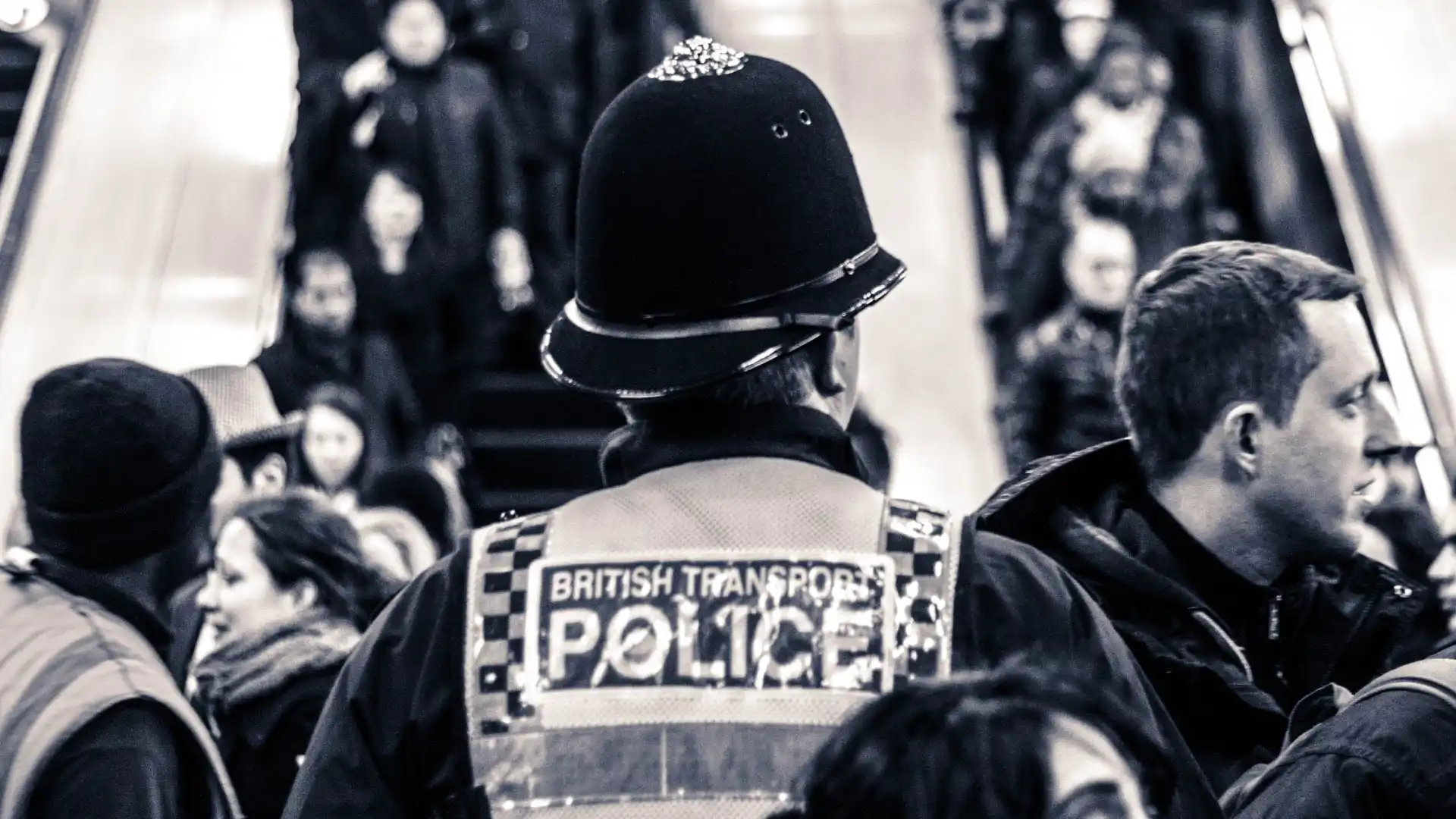
Police chiefs are facing a High Court challenge over guidance protecting trans women during strip searches.
The National Police Chiefs’ Council and British Transport Police (BTP) guidance allows trans people to request “a member of the team that the individual is comfortable with to conduct the search in their place”.
As per a Freedom of Information request [PDF] issued by the BTP last year, the body outlined guidance following the April 2025 Supreme Court ruling.
British Transport Police say they are “committed” to serving the trans community with fairness
The Supreme Court ruled that under the Equality Act 2010, a person’s “sex” should be interpreted in certain contexts as their biological sex, leaving trans people in limbo.
The BTP stated it remains “committed to serving all members of the public with fairness, dignity and respect. This includes the trans community”.
It added: “Therefore, if an individual objected to being searched by any officer, and as far as it is operationally viable, we will make every effort replace the officer with a member of the team that the individual is comfortable with to conduct the search.”
Sex Matters argue that police chiefs’ strip-search policy raises serious safeguarding concerns for female officers
The case has been brought forward to the High Court by gender-critical women’s rights group Sex Matters, which says it raises serious safeguarding concerns for female officers.
“We think that both documents breach Section 54 (Searches of detained persons) of PACE,” the group said. “Section 54 of PACE gives police the legal power to search someone who is arrested.”
“We argue that this is unequivocal and provides the only basis for lawful searching. We disagree that there is any power at common law for a police officer to search a detainee by consent,” it added.
Maya Forstater, Sex Matters’ chief executive, claimed officers are worried the policy could lead to difficult or unsafe situations during strip searches because of gender identity.
“We request that the court declare that the guidance is unlawful” – Sex Matters on the High Court case
“Taken together, the extreme vulnerability of female detainees, the recognised greater trauma done to women by being strip-searched and the existence of this new cohort of young trans-identifying women mean it is necessary to consider the impact of the revised policies on female detainees who identify as trans,” said Forstater.
“The officers we spoke to expressed fears that such women might request to be searched by male officers because they feel that to do otherwise would be to invalidate their trans identities.”
The case will be brought to the High Court on 16 June 2026 for a judicial review hearing.
“If the court agrees with Sex Matters that opposite-sex strip searches cannot be permitted by consent, then we request that the court declare that the guidance is unlawful,” said Sex Matters.