
‘Queer lives aren’t just drama to entertain straight readers’: Fruit Fly writer Josh Silver on reclaiming the gay narrative (EXCLUSIVE)
Josh Silver speaks to Attitude about writing Fruit Fly, the runaway hit read that asks who should tell stories about the queer experience
By James Hodge
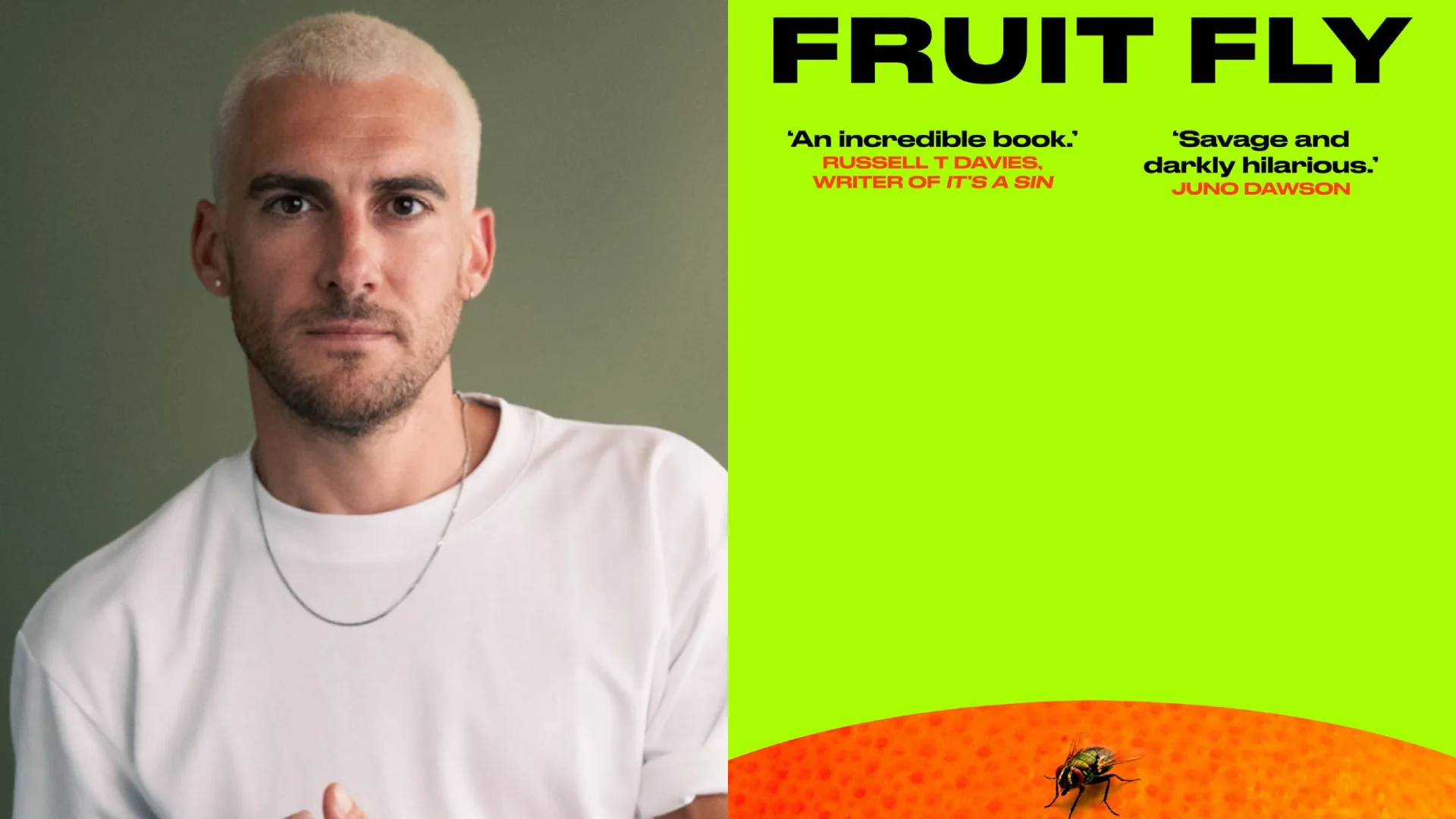
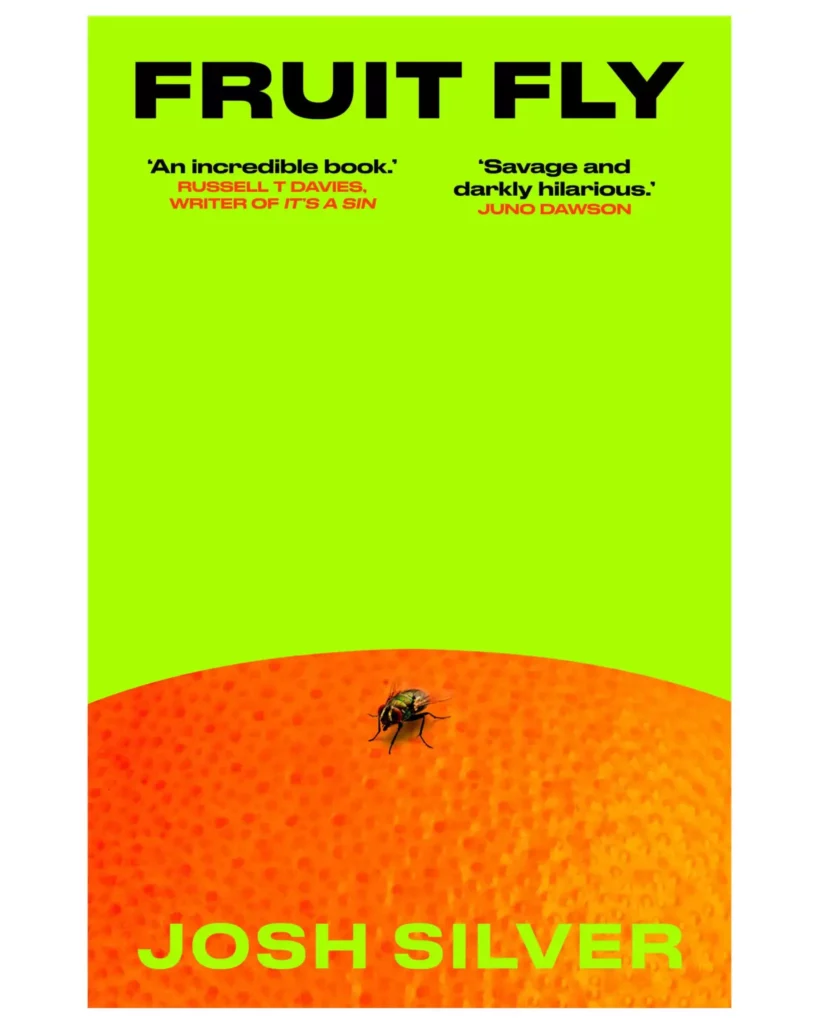
Described by Russell T Davies as “tough and raw and merciless”, and by Jonathan Harvey as “a visceral triumph”, Josh Silver’s first adult novel, Fruit Fly, has become a queer literary sensation. Unflinchingly dark, brutally funny and deeply moving, it tells the tale of a burnt-out writer who decides to write a queer bestseller, exploiting the real-life experiences of a young gay man lost in the throes of addiction.
Silver, a trained actor and mental health nurse, has previously written YA, but his latest work critiques the publishing industry. Here, Silver talks about exploring addiction and the importance of telling our own stories.
Attitude: How does it feel to have written a novel that is the talk of the town?
Josh Silver: It feels insane that a book I nearly didn’t write has created a pair of characters who people are really connecting with.
The title – Fruit Fly – alludes to the way humans feed on toxicity – whether drugs, fame or one another…
Absolutely – we live in a society where we want to be voyeurs of the suffering of others. But when you’re living that trauma, it’s a far more painful experience. Writer Mallory tries to capitalise on the tragic queer story of Leo, an addict. He is equally parasitic – he sees the damage in Mallory, her vulnerability, and manipulates her. Also, “fruit fly” used to be a term used for “fag hag”, so it felt apt!
Where did the seed of the story originate?
I used to be an actor – I graduated from drama school in 2012 – and I was told by the industry, “Don’t be openly gay – it won’t serve you; keep it to yourself.” I was hiding who I really was and struggling to express myself creatively. Seven years on, there was a cultural shift where diversity was suddenly the most important thing. I felt an emotional whiplash: ‘Be yourself! Take a feather boa into the audition and perform gay.’ Did society really care – or was our generational trauma suddenly profitable?
Did your work as a mental health nurse also inspire the text?
I struggled a lot with my own mental health historically and I had amazing support from nurses. I was very interested in psychology, particularly having got sober. I was interested in my own behaviour, and I wanted to explore where my avoidance of self was coming from. I’d spent years obsessing about who I was, my purpose, what other people thought of me. Becoming a mental health nurse and working the wards helped me be present. It gave me worth. It also informed how I write my characters: I start from their childhood, their history, their psychology, and how it shaped who they have become.
Fruit Fly seems to needle the trend for straight writers to tell queer stories. Why did you want to tell a queer story from your perspective?
Writers should be able to tell whatever stories they seek to tell, but we must question intention. If your intention is to shine a light on a community that you care about, or to centre queer characters in a positive light – brilliant! But sometimes there’s potentially a fetishisation of queer pain and queer trauma. What about the queer joy that emanates from it? If you’re not from within that world, don’t have that mindset, do you really understand the queer experience?
This seems to be the journey of Mallory as an author in the novel…
The first chapter ends with Mallory going to a chemsex party. Seeking inspiration for her next novel, she joins Grindr disguised as her husband and approaches it with a camp, “yass queen” attitude. She calls herself an ally but she’s ill-informed. When she’s in the throes of the reality, she has a visceral response to run as far away as she can. But then she’s drawn back to the chaos and can’t look away. Queer lives aren’t just drama to entertain straight readers. That’s why I wanted to explore chemsex in a more truthful way. Many readers have never heard of it, and I explore it unflinchingly, non-judgementally. Some may find that challenging, but I’m always willing to tell my truth.
The novel carefully traverses the very dark alongside the very funny. Was this important to you?
Gay people tend to be naturally funny, growing up in the face of adversity and needing to find community and lightness with each other. The absurdity of people’s choices can be funny, but the comedy comes from the shock of the situation rather than turning characters into a joke. I want the reader to think, ‘Should I be laughing at this?’
This is an extract from a feature appearing in Attitude’s July/August 2026 issue.