
‘I may have been even more interested in his body than he was in mine’: Michael Cunningham recalls first stint as a rent boy in this extract from his new book, Unsayable
"He said, 'You’re a pretty boy,' in an appraising tone, mildly admiring, though I detected a shade of indictment as well," writes Pulitzer Prize-winner Cunningham in his new memoir

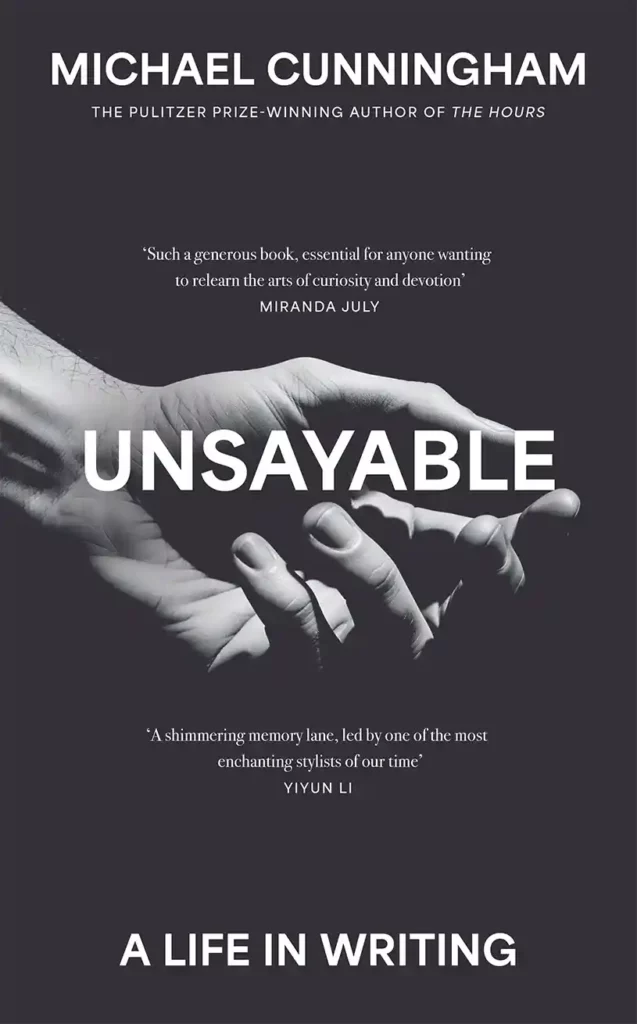
This month, 4th Estate will be publishing an intimate memoir and mediation on the craft of writing from Pulitzer Prize-winning novelist of The Hours, Day, and A Home at the End of the World, Michael Cunningham. Named Unsayable, the book has been described by Tash Aw, author of The South, as “a luminous meditation on writing and on life, and how the two entwine; […] a memoir like no other, from one of the great writers of our times.”
Below, in this extract shared exclusively with Attitude, Cunningham remembers his college years, and his first experience as a sex worker.
For Hire
During my senior year at Stanford, I started going to San Francisco on weekends to work as a rent boy (we called ourselves hustlers then).
It wasn’t hard to figure out how to go about it, thanks to a couple of friends I’d made on excursions to the city. You simply put on a pair of jeans and a tight T-shirt and stood idly in front of the St. Francis Hotel on Union Square until a man strolled up and initiated a transaction.
I was, of course, nervous my first time. I hadn’t said anything about it to Donna Lee or Cristina. As intimate as we were, I couldn’t bear the idea of myself as a prostitute in their eyes, as much as I wanted to try being one. I confided instead in a girl named Marta. Marta was the wildest, most perverse person I knew — a sharp-faced, unapologetically buxom girl, prone to sarcasm and, prematurely, to bitterness; a history major considering switching to pre-med, fascinated by Weimar cabaret and Gothic horror. She, too, chafed at the genial blandness of Stanford. She was even more eager to get out of there than were Donna Lee, Cristina, and me, and so she was, if anything, more titillated than I by the idea of me as a student during the week, and a hustler on weekends. It made me, in her eyes, a figure worthy of her devotion to the dark underlayers— she was horrified by the idea that the world was just as prosperous and ordinary as it appeared to be. Why wouldn’t she be glad to know that one of the bland-ish boys surrounding her wanted to look into prostitution as a part-time job?
I’d need more time to try and figure out why, exactly, I’d wanted to do something like that.
Meanwhile, I wasn’t burdened by the conviction that I’d know Marta for the rest of my life, as I’d know Donna Lee and Cristina. It was the first time I learned that we are sometimes more intimate with people we don’t truly care about than we are with our lifelong companions, who will remember everything, forever. On the train to San Francisco, I made Marta promise that if I had no takers within the first fifteen minutes, or if I simply lost my nerve, we could go back to Palo Alto together, without shame. I could tell, by her ready agreement, that all she could offer was the promise to try and conceal her recriminations if I backed out. That would have to suffice.
When we got to the hotel, we stood together before its sternly patrician façade, looking for the place I might station myself. I learned later that we’d arrived a little early in the evening. We saw only a couple of other young men, also in jeans and tight T-shirts, leaning insouciantly against the hotel’s dun-colored exterior wall, as if they were waiting for someone but wouldn’t mind if that someone was running late, or didn’t show up at all. They managed to convey the impression that they preferred their own indifferently louche, brooding company to that of anyone who might work up the courage to approach them.
I wasn’t sure if I could manage that, but I’d give it a try.
Marta said, “You don’t want to stand too close to those other guys.”
I agreed. She scanned the hotel’s eastern expanse, my two competitors having claimed the west.
As we stood there on the sidewalk, considering our options, an elderly couple, well dressed, she with her gray hair in a chignon, walked past us and into the hotel lobby, without glancing at Marta and me. If they thought about us at all, we were probably someone’s disappointing grown children, waiting to be taken to dinner by their parents.
Marta settled on a spot well away from the hotel’s entrance, where a menswear shop, closed for the night, displayed its illuminated goods.
“This is perfect,” she said. “You stand near the window, and your john”— she insisted on the word “john”— “can pretend to be checking out the goods before they, you know, start checking out the real goods.”
Marta was so much better at this than I.
“And you’ll be right over there,” I said, inclining my head in the direction of Union Square Park, on the other side of Powell Street.
“I’ll be right there.”
“And if nobody comes after fifteen minutes . . .”
She merely kissed me on the cheek, whispered, “Be a brave boy,” and crossed Powell to a bench at the edge of the park. She blew me a kiss. I resisted the urge to follow her, suggest we consider this a practice run, have a drink or two in one of the bars on Market Street, and go back to Palo Alto. Now that we’d scouted the location, we’d come back next weekend and I’d absolutely, without question, go through with it.
I knew, though, that I’d be letting her down. She was there for a proper adventure. She was there in the hope that if I was capable of this so would at least a handful of other Stanford boys, those smilers and studiers, those sure-footed optimists, which would help her survive one more year there in her ongoing state of poorly concealed rage.
It was partly for Marta, then, that I blew her a kiss in return, and leaned as insouciantly as possible against a section of wall a foot or so to the right of the shopwindow, which sported a backdrop of deep-blue velvet that might have been the official color of satisfied prosperity itself. It sold blazers and loafers and pocket squares worn by a pair of plaster torsos topped by plaster imitations of classical Greek busts, the implication being that if the heroes of ancient Greece were alive today, they’d be wearing jackets of madras or hopsack, with rep ties and pocket squares.
I permitted myself one last look at Marta, who, for all her aspect of indignant eccentricity at Stanford, looked suddenly like a lost mother attempting to remain a figure of succor and consolation despite her long absence. I did, truly, hope to make her proud. I was relieved, then, if terrified, when it took less than five minutes for an older man to stroll up and pretend momentarily to admire the jackets on the heroic torsos, before turning to me. He was around fifty, in slacks and a blazer. He was round-faced, with a receding hairline and blank brown eyes. He could have been, and quite possibly was, somebody’s hardworking, slightly beleaguered husband and father, who drove a respectable American car and kept the lawn well mowed.
We engaged in the briefest imaginable interlude of small talk.
He: “Nice night.”
Me: “Yup.”
He: “How you doing?”
Me: “Okay. You?”
He: “Do you want to make a deal?”
Just like that.
I told him I could, in fact, make a deal, depending on the sort of deal he had in mind.
I’m afraid I lack the courage to recount our entire conversation. I do, as it turns out, have some shame. I can tell you that, thanks to the movies, I was better at whore-speak than I’d expected to be. I can only offer this snippet of our exchange:
He: “I want to blow you, and I want a little affection.”
Me: “You can blow me for a hundred dollars, and I don’t do affection.”
I sounded convincing. Who knew?
I glanced once more at Marta, seated on her bench. She snuck me a thumbs-up, which I didn’t acknowledge and which the man failed to notice. I followed him several blocks to his hotel, one of those corporate chains, utterly presentable but not the brown brick dowager that was the St. Francis. I was relieved to know that we’d go unnoticed, crossing the lobby of his anonymous hotel, and only slightly disappointed by the evaporation of any edgy fantasy I might have entertained about my first client taking me somewhere seedy on lower Market Street, trading a somber, knowing nod with the desk clerk— this wealthy, important person was permitted his discreet transgressions— as the two of us passed by on our way to the elevator bank.
When we reached the man’s room, which was as impeccably anonymous as rooms in a hotel like that are required to be (bed, bureau, landscape painting), he and I passed through an oddly awkward moment. We might have been strangers who’d wandered into the same room by mistake. I asked him to put the hundred dollars on the top of the bureau, because it seemed a prostitute would do that. He complied.
He cleared his throat. He might have been a Rotarian, about to deliver a speech. He told me, in an offhand tone, to take my clothes off. I did. He took his off, as well.
I may have been even more interested in his body than he was in mine. I’d never seen my father naked (we weren’t that kind of family). I’d never seen any fifty-year-old man naked.
I didn’t find him alluring, but neither did I find him repulsive, with his half-basketball belly and the eagle-shaped tangle of dark chest hair that spread wings across his pectorals and diminished down to his groin. The skin of his shoulders and chest was mottled, splotches of pallid pink that looked like a rash impervious to healing, and, at an oblique diagonal to his left hip, the whitish line of a scar, surgery of some sort. The minor wounds accrued in the battle of aging.
We passed, together, through another moment of that peculiarly social discomfort. I wasn’t sure if I should take charge, if I should get onto the bed and beckon heartily to him (Get over here, big buddy) or wait for him to do . . . whatever he might have wanted to do. I’d hoped he’d be more practiced, more commanding.
He said, “You’re a pretty boy,” in an appraising tone, mildly admiring, though I detected a shade of indictment as well. Do you know that your prettiness is an accident of youth, that you’ll do for an hour but you’re unextraordinary-looking, time will strip your prettiness away, and where will you be then?
And yet I was glad to be called a pretty boy, by anyone, in any tone of voice.
We were both putting on acts. I’d agreed to be this, to be here, and although I wasn’t sure whether or not I was required to be more adept and authoritative, the deal was on, regardless.
He might have been a loving father and a dutiful husband. But he was compelled to be, as Marta insisted, a john: clear about his disdain for me, which mixed uneasily with his desire. Don’t expect me to worship your youth, and, really, why are you doing this at all, what kind of kid are you? And he needed to disguise his envy, which was his most vulnerable point. He wanted to be powerful enough to pay me for an hour, but he also wanted, more ardently, to be me, the one getting paid.
I won the match, then, because I was young, and pretty enough for an hour. He won as well, though, because he could spare a hundred dollars, which was a fortune to me.
He nodded toward the bed. Not a moment too soon.
We started. We finished. We lay side by side on the bed. It had taken less than thirty minutes.
What was I supposed to do with the remaining thirty-two?
He seemed disinclined toward a second go— the first had required some effort on his part. I was at least as disinclined as he.
But what about those thirty-two minutes?
Should I leave now, and take two- thirds of the money? Should I continue lying beside him on the bed, waiting out the clock?
He offered no help. He simply lay on his back, breathing with a hint of asthma, looking idly at the empty air in front of his own face.
Then he laid his hand over mine. Gently, as a parent might try calming a nervous child, though, as far as I could tell, I had not acted nervous, nor had he acted paternal.
He didn’t change his position. He didn’t look at me. But he kept his left hand atop my right.
I asked him, “Are you in town for a while?” I had no idea about whether or not a prostitute was permitted a personal question, even one as ordinary as that. But the silent hand-touching (you wouldn’t have called it hand-holding) implied that we were not, suddenly, two strangers waiting for the same bus.
“Just a couple of days,” he said. “Business.”
It seemed that a prostitute should not inquire into the nature of a client’s business. It seemed that a prostitute should not pursue personal information of any kind.
Almost involuntarily, I said, “My name is Bart.”
He nodded, as if I’d answered a question correctly. Bart, that’s right, that’s the name for you. He did not offer his own name in return.
The remaining minutes passed in silence. At five to the hour, I got up off the bed and put my clothes back on, which included a brief, embarrassing struggle getting one of my socks on. He remained naked, lying on the bed, though he did turn his head so he could watch me get dressed.
I took the five twenties from the bureau top, stuffed them into the pocket of my jeans. I felt greedy and vindicated and ashamed.
The man on the bed said, “Thanks.”
“My pleasure,” I replied. Speaking those two words made me feel more like an actual prostitute than anything I had yet done.
He nodded, as he had when I told him my false name, as if I had, once again, answered a question correctly. I said, “See you,” and walked out the door and into the long fluorescence of the hallway, carpeted in a repeating series of stylized, geometric flowers, lined with numbered doors.
I didn’t much mind having sex with strangers. The sex itself ran to the mild. I did only blow jobs, and once refused an extra hundred from an elderly man who wanted to lie in his hotel bathtub while I peed on him. I was virtuous, in my whorish way.
The men were all different, of course, and yet they were all similar, as well. There was the guy with a colostomy bag, which he did not mention until we got to his hotel room. There was the one who proudly showed me pictures of his wife and children, as if I was his nephew who’d been away for a while. There was the occasional toupee and, once, a man who insisted on being naked except for his red-and-blue-striped necktie. No one was younger than fifty.
They might have been brothers, members of a far-flung family that had neither prospered nor failed; a family that may have observed Taco Thursdays or raised angora rabbits, and if this crew of aging brothers carried with them no whiff of genuine tragedy, they were all at least slightly uncomfortable, though they tried, with various degrees of success, to act as if this was just another transaction. As I grew more practiced, I learned to help them with their guilt and their unease. I learned to strike a balance between friendliness and whorishness.
Relax, this is only a little fun you’re having, I’m perfectly willing to be part of it.
The element I’d least expected, though, was the realization that many of the men were at least as eager to hold me, or even just to lie on the bed beside me, after our sexual exchange, as they’d been for the sex itself. It being San Francisco, my clients tended to be in town on business, visiting from some other place, where they lived what more than one of them called “normal” lives.
What they often wanted, more than anything, was spending an abnormal hour, alone with a boy in a room.
And, as it turned out, I did do affection, up to a point. I did let them hold me, after the sex, if they wanted it. If they asked (some of them asked), I invented a story to tell: I lived with my girlfriend but I was bisexual (hey, it’s not like I’m not into guys); I was a musician, but until my musical career took off, the rent had to be paid.
My prostitute model was Jane Fonda, in Klute.
I didn’t last long at it. I probably made ten or so trips to the St. Francis, over a period of six months. And then I went into retirement.
I’ve realized, since, that I was looking for more than an adventure. I was looking, hoping, to be someone who’d do something like that in the first place.
And, more insidiously, I wanted to unmake, to the best of my ability, my own cosseted life. I wanted to be more than the good boy who’d gotten good grades and gone to a fancy college; the boy whose only crime to date had been stealing a Snickers bar at the age of twelve, and buying acid from a few street dealers in the Fillmore when I was twenty.
I wanted to be a more interesting, unorthodox person.
Unsayable by Michael Cunningham published by 4th Estate, is out on 23 July.