
Nigel Farage pledges to deny asylum seekers access to NHS HIV treatment
"This is a national health service. It is not an international health service," said Farage
By Aaron Sugg
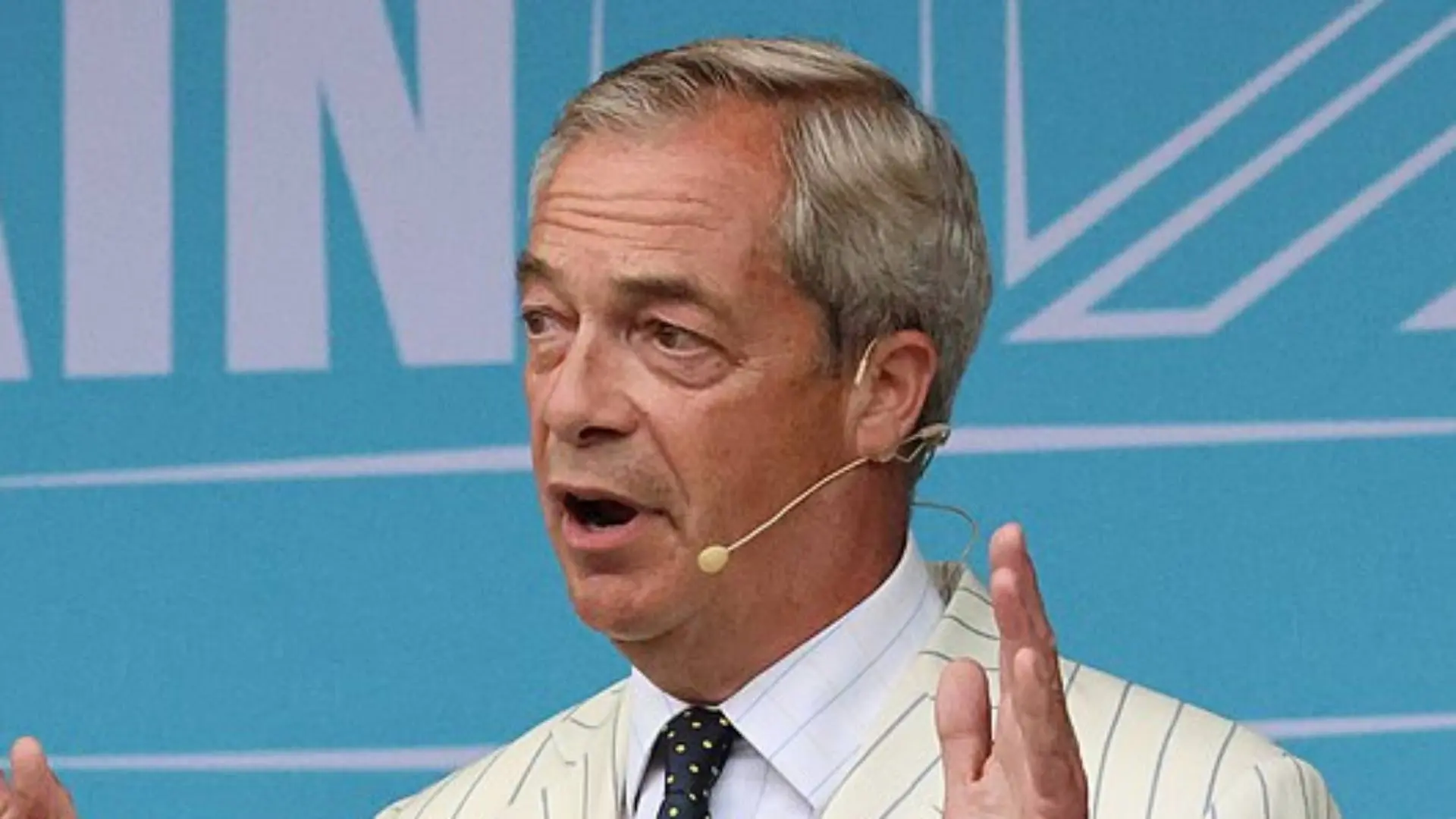
Nigel Farage pledged yesterday (14 April) that he will double down on his 2015 promise to ban asylum seekers from free HIV/AIDS NHS treatment.
At a rally in Aberdeen yesterday (14 April), the Reform UK leader made comments echoing a televised debate before the 2015 general election.
He said at the time: “You can come into Britain from anywhere in the world and get diagnosed with HIV and get the retro-viral drugs that cost up to £25,000 per year per patient.”
“This is a national health service. It is not an international health service” – Nigel Farage on banning asylum seekers from NHS HIV/AIDS treatment
At yesterday’s event, Farage reiterated his message: “The idea that somebody can newly arrive in Britain and get expensive NHS treatment, whether it’s for HIV or hepatitis or whatever it is…”
“Truth of it is: this is a national health service. It is not an international health service,” he added.
Since 2012, people living with HIV in the UK can receive treatment for free, regardless of immigration status, following a policy change removing charges for all overseas visitors.
What medication is PrEP?
PrEP, which protects against HIV transmission, has been available for free through the NHS in England since April 2020, and is found to be 99 per cent effective when following medical guidance correctly.
Farage’s remarks have been widely criticised by HIV charities and organisations across the UK, with calls for him to educate himself on the issue.
Richard Angell OBE, chief executive of Terrence Higgins Trust, issued a statement following the right-wing politician’s comments: “Nigel Farage was wrong in 2015 and he was wrong yesterday.”
“Withholding HIV treatment to asylum seekers creates higher risk of HIV/AIDS transmission” – Richard Angell OBE on Farage’s comments
“With access to treatment, people living with HIV can live a normal, healthy life and can’t pass it on. Withholding HIV treatment from anyone in the UK means more people living with HIV because there is a chance it could be passed on, and means more pressure on the NHS.”
He praised former prime minister David Cameron, who during his tenure from 2010 to 2016 pledged to support the UN goal of ending the AIDS epidemic by 2030 in the UK. The notion still stands.
Angell continued: “It’s disappointing that Mr Farage is promising to take away vital healthcare that could lead to more people in the UK having HIV. Instead, he should be joining the cross-party effort to end new HIV cases and to do so by 2030.”
The UK is committed to abolishing HIV transmission cases by 2023
Robbie Currie, chief executive of the National AIDS Trust, responded to the Reform UK leader’s pledge in a statement, saying that if the UK stays focused, it could reach its goal of zero transmission.
“Everybody in the UK, regardless of their immigration status, must be able to access the HIV medicine they need, including throughout the full process of any asylum claims,” said Currie.
He continued: “This is both a fundamental individual right and completely in line with the medical consensus on public health and reduction of HIV transmissions, as someone on effective HIV treatment will have an undetectable viral load and can’t pass HIV on to others.”
“There is no evidence that people come to the UK to access HIV treatment” – Robbie Currie condemning Farage’s asylm seeker claim
“More broadly, the insinuation of health tourism in Mr Farage’s comments does not stand up – there is no evidence that people come to the UK to access HIV treatment.”
The UK Government has committed to ending new HIV transmissions in England by 2030, supported by a £170 million HIV Action Plan which begun in December 2025.
For more information on HIV treatment in the UK, please visit the official NHS website, and to learn more about PrEP, please visit the NHS’s “Common questions about pre-exposure prophylaxis” page.