
Show me the receipts: Examining prime minister Andy Burnham’s history of LGBTQ+ allyship
He's built up one of the most consistently pro-LGBTQ+ records in politics. But is there anything lurking in the archives? Let's find out
By Callum Wells
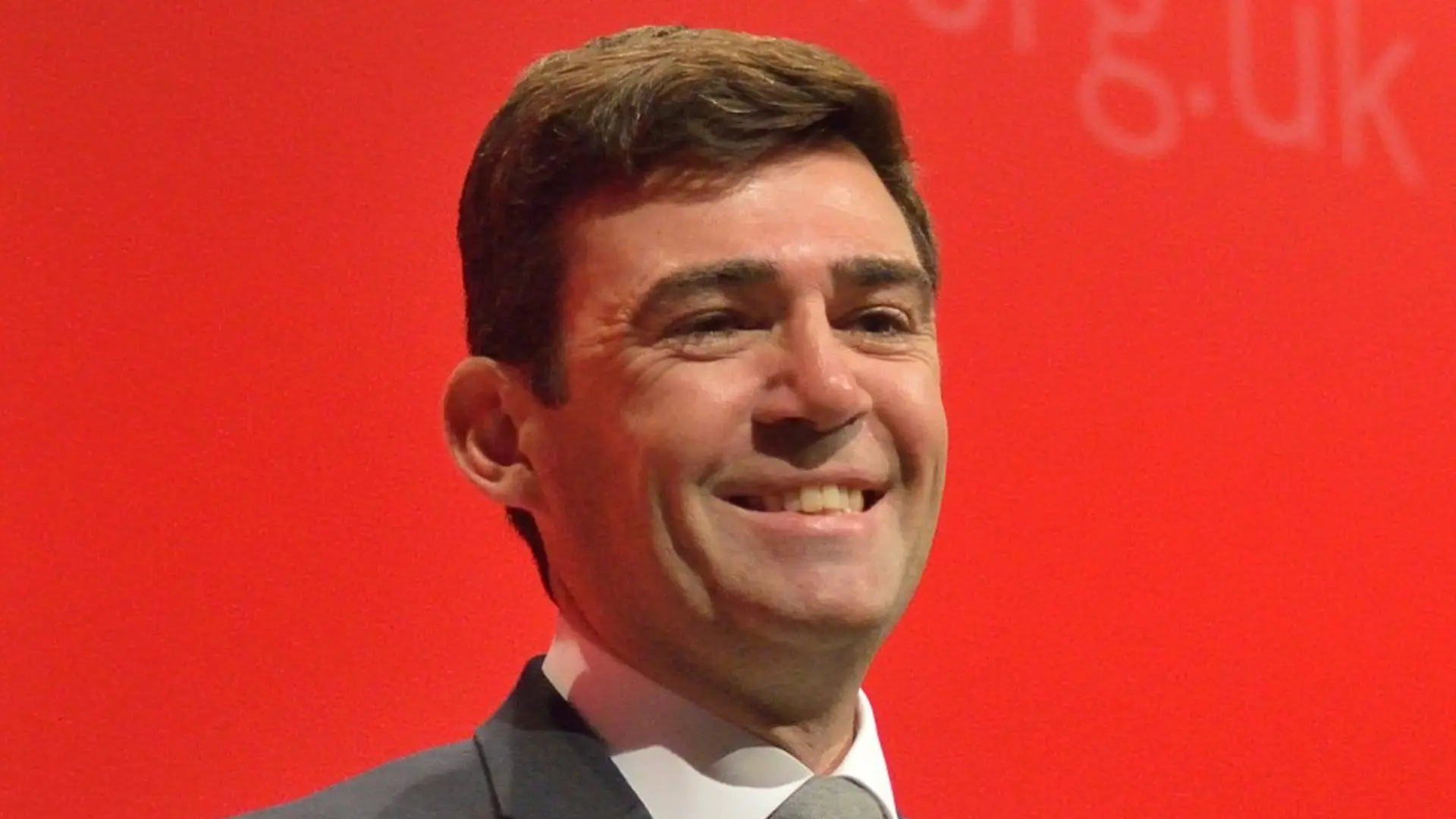
Andy Burnham has entered Downing Street as Britain’s new prime minister, pledging to restore trust in politics and tackle issues including the cost of living, housing and rough sleeping in his first speech outside Number 10 today (20 July).
While LGBTQ+ issues did not feature in his opening address, the Labour leader has built a long public record on equality during his political career.
Before becoming prime minister, Burnham spent almost a decade as Mayor of Greater Manchester after serving as a Labour MP and cabinet minister under Gordon Brown. Throughout that time, he repeatedly voiced support for LGBTQ+ communities, backed Pride events and spoken out against discrimination.
As Burnham begins his premiership, Attitude looks back at his record on LGBTQ+ issues and the moments that have shaped his reputation as an ally.
1988 ✓
As an 18-year-old student activist, Burnham marched against Margaret Thatcher’s Section 28 legislation, which prohibited the “promotion” of homosexuality in schools. He later said opposition to the law helped shape his political outlook.
2003 ✓
Burnham voted to repeal Section 28 in England and Wales, helping bring an end to one of the most notorious pieces of anti-LGBTQ+ legislation in modern British history.
2004 ✓
He voted in favour of the Civil Partnership Act, giving same-sex couples legal recognition for the first time.
2007 ✓
Burnham supported regulations outlawing discrimination based on sexual orientation in the provision of goods and services.
2008 ✓
He voted to extend IVF rights to lesbian couples. Burnham later admitted that his support for LGBTQ+ equality caused tensions with some members of his Catholic family.
2010 ✓
Breaking with many conservatives in public life, Burnham urged Pope Benedict XVI and the Catholic Church to modernise their approach to homosexuality and same-sex relationships.
2013 ✓
Burnham voted for the Marriage (Same Sex Couples) Act, helping legalise equal marriage in England and Wales. During his later Labour leadership campaign, he proudly noted: “I’ve voted for everything.”
2015 ✓
When questions were raised during his Labour leadership campaign about whether he had been vocal enough on LGBTQ+ issues, former Labour parliamentary candidate Kevin McKeever came to his defence in the New Statesman, insisting Burnham had “no case to answer” and pointing to his unwavering voting record.
2018 ✓
Burnham appointed former Lord Mayor of Manchester Carl Austin-Behan as his LGBTQ+ adviser – believed to be the first role of its kind attached to a metro mayor. Austin-Behan had previously been dismissed from the RAF simply for being gay.
2018 ✓
His administration launched Greater Manchester’s LGBTQ+ Equality Panel and committed to tackling inequalities affecting lesbian, gay, bi and trans residents.
2019 ✓
Burnham backed reform of the Gender Recognition Act and supported simplifying the process for trans people to obtain legal recognition.
2020 ×
Burnham met with representatives from the LGB Alliance regarding proposed Gender Recognition Act reforms. The organisation has been criticised by many LGBTQ+ groups and trans campaigners. His office later stressed that Burnham had “made his support for the trans community very clear over the years” and noted that concerns surrounding the organisation had not been raised before the meeting took place.
2022 ✓
Burnham publicly defended trans inclusion, arguing that trans women should be able to use women’s toilets and dismissing efforts to turn the issue into a divisive culture war. His comments drew criticism from gender-critical campaigners but were welcomed by many LGBTQ+ activists.
2022 ✓
He pledged Greater Manchester’s support for ending conversion therapy for all LGBTQ+ people and backed efforts to ban the practice.
2025 ✓
Burnham formally apologised for decades of discrimination against LGBTQ+ people by Greater Manchester Police, describing the historic treatment of gay and trans people as “shameful”.
2026 ×
Following the Supreme Court ruling on the legal definition of sex, Burnham said the decision and subsequent Equality and Human Rights Commission guidance should be implemented “in the fairest and most compassionate way possible”.
Amid backlash, Burnham said implementation should protect single-sex spaces while “not marginalising already marginalised communities”, and argued that the ruling should not be seen as a victory for one side over another.
VERDICT
Burnham’s record on LGBTQ+ issues is overwhelmingly supportive, though not without controversy.
From opposing Section 28 as a young activist to backing equal marriage and supporting reforms to the Gender Recognition Act, he has consistently supported measures expanding LGBTQ+ rights. However, his response to the Supreme Court ruling on the legal definition of sex and his support for implementing subsequent EHRC guidance have prompted criticism from trans people and allies, who argue he has shifted his position.