
Why ‘masc’ still means more: The social cost of being ‘too gay’
Ahead of his latest novel Orange, published by VERVE Books on 19 February 2026, author Curtis Garner reflects on the difference between "rural masculinity, which is imposed through threat, [and] urban gay masculinity, which is enforced through desire"
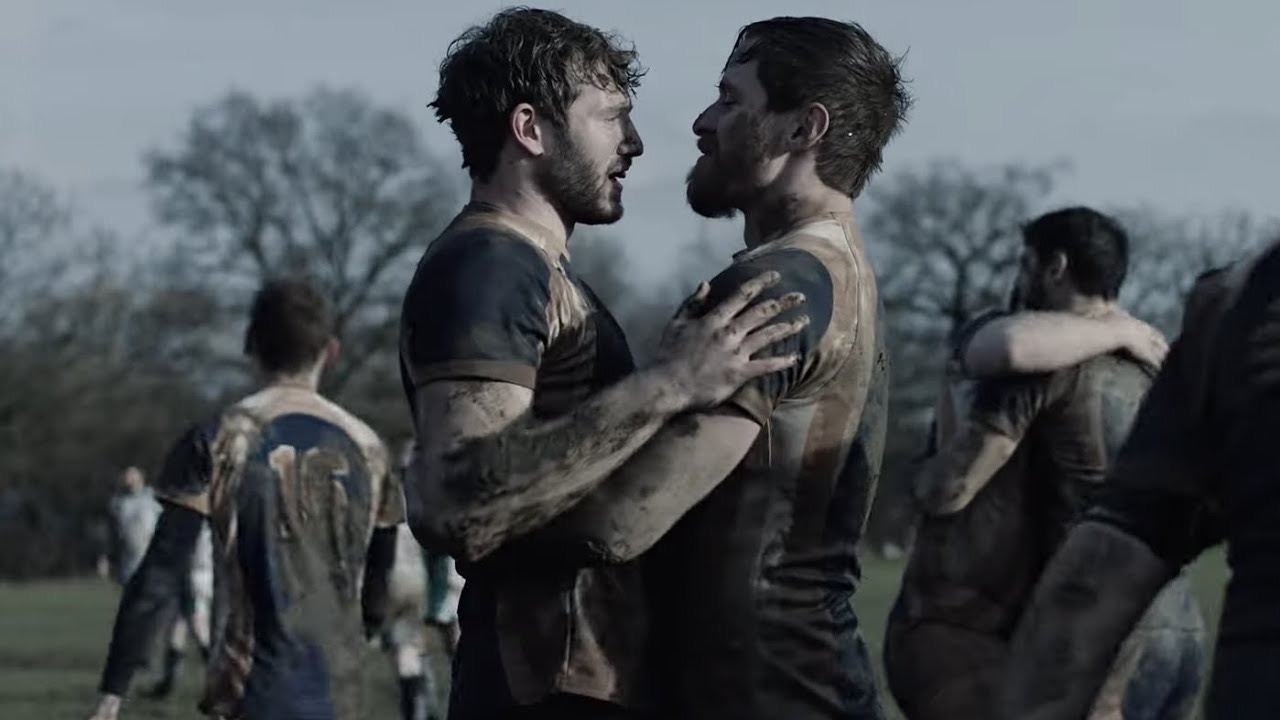
My second novel, Orange, explores queerness as something shaped not only by desire but by geography, surveillance and the rules – spoken and unspoken – around masculinity. A few months ago a group of straight men wound down their windows to scream faggot at me in the middle of a crowded street in King’s Cross in London. The incident gave me pause – for the first time in my 29 years I wondered to what extent I (aesthetically – I had a skirt on), had brought on homophobia myself. Of course, the thought passed almost as soon as it arrived, and off they sped through the traffic lights.
Growing up queer in Cornwall was defined largely by overt policing when I was a teenager. Masculinity was publicly enforced through school, memory, family. It was lost on me that manliness, like sexuality, could be a spectrum. I attended an enormous comprehensive school in Bodmin – around 2500 students – where there were few alternative scripts for boyhood. Bodmin bears little resemblance to Cornwall’s postcard seaside clichés: it is a struggling industrial town, with parts ranking among the most deprived twenty percent of neighbourhoods in England, high crime rates, a declining high street and lower levels of educational attainment than the county as a whole.
Deviation was noticed. It was remembered and quietly punished. I learned early on that masculinity was not a natural state but something acutely fragile – a performance at which one can visibly fail and which was, by its very nature, flawed. I come from a family of grafters: my parents met at a factory called Spectacraft, where they made – as the name suggests – glasses. My nan and her three sisters worked together in a shirt factory. Loving as my family was, my childhood was steeped in the camaraderie of working class men – poof, bender and the rest – and in the strict, unspoken rules about what it was to be a man (this precarious, elusive thing). I was confused by these principles from an early age: by why I could not, nor wanted to be like the men in my life, why I aspired to the stolid honesty and kindness of all the women around me, and why men so often went out of their way to impose their manliness on others, usually at the cost of their own happiness. In many ways I was afraid of men when I was young – I only enjoyed myself when in the company of women. I was insufferably curious, even as a little boy, and wondered why only the women in my life seemed to use words that accurately described what they were genuinely feeling, why only they appeared to feel guilty about things that, more often than not, did not even concern them, why only they made me feel like I could be entirely and unapologetically myself – effeminate, gossipy know-it-all that I was (and still am). It’s a bias – of course. My upbringing is not everyone’s upbringing, but this is not to say the same pattern has not played out into the rest of my adult life. Women have always made me feel safe.
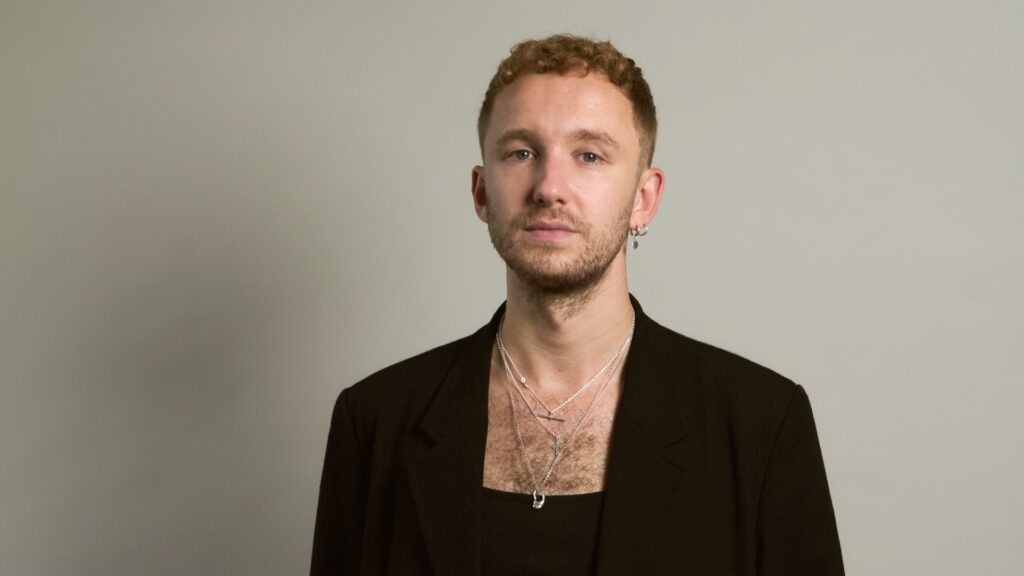
The irony was that Cornwall’s older rhythms of life – its distance from trend cycles, its limited creative infrastructure, its small and insular rural communities – produced a masculinity that, whilst uncomfortable for a young, gay child, felt less overtly performative. It was no less restrictive or suffocating, and still benefitted no one as far as I’m aware, but it didn’t feel curated or announced. Masculinity there was assumed rather than styled; habit rather than spectacle. There was something blunt and unexamined about it and, however frustrating, something that felt stubbornly real.
London, by contrast, exists first as a fantasy of freedom. From a distance, it promised anonymity, plurality and loosened gender roles. For years, before I had visited even once, I held a Mecca-like preoccupation with our bizarre capital. Set against Cornwall, masculinity in The Big City appeared structurally less rigid: men, I thought, could be softer, fluid, contradictory. London also seemed to offer respite from constant self-surveillance – a place where masculinity no longer had to be performed as a basic survival strategy. And in many ways, this was and is the case. I moved here at eighteen and fell in love, and London remains miraculous to me 11 years later. I never imagine myself living anywhere else and as a novelist, I am endlessly grateful for the infinite copy it provides. But my novels dwell on the shock of discovering that this queer freedom, so vividly promised, is never guaranteed.
While the city at large tolerates ambiguity, gay male culture often demands legibility. Masculinity becomes hyper-visible, hyper-curated and tightly ranked. Heteronormativity reemerges not as law or tradition but as style – Str8-acting, Masc 4 Masc ideals ubiquitous on Grindr, gym-built bodies and the compulsion to document them, emotional restraint, anything coded as feminine.
Particularly in my debut novel Isaac, but also in Orange – where the protagonist’s love interest, Jago, is prized among gay men precisely because he doesn’t look gay – the central irony is that in spaces where gender rules are loosest, the gay community often becomes the most vigilant enforcer of normativity. In my debut novel, Grindr plays a largely antagonistic role, because of the licence the app gives gay men to be cruel and exercise prejudice under the guise of sexual preference, and to mask an innate phobia of effeminate men as a harmless personality quirk.
In London’s gay community, it is hard not to notice that the very forms of aggressive, toxic masculinity that people like me attempted to escape are often reproduced within the very spaces that are supposed to reject them. It is largely an aesthetic issue, and I often empathise with its roots. Gay men strive for perfection – being average and gay is akin to social death. In a post-AIDS, health-is-wealth world, one must not only survive but be exceptional, which often translates into the relentless pursuit of heteronormative ideals – namely sculpted bodies and visible strength.
The obsession with the perfect athletic form and red-blooded virility – let’s face it, hardly helped by the ubiquity of shows like Heated Rivalry which, sweet as it is, does nothing to defy the idea that only men with six packs, easily passable masculinity and the eroticism of the locker room are worth watching – is reinforced by the national media’s heroising of football and rugby players who come out as the correct kind of gay men – athletic, masc-presenting and never remotely effeminate. This highlights a profound irony. The pursuit of conventional manliness runs directly counter to the principles of queerness, which are meant to celebrate fluidity, difference and the refusal of rigid hierarchies. What is framed as freedom – the licence to be yourself – often becomes yet another arena for performance, comparison and self-policing.
“This obsession with heteronormativity does not exist in isolation; it is inseparable from a broader system that devalues femininity”
This dynamic becomes even more glaring against the backdrop of contemporary politics. With the surge of white nationalism – and with it the warped assertion of traditional gender roles and family hierarchies – aggressive, heteronormative masculinity is celebrated as inherently virtuous. Here I think of British men at the recent anti-immigration march in London in September 2025, who vowed to protect ‘our’ women from the supposed misogyny and sexual deviancy of migrants while simultaneously chanting Get your tits out for the lads.
But this obsession with heteronormativity does not exist in isolation; it is inseparable from a broader system that devalues femininity and enforces rigid hierarchies of gender and desire. I am, of course, not calling for mass gym cancellations across the gay community. Nor do I think gay men should not be allowed to be manly. I’m merely suggesting that we celebrate other dimensions of ourselves beyond the circumference of our biceps; that we pursue exceptionalism in ways that do not make others feel terrible about themselves. And take it from someone who has endured his fair share of Grindr-imposed eating disorders, and has been on more dates with men who speak in fake baritones than I can count: there is a different, richer kind of freedom in being allowed to exist outside the standards enforced by the very people who call us faggots in the street.
Unlike rural masculinity, which is imposed through threat, urban gay masculinity is enforced through desire. Who is wanted, who is ignored, who is laughed at, who is told – explicitly or silently – to tone it down. Masculinity becomes currency; proximity to straightness and aggressive heteronormativity translates into safety and status. Policing occurs not through violence, but through reward.
Femmephobia sits, of course, at the centre of this system, which is inseparable from misogyny – the devaluation of femininity, softness, emotional openness and women themselves. Gay men are often positioned as natural allies to women, yet many reproduce the very patriarchal values they claim to reject. ‘No femmes’ culture is not a matter of preference – it is inheritance. Its roots run deep, stretching back through fascist histories: think Ernst Röhm, Ronnie Kray and every toxic gay man who has come before or after.
Orange traces a movement from external surveillance (the rural gaze) to internalised self-surveillance (the gay male gaze). From restriction to performance. From masculinity as survival strategy to masculinity as social capital. Both my novels ultimately question whether freedom is ever geographical. In my experience, the countryside doesn’t disappear in the city – its values travel with you. The work of queerness – this nebulous, everchanging word – is not merely about arriving somewhere else and hoping for the best, but unlearning what we’ve been taught to desire and what we’ve been encouraged to despise.
Curtis Garner is the author of the ‘instant queer classic’ Isaac, which was published in 2024 to critical acclaim. He was born in Cornwall in 1996 and moved to London when he was eighteen to study Creative Writing and English Literature. He graduated in 2017 and has been working in publishing since. In 2020 he also received an MA with Distinction from Manchester Writing School, where much of Isaac was written. In his spare time he reviews novels on Instagram (@queer_novels). Orange is his second novel. He works at Thames & Hudson, managing the publicity and marketing for its successful fashion list. He has also written for The World of Interiors. Garner’s latest novel Orange is published by VERVE Books on 19 February 2026.
Get more from Attitude