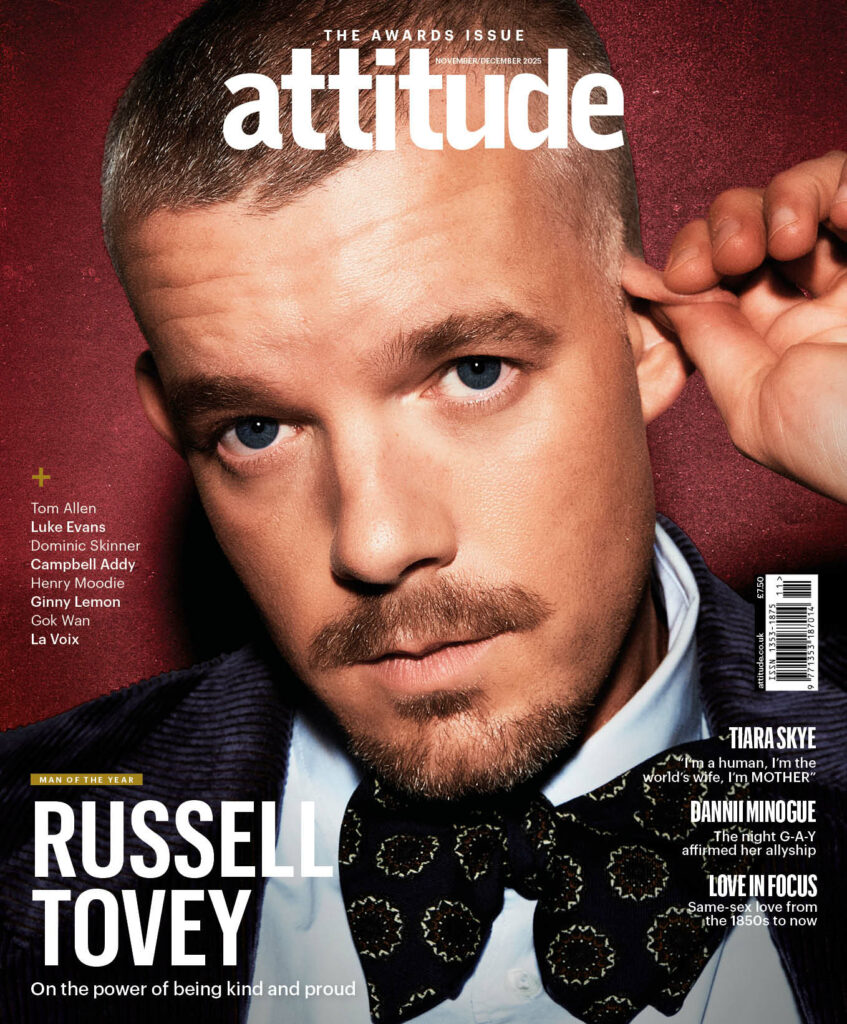
Daniel Lismore finally visits Egypt as they discover ancient wonders and modern lessons (EXCLUSIVE)
This is an excerpt from a feature appearing in the Attitude Awards 2025 issue
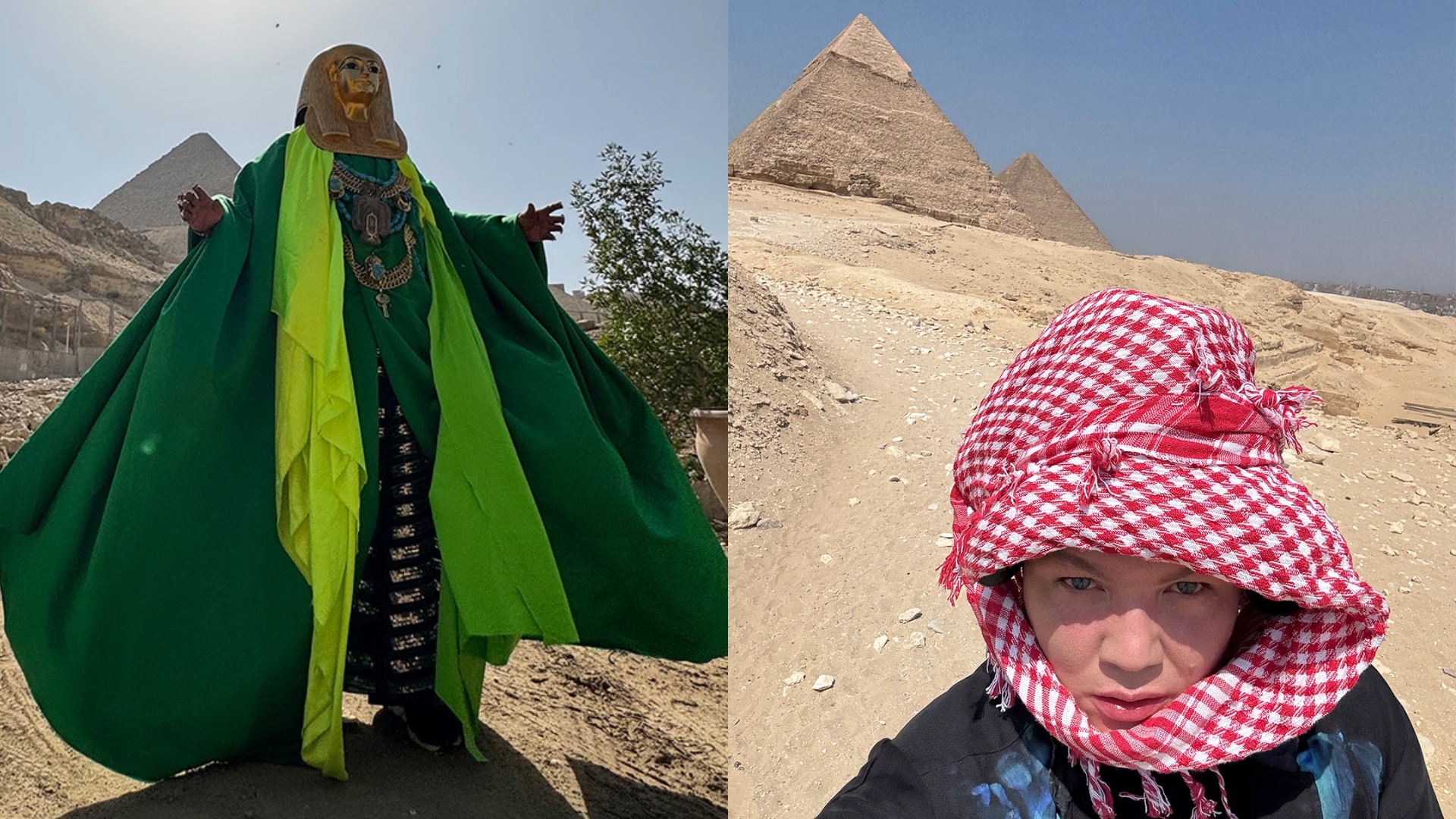
Heeding a lifetime calling, living sculpture, artist and activist Daniel Lismore finally sets foot in Egypt. As he writes, the experience is as much a reassurance of personal identity and passion as it is a journey back to antiquity.
Over the years, my best friend, who lives in Egypt, had invited me to stay with him more than once, always with the promise of extraordinary hospitality, but I always found reasons to decline. Sometimes I blamed timing, sometimes I blamed work, but the truth is I was scared. Egypt’s record on LGBTQIA+ rights is no secret, and I was not sure I wanted to put myself in that position.
I have travelled across the Middle East and Africa. South Sudan, Ethiopia, Oman, the UAE. I even went to Qatar after work I did ahead of the World Cup, negotiating with officials and the local government not to arrest LGBTQIA+ people from abroad. Each country carried its own complexities, but Egypt always felt like a risk too far. But with wars raging elsewhere, the fear of a wider war in the region, and the sense that nothing is certain anymore, I suddenly felt the urge to go. Two decades after first being invited, I finally said yes. I was terrified as I stepped off the plane.
“The whole room feels like a celebrity meet-and-greet from the history books”
Egypt has fascinated me since childhood. Later on, my obsession deepened when John Galliano staged a Dior collection based on Egypt in a show that seemed to lift the pharaohs straight out of the school textbooks of my youth. It fed directly into the way I live as a sculpture, carving history onto my body using fabric and jewellery. During lockdown, I even taught myself hieroglyphs. Elizabeth Taylor’s Cleopatra had always been one of my inspirations even though I knew the film was wildly inaccurate. The Egyptian fantasy was irresistible and so was Alexander the Great, the Pharaoh of Egypt whose same-sex relationships gave me an early image of queerness at the heart of history. Last year, I painted Egypt into my own art as if conjuring the trip into existence.
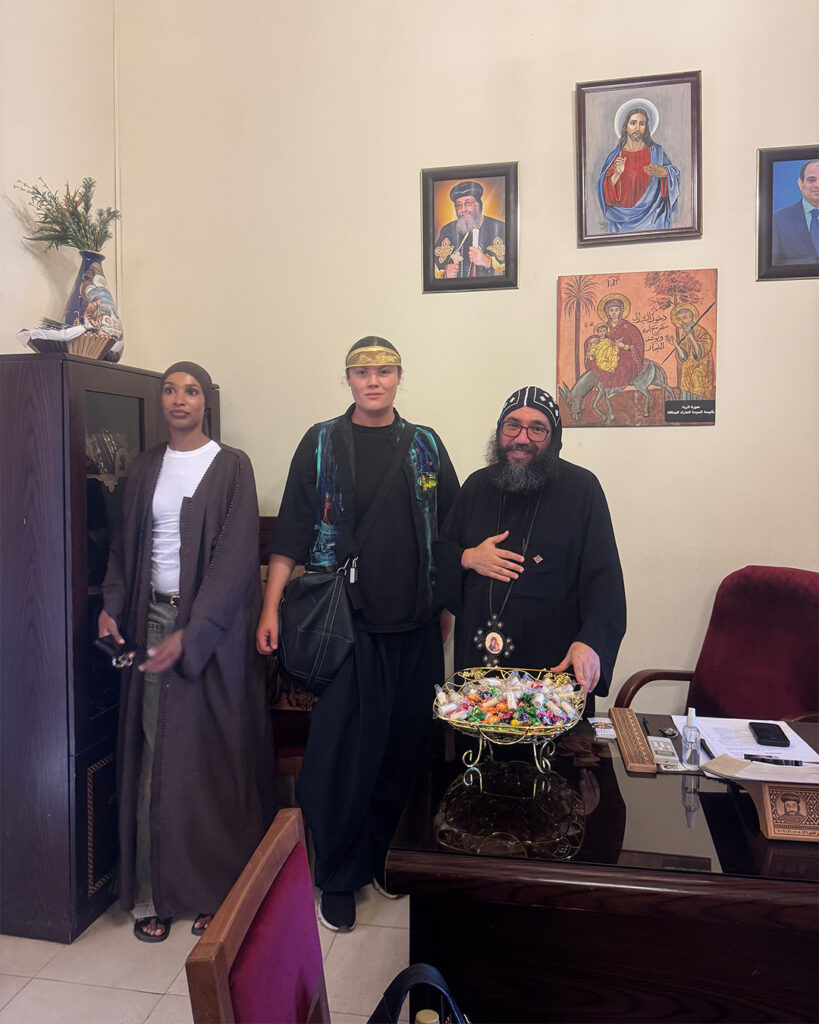
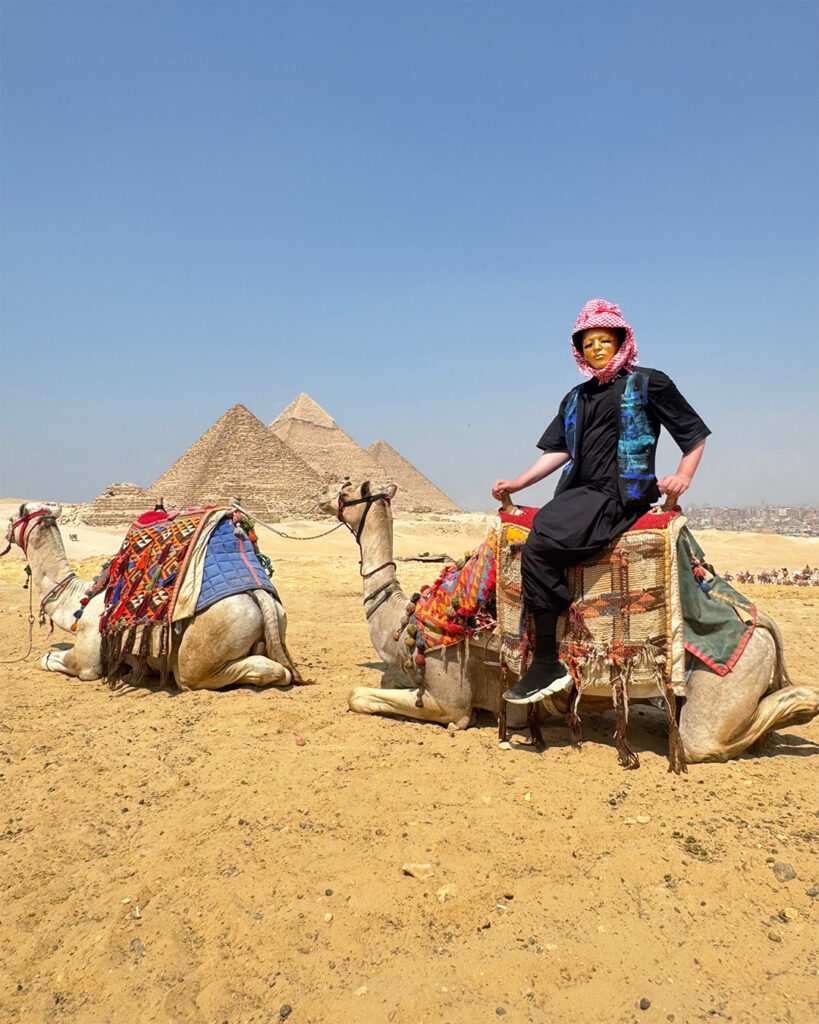
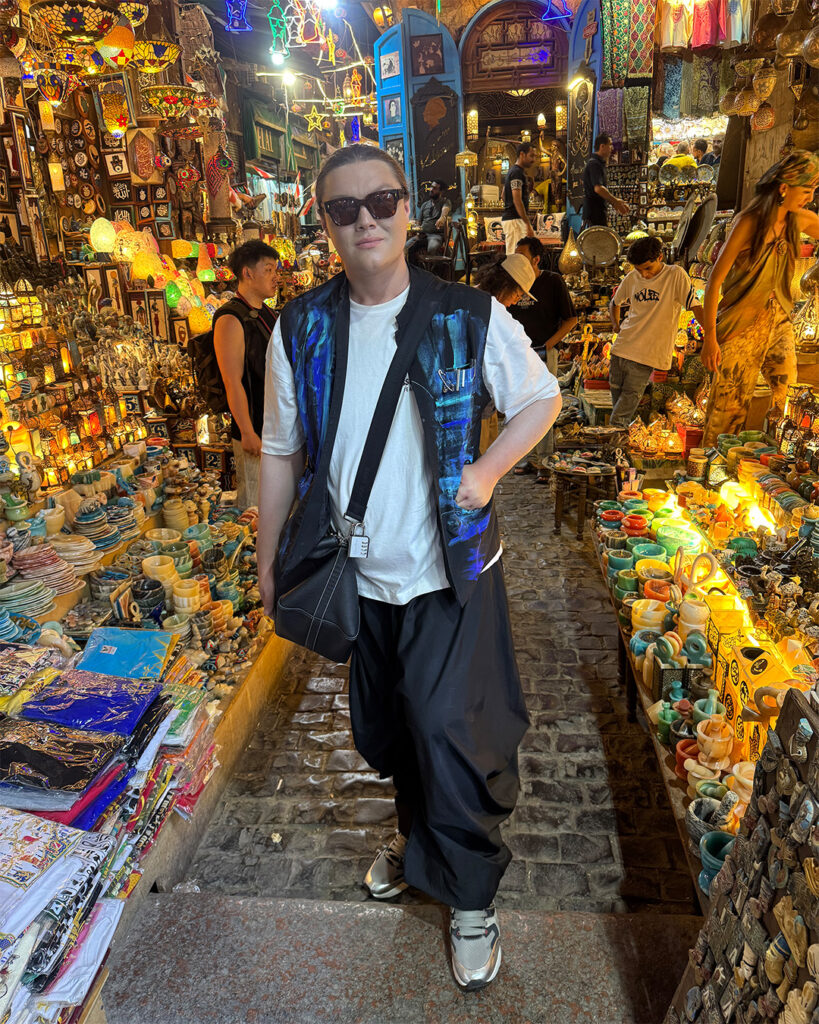
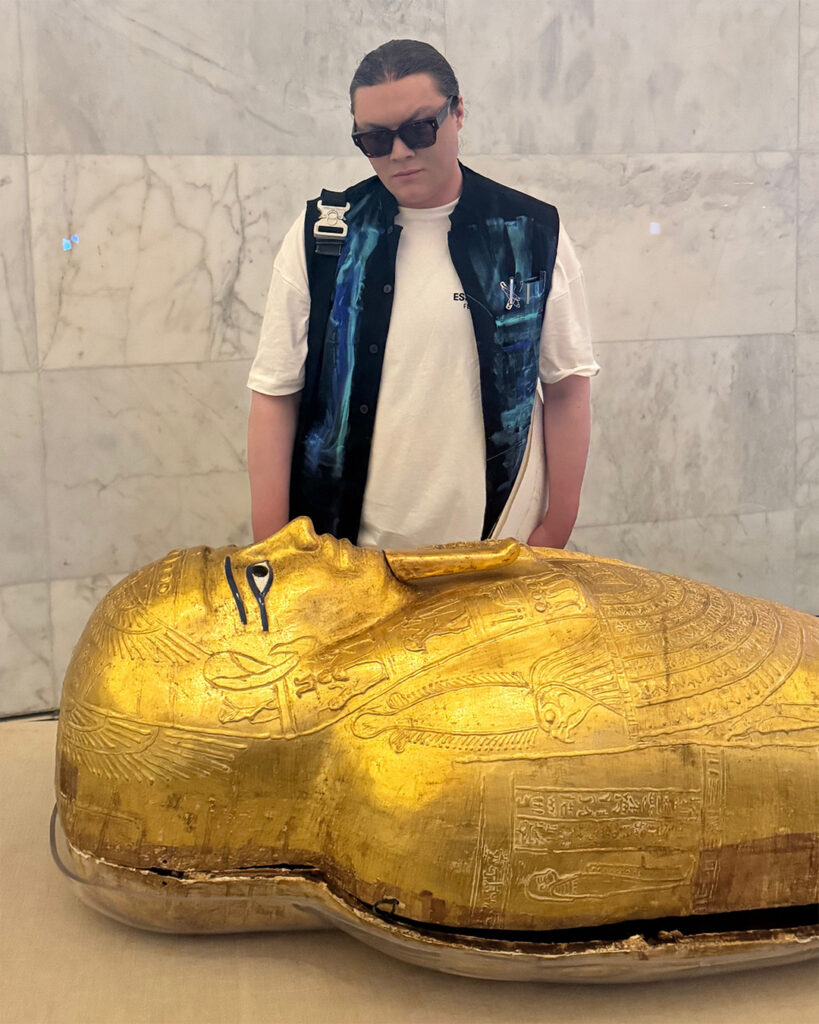
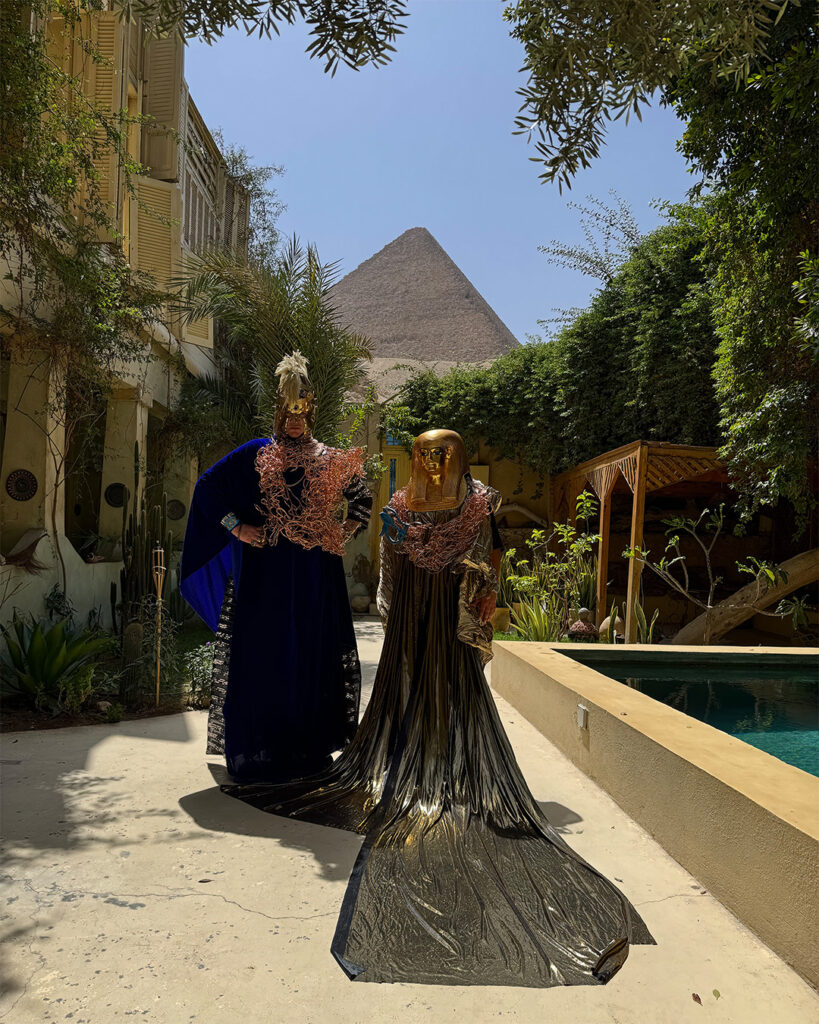
Cairo greets me with traffic, heat and a heartbeat that never sleeps. It hits all at once — I feel alive. My first stop is the National Museum of Egyptian Civilisation, where I encounter Ramses II. In The Prince of Egypt animated film, he is Moses’s adoptive brother, and Whitney and Mariah’s duet ‘When You Believe’ from the soundtrack plays on repeat in my head as I stand before his sarcophagus. The whole room feels like a celebrity meet-and-greet from the history books; the great pharaohs gathered together in one place. I sketch as I stand in front of his sarcophagus because I am so blown away by its beauty, almost to prove it had really happened.
“I feel Egypt is not only preserving its past but opening a door to its future, ready to welcome the world”
From here, I go to the new Grand Egyptian Museum in Giza. The official opening is scheduled for November 2025, but I am lucky that it is partly open. Enormous and ambitious, it feels like a modern pyramid. When complete, it will be the largest archaeological museum in the world, home to the full Tutankhamun collection and thousands of artefacts never seen before. Standing in its vast halls, I feel Egypt is not only preserving its past but opening a door to its future, ready to welcome the world.
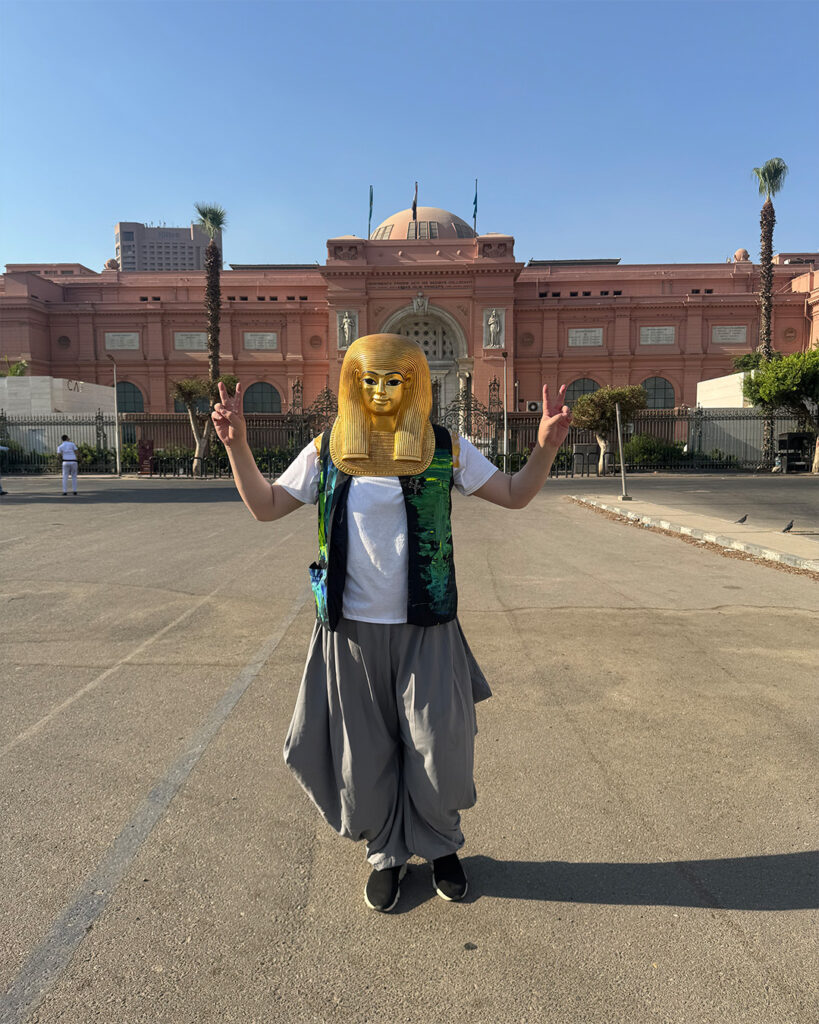
I also visit the Egyptian Museum in Tahrir Square, open since 1902. Dusty and chaotic, it feels like a Victorian cabinet of curiosities, the cases crammed with artefacts so close they seem within reach. This is where I come face to face with Tutankhamun’s death mask. I gasp, raise my phone for a picture and am immediately told off. It is breathtaking. Soon it will be moved to the Grand Egyptian Museum for its opening, but I secretly prefer it here. Imperfect and worn, the museum is alive with history. Many of the statues I see are missing their noses. Guides explain that in ancient Egyptian belief the spirit could inhabit the stone itself and that the nose was the pathway to breath. Breaking it was thought to release or silence the soul. Others were defaced later by invaders or rivals determined to strip their predecessors of power. Even in fragments they still radiate strength.
This is an excerpt from a feature appearing in the Attitude Awards 2025 issue.
Subscribe to Attitude magazine in print, download the Attitude app, and follow Attitude on Apple News+. Plus, find Attitude on Instagram, Facebook, TikTok, X and YouTube.