
The Covid castle: meet the gay couple who transformed a French Château in case of a second lockdown (EXCLUSIVE)
Since they bought their dream spot in the French countryside of Champéon, Mayenne, in northern France, they have turned it into a B&B, an artists’ residence and a cultural hub
By Roel Janssen
During the first Covid lockdown, the vibrant life of Gijs Stork and his partner Angelo Tromp came to a standstill.
Where they had previously hosted dinners, concerts and art projects from their canal house in Amsterdam, Stork now found himself at home alone, as his partner was in Aruba caring for his sick father. “All our activities disappeared,” says Stork. “No guests, no events, nothing. I thought: ‘What am I even doing here?’”
When the pandemic ended and Tromp returned to Amsterdam, they decided to radically change course and start looking for a home abroad. The idea of a new kind of place appealed to them, somewhere with space, quiet and a sense of future. “We opened our laptops, and this château was the first thing we saw. The estate agent didn’t respond, probably thinking: ‘Here’s another pair of Amsterdam gays with a castle dream who won’t show up.’ But we just went to take a look. Everything was closed, it was raining, and the gate was chained shut. Still, we knew immediately: ‘This is it.’”
A great responsibility
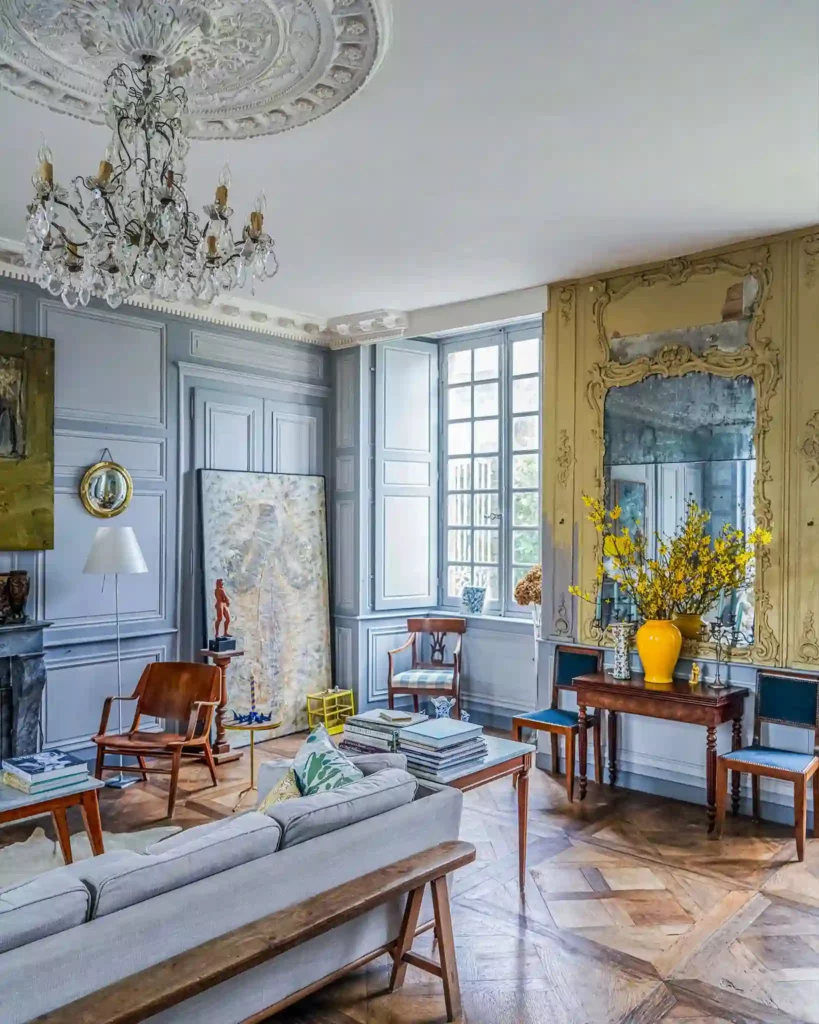
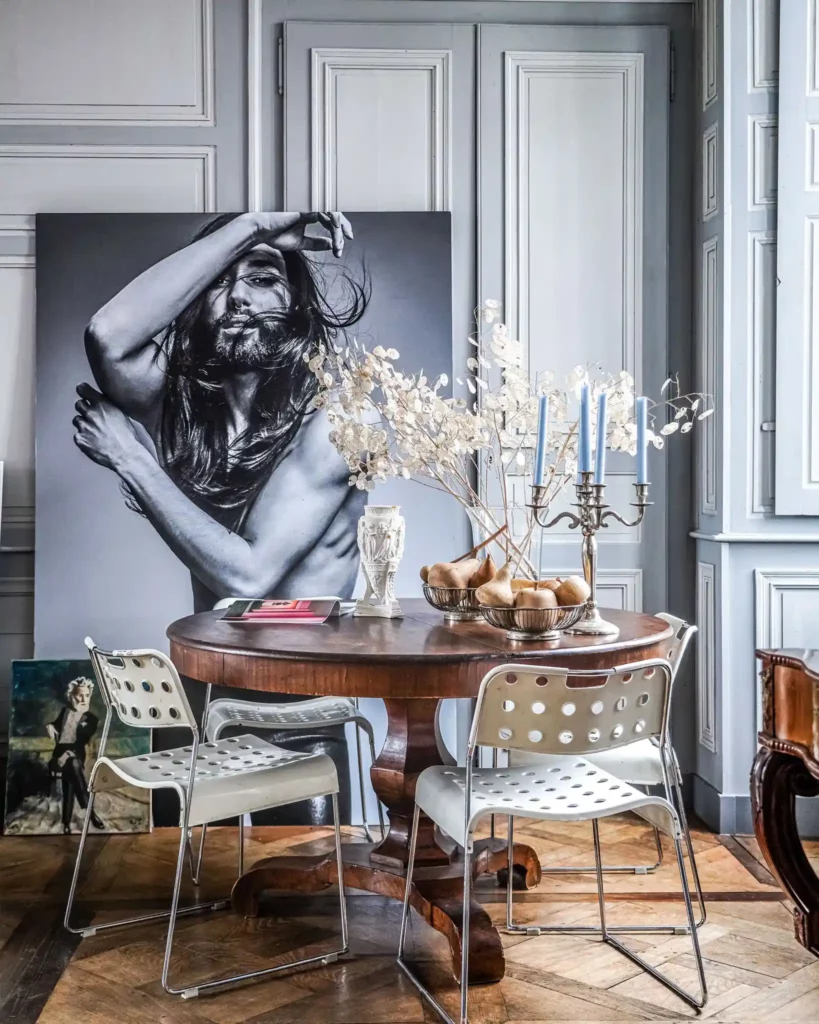
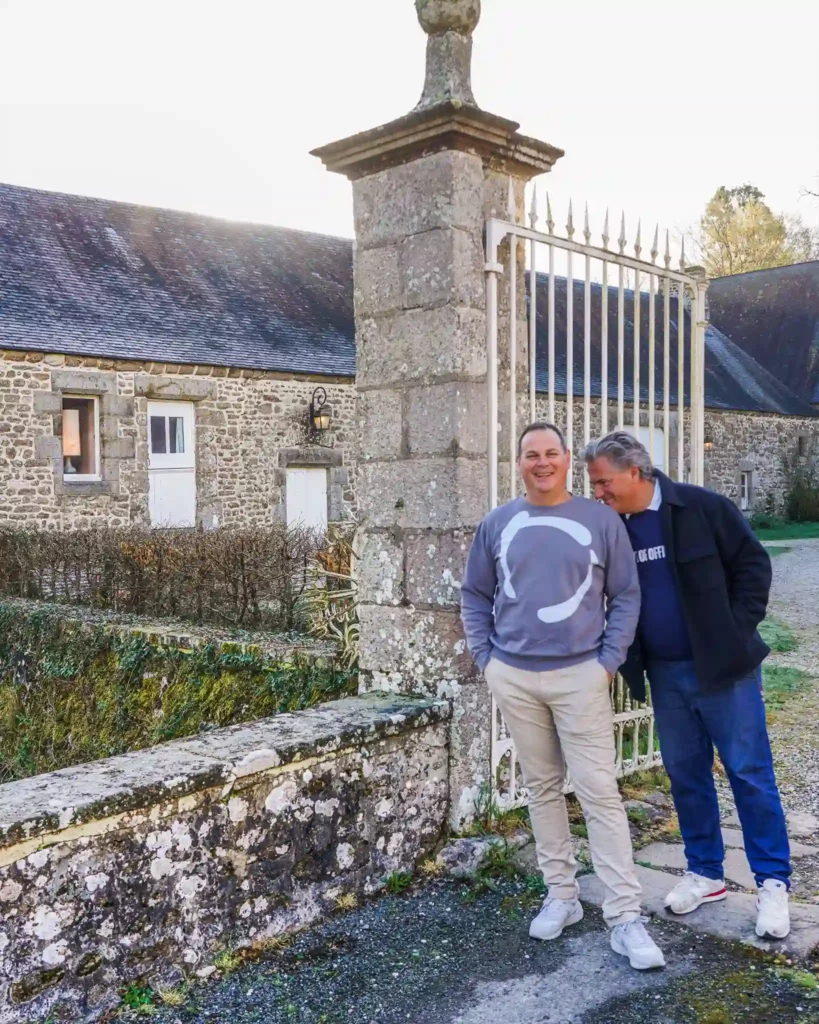
The Château du Fresne turned out to be a beautiful historic property, complete with a dovecote, a bridge and a vast courtyard. “The stable doors were rotten, the windows needed painting, a bridge had to be replaced, but the foundations were solid. A major restoration had taken place in 2008, when the castle received a new roof and new windows.”
What Stork and Tromp hadn’t expected was the way the entire village would welcome them with open arms. “It’s a small place with just 600 inhabitants. We were worried people might not accept us as two men, but that wasn’t the case at all. We went straight to the mayor, and we clicked immediately. He came to visit with the municipal council. He said she’d bring 10 people but turned up with no fewer than 40. They still drop by from time to time.”
A group of around a hundred volunteers, about 30 of them very active, now helps with everything from trimming hedges to painting garden furniture. “For the people here, the castle feels like it belongs to them. During the war it served as a field hospital, and everyone in the village slept there because it was safe. There has always been a strong bond between the community and this place.”
Eclectic heritage
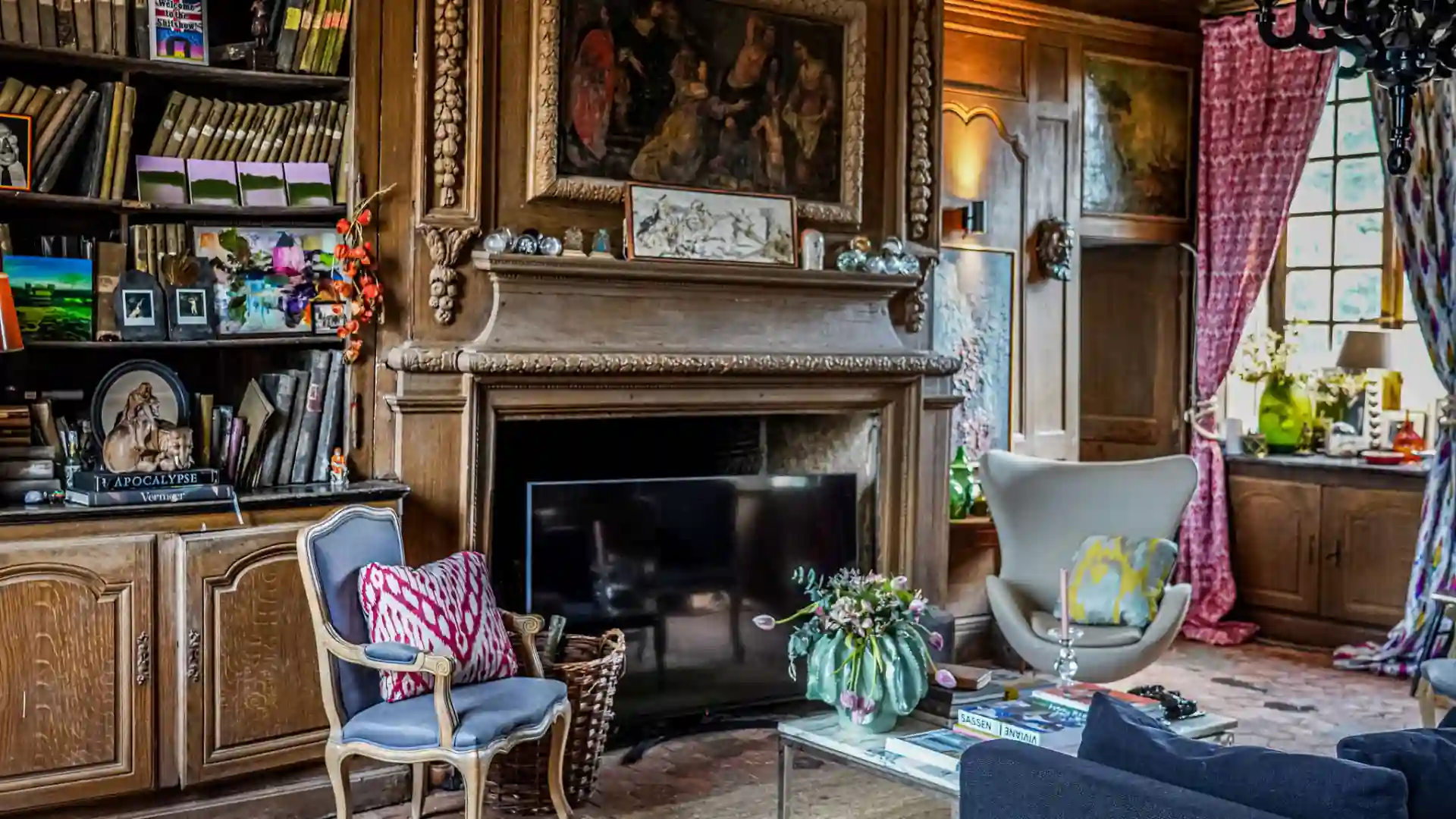
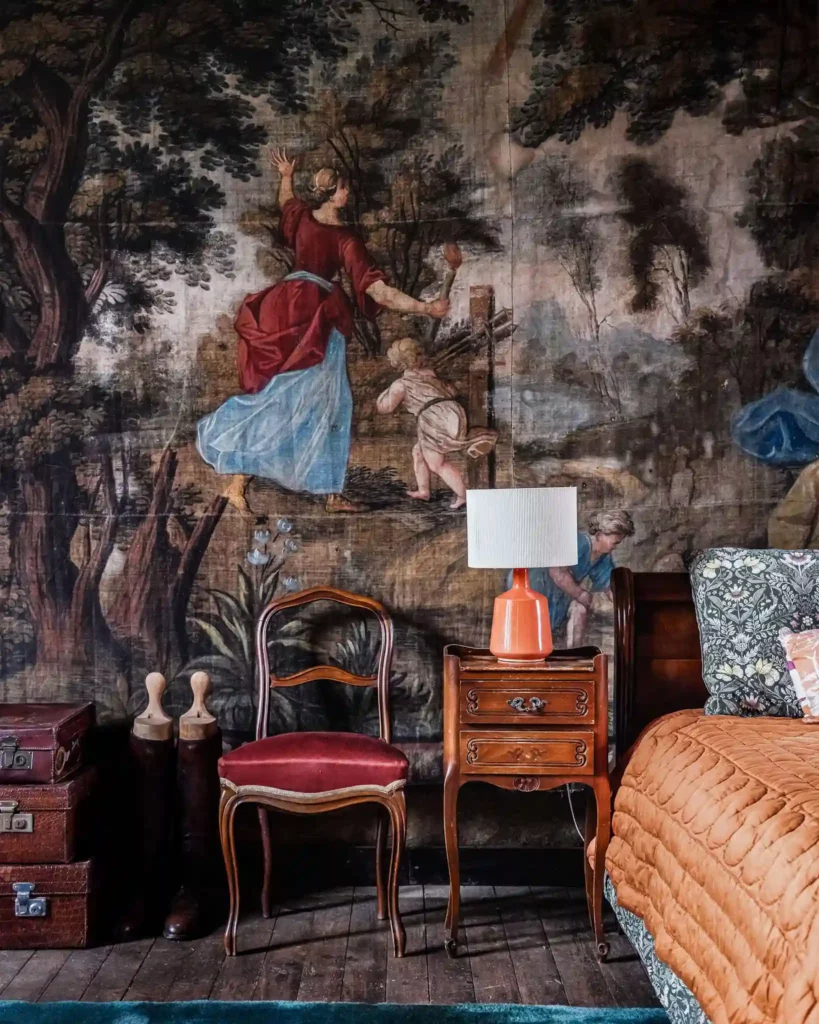
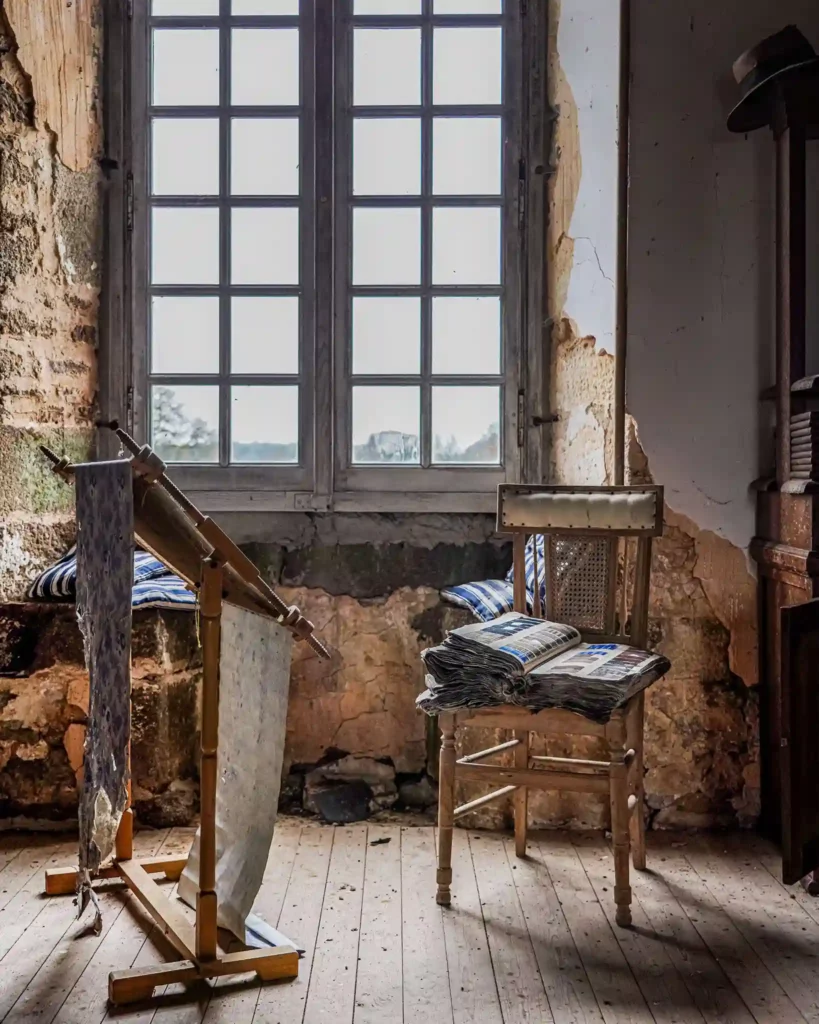
When they bought it, the castle was completely empty. Rather than seeing that as a loss, they embraced it as an opportunity to shape the interior entirely themselves. The style? Eclectic, with a wink. “We combine a wall tapestry from 1740 with work by Dutch photographer Viviane Sassen. A piece of furniture in Napoleonic style with a contemporary lamp.” Much of the interior was sourced from French brocante shops, brought over from Amsterdam or gifted by villagers. “More than once, someone has turned up with, say, an old clock and said, ‘This used to be in the castle, it should come back to you.’ Those people had once received it from the heirs.”
The castle is one vast storybook. In one room, a fireplace from the 12th century; in another, Empire-style furniture from Napoleon’s era, a style also seen in the interiors of the Royal Palace on Dam Square. Classical, with influences from ancient Greece and Egypt. “By combining old and new, it feels like a living house that keeps evolving,” says Stork.
A flamboyant love life
One of the rooms, the Chambre du Roi (Room of the King), contains several paintings that carry particular meaning for Stork and Tromp. On the wall hang portraits of Louis XIV, the Sun King, and his brother, Philippe I, Duke of Orléans. “Philippe was raised by his mother as something of a ‘court homosexual’. He wore dresses, jewellery, had a flamboyant love life and also turned out to be a brilliant military leader. In the portrait here he holds a small flower – in art history a subtle hint that someone was attracted to the same sex. For us, and for visitors, it’s an inspiring reference to hidden queer stories in European history.”
This is an excerpt from a feature appearing in Attitude’s May/June 2026 issue.