
Review: Assassin’s Creed Black Flag Resynced blends gaming with real history
Ubisoft's remake of its 2013 high-seas epic sails you across the Caribbean of the early 1700s, alongside two of the very few women known to have gone to sea as pirates
By Dale Fox
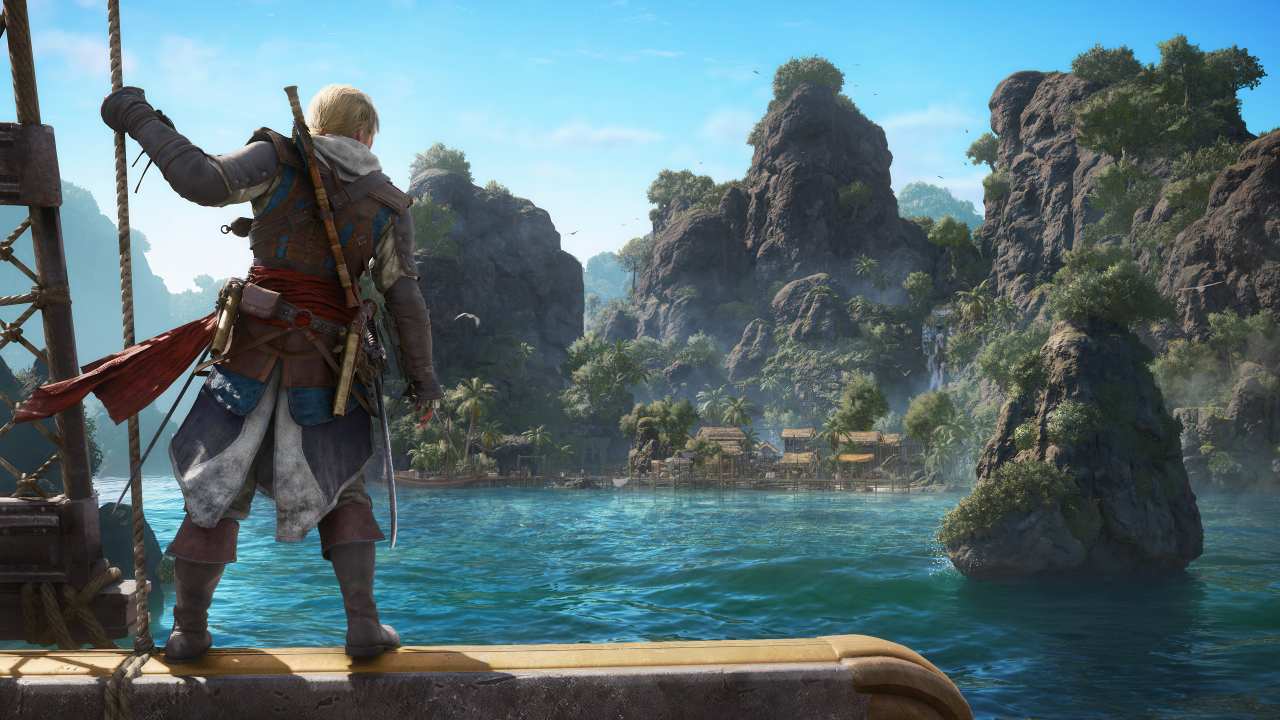
To paraphrase Madonna, people think that video games are superficial, but they’ve got it all wrong. The condescension comes mostly from those who’ve never played one, and few series answer it as neatly as Assassin’s Creed, which has spent close to two decades rebuilding vanished worlds street by street and letting you loose in them with a sword and a mystery to unravel.
Assassin’s Creed Black Flag Resynced, out now on PlayStation 5, XBOX Series X/S and PC, is Ubisoft’s ground-up remake of its 2013 high-seas epic, bringing the Golden Age of Piracy back to life across an open world of sun-bleached ports, jungle-choked islands and a vast, sailable ocean.
You play as Edward Kenway, a Welsh privateer turned pirate in the Caribbean of the early 1700s, most of it spent at the wheel of a brig named the Jackdaw. A plot pulls you into the pirate haven of Nassau and its collapse under the British, but the game is at its best between missions, when it’s just you, the Jackdaw, and the open sea: run down a passing ship and plunder it, storm a fort by mortar fire, or drop anchor at a random island and go exploring.
Real-life female pirates appear in the game
Kenway is fictional, but almost everyone else you meet in the game is based on a real person, and this is where a game about quite literally stabbing people in the neck turns into an unlikely history lesson. Edward Thatch, better known as Blackbeard, is depicted close to how records described him, as is Benjamin Hornigold, one of the pirate warlords who ran the then-lawless haven of Nassau.
Fiercer company arrives with Anne Bonny and Mary Read, among the very few women known to have gone to sea as pirates, and proof that queer and gender-nonconforming lives were being lived long before anyone had the words for them. Read spent much of her life presenting as a man, joining armies and ships as one, arriving in the game under the name James Kidd.
A respect for historical accuracy is typical of the Assassin’s Creed franchise, some of whose games even include a separate mode called Discovery Tour that strips out the fighting and lets you wander the likes of Ancient Greece (in 2018’s Odyssey) or Viking-age Britain (in 2020’s Valhalla) without having to worry about killing or being killed. Black Flag Resynced has no tour mode of its own, but Ubisoft’s usual attention to detail still runs through every plank of it.
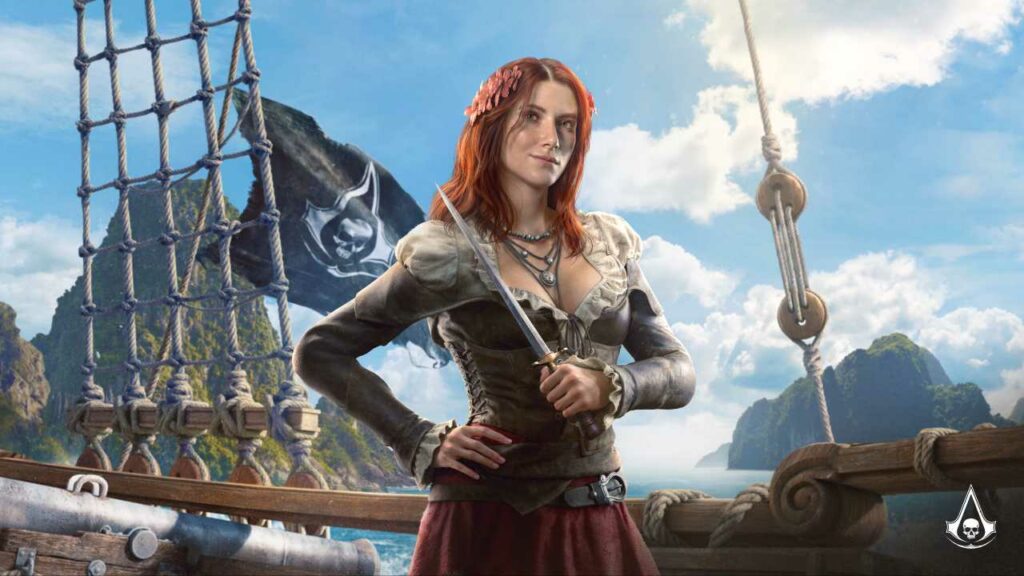
Game first, history lesson second
And while one could be tempted to put down the controller every 10 minutes to go down a Google rabbit hole as you make new discoveries, Ubisoft includes a “codex” of noteable characters, buildings and more as you come across them – think of it as a built-in Wikipedia.
Black Flag Resynced, of course, is a game first and history lesson second. Rebuilt on the engine behind last year’s Japan-based Shadows, it’s a beautiful thing to behold. A highlight is climbing the rigging of the Jackdaw to its crow’s nest before diving straight down into the ocean, where you’ll be greeted by a seabed of bright coral and darting fish. Parkour-master Kenway fluidly climbs almost anything, and a chase over the tiled roofs of Havana is often the best part of a mission.
It’s equally as exhilarating to take another ship, whether you sink it from range under a broadside that shudders through its hulls or draw alongside, swing your crew over the rail and finish the job by sword and pistol.
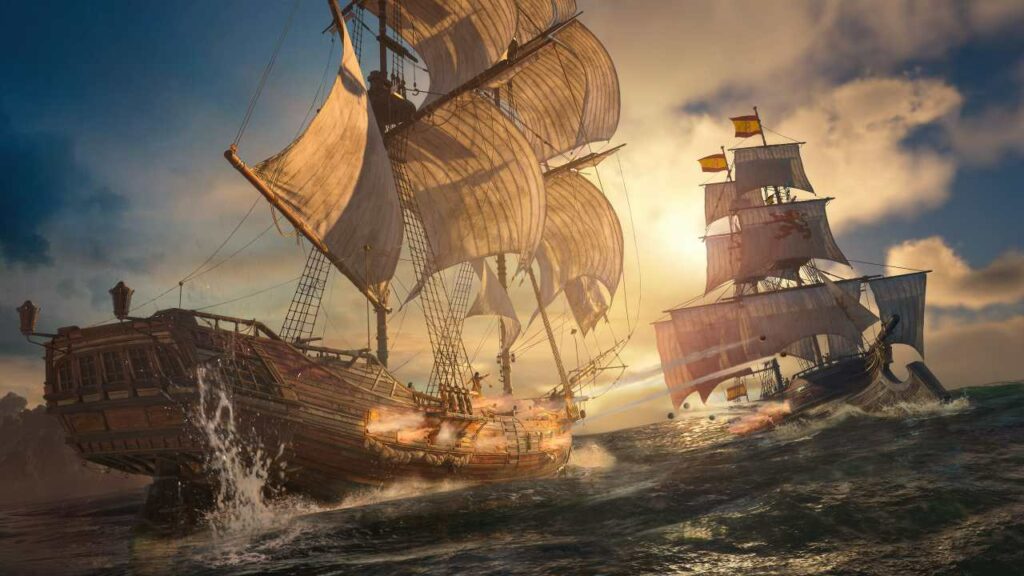
Verdict
Black Flag Resynced is a violent game, and yet a strangely peaceful one, given over to long crossings between the fighting, as you enjoy the open waters while your crew sing soothing shanties. But that’s basically history: a lot of blood, and a lot of open water in between.
Spend a few hours captaining the Jackdaw and you come away learning how Nassau rose and fell, what its ports were built on, and who remarkable real-life people like Bonny and Read were. A history lesson with swords, superficial it is not.