
The hidden queer history of Charles Darwin’s biological research, from Swallowtail butterflies to emus
In his new book, Darwin and the Queer Origins of Life, historian Dr Ross Brooks finds that Victorian naturalists can teach us a thing or two about the nature of sex
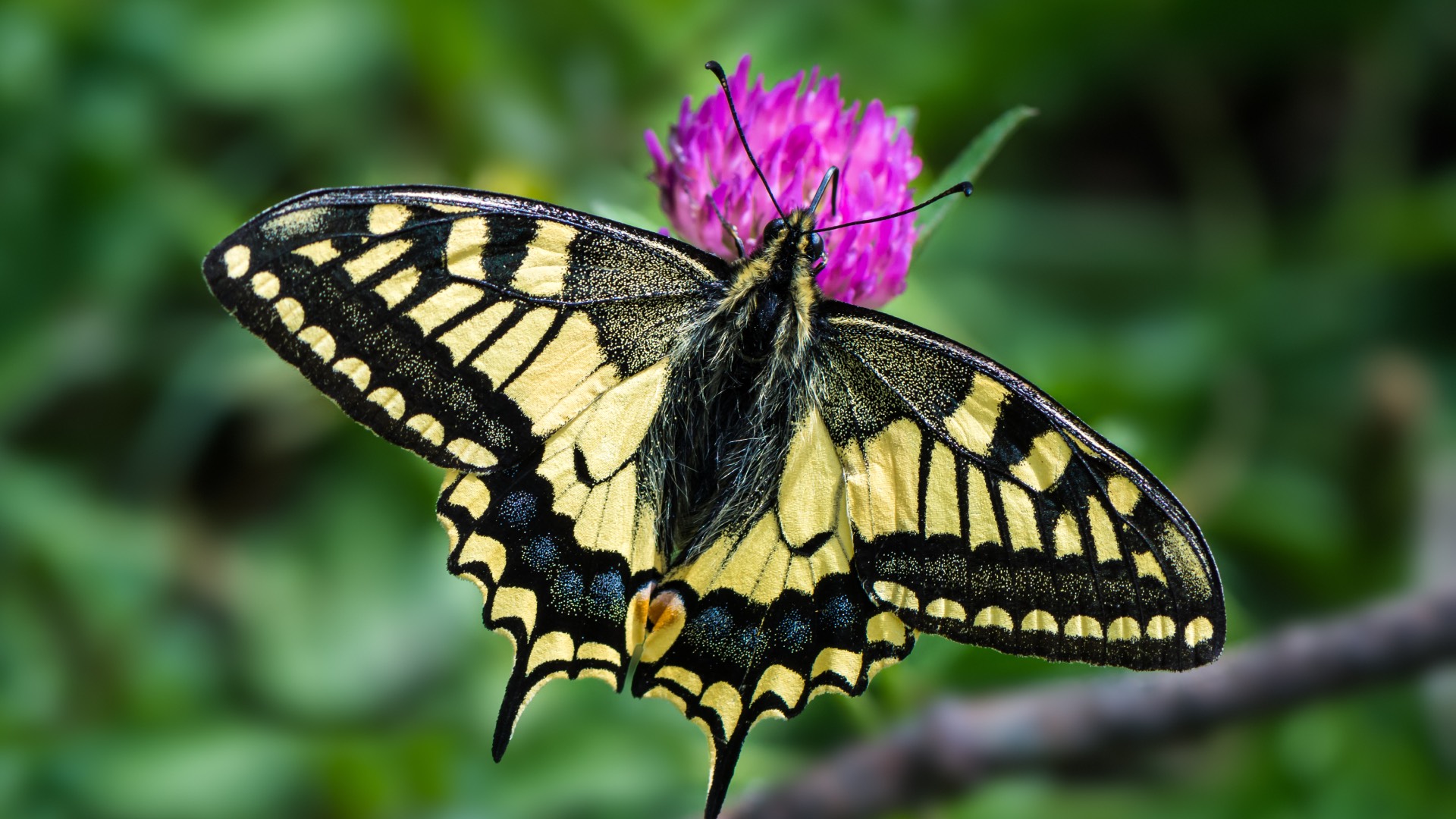
Charles Darwin isn’t someone whose name is mentioned much in relation to LGBTQ+ life and culture. That’s understandable.
Science, especially biology, has long been weaponised against us. We’ve been excluded from science textbooks, subjected to invasive medical procedures, and told we are ‘unnatural’, even ‘against nature’.
Many people came to believe this because accounts of Darwin’s ideas, as well as later interpretations of it, excluded queerness. His famous book The Descent of Man, and Selection in Relation to Sex, published in 1871, outlined his theory of sexual selection as a process driven by reproductive competition between males and female choice. He described male animals as aggressive, competing either by fighting or through courtship displays as they vie for reproductive access to females who, in turn, choose the males who impress them most. In this courtship drama choreographed by evolution, there’s supposedly little room for queer bodies and behaviours.
Is this the case? Was Darwin, widely credited as being quite clever, really so blinkered when it came to sex? Who, indeed, has actually read The Descent of Man these days?
I have. And it was quite the surprise. True, there’s plenty of laboured descriptions of fussy females and combative males, styled in the manner of a soppy Victorian melodrama. But there’s much more to it than that. Descent is in fact packed full of sex-variant creatures and Darwin thinks about them in startlingly queer ways. In my new book, Darwin and the Queer Origins of Life, I share some of the lessons in queer biology I first learned from Darwin and other Victorian naturalists, lessons I was never taught at school, or saw on TV nature documentaries, but which have long been hugely significant aspects of modern sexual biology. Here are three of them.
Serranus
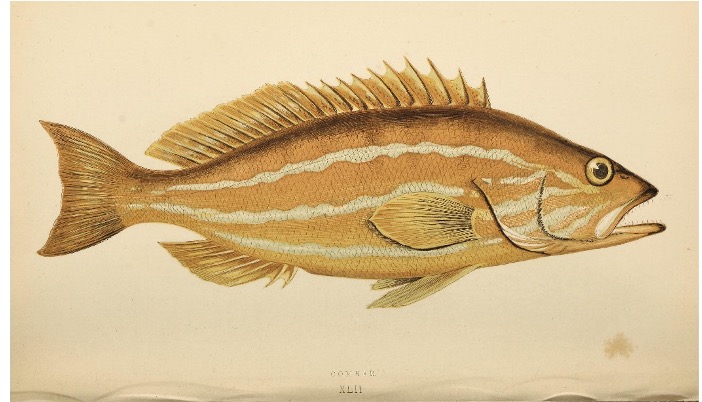
Most plants and many animal species are naturally dual-sexed, or ‘hermaphrodite’. Yet naturalists took surprisingly long to recognise this. Sexual reproduction in plants wasn’t firmly established until the mid-eighteenth century, while the hermaphroditism of the slugs and snails found in our gardens was first described only in 1660. Recognition that some fish are naturally hermaphroditic came even later, although Aristotle, the greatest naturalist of the classical world, had observed that three species of the fish genus Serranus appeared to be so. Strangely, this incisive observation was ignored for centuries.
Darwin, for one, was excited by hermaphroditism in vertebrates because it supported his theory that species with apparently separate sexes had evolved from dual-sexed ancestors. He believed that primordial hermaphroditism hadn’t disappeared but persisted in latent form: every individual, plant or animal, retained the capacity to develop characteristics associated with the other sex, even if these remained unexpressed. Privately, he had no qualms about including humans in this scenario, writing in a notebook in 1838, ‘Every man & woman is hermaphrodite’. In The Descent of Man, he traced this intersexuality to our evolutionary origins, proposing that ‘some extremely remote progenitor of the whole vertebrate kingdom appears to have been hermaphrodite or androgynous’. He cited Serranus, along with other queer creatures, as evidence.
Swallowtail butterflies
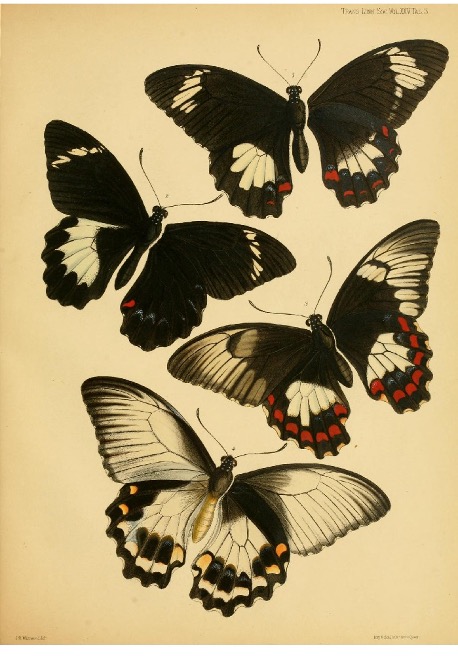
Darwin’s belief that individuals could express both male and female traits helped naturalists understand naturally occurring intersexualities, changes of sex, as well as how sex characteristics transformed over evolutionary time. It also helped him explain species in which one sex appeared in several forms, a phenomenon known as sex-limited polymorphism. English naturalist Alfred Russel Wallace made especially striking discoveries of different female forms among swallowtail butterflies (Papilionidae) in the Malay Archipelago. One was the orchard swallowtail butterfly (Papilio aegeus ormenus): the male was the same on each island, while the female appeared in multiple forms.
Victorian naturalists later identified sex-limited polymorphism in many other insects, as well as spiders and crustaceans, and we now know it exists among mammals, including humans. In The Descent of Man, Darwin referred to species with polymorphic sexes, including Wallace’s extraordinary butterflies, on several occasions. The phenomenon led him to reject an overly rigid view of sexual selection and consider how evolutionary pressures might diversify a sex within a species.
Emu
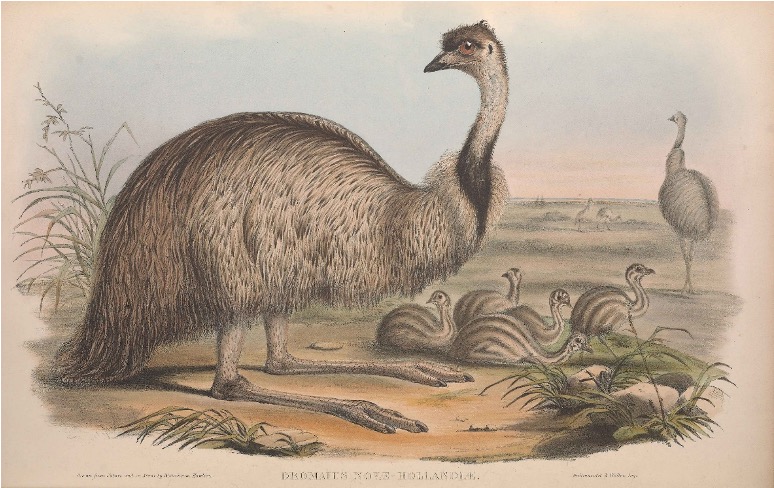
Adult emu and chicks from The Birds of Australia (1848) by English ornithologist John Gould. ‘[T]he male bird appears to take a large share in the task of incubation.’ Biodiversity Heritage Library.
Although he preferred writing about antagonistic males competing for the attention of picky females, Darwin knew that not all species fitted this pattern. In some bird species, females are larger, more brightly coloured, and more aggressive than males. Today, this is called sex-role reversal. Darwin was aware of several examples, including the emu. In Descent, he wrote of the bird: ‘we have a complete reversal not only of the parental and incubating instincts, but of the usual moral qualities of the two sexes; the females being savage, quarrelsome, and noisy, the males gentle and good.’ Darwin argued that sexual selection was still at work in these species, but that its actions had inverted. His conclusion is important because it acknowledges that courtship, sexual, and reproductive behaviours aren’t based on fixed qualities of maleness or femaleness, or simply on the production of different gametes (eggs and sperm). Instead, sexual characteristics are fluid and can even transfer between females and males in response to changing conditions of life.
Recognition of the queerer dimensions of Darwin’s evolutionary science has been painfully slow. In large part, this was Darwin’s fault. He remained a Victorian man, with Victorian assumptions, and often stopped just short of following the implications of his own observations and ideas. Yet hidden among the familiar story of competitive males and choosy females is another Darwin: one fascinated by hermaphroditic fish, polymorphic butterflies, role-reversed birds, and the deep biological continuities between the sexes. Perhaps the strangest thing isn’t that queerness exists throughout nature. It’s that so much of it has been quietly subdued in the stories we’ve been told about evolution.
Darwin and the Queer Origins of Life: A History of Sex and Science is out now in bookshops.