Drunken Noodles review: Gay sex, food and companionship combine to rich and woozy effect
A story of finding oneself through fleeting moments, failed relationships and casual encounters, from the director of End of the Century, screening at this year's BFI Flare: London LGBTQIA+ Film Festival
By Jude Jones
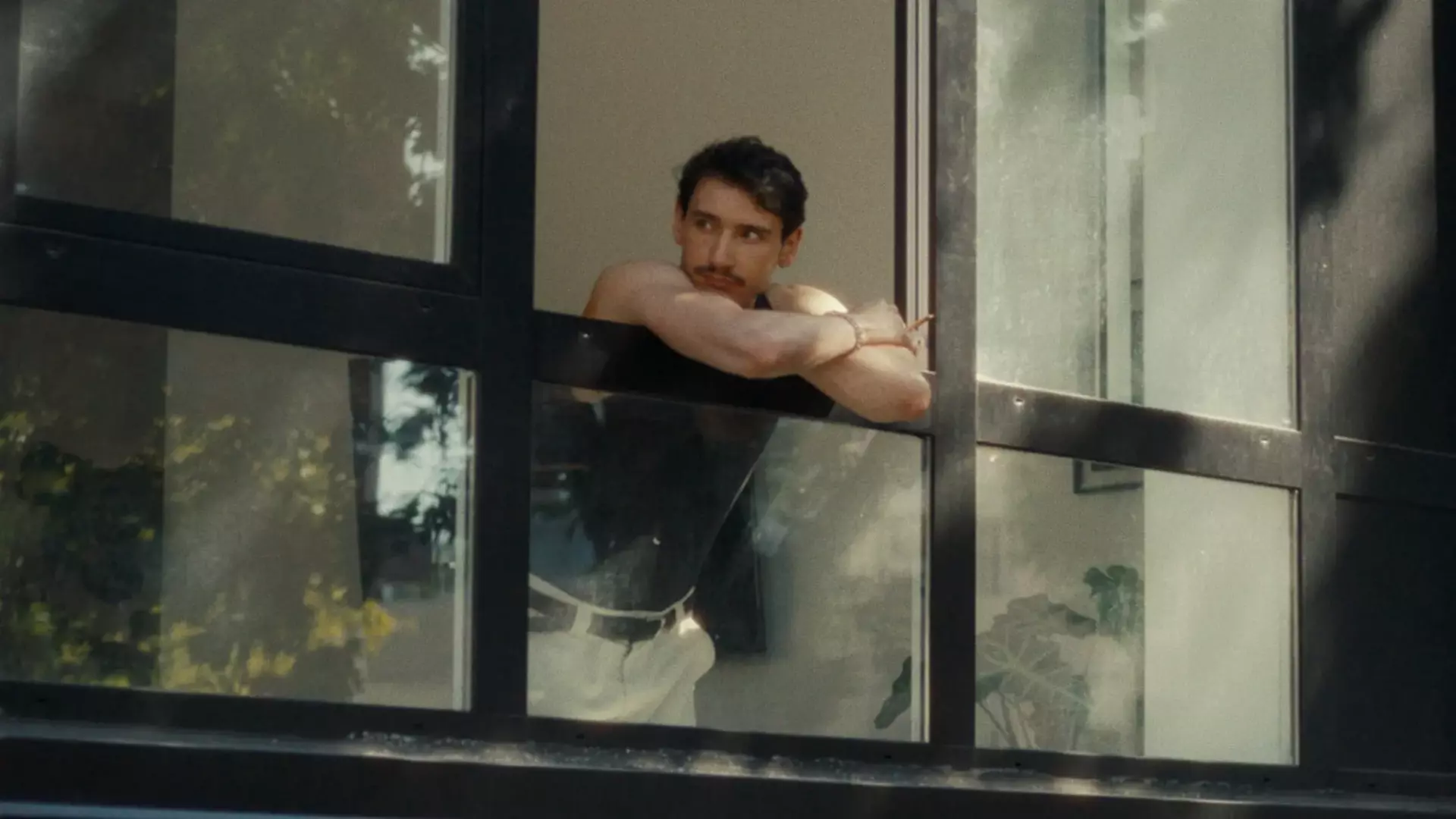
Adnan (Laith Khalifeh) is a handsome 20something art student spending his summer in New York. He is interning at a quiet, shoebox-sized art gallery where he has helped arrange the exhibition of an obscure outsider artist’s works, epic Tom of Finland tapestries depicting mythic beasts and muscled men united in bacchanalian orgy. “And you met him, how?” the gallerist unassumingly asks. With a telling and familiar pause, Adnan replies: “I… Last summer, I met him upstate.
“Directed, written and edited by Argentine filmmaker Lucio Castro, Drunken Noodles, screening at this year’s BFI Flare: London LGBTQIA+ Film Festival is a pleasant drama about growth which follows Adnan over two sultry summers. A story without much plot, Castro simply invites us to watch our hero on his languorous, exploratory journey through sex, intimacy, connection and the foggy borderlands that separate and join the three.

Moving non-linearly, we begin with Adnan and the art gallery. Without much to do, Adnan passes his time by scrolling through apps and cruising in parks. One balmy night, sat on a playground bench, he is approached by a delivery driver, Yariel (Joél Isaac). They jerk each other off without saying a word and quietly share a box of drunken noodles. The duo come from different worlds – one a well-off, aspiring gallerist, the other a migrant worker – yet bond through the most primordial human wants of food, companionship and sex.
“Then, the film ebbs backward. Adnan is now upstate and first meets the artist (Ezriel Kornel) – bronzed, 70something and topless – after suffering a flat tyre while cycling in the woods. They have sex (quietly, the artist’s mother is in the main room) then go into the forest to watch a satyr, one of the fantastical monsters populating his art, huff a ruby-red slipper and fellate a flute. Reality, in Castro’s dreamy cinematic world, becomes wondrously flimsy.
Suddenly, we go backwards once more. Adnan has just arrived upstate with his older, softly-spoken partner, Iggy (Matthew Risch), but is sexually unsatisfied – Iggy’s libido has recently been killed by a new medication, and the chastity is beginning to cause a rift. Iggy urges Adnan to take on other lovers, so he doesn’t become frustrated, but Adnan only wants him. Connection, Adnan says, is far more important to him than quick thrills.
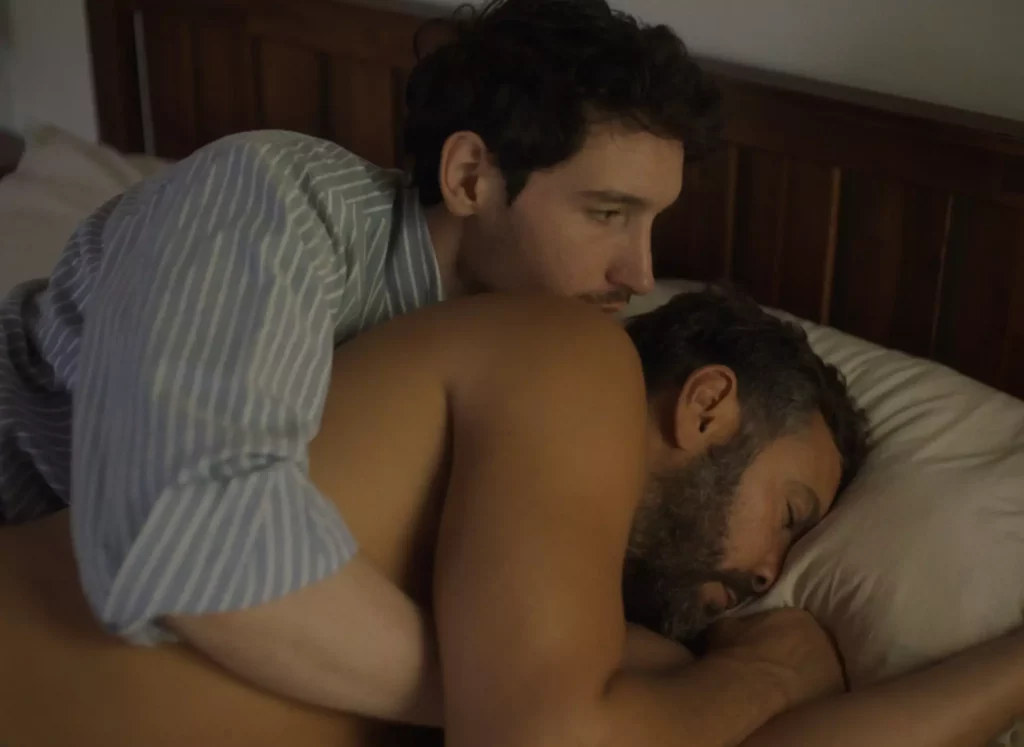
Ultimately, Drunken Noodles is a universally relatable story of finding oneself through fleeting moments, failed relationships and casual encounters. The film, like that journey, is slow and fragmented, and though this at times makes the film feel like it lacks propulsion, its atmospheric score and luscious cinematography are enough to keep viewers immersed.
Castro’s 35mm film is rich and woozy, accentuating his core themes of youth and yearning; his sex scenes are erotic and non-judgemental; and his camera lingers on bodies just long enough to tell you everything without saying a word. Clearly, Drunken Noodles is a film from the Call Me by Your Name school of queer cinema – something slow, restrained and subdued.
Drunken Noodles is playing as part of the BFI Flare: London LGBTQIA+ Film Festival, running from 18–29 March 2026.
This review first appeared in Attitude Uncut, the all-new digital magazine that will be published six times a year (between Attitude print issues) and available exclusively on Apple News+ and via the Attitude app. Featuring long-read journalism inspired by themes resonating within the LGBTQ+ community, each issue will provide a deep dive into topics as varied as sexuality, identity, health, relationships and beyond.

Get more Attitude