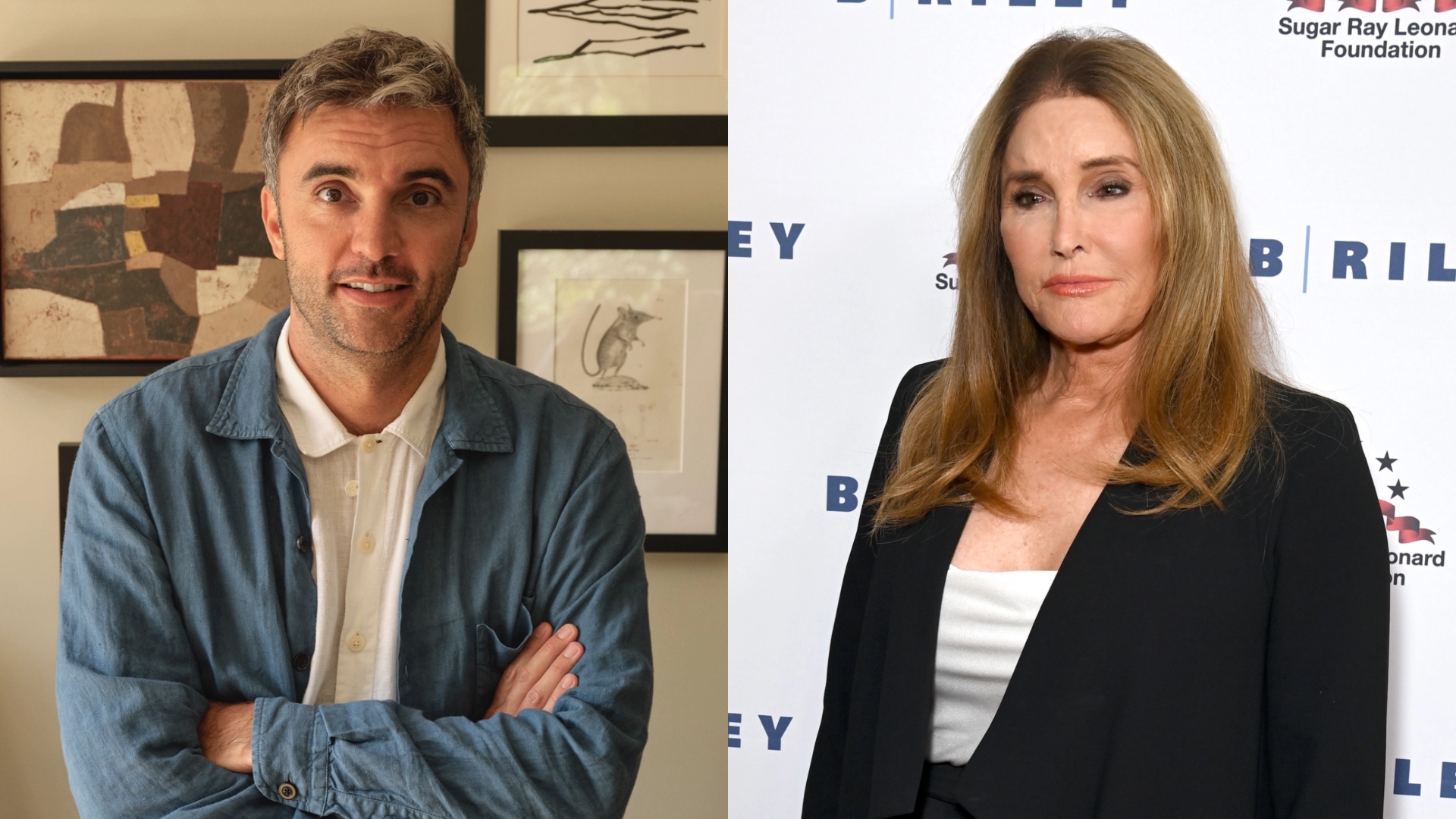
Did Vanity Fair undo LGBTQ+ rights? ‘Unlike fashion trends, queer identity is not disposable’ writes Homo Sapiens host Chris Sweeney
Opinion: "Let’s pause, regroup and ask if the mainstream media and brands, have our best interests at heart," says Sweeney
It could be said that it all started ten years ago with a Vanity Fair cover shoot.
Shrouded in secrecy, world famous photographer Annie Liebowitz was smuggled into a secret location in Los Angeles, 2015. Waiting for her was Caitlyn Jenner – full hair and makeup, in a dazzling pearl corset. Their mission? To unleash Caitlyn to the world on the cover of Vanity Fair magazine.
When the issue hit newsstands, the world’s collective jaw dropped. Caitlyn smashed sales records, lead news bulletins, and set social media alight.
Beneath her iconic photo were three words: “Call me Caitlyn”
And boy did they call. Trans people were suddenly being snapped up by model agencies – after all, now we had proof that trans people could sell fashion magazines. Multinational corporations, freshly equipped with DEI departments, rushed to book “diverse voices” for panels and keynotes.
By 2017, I launched a podcast, Homo Sapiens—Woman’s Hour for LGBTQ+ audiences—and within a week it debuted in the UK Top Five. Invitations followed quickly: Facebook asked us to speak at their events, Amazon asked Homo Sapiens to launch a nationwide LGBTQ+ books-in-schools initiative. LGBTQ+ people were everywhere, fronting clothing campaigns, Vogue covers, topping the charts, breaking records winning Emmys, Golden Globes, Oscars…
The Chilling Change
But fast-forward to today, and the Vanity Fair cover line—“Call me”—reads less like an invitation and more like a warning. The phone has stopped ringing. I don’t know a single LGBTQ+ influencer who hasn’t watched their usual work evaporate. For me, the idea that Amazon might call in 2025 asking Homo Sapiens to front a national “LGBTQ+ books in schools” initiative now feels unthinkable in a Britain so deeply divided. The world, it seems, is no longer captivated by queer identity.
That cultural shift is mirrored in policy and law. In May 2025, Transgender Europe (TGEU) published its Trans Rights Index and Map, reporting that, for the first time in the project’s 13-year history, setbacks to the human rights of trans people across Europe and Central Asia now clearly outweigh progress.
The Trans Tipping Point
To understand why, we need to rewind a year before Caitlyn’s Vanity Fair cover and recall another landmark magazine moment. In June 2014, Time magazine—the lodestar of politics, finance, culture, and science—put Laverne Cox on its cover under the headline “The Transgender Tipping Point.” Having become the first Black transgender woman to hold a leading role on a mainstream U.S. television series, Cox was already reshaping public visibility, and the cover cemented her status as a trailblazer. That moment has since come to define what many describe as the “transgender tipping point”: a new era of social progress in transgender representation.
The second tipping point – From Respect to Fashion
While many in the LGBTQ+ community—including myself—celebrated Caitlyn’s Vanity Fair cover as a moment of long-awaited validation and acceptance, something crucial went unnoticed amid the collective excitement. It marked a second tipping point: the shift from Time magazine—long associated with gravitas and institutional legitimacy—to Vanity Fair, a publication grounded in fashion and celebrity culture. That transition signaled a troubling reality: queer identity had become fashionable.
This proved to be a costly mistake, because fashion is, by definition, fleeting. It moves on—and it has moved on from us. Around the world, DEI departments are being dismantled, LGBTQ+ protections are being rolled back, and we are being discarded as cultural tastes shift, consigned to fashion’s scrap heap. GLAAD recently reported that nearly half of LGBTQ+ television characters have been eliminated from U.S. programming. What we mistook for hard-earned respect was, in truth, little more than lip service.
Perhaps we have already seen the first green shoots of what comes next. Alex Consani being named Model of the Year at the British Fashion Awards in December 2024 feels like an echo of the Caitlyn Jenner cover all those years ago—a moment worth celebrating, but also one that warrants caution.
I don’t blame us for getting giddy, the spotlight on trans – and broader queer – identity a decade ago was long overdue. But fashion is always cyclical, so next time we’re find ourselves en vogue, we should think carefully about letting ourselves back onto the covers of fashion magazines. Let’s pause, regroup and ask if the mainstream media and brands, have our best interests at heart.
- Homo Sapiens’s new season is ongoing, with new episodes released weekly. Click here to listen.
Subscribe to Attitude magazine in print, download the Attitude app, and follow Attitude on Apple News+. Plus, find Attitude on Instagram, Facebook, TikTok, X and YouTube.