
UK AIDS Memorial Quilt to be displayed in Scotland for the first time
The UK AIDS Memorial Quilt will be on display at Tramway in Glasgow from 12 September to 4 October 2026
By Callum Wells
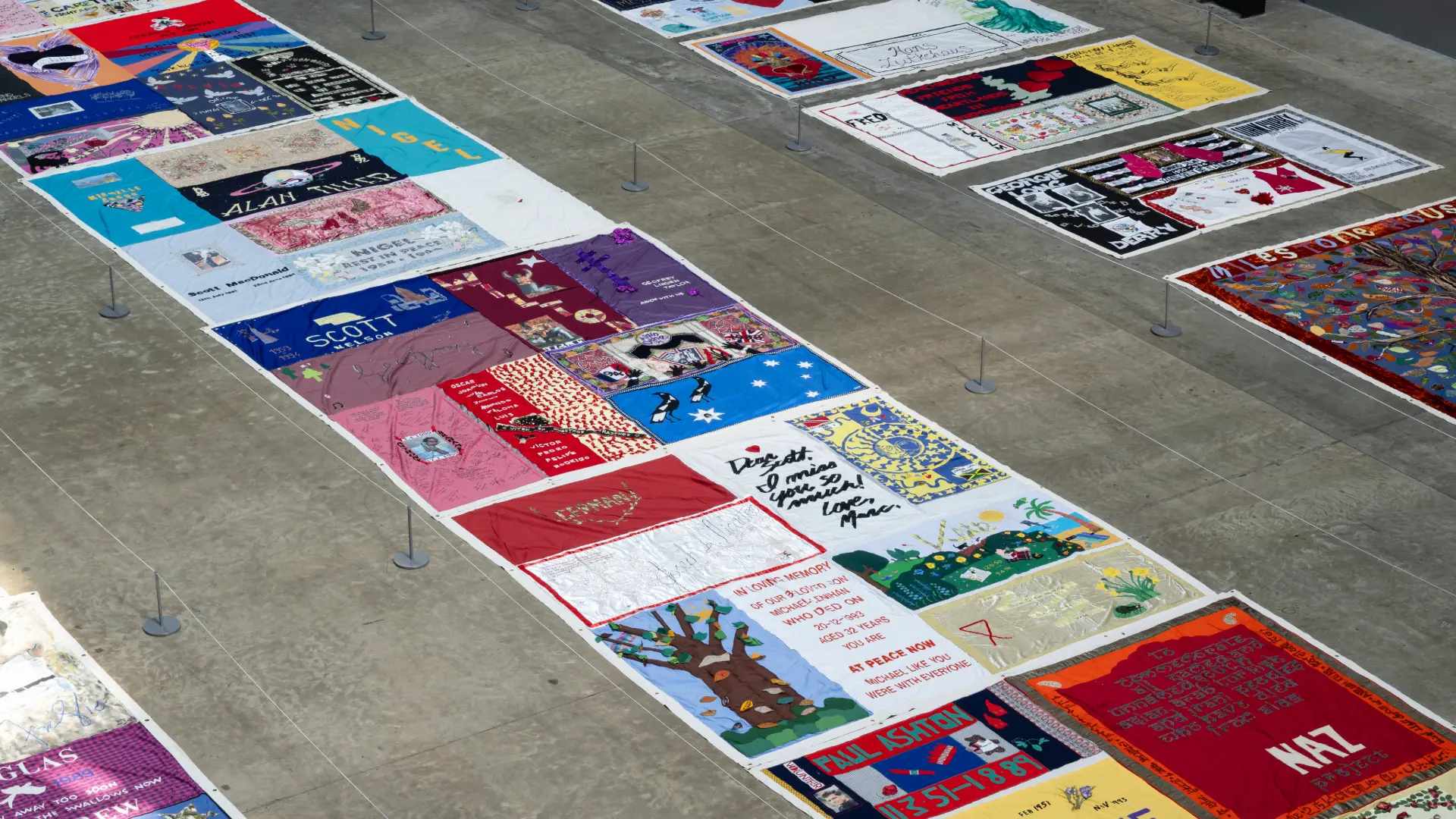
The UK AIDS Memorial Quilt will be displayed in full in Scotland for the first time this September, with the landmark memorial coming to Glasgow’s Tramway.
The free exhibition will run from 12 September to 4 October, bringing together the Quilt with archival material exploring its Scottish history and the documentary film There Is A Light That Never Goes Out.
What is the UK AIDS Memorial Quilt?
The UK AIDS Memorial Quilt represents more than 600 people who died from HIV and AIDS in the UK. It forms part of the world’s largest community art project, which was started in San Francisco in 1985 by activist Cleve Jones to remember people who had died during the AIDS crisis.
The UK Quilt was coordinated in Scotland from the late 1980s by activist ally Van Tillo, who helped establish a collection that became an important part of HIV and AIDS activism and remembrance.
Every panel was made by someone who knew and loved the person being remembered. The designs include personal messages, photographs, artwork and tributes, ensuring that the people commemorated are remembered as individuals rather than statistics.
The Quilt became particularly significant during the height of the AIDS crisis, when stigma surrounding HIV and AIDS meant many people died without being publicly mourned.
Its 335 individual panels, most measuring 3ft by 6ft, are stitched together into larger 12ft by 12ft blocks. The dimensions are deliberately symbolic, with each individual panel representing the size of a typical grave plot.
“The UK AIDS Memorial Quilt is coming home to Scotland” – ally and activist Van Tillo
Displayed in public spaces, the Quilt became a way of remembering those who had died while also confronting the stigma surrounding HIV and AIDS.
Seven UK HIV support charities established the UK AIDS Memorial Quilt Partnership in 2014 to conserve and display the collection.
Van Tillo said the Quilt’s return to Scotland was particularly significant given its history in the country.
“The UK AIDS Memorial Quilt is coming home to Scotland. From 1989 and throughout the 90s, the Quilt found a home in Leith,” he said.
The Glasgow exhibition follows the Quilt’s display at Tate Modern’s Turbine Hall in London
“At the time, it was a resource for loss, bereavement and education. It helped people make sense of their loss, humanising the death of individuals that our government and media were painting as perverts and social pariahs.”
Van Tillo said the Quilt remained relevant beyond its historical significance, adding: “The AIDS Memorial Quilt is alive: let’s ensure no more of our history is allowed to disappear.”
The Glasgow exhibition follows the Quilt’s display at Tate Modern’s Turbine Hall in London in June 2025, where almost 70,000 people visited across five days.
The Tramway exhibition will also feature a programme of events exploring Scotland’s history of HIV and AIDS.
ACT UP will also host events exploring its work in Edinburgh and Glasgow
Jones, who conceived the original AIDS Memorial Quilt project in 1985, will appear in conversation with Ian Van Tillo, who worked on the UK Quilt from its earliest days in Leith, and Siobhán Lanigan, chair of the UK AIDS Memorial Quilt Partnership.
Other events include a discussion around John Binnie’s 1987 play Killing Me Softly, a screening of Choose Life: Edinburgh’s Battle Against AIDS, and a day of events from LGBT heritage organisation OurStory Scotland examining Glasgow’s HIV and AIDS history.
ACT UP will also host events exploring its work in Edinburgh and Glasgow, including film screenings, a talk and a workshop led by activist Dan Glass.
Creative workshops will give visitors the opportunity to explore the themes and history of the Quilt through textile-making, while a fundraising event at The Vic & Assembly on 24 September will raise money to support future displays.
The UK AIDS Memorial Quilt will be on display at Tramway in Glasgow from 12 September to 4 October 2026. Admission is free. For more info, visit aidsquiltuk.org.